A semen analysis is supposed to provide answers. So why does it often leave men with more questions? And why are so many turning to AI for sperm test analysis?
Here's what typically happens.
You provide your sample. You wait, sometimes for weeks, to get your report. During that time, your anxiety builds as you wonder what those numbers might mean for your future.
Once you get it, it's filled with numbers like concentration, motility and morphology. Some are above the "normal" range. Some are not.
But you're not sure what all these numbers actually mean when it comes to your chances of conception. Even after reviewing the results with your doctor, you may be left wondering. Is this good? Is this bad? And what should I do next?
Read our blog post: Understanding sperm analysis results
Why Semen Analysis Results Are Hard to Interpret
Most labs compare your numbers to reference limits set by the World Health Organization (WHO). These thresholds help identify when sperm parameters fall below population averages.
But being "within normal range" doesn't guarantee fertility. And being slightly below a threshold doesn't automatically signal infertility.
Watch our video: When and why to retest your sperm
A semen analysis is a snapshot. It's useful, but it doesn't directly predict whether you'll conceive. That limitation is often where confusion begins.
And when you're still left with questions, men often turn to AI tools for help.
Using Generic AI for Sperm Test Analysis
After uploading sperm test results to an AI tool, like ChatGPT, you'll get a breakdown of what the numbers mean and how they compare to standard reference ranges. You also get general lifestyle suggestions for improving fertility health.
Generic AI tools are designed to answer almost any question. That breadth is useful, but it also means the analysis is surface-level. These systems interpret sperm test results by comparing numbers to standard reference ranges and summarizing commonly available information. They are not built to recognize nuanced patterns across thousands of semen analyses or to weigh how different factors interact in real-world fertility outcomes.
Because these systems generate answers based on patterns, not clinical oversight, they can sometimes get things wrong or reference unreliable sources. And that risk matters when you are making decisions about your fertility.
So while the explanation you get might sound clear and easy to understand, it often stops at surface-level interpretation. Generic AI can analyze the numbers, but it doesn't truly explain what they mean for your chances of conception or your next best steps.
What Makes Fertility-Specific AI Analysis Different
Fertility-focused AI tools are built specifically to interpret semen analysis data. Rather than drawing from broad internet content, they are trained on real semen analysis records, documented pregnancy outcomes and carefully vetted research, all reviewed with input from reproductive urologists (specialists in male fertility).
That foundation means the guidance is grounded in real clinical patterns, not just generic health information.
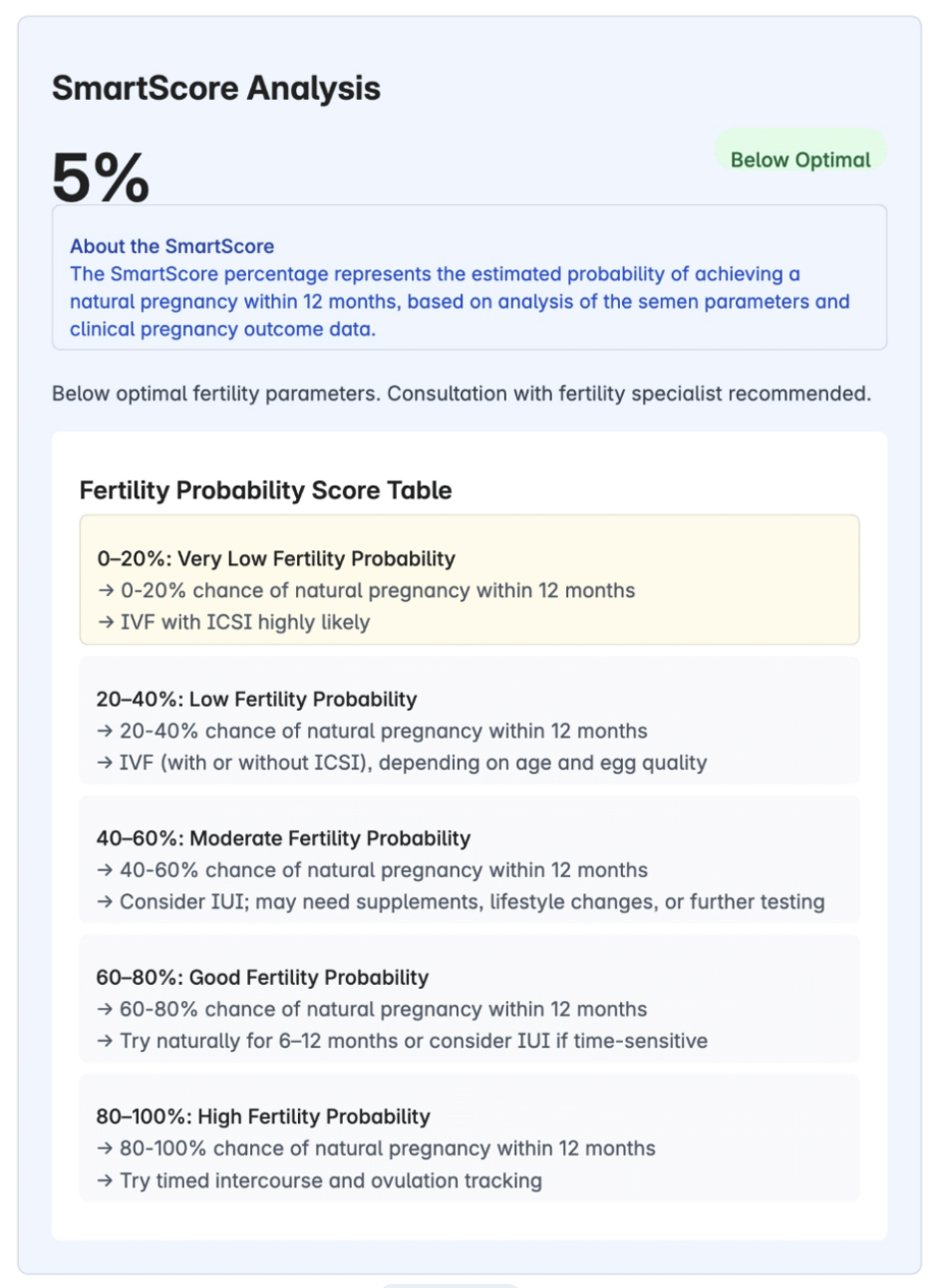
Rather than simply asking, "Are you above the WHO threshold?" fertility-specific AI can ask, "Which factors in this individual profile most influence conception outcomes?"
Read our blog post: Low sperm quality: understanding your options
How AI Supports Better Decisions in Male Fertility
Fertility prediction is not an exact science. Even semen analysis is an imperfect indicator, but it is the best option we have right now. These tests are meant to guide decisions, not promise outcomes.
That is why individualized, research-backed insights are so important. When advice is grounded in real data and clinical review, it supports more informed decision-making before moving toward more invasive treatments.
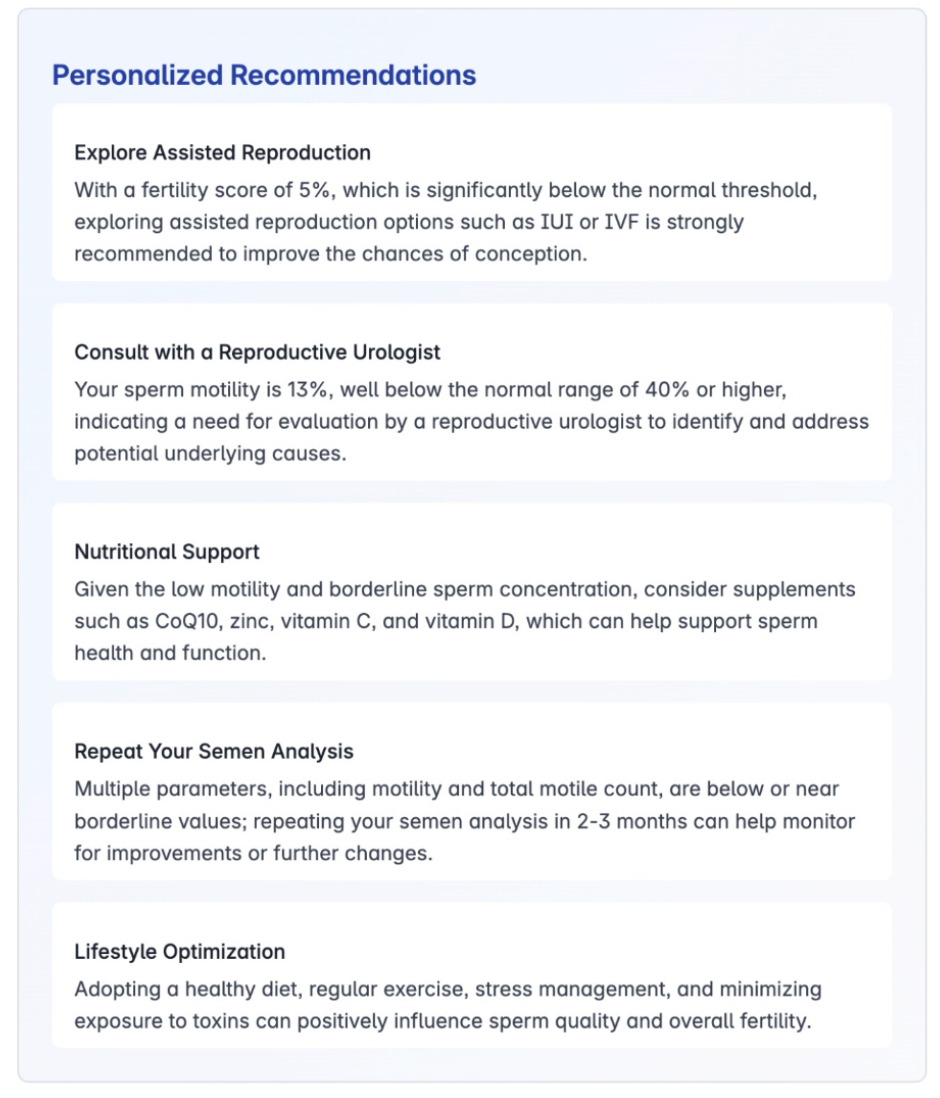
We're only beginning to see what fertility-focused AI can do. The next step is integrating semen analysis with blood work and other health markers to deliver more personalized guidance and a fuller picture of male reproductive health.
Read our blog post: Improve your sperm health: A comprehensive guide
Smarter Semen Analysis with Hera's AI Tools
Men trying to conceive want to know two things: what do these results mean, and what should I do next?
Answering those questions requires data, context and clinical insight.
Hera's AI is trained on more than 7,000 semen analysis records, real pregnancy outcomes, and insights reviewed by reproductive urologists. It draws from hundreds of carefully vetted research studies, not just broad internet content, to help interpret your results in context.
Rather than simply flagging whether you fall above or below a cutoff, it helps you understand which factors matter most in your case and what to focus on next.
If you are ready for a clearer, more evidence-informed look at your sperm test results, you can explore them with Hera.