DNA sperm fragmentation is a technical term for something pretty simple: breaks or damage in the genetic material inside a sperm cell. While a standard semen analysis is great for checking the basics—like how many sperm you have and how well they swim—it doesn't look at this critical piece of the puzzle. This makes DNA sperm fragmentation a major hidden factor in male fertility.
What DNA Sperm Fragmentation Means for Men
Think of a sperm’s DNA as the blueprint for building a healthy embryo. If that blueprint is intact, all the instructions are clear and the construction can go off without a hitch.
But what if the blueprint is torn, smudged, or has missing pages? The instructions become confusing or totally unreadable. That damage is exactly what we mean by DNA sperm fragmentation. The genetic integrity of the sperm is compromised.
The tricky part is that millions of sperm can look great on the outside and swim like champions, but a high percentage could be carrying these damaged blueprints. It’s a crucial detail that often gets missed on the path to fatherhood.
Beyond a Standard Semen Analysis
A routine semen analysis is a foundational first step, but it only tells part of the story for a man. It focuses on three main things:
- Sperm Count: How many sperm are in the sample.
- Motility: How well the sperm are swimming.
- Morphology: The size and shape of the sperm.
A man can get a "normal" or even excellent report on all these fronts and still struggle on his path to fatherhood. That's because a standard analysis doesn't look inside the sperm's head to check the quality of the DNA it's carrying. For many men, high DNA fragmentation is the missing piece of the fertility puzzle. To learn more about the initial signs, you can explore the common signs of male infertility in our guide.
Understanding the DNA Fragmentation Index (DFI)
The level of damage is measured with a simple score called the DNA Fragmentation Index (DFI). This score is just a percentage that tells you what proportion of sperm in a man's sample has damaged DNA.
For example, a DFI of 25% means that one-quarter of the sperm in that sample have fragmented DNA. This number gives you a much clearer picture of your reproductive potential than sperm count alone.
What used to be a niche research topic is now a recognized and important clinical test for male reproductive health. Globally, about 50% of infertility cases have a male factor involved. It’s not uncommon for a man to have a normal semen analysis but still have a DFI in the 20–40% range—a level that multiple studies have linked with taking longer to achieve a successful conception.
Getting your DFI score gives you a specific, actionable piece of data. It takes you beyond the basic numbers and provides a deeper understanding of your sperm quality, empowering you to take targeted next steps on your journey to fatherhood.
How Is Sperm DNA Integrity Actually Measured?
A standard semen analysis is a great starting point for any man, but it doesn’t look inside the sperm to check the DNA. So, how is this kind of damage even detected? It requires specialized lab tests that go beyond just counting sperm or watching them swim, assessing the quality of the genetic blueprint they're carrying. Think of it as moving from a basic vehicle inspection to a high-tech scan of the internal wiring.
These advanced tests are designed to do one thing really well: measure the amount of damage, or fragmentation, in a sperm's DNA. They put the sperm under controlled stress to see how stable its genetic material really is. The result of any of these tests is the all-important DNA Fragmentation Index (DFI)—a simple percentage that tells you the extent of the damage.
The Most Common Tests for Sperm DNA Fragmentation
While the science can get complex, the ideas behind the main tests are pretty straightforward. Each one uses a different method to "see" the damage inside the sperm. The three most common tests you'll come across are SCSA, TUNEL, and the Comet assay.
Sperm Chromatin Structure Assay (SCSA) This is one of the most widely used and validated tests out there. Imagine the DNA inside a sperm as a tightly wound ball of yarn. The SCSA test uses a special dye that reacts differently to healthy, intact DNA versus damaged, fragmented DNA. Healthy DNA glows green, while fragmented DNA glows red. A machine then counts the red and green sperm to calculate the DFI percentage. It’s like a scanner that highlights the weak spots in the blueprint.
TUNEL Assay The TUNEL assay works a bit differently. It uses an enzyme to tag the broken ends of the DNA strands. You can think of it like a repair crew that goes in and puts a tiny fluorescent flag on every single break it finds. The more flags there are, the brighter the sperm glows under a microscope, which indicates a higher level of DNA fragmentation.
Comet Assay This test gets its memorable name from the shape it creates. Individual sperm cells are placed in a special gel and exposed to an electric field. If the DNA is healthy and intact, it stays tightly packed inside the sperm's head. But if the DNA is fragmented, the broken pieces stream out, forming a tail that looks just like a comet. The longer the comet's tail, the more DNA damage there is.
The key takeaway is that no matter which test is used—SCSA, TUNEL, or Comet—the goal is the same: to produce a DFI score. This single number provides a clear, standardized measure of your sperm’s genetic health, giving you a vital piece of information that goes far beyond a traditional semen analysis.
Finding a Lab and Getting Tested
Knowing which tests exist is one thing, but getting one is another. These aren't standard procedures offered at every lab. They require specific equipment and expertise, which can make the process feel intimidating for many men.
It's important to find a certified lab that has experience performing these specialized male fertility diagnostics. A great first step is to get comfortable with how to interpret a basic lab report, as this will prepare you for understanding these more advanced results. You can find a detailed breakdown in our guide to semen analysis results explained.
This is where Hera Fertility simplifies the entire journey. We take the guesswork out of the process by helping men get the correct, physician-signed lab requisitions for advanced tests like DNA fragmentation. Our network includes over 250 CLIA-certified labs across the country, ensuring you can find a qualified location near you to get tested without the hassle. We connect you directly to the right resources, making it easier to get the clear answers you need.
Decoding Your DNA Fragmentation Test Results
Getting a lab report back can feel like trying to crack a code. It's full of acronyms and numbers that don't mean much on their own. When it comes to a dna sperm fragmentation test, the number you really need to zone in on is the DNA Fragmentation Index, or DFI.
This single percentage is a powerful snapshot of your sperm's genetic integrity. Think of it not as a final grade on your fertility, but as a critical piece of the puzzle. It’s a signpost on your path to fatherhood, pointing you toward specific, actionable next steps.
What Do the DFI Numbers Mean for Men?
Your DFI score is usually broken down into a few key ranges that help estimate your fertility potential. While the exact cutoffs can vary a tiny bit from lab to lab, the general categories are always the same: Low, Intermediate, and High.
Each level gives you and your doctor a much clearer picture of what might be happening under the hood. A low DFI is what you're hoping for, showing that your sperm's genetic code is mostly intact. An intermediate score suggests a moderate level of damage that could create some hurdles. A high score flags significant DNA damage, which is often linked to bigger challenges in achieving a successful conception without help.
This decision tree shows the simple first steps when you're thinking about getting a dna sperm fragmentation test.
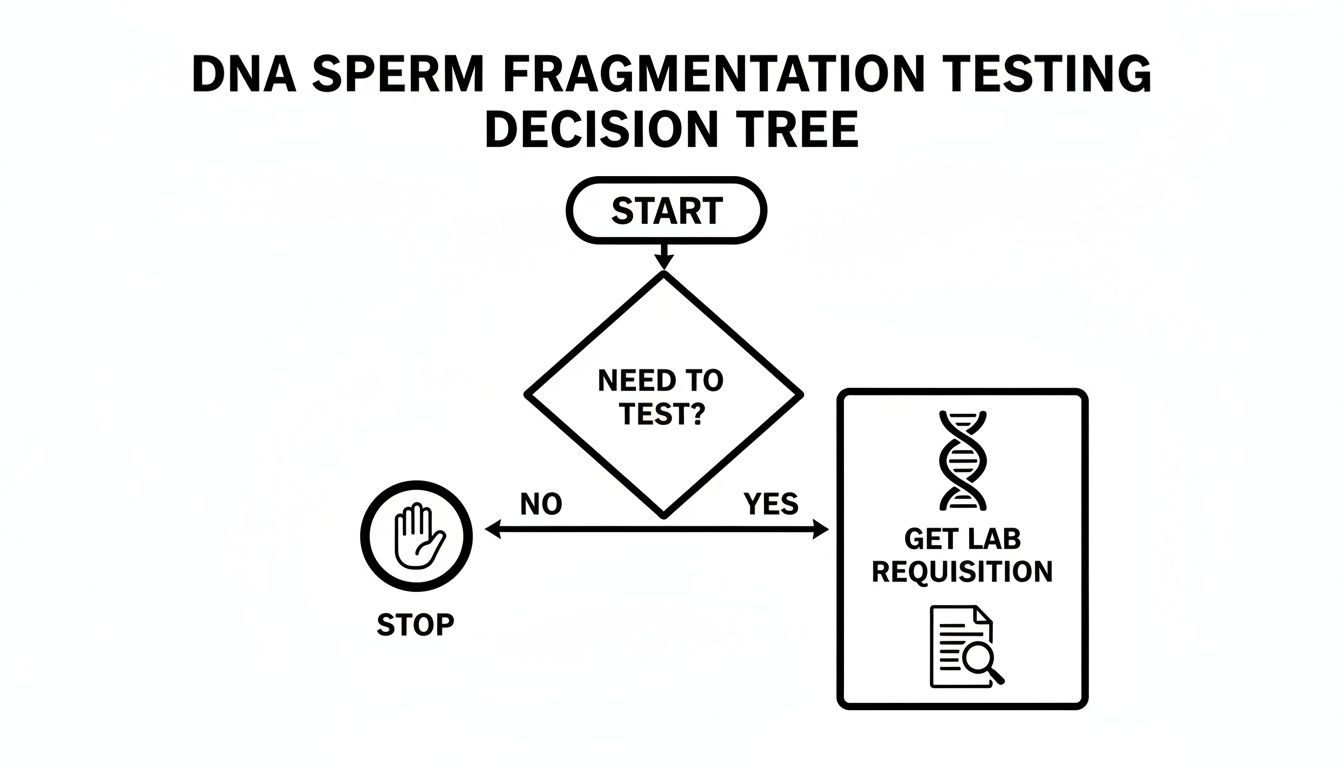
As you can see, the path starts with the decision to get tested, leading you straight to getting the lab paperwork you need to move forward.
Clinical Ranges and Their Impact on a Man's Fertility
Let's get more specific and break down what each DFI level actually means for your reproductive health. Knowing where you land helps put your results into context and sets you up for a productive chat with your fertility specialist.
Low DFI (Good Fertility Potential): A score of less than 15% is considered excellent. This means the vast majority of your sperm have intact DNA, which is linked to a high potential for natural conception.
Intermediate DFI (Fair Fertility Potential): This range, typically from 15% to 30%, points to a fair-to-good outlook. Natural conception is still very much on the table, but it might take a bit longer. This result often triggers a closer look at lifestyle factors that could be causing some of the damage.
High DFI (Poor Fertility Potential): A score above 30% indicates a significant level of sperm DNA damage. Men in this range often face bigger hurdles with natural conception and may experience a much longer time to achieve a successful conception.
It’s crucial to remember that these numbers aren't barriers. They're diagnostic tools that bring clarity and direction. A high DFI score doesn't mean the journey is over; it just means you may need a more targeted game plan.
Your DFI score is a snapshot in time. Because sperm production is a continuous cycle lasting about three months, this number can often be improved with targeted lifestyle changes and medical interventions.
This table maps out these DFI levels and what they might mean for your personal fertility journey, making the data easier to digest.
DNA Fragmentation Index (DFI) Levels and What They Mean for a Man
| DFI Level | Percentage Range | Potential Impact on Male Fertility |
|---|---|---|
| Excellent to Good | < 15% | Good Fertility Potential. Linked to a high likelihood of successful natural conception. |
| Fair to Good | 15% - 30% | Fair Fertility Potential. Natural conception is still quite possible, but may require more time. This is a good time to review lifestyle factors. |
| Poor to Fair | > 30% | Poor Fertility Potential. Often associated with significant challenges for natural conception and may call for further medical evaluation and intervention. |
Ultimately, your test results are the starting line for a conversation. They arm you with knowledge, moving you from a place of uncertainty to one of clarity. With this information, you can start digging into the root causes and build an effective plan to improve your sperm health.
What’s Causing High Sperm DNA Fragmentation?
Getting a high sperm DNA fragmentation result is a big moment. It gives you a concrete piece of the puzzle. The very next question is always, "Okay... but why?" Figuring out the root causes is everything, because that’s what allows you to build a smart, targeted plan to improve your sperm health. The best part? Many of the things that contribute to high DNA sperm fragmentation are well within your control.
At its core, damage to sperm DNA is usually caused by something called oxidative stress. The easiest way to think about it is like rust forming on metal. This "rust" happens inside your body when there's an imbalance between damaging molecules, called free radicals, and the antioxidants that are supposed to neutralize them. When free radicals win out, they can directly attack and break the delicate DNA strands packed inside your sperm.
A whole range of factors, from your daily habits to underlying medical issues, can crank up this oxidative stress and lead to DNA damage. This isn't about blame; it's about empowerment. Identifying these factors is the first and most critical step toward making a real difference.
Lifestyle and Environmental Factors You Can Actually Change
Your day-to-day choices and your environment have a massive impact on your sperm's genetic integrity. The good news is these are often the easiest areas to tackle, and the changes you make can have a surprisingly profound effect on your DFI score.
- Diet: A diet that’s low in antioxidants—the good stuff found in fruits, vegetables, and nuts—leaves your sperm defenseless against free radicals. On the flip side, a diet heavy in processed foods, unhealthy fats, and sugar actively increases oxidative stress throughout your body.
- Smoking and Vaping: This is a big one. Tobacco smoke is loaded with thousands of chemicals, including heavy metals like cadmium and lead, which are known to directly poison sperm and shatter their DNA. And no, vaping is not a safe alternative; its chemical cocktail can also cause significant harm.
- Too Much Heat: Sperm production is a delicate process that needs to happen at a temperature slightly cooler than the rest of your body—it’s the whole reason testicles are on the outside! Frequent dips in hot tubs, long sauna sessions, or even just keeping a warm laptop on your lap for hours can raise the scrotal temperature, messing up sperm development and damaging their DNA.
Don’t forget about other lifestyle players, like excessive alcohol, recreational drug use, and even chronic psychological stress. Each of these can throw your hormones out of whack and ramp up the oxidative stress that leads to fragmentation.
The Role of Age and Medical Conditions
While lifestyle is a huge piece of the puzzle, some causes of high DNA sperm fragmentation are biological or medical. Knowing about these gives you the full picture of what’s going on.
One of the most unavoidable factors is simply age. As men get older, the body's natural antioxidant defenses just aren't as robust as they used to be. The intricate process of making sperm can start to accumulate more errors over time, leading to a natural, gradual increase in DNA damage.
It's not just a theory—age and environment have a measurable impact. Studies show that a man’s DFI can climb by an average of about 2 percentage points for every decade he gets older. The data also clearly shows DFI rising not just with age, but also with smoking, alcohol use, and even waiting too long between ejaculations before giving a sample. You can learn more about the research connecting age and lifestyle to DFI.
Beyond just getting older, certain medical conditions are well-known culprits.
- Varicocele: Think of this as a varicose vein, but in the scrotum. It's one of the leading, most correctable causes of male infertility and is strongly linked to a build-up of heat and oxidative stress right where sperm are made, leading to higher DFI scores.
- Infections: Any infection in the reproductive tract, even a low-grade one you might not have symptoms for, can trigger an inflammatory response. That inflammation brings a flood of free radicals that are collateral damage to nearby sperm.
- Fever: A high fever from any illness—the flu, COVID-19, you name it—can temporarily overheat the testicles and throw a wrench in sperm production. This often causes a temporary spike in DNA fragmentation that usually resolves a few months later.
Pinpointing the specific cause—or, more often, the combination of causes—behind your high DFI is the most important thing you can do. It’s what lets you and your doctor move past the number on the page and start building a real strategy to protect and improve your sperm health from the inside out.
An Action Plan for Improving Your Sperm DNA Health

Getting a high DNA Fragmentation Index (DFI) result isn’t a dead end. Think of it as a starting point—a powerful piece of information that lets you build a proactive strategy to improve your sperm health from the inside out.
The full sperm production cycle takes about three months, so the changes you start today are a direct investment in your future fertility. The main goal is to dial down the oxidative stress that's causing all that DNA damage. The best way to do this is with a three-pronged attack: smart lifestyle adjustments, targeted nutritional support, and, if needed, addressing any underlying medical issues. The key to making it all work? Consistency.
Kickstart Key Lifestyle Adjustments
Your daily habits have a massive impact on the health of your sperm. Making a few targeted changes can create a much better environment for sperm development, which can significantly lower the risk of DNA damage.
Eat an Antioxidant-Rich Diet: Think of antioxidants as your body's personal rust-proofers. They go to work neutralizing the free radicals that cause oxidative stress. Try to load up your plate with colorful fruits and vegetables like berries, leafy greens, and bell peppers. Nuts, seeds, and whole grains are also fantastic sources.
Prioritize Quality Sleep: Your body does most of its heavy lifting and repair work while you sleep. Aiming for 7-9 hours of solid, consistent sleep each night helps regulate the hormones essential for sperm production and gives your system the downtime it needs to fight off oxidative stress.
Manage Your Stress Levels: Being chronically stressed floods your body with cortisol, a hormone that can mess with sperm production and ramp up inflammation. Finding ways to manage that stress—whether it's through exercise, meditation, or even just making time for hobbies—can make a real, tangible difference.
These adjustments are fundamental. They create a healthier internal environment where sperm can thrive without getting damaged.
Consider Targeted Supplements
While a healthy diet is the foundation, certain supplements can give you a concentrated boost of the specific nutrients known to protect sperm DNA. They act like reinforcements for your body's natural defense systems.
It’s always a good idea to chat with your doctor or a fertility specialist before starting any new supplements. They can help you figure out the right dosages and make sure there are no conflicts with other medications or health conditions you might have.
The impact of DNA sperm fragmentation on male fertility outcomes has been clearly measured. One study categorized men by their DFI score into low, medium, and high groups. Higher DFI scores were directly linked to lower conception rates, showing why taking these steps to lower your DFI can be a clinically meaningful action. To dive deeper into the data, you can explore the full study on DFI and pregnancy outcomes.
Some of the most well-researched supplements for male fertility include:
- Coenzyme Q10 (CoQ10): A powerful antioxidant that helps fuel the energy centers of sperm cells and protects them from damage.
- Vitamin C and E: These classic antioxidants work as a team to shield sperm from free radicals.
- Zinc: An essential mineral for sperm formation that has been shown to improve overall sperm quality and function.
- Selenium: Works hand-in-hand with Vitamin E to protect the structural integrity of sperm.
Making these changes can be a journey, and having the right information is key. For more detailed strategies, check out our complete guide on how to improve sperm health.
Address Underlying Medical Factors
Sometimes, lifestyle changes just aren't enough, especially if there's a medical issue contributing to high dna sperm fragmentation. Identifying and treating these root causes is a critical step for many men.
The most common culprit is a varicocele, which is basically a varicose vein in the scrotum. This condition raises scrotal temperature and oxidative stress, directly damaging sperm DNA. The good news is that a simple surgical procedure to correct the varicocele often leads to a significant drop in DFI scores.
Other issues, like infections in the reproductive tract, can also trigger inflammation and increase DNA damage. A course of antibiotics can often resolve the problem and bring your DFI back down. For a holistic approach to improving your overall health and addressing underlying factors, you might find valuable resources at specialized medical wellness clinics.
Working with a urologist or a male fertility specialist is the best way to get these conditions diagnosed and managed effectively. By combining medical treatments with positive lifestyle and supplement changes, you create a powerful, multi-faceted strategy to protect your sperm and take control of your fertility journey.
Ready to Take Control of Your Fertility Journey?
Understanding your reproductive health is the very first step toward building the future you want. As we've seen, sperm DNA fragmentation isn't just a complex scientific term—it's a critical, measurable, and often improvable piece of your fertility puzzle. It can finally provide clarity where there was once confusion and give you a real path forward.
For men ready to get answers, the process should be straightforward. Getting tested for sperm DNA fragmentation starts with a lab requisition, which can sometimes be a hurdle. Hera Fertility cuts through the red tape by providing a physician-signed lab requisition directly, empowering you to take the next step with confidence.
From Test Results to an Action Plan
Already have a lab report in hand? You're one step closer to a clear plan. Our free, secure upload tool is designed to translate that complex lab data into something you can actually use.
Just upload your existing report, and our AI-powered platform gets to work. It crunches the numbers and generates your personalized Hera SmartScore—an easy-to-understand summary of your sperm health.
But it’s more than just a score. You'll receive a detailed, actionable plan based on your unique results. This plan offers personalized recommendations and next steps, turning your lab report from a static document into a dynamic roadmap for your fertility journey.
Your Partner in Male Fertility
Our mission is to replace uncertainty with clarity. Whether you’re a man just starting to investigate sperm DNA fragmentation or you’re ready to analyze your test results, we provide the tools and support you need to move forward.
Hera Fertility is your dedicated partner in understanding and improving your reproductive health. Gaining insight into how healthcare providers develop a patient-centric digital marketing strategy in healthcare can further help in identifying services that truly prioritize patient needs and successful outcomes for improving sperm DNA health. We’re here to help you confidently advance on your path to fatherhood.
Frequently Asked Questions
When you first start digging into sperm DNA fragmentation, it's natural to have a lot of questions. Getting straight answers is the best way to feel more in control of your fertility journey. We've pulled together some of the most common questions we hear from men just like you.
Can a Man Have High DNA Fragmentation with a Normal Semen Analysis?
Yes, and this is a really important point. A standard semen analysis is a great starting point—it looks at sperm count, motility (how they swim), and morphology (their shape). But it gives a man zero information about the genetic cargo inside the sperm head.
It’s completely possible for a man to get a "normal" or even "great" report card from a basic semen analysis, while still having a high percentage of sperm with damaged DNA. This is exactly why a DFI test is such a critical next step for any man looking for the full picture of his reproductive health.
How Long Does It Realistically Take to Lower a Man's DFI Score?
Improving your DFI score is a marathon, not a sprint. The full sperm production cycle—from the earliest stages to mature sperm ready for ejaculation—takes about 72 to 90 days.
This means any positive changes you make, whether it's overhauling your diet, quitting smoking, or starting a new supplement regimen, need a solid three months to show up in your results. Think of it as a long-term investment in your health where the payoff builds over time.
A high DFI is a significant factor in male fertility, but it is rarely the only piece of the puzzle. It should be considered alongside a complete fertility evaluation for a man to understand all contributing factors.
Is a High DFI the Only Thing Holding a Man Back?
While an elevated DFI can definitely be a major hurdle for a man, it's rarely the whole story. Male fertility is a complex puzzle with many interlocking pieces. Other factors, like a man's sperm count, motility, hormone levels, and overall health, all play crucial roles.
Think of your high DFI score as a critical piece of information that was missing before. The best approach is to use this result as part of a complete fertility evaluation to finally see the full picture and build the most effective plan forward.
Take the first step toward clear answers about your reproductive health. With Hera Fertility, you can order a physician-signed lab requisition for a DNA fragmentation test or upload your existing results for an instant, AI-powered analysis and personalized action plan. Get your Hera SmartScore and start your journey with confidence today. Learn more at https://herafertility.co.
Related Resource Articles
-
A Man's Guide to the DNA Fragmentation Test
Discover what a DNA fragmentation test reveals about male fertility. Understand your results, learn how to improve sperm health, and find your next steps.
19 min read
-
Obstructive Azoospermia: Causes, Tests, and Treatments
Learn about obstructive azoospermia, a treatable cause of male infertility. Understand the signs, diagnostic tests, and modern fertility options available.
15 min read
-
Understanding the DNA Sperm Fragmentation Test vs Semen Analysis
Learn how the dna sperm fragmentation test differs from a semen analysis and which test helps you get clear fertility insights.
22 min read