How long does it take to get pregnant: A man's guide to shortening the timeline

December 29, 2025
23 min read
By Hera Fertility Team
Wondering how long does it take to get pregnant? Discover timing and practical steps to boost your odds of conceiving.

When you're trying to start a family, the question "how long does it take to get pregnant?" is often front and center. For men, the answer isn't just about waiting and hoping. The fastest way to shorten that timeline starts with one proactive step: understanding the health of your sperm. Taking charge of your side of the equation is the single most powerful strategy to influence how quickly you can start a family.

Why Male Fertility Is Half the Conception Equation

A young couple looks at a tablet displaying male fertility data and charts in a bright kitchen.

For far too long, the conversation around getting pregnant has unfairly overlooked the male contribution. The reality? Male health is just as critical. Conception is a fifty-fifty partnership, and a man’s reproductive health plays a massive role in how long it takes to conceive.

This isn't just an opinion; it's a statistical fact. Globally, one in six couples faces challenges conceiving after a year of trying, with male factors contributing to 40-50% of all cases. In the US and Canada, where Hera Fertility operates, that number is even higher—a staggering 19% of couples are unable to get pregnant after one year. You can discover more insights about these fertility statistics and why a man's early checks are so important.

The Problem with the "Wait and See" Approach

The old advice was to just "try for a year" before looking into potential issues. This passive, wait-and-see strategy is not only outdated but often leads to months of unnecessary stress and uncertainty. Why spend a year in the dark when you could have identified and started improving your sperm health from day one?

Getting a baseline semen analysis early in your journey is a game-changer. It gives you a clear roadmap and one of two powerful outcomes:

  • Peace of Mind: Confirming your sperm health is optimal allows you to move forward with confidence, knowing your side of the equation is strong.
  • An Action Plan: If you uncover areas for improvement, you get immediate, actionable steps to enhance your sperm health, which can directly shorten your time to pregnancy.

A baseline semen analysis isn't about finding problems; it's about gaining knowledge. It's the most effective first step a man can take to actively steer the conception journey in the right direction.

Understanding Your Foundational Metrics

Your ability to contribute to a successful pregnancy comes down to a few key biological factors. A comprehensive semen analysis looks at these foundational pillars of male reproductive health:

  • Sperm Count: The total number of sperm present. Think of this as the size of your team.
  • Motility: The percentage of sperm that are actively moving forward. These are the effective players who can actually reach the goal.
  • Morphology: The percentage of sperm with the correct shape and structure, which is crucial for success.

Waiting to assess these metrics is like starting a major project without checking if you have the right tools. When you understand these numbers early, you can make targeted improvements.

The timeline below shows how quickly things can get extended when sperm health isn't optimal.

How Male Fertility Impacts the Average Time to Conceive

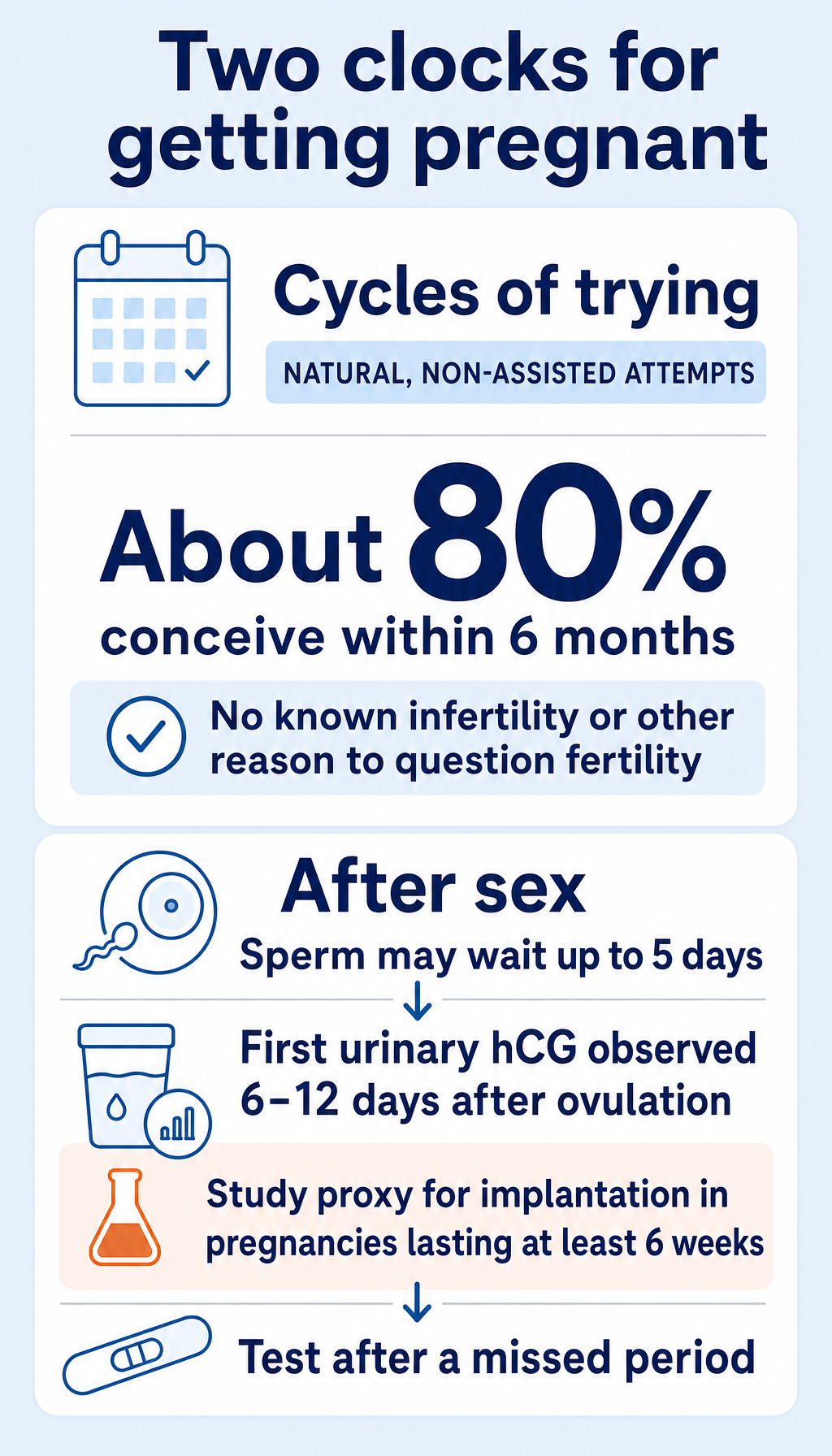
Even small deficiencies in sperm parameters can stretch out the conception timeline significantly. Here's a look at how average success rates can be affected.

Time Spent Trying Success Rate with Optimal Sperm How Poor Sperm Health Can Extend Timelines
Within 3 Months ~60% of couples conceive Mild issues with count or motility might mean only 30-40% of couples succeed in this timeframe.
Within 6 Months ~75% of couples conceive The gap widens. With suboptimal sperm, this can drop to 50-60%, doubling the wait time for many.
Within 12 Months ~85-90% of couples conceive For couples with significant male factor issues, less than 50% might conceive without intervention.
After 12 Months Remaining 10-15% Most couples still trying will have an identifiable cause, with male factors being a primary contributor.

As you can see, what might take a few months could easily stretch to a year or more when sperm health is a limiting factor.

Since it takes about three months to generate new sperm, getting tested early and then re-testing every three months is the best way to track your progress and see the direct results of your positive lifestyle changes. This proactive cycle of testing and improving is the modern, efficient path to shortening your conception timeline.

Decoding the Three Pillars of Sperm Health

When a lab looks at a semen sample, they’re not just counting sperm. They’re evaluating a highly specialized team where every player has a critical job. Think of it like a sophisticated delivery service: to succeed, you need enough drivers, they need to know how to get to the destination, and they have to be carrying the right package.

That's exactly what a semen analysis measures. It breaks down the complex process into three core pillars of sperm health. Getting a handle on these metrics is the first, most crucial step for any man looking to shorten the time it takes to get pregnant.

Sperm Count: The Size of Your Workforce

Sperm count, or concentration, is the metric everyone’s heard of. It’s a straightforward measurement of how many million sperm are packed into each milliliter of semen. Imagine you’re trying to win a massive lottery. The more tickets you have, the better your odds. A higher sperm count is just like having more tickets in the game.

The World Health Organization (WHO) considers 15 million sperm per milliliter to be the lower end of the normal range. While it's certainly possible to conceive with fewer, having a robust workforce significantly boosts your chances of success. It's a numbers game, plain and simple—the more sperm available, the higher the likelihood that one will complete its incredible journey.

Sperm Motility: The Effectiveness of Your Team

Having a massive team doesn't mean much if they can't get where they need to go. This is where sperm motility comes in. This metric measures the percentage of sperm that are actively moving, specifically those swimming forward with purpose. These are your MVPs.

Think of it this way: your sperm count is the total number of players on the field. Motility tells you what percentage of those players are actually running toward the goal. The rest might be spinning in circles or just standing still, making them totally ineffective. A higher motility percentage means you have a much more efficient and capable team.

The benchmark for normal motility is 40% or more of sperm showing movement, with a special focus on progressive motility (the forward swimmers). When this number is low, your sperm count could be sky-high and it wouldn't matter. If the sperm can't travel effectively, the road to conception gets a lot longer.

Sperm Morphology: The Quality of the Work

Finally, sperm morphology is all about shape and structure. For a sperm to do its job, it needs a very specific build: an oval head, a stable midpiece, and a long, powerful tail. This precise design isn't for looks—it's entirely functional, ensuring the sperm has the right tools for the job once it arrives.

Going back to our delivery service analogy, morphology is the quality control check. Does the driver have the right key to unlock the door? A sperm with a normal shape is equipped with the correct biological "key" for fertilization.

The clinical benchmark for normal forms is surprisingly low—only 4% or more of sperm need to be perfectly shaped to fall within the normal range. Anything less can be a major hurdle. These three pillars—count, motility, and morphology—all work together. A weakness in one can throw the entire process off balance. A man's sperm quality is a huge factor in the odds of conception, and poor numbers in any of these areas can easily double the time it takes to get pregnant.

Simply put, you need enough sperm (count), they need to be strong swimmers (motility), and they need to have the right shape for the job (morphology). A problem in any one of these areas is a primary reason why the answer to "how long does it take to get pregnant" can stretch from a few months into years.

Understanding these metrics isn't just about reading a lab report; it's about getting a clear, honest picture of your reproductive health. This knowledge empowers you to make targeted changes. For example, hormonal balance is a key driver of sperm production. Getting a deeper insight into the active testosterone available in your body by understanding your Free Androgen Index can be a critical piece of the puzzle.

By getting a baseline analysis early on, you can see exactly which pillar needs support. From there, you can track your progress. Testing every three months—which aligns with the natural sperm production cycle—allows you to see the real impact of positive lifestyle changes. This proactive approach turns passive waiting into active working, giving you the power to improve your sperm health and shorten your path to fatherhood.

Why an Early Semen Analysis Is Your Best First Step

The old advice to "just keep trying for a year" is one of the biggest roadblocks on the path to parenthood for men. This passive approach can lead to months of unnecessary frustration and leaves men completely in the dark about their own reproductive health. The smarter, more modern strategy is to take control right from the start.

Forget waiting. An early semen analysis is the single most powerful first step a man can take to shorten the time it takes to get pregnant. This simple test provides a priceless roadmap, giving you one of two outcomes: immediate peace of mind that your sperm are good to go, or a clear action plan that pinpoints specific areas for improvement.

The Power of a Proactive Baseline

Think of it like getting your car checked out before you leave for a long road trip. You wouldn't just start driving and hope for the best; you’d want to know if your engine, tires, and fluids are in good shape. A semen analysis does the exact same thing for your fertility.

This proactive step removes all the guesswork. Instead of wondering for months if a male factor is causing delays, you get answers immediately. That knowledge is empowering. It lets you focus your efforts where they’ll actually make a difference, saving you time and a whole lot of emotional strain.

Getting tested early isn’t about expecting a problem—it’s about being strategic. It’s the difference between navigating with a GPS and driving blindfolded.

The image below breaks down the three pillars of sperm health that a semen analysis evaluates. These are the absolute foundations of your fertility.

A black and white timeline illustrating sperm health pillars: count, motility, and morphology, across years 2023-2025.

This visual shows that sperm count, motility (how they swim), and morphology (their shape) are the core components determining a man's contribution to starting a family.

Tracking Progress with the Sperm Production Cycle

One of the best reasons for early testing is the sperm production cycle. Your body is constantly manufacturing new sperm in a process that takes roughly 74 days—just under three months. This biological timeline is a game-changer for any man looking to improve his fertility.

What this means is that the lifestyle choices you make today—improving your diet, cutting back on stress, quitting smoking—can directly lead to a healthier "batch" of sperm in about three months' time. It creates a powerful feedback loop:

  1. Get a Baseline: Do an initial semen analysis to see where you're starting from.
  2. Make Improvements: Start making positive lifestyle changes based on your results.
  3. Retest in 3 Months: Get a follow-up test to see the direct impact of your efforts.

This cycle of testing and improving transforms the passive waiting game into an active, data-driven strategy. You get to see tangible progress and fine-tune your approach, giving you far more control over the entire process.

Overcoming the Barriers to Testing

In the past, getting a semen analysis could feel clinical, inconvenient, and even a little intimidating. Luckily, that’s just not the case anymore. Modern services have torn down those old barriers, making male fertility testing private, easy, and accessible from day one of your journey.

Platforms like Hera Fertility make it simple to get a physician-ordered analysis at a certified lab near you, entirely on your own schedule. There are no awkward conversations or long waits for a specialist appointment. You can take the first step in minutes, right from the privacy of your home.

When testing is this easy, there's absolutely no reason to wait a year to get the critical information that could help you build your family faster.

Actionable Steps to Boost Your Sperm Health

Flat lay of running shoes, almonds, water bottle, and sleep mask promoting 'BOOST SPERM HEALTH'.

Understanding your semen analysis results is the first step, but the next step is where the real power lies: taking action. The great news for men is that you have a remarkable amount of control over your reproductive health. Since your body is constantly producing new sperm—a full cycle takes about three months—the positive changes you make today can have a direct, measurable impact on your fertility in the very near future.

This isn’t about a complete life overhaul. It's about making smart, targeted adjustments to your daily habits that work together to create an optimal environment for sperm production. Simple, consistent changes can significantly improve your sperm count, motility, and morphology, helping you and your partner get pregnant faster.

Fuel Your Body for Fertility

Think of your diet as the raw material for your future family. What you eat directly impacts the quality of the building blocks your body uses to produce sperm. Prioritizing certain nutrients can give your reproductive system a powerful boost.

Start by loading up on foods rich in antioxidants, which act like bodyguards for your sperm, protecting them from cellular damage.

  • Add Walnuts: Just a handful a day has been shown to improve sperm vitality.
  • Eat Berries and Leafy Greens: Blueberries, strawberries, and spinach are packed with protective compounds.
  • Incorporate Zinc-Rich Foods: Oysters, beef, and pumpkin seeds are excellent sources of zinc, a mineral absolutely essential for sperm formation.
  • Choose Healthy Fats: Foods like avocados and olive oil help support overall hormonal health, which is crucial for sperm production.

Making small swaps—like adding a side of steamed spinach to your dinner or snacking on almonds instead of chips—can make a huge difference over a single sperm production cycle.

A well-balanced diet isn't just good for your general health; it's a foundational strategy for improving sperm quality. Every meal is an opportunity to provide your body with the nutrients it needs to build a stronger, healthier team.

Find the Right Balance with Physical Activity

Regular exercise is fantastic for male fertility. It helps manage weight, slash stress, and improve circulation—all of which contribute to better sperm health. The key, however, is balance. Going too hard can actually have the opposite effect.

Overtraining, especially in activities that generate a lot of heat near the scrotum (like long-distance cycling), can put a damper on sperm production. The goal is moderate, consistent activity.

  • Swap Intense Daily Workouts for Moderate Jogs: Aim for 30-45 minutes of moderate cardio, like jogging or brisk walking, 3-5 times per week.
  • Incorporate Strength Training: Lifting weights can help boost testosterone levels, which is a big win for sperm health.
  • Listen to Your Body: Avoid pushing yourself to the point of exhaustion. Rest and recovery are just as important as the workout itself.

By finding a sustainable exercise routine, you get all the benefits for your sperm health without the risks of overdoing it.

Master Your Lifestyle Factors

Beyond diet and exercise, several daily habits play a major role in your reproductive health. Managing these factors can be one of the quickest ways to see improvements in your semen analysis results. For an even deeper dive, our guide offers additional tips to improve sperm health.

Heat is a known enemy of sperm production. There's a reason your scrotum is designed to keep the testicles slightly cooler than the rest of your body.

  • Limit Hot Tubs and Saunas: Frequent exposure to high temperatures can temporarily knock down your sperm count.
  • Take Breaks from Sitting: If you have a desk job, get up and walk around every hour to improve circulation and reduce heat buildup.
  • Keep Laptops Off Your Lap: Always place your laptop on a desk or table to avoid beaming heat directly where you don't want it.

Stress and sleep are also critically important. Chronic stress can throw the hormones needed for sperm production out of whack, while poor sleep disrupts your entire system.

On top of physical wellness, practices like mindfulness, meditation, and mindset training can significantly reduce stress, a known factor that can lengthen conception time. Make sure you're getting 7-8 hours of quality sleep per night, which allows your body to regulate hormones and repair itself. A simple change like putting screens away an hour before bed can make a world of difference.

Here’s a practical way to pull all these recommendations together. Think of the next three months—one full sperm production cycle—as your window of opportunity to make a real difference.

Your 3-Month Sperm Health Improvement Plan

Lifestyle Change Key Action Potential Impact on Sperm Health
Dietary Upgrade Add a daily handful of walnuts and 2-3 weekly servings of leafy greens or berries. Increases antioxidant protection, potentially improving morphology and motility.
Moderate Exercise Aim for 3-5 sessions of 30-minute moderate cardio (jogging, brisk walking) per week. Boosts circulation and testosterone, which supports overall sperm production.
Heat Reduction Skip hot tubs and saunas; keep your laptop off your lap. Helps maintain optimal testicular temperature, potentially increasing sperm count.
Stress Management Dedicate 10 minutes daily to mindfulness or deep breathing exercises. Lowers cortisol levels, which can help balance hormones needed for sperm creation.
Sleep Prioritization Target 7-8 hours of quality sleep per night by setting a consistent bedtime. Supports hormone regulation and cellular repair, crucial for healthy sperm.

Committing to these changes for just one cycle can lead to noticeable improvements in your next semen analysis. It's a proactive, powerful way to take control of your fertility journey.

Translating Lab Results into a Clear Action Plan

Getting a standard semen analysis report can feel overwhelming. You’re handed a page packed with medical terms and numbers—concentration, motility, morphology—that often create more questions than answers. You might see your numbers, but what do they actually mean for your goal of starting a family?

This is where the real value of a modern approach to male fertility testing comes in. The point isn’t just to get raw data; it’s to turn that data into a clear, straightforward path forward. You need to know not just what the numbers are, but what to do about them. Taking this crucial step can help shorten the time it takes to get pregnant.

From Complex Data to a Single Score

Think about your fertility like a credit score. A credit report is filled with dozens of data points—payment history, credit utilization, length of history—that can be confusing on their own. But all that information gets boiled down into a single, easy-to-understand score that tells you exactly where you stand.

That’s the exact approach platforms like Hera Fertility take. Advanced analysis tools process all the complex metrics from your lab report and translate them into one simple, intuitive Hera SmartScore.

The SmartScore is your fertility snapshot. It cuts through the clinical jargon to give you an immediate understanding of your overall sperm health, making it clear whether you're in a great position or have specific areas to focus on.

Instead of trying to piece together multiple percentages and figures, you get one number that tells the whole story. This kind of clarity is essential for taking confident next steps.

Your Personalized Roadmap to Improvement

The SmartScore is much more than just a number—it’s the foundation for your personalized action plan. Based on your specific results, the system generates targeted recommendations designed to address your unique areas for improvement. This turns a diagnostic report into a strategic guide.

For example, if your score is being held back by low motility, your action plan won't be a generic list of health tips. It will provide specific, evidence-based steps known to support sperm movement, such as:

  • Nutritional Advice: Focusing on foods rich in antioxidants and L-carnitine.
  • Lifestyle Adjustments: Recommending moderate exercise to boost circulation without causing overheating.
  • Supplement Guidance: Suggesting specific vitamins and minerals that play a key role in sperm energy production.

This level of personalization ensures you’re not wasting time on strategies that don't apply to you. Instead, you can focus your energy precisely where it will have the biggest impact. Getting a handle on the metrics behind the score is also empowering, and you can learn more about how to read semen analysis results in our detailed guide.

The Power of Knowing What to Do Next

Ultimately, getting tested is about gaining intelligence you can act on. Platforms like Hera Fertility make this simple. Using AI-powered analysis from CLIA-certified labs, they deliver your SmartScore and action plan in minutes, helping you optimize your fertility before delays turn into years of frustration.

This approach is especially powerful because it aligns perfectly with the male reproductive cycle. Since your body produces a fresh supply of sperm approximately every three months, you have a recurring opportunity to see real progress. By following your personalized action plan and re-testing every three months, you can track the improvements in your SmartScore and see tangible proof that your efforts are paying off.

This data-driven cycle of testing, acting, and re-evaluating is the most effective way for men to take control of their fertility and actively work to shorten the time it takes to get pregnant.

Got Questions About Male Fertility? We’ve Got Answers.

When you start digging into male fertility, a lot of questions pop up. It’s a world filled with myths and misconceptions, but getting clear, straight-up answers is the first step toward feeling confident and making smart decisions. Let’s tackle some of the most common things men wonder about their reproductive health.

Does My Age Really Affect My Fertility?

Yes, absolutely. While some may think a man's fertility lasts forever, age does play a role. The decline is just more gradual. After a man hits 40, things can start to change—sperm count might drop, motility can slow down, and the rate of DNA damage within the sperm often creeps up.

These changes don't mean you can't become a father, but they can definitely stretch out the timeline for getting pregnant. This is exactly why getting a baseline fertility check earlier in your life is such a good move, even if kids aren't on the immediate horizon. It gives you a clear picture of your reproductive potential.

I Already Have a Kid. Doesn't That Mean I'm Still Fertile?

Not necessarily. Fathering a child in the past is no guarantee that your fertility is the same today. This situation is actually common enough to have a name: "secondary infertility." A man's reproductive health isn't static; it can change quite a bit over the years.

Think about what might be different since you last conceived. Plenty of things can impact your current sperm health, including:

  • Age-related changes that have occurred since your last child was born.
  • Lifestyle shifts, like changes in diet, exercise habits, or stress levels.
  • New health conditions that may have popped up over time.
  • Environmental exposures you might not have had before.

A semen analysis from a few years ago is just a snapshot of the past. To understand your fertility now and how it might affect your current timeline, a new analysis is the only way to know for sure.

Can I *Really* Improve My Sperm Health in Just Three Months?

You bet. This is one of the most empowering aspects of male fertility. The entire cycle of sperm production—from a tiny cell to a fully mature sperm—takes about 74 days. That’s a little over two months, but we round up to three to be safe. This constant regeneration cycle means you always have an opportunity to make improvements.

Positive changes you make today—cleaning up your diet, quitting smoking, cutting back on hot tubs, or managing stress—can have a direct impact on the quality of the sperm your body is making right now. This is why re-testing every three months can be such a powerful strategy. It lets you track your progress and see the real-world results of your hard work.

How Does an At-Home Sperm Test Compare to a Real Lab Analysis?

While some of those mail-in kits can give you a rough headcount of your sperm, they don’t tell the whole story. A comprehensive clinical semen analysis, done at a CLIA-certified lab, is the gold standard for a reason. It’s the difference between guessing and knowing.

A full lab analysis gives you the critical data points that actually determine fertility, including:

  • Sperm Motility: What percentage of your sperm are strong swimmers moving forward?
  • Sperm Morphology: What percentage have the normal shape needed for fertilization?
  • Total Volume and Concentration: A precise measurement of your overall sperm count.

These details are vital for understanding your reproductive health and are things the simpler at-home options just can't measure accurately. If you want reliable, actionable results that can guide your journey to natural conception, a physician-ordered, lab-based analysis is always the way to go.


Ready to stop guessing and get a clear picture of your sperm health? Hera Fertility makes it easy to order a physician-backed semen analysis at a certified lab near you. We'll translate your results into an easy-to-understand SmartScore and give you a personalized action plan to help you reach your family goals faster.

Get Your Semen Analysis Today