Figuring out the cost of male fertility testing is a smart first step for any man thinking about his reproductive health. A basic test, called a semen analysis, will typically run you between $200 and $500 out-of-pocket in the USA and Canada.
Just keep in mind, that price usually just covers the lab work itself—not the doctor's consultation or any more advanced tests you might need down the line.
Breaking Down The Cost Of Male Fertility Testing

Let's be real: no one likes surprise bills. Getting a clear picture of the typical expenses for male fertility testing helps you plan ahead and make decisions without feeling blindsided. The foundational test, and the one you'll almost always start with, is the semen analysis.
This one test gives your doctor a massive amount of information about your sperm health, which is why it’s the go-to starting point for any male fertility evaluation.
What Does The Initial Price Include?
That $200 to $500 price tag for a basic semen analysis gets you the core numbers. But if you need more advanced diagnostics, like a DNA fragmentation test, the total cost can easily jump over $1,000. You can find more details on the male infertility market and its associated costs if you want to dig deeper.
Where you get the test done also makes a big difference. A specialized fertility clinic will almost always have a different price list than a general hospital lab.
Getting a handle on this baseline cost empowers you to ask the right questions and compare your options. It turns what can feel like a confusing process into something you can actually manage.
To give you a clearer idea of how these costs can vary, here's a quick look at the typical price ranges you might see at different types of facilities.
At-a-Glance Cost For Male Fertility Tests
This table breaks down what you can generally expect to pay out-of-pocket for a semen analysis, depending on where you go.
| Testing Location / Service | Typical Out-of-Pocket Cost Range (USD) | Key Considerations |
|---|---|---|
| Fertility Clinic | $250 - $600+ | Highest cost, but offers specialized expertise and comprehensive, on-site services. |
| General Hospital Lab | $150 - $400 | More likely to be covered by insurance, but may have less specialized andrologists. |
| At-Home Collection Kit | $100 - $300 | Convenient and private, but results can be less comprehensive than a clinical analysis. |
| Post-Vasectomy Verification | $50 - $150 | Cheapest option, as it only checks for the presence or absence of sperm, not quality. |
Remember, these are just ballpark figures. The final cost will depend on your location, specific lab, and whether you need any follow-up tests. It always pays to call ahead and ask for a detailed price breakdown. As a next step, consider calling two local labs to compare pricing.
What Really Influences The Price Of A Sperm Test
The final bill for a sperm test is rarely a single, simple number. It's more of a puzzle, with several different pieces clicking together to determine the total cost. Understanding what those pieces are is the key to avoiding surprises and knowing exactly what you’re paying for.
Think of it like buying a car. You have the base model—the standard semen analysis—which is effective and gives you the essentials. But just like adding premium features bumps up the sticker price, adding more detailed diagnostics will increase the cost of your fertility workup.
Basic Analysis vs. Advanced Diagnostics
The basic semen analysis is the foundational test for male reproductive health. It’s the first step for a reason. It measures the three most critical factors: sperm count, motility (how well they swim), and morphology (their shape). For many men, this test provides a powerful and perfectly sufficient overview of their fertility status.
But sometimes, your doctor might recommend digging a little deeper based on your health history or initial results. That’s where advanced diagnostics come in. These are specialized tests that investigate specific sperm functions beyond the basics.
A couple of key examples include:
- Sperm DNA Fragmentation Test: This isn't about count or shape; it's about the quality of the genetic material inside the sperm. A high level of DNA damage can affect fertility potential. It's a much more complex analysis, and that's reflected in the higher price tag.
- Detailed Morphology Analysis: While a basic test looks at shape, a super-detailed analysis (like a Kruger Strict Morphology test) uses very precise criteria to grade sperm. This requires a highly trained expert to spend significant time examining the sample, which adds to the lab fees.
Each of these add-ons provides more data, but they also contribute to a higher final bill. Your actionable next step is to discuss with a healthcare provider if these advanced tests are necessary for you.
Overlooked Costs That Add Up
It's not just the type of analysis that determines the cost. Several other charges often appear on the final bill, and being aware of them helps you budget more accurately.
One of the most common is the physician consultation fee. Before you can even get an order for the lab, you typically need to see a doctor or a specialist, and that visit is its own separate charge. On top of that, the lab itself has its own processing and analysis fees to cover the work of the technicians and embryologists who handle your sample.
The total cost isn't just the test itself, but a combination of the specific analysis, professional consultations, and lab service charges required to get a complete and accurate picture of your fertility.
Finally, don't forget about repeat testing. A single test is just a snapshot in time, and sperm health can fluctuate due to stress, illness, or even a few nights of bad sleep. It’s very common for doctors to order a second analysis a few weeks or months later to confirm the initial findings. This means you might need to budget for the cost of two tests, not just one, to get a reliable baseline.
Comparing Your Options: Clinic Test vs. At-Home Collection
When you’re ready to get your sperm tested, you’ve got a few paths to choose from. It really boils down to balancing cost, convenience, and how much detail you actually need. Let's break down the key differences between going to a traditional fertility clinic and using an at-home collection kit, so you can figure out what makes the most sense for you.
A visit to a fertility clinic is the most comprehensive route you can take. In a formal medical setting, a trained andrologist performs a deep-dive semen analysis, looking at everything from sperm count and motility to morphology (their shape and size). This is the gold standard for accuracy, but it's also the priciest and least flexible option—you'll have to schedule an appointment and produce a sample on-site, which isn't exactly comfortable for every man.
Then you have at-home collection kits. These offer a huge advantage in convenience and privacy. You simply collect your sample in the comfort of your own home and mail it off to a certified lab. For many men, this is a much more approachable and affordable first step to understanding their reproductive health.
Weighing The Pros and Cons
So, which way should you go? It all depends on your goals. Are you trying to get a complete diagnostic picture to take to a fertility specialist, or are you just looking for a private, convenient way to get a baseline reading on your health?
The male fertility space is growing, but the cost—often ranging from $250 to $600 for a full workup—is still a major consideration for most men. This decision tree below does a great job of showing how the final price tag gets built, layer by layer.
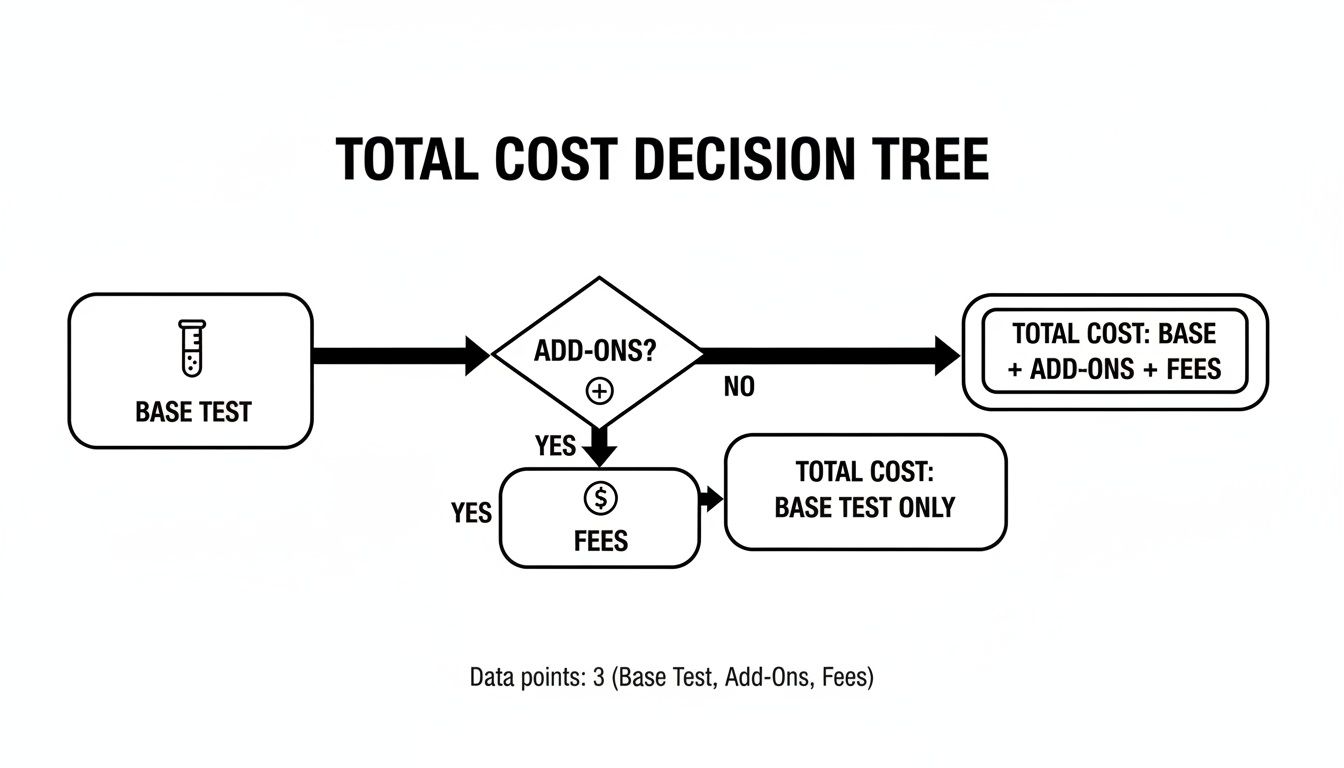
As you can see, you start with the base test, and then add-ons and various fees start to stack up, determining your final out-of-pocket cost.
A Look at Your Testing Choices
To make it even clearer, here’s a side-by-side comparison of the most common ways to get a semen analysis.
Male Fertility Testing Options Compared
| Feature | Fertility Clinic | At-Home Collection Kit | Post-Vasectomy Test |
|---|---|---|---|
| Primary Use | Comprehensive diagnostic for fertility issues. | Baseline fertility screening, initial check-up. | Confirms absence of sperm after vasectomy. |
| Cost Range | $250 - $600+ | $79 - $250 | $50 - $150 |
| Convenience | Low - Requires appointment, on-site sample. | High - Collect at home, mail-in. | High - Often an at-home mail-in kit. |
| Parameters Tested | Full panel (count, motility, morphology, etc.). | Key parameters (count, motility, volume). | Simple presence/absence of sperm. |
| Best For | Men with known or suspected fertility issues. | Men seeking initial insights with privacy. | Men needing to confirm vasectomy success. |
Each option has its place. The key is matching the test to your specific need without overpaying for information you don't require.
Finding The Right Fit for You
The best choice is one that balances reliability with practicality. A clinic gives you direct access to specialists, but at-home collection completely removes the stress and awkward scheduling of a clinic visit. It's worth noting that many at-home kits partner with the very same CLIA-certified labs that clinics use, so you're still getting a clinically valid result.
Services like Hera Fertility are designed to bridge this gap. We help you find a convenient, certified lab near you so you can get professional-grade testing without the full, expensive clinic experience.
Finally, there's a third, very specific option: the post-vasectomy test. This is a much simpler and cheaper analysis designed for one purpose only—to confirm that there are zero sperm left after your procedure. It doesn't tell you anything about sperm health, making it the wrong choice for a fertility check-up, but it's perfect for its intended job. Ultimately, choosing the right test starts with knowing exactly what you need to find out.
Navigating Insurance Coverage And Hidden Fees
The financial side of male fertility testing can feel like a maze, especially once you bring insurance into the picture. Let’s be honest: coverage for men's reproductive health is often inconsistent, and that means many men end up paying for a big chunk of the male fertility testing cost out-of-pocket.
This often happens because many insurance plans don’t consider these tests "essential" unless there’s already a specific medical diagnosis on the books.
This uncertainty makes it critical to get ahead of the game. Before you schedule anything, your first move should be calling your insurance provider directly to understand exactly what your benefits are. Going in with the right questions can save you from a major headache—and a surprise bill—down the road.
Questions To Ask Your Insurance Provider
When you get a representative on the phone, don’t just ask if “fertility testing” is covered. That’s too vague. You need to be specific to get clear, actionable answers.
- Does my plan cover diagnostic testing for male infertility?
- Is a semen analysis—and you can even mention the billing code 89320—a covered benefit under my plan?
- Are the initial consultation and any follow-up appointments with a specialist covered?
- What percentage of the cost will I be responsible for after my deductible is met?
To get a real handle on your upfront costs, you have to understand what a health insurance deductible means and how it works with your specific plan. Knowing that number is key to budgeting for what you’ll actually have to pay before your benefits start to help out. Your next step is to make that call before booking your appointment.
Uncovering Common Hidden Costs
Beyond the main lab fee, a few other charges can sneak in and inflate the final price. These “hidden” costs often catch people by surprise, turning what seemed like an affordable test into a financial strain. Knowing what to look for allows you to ask for a complete, all-in cost breakdown from the clinic or lab beforehand.
The male infertility market is growing, and with semen analysis costs averaging $300-$700 in major markets, that price tag is often just the starting point. You can get a better sense of these trends and discover insights into the male infertility market.
Remember, the advertised price for a semen analysis rarely includes the separate fees for the initial doctor’s consultation required to get the lab order or the follow-up appointment to discuss your results.
These appointments can easily add another $100 to $300 each to your total bill. By asking for an all-inclusive quote that covers every single step—from the first chat with the doctor to getting your results—you put yourself in control and can manage the expenses without any last-minute financial shocks.
How Modern Platforms Can Lower Your Testing Costs

Technology is finally making clinical-grade men's health testing more affordable and a whole lot less complicated. Modern health platforms are knocking down the cost barriers that have kept many men from getting a clear picture of their fertility. By redesigning the process from the ground up, these services cut out unnecessary expenses and put you back in the driver's seat.
One of the biggest game-changers is how you get the lab order in the first place. Instead of booking (and paying for) a separate doctor's appointment just for a signature on a form, these platforms provide a physician-signed requisition online. That one simple step can save you over $100 and hours of your time right out of the gate.
Streamlining Access to Certified Labs
Once you have your requisition, the next step is finding a reliable lab. Health platforms take the guesswork out of this by partnering with a pre-vetted network of certified labs. No more calling around town comparing prices and services—you can easily find a qualified spot near you.
This guarantees you get a high-quality, clinically accurate test without the steep overhead costs of a full-service fertility clinic.
It’s the best of both worlds: the affordability of going directly to a lab combined with the clinical standards you need for a trustworthy diagnosis. You can see how this model works by checking out a transparent breakdown of Hera Fertility’s pricing.
The Power of AI-Powered Analysis
Maybe the biggest value comes after you’ve provided your sample. Traditionally, you’d have to book another expensive follow-up with a specialist to make sense of your lab report. That appointment alone can tack on another $200-$400 to your total bill.
This is where modern platforms really shine, using AI-powered analysis to translate your results. The tech crunches all the raw lab data—sperm count, motility, morphology, and other key metrics—and turns it into a simple, easy-to-understand score and a personalized report.
Instead of just getting a page full of confusing numbers, you receive clear insights into what your results actually mean for your reproductive health. It’s the kind of clarity that used to require an expensive specialist visit, now delivered right to your screen.
This intelligent interpretation is a huge advantage. Here’s why:
- Immediate Clarity: No more waiting weeks for a follow-up appointment to find out what your results mean.
- Actionable Next Steps: The report gives you personalized suggestions based on your specific numbers, so you know exactly what to do next.
- Significant Cost Savings: By cutting out the need for that separate interpretation appointment, you keep hundreds of dollars in your pocket.
Some platforms even let you upload an existing lab report for a free AI-powered analysis. This is a great way to get a second opinion on your results at no extra cost, putting more knowledge and control right where it belongs—with you.
Your Questions About Fertility Testing Costs, Answered
As you get closer to taking the next step, it's natural to have a few final questions pop up, especially about costs and logistics. Getting straight answers helps you move forward with confidence. We've got you covered.
Think of this as the final check-in. You know the price ranges, what drives them, and how to handle the financial side. Let's clear up these common questions so you feel completely ready.
Is a Basic Semen Analysis Enough to Understand My Fertility?
For the vast majority of men, a basic semen analysis is the perfect place to start. It’s the foundational test for a reason, measuring the three metrics that matter most: sperm count (the number of sperm), motility (how well they swim), and morphology (their shape). These numbers give you a solid, initial snapshot of your reproductive health.
If that first test flags any major issues, your doctor might suggest more advanced—and pricier—tests down the line. But jumping straight to complex diagnostics isn't necessary for most guys. Starting with a standard, clinically-validated semen analysis is the smartest, most cost-effective first move. It delivers the essential data you need to figure out what comes next.
Why Do I Need a Doctor's Requisition for a Sperm Test?
A doctor’s requisition, also known as a lab order, is the key that unlocks a legitimate, clinical-grade test. It ensures your sample is analyzed at a CLIA-certified lab, which has to meet strict federal standards for quality and accuracy. Without that official order, any results you get are considered a "screening" at best—they can't be used by a doctor to make a real diagnosis or recommend treatment.
This is what separates a casual wellness check from a true medical diagnostic. Modern platforms have figured out how to make this seamless by having physicians issue requisitions online. You get the convenience of an at-home process but the clinical reliability of a test performed at the same high-quality labs used by top fertility clinics.
Can I Use My HSA or FSA for Male Fertility Testing?
Yes, absolutely. In nearly all cases, you can use funds from your Health Savings Account (HSA) or Flexible Spending Account (FSA) for male fertility testing. A semen analysis is considered a qualified medical expense, meaning you can pay for it with pre-tax dollars. This is a simple, practical way to significantly lower your out-of-pocket male fertility testing cost.
To be 100% sure, it's always a good idea to give your HSA/FSA administrator a quick call to confirm. Make sure to hang on to your receipts, especially the physician's requisition and the final lab invoice, for your records.
This is a real, actionable step you can take right now to save money. Before you book anything, that quick phone call can clear up any questions and help you plan your payment.
How Can I Get a Second Opinion on My Results Without Another Consultation Fee?
Getting clarity on your report is critical, but booking—and paying for—multiple specialist appointments can get expensive fast. This is where newer health platforms offer incredible value. Some services now allow you to upload an existing semen analysis report you received from any certified lab.
Their systems, often powered by AI, can re-analyze your data and give you a fresh, data-driven interpretation of your results, sometimes for free. This is a game-changer for getting a second perspective without the cost or long wait times of another appointment. It puts you back in the driver's seat, giving you the information to better understand your health and have more productive conversations with your doctor.
At Hera Fertility, we make understanding your reproductive health straightforward and affordable. Get a physician-signed lab order in minutes, find a certified lab near you, and receive an easy-to-understand AI-powered report that gives you clear next steps. Take control of your fertility journey today by visiting https://herafertility.co.