When you're trying to figure out your fertility, the numbers on a semen analysis report can feel a little intimidating. One of the biggest questions men ask is: what’s a normal sperm count?
Generally, a normal sperm count falls in the range of 15 million to over 200 million sperm per milliliter (mL) of semen. If a man's count dips below 15 million per mL, it's typically considered low.
What Is a Normal Sperm Count?
Let's break down what those numbers on your semen analysis really mean. It's helpful to think of them not as a simple pass/fail grade, but as key data points that paint a picture of a man's reproductive health. The two most fundamental metrics to understand are sperm concentration and total sperm count.
Sperm Concentration vs. Total Count
Sperm concentration is all about density. Imagine you're looking at a crowd—concentration tells you how many people are packed into one specific area. For sperm, it’s the number of sperm found in a single milliliter of semen. A healthy, dense crowd means more potential.
Total sperm count, on the other hand, gives you the big picture. It’s the total number of sperm in the entire sample. The lab calculates this by multiplying your sperm concentration by the total volume of semen you provided. This number reflects your overall sperm production.
Here’s a quick visual that puts the baseline numbers into perspective.
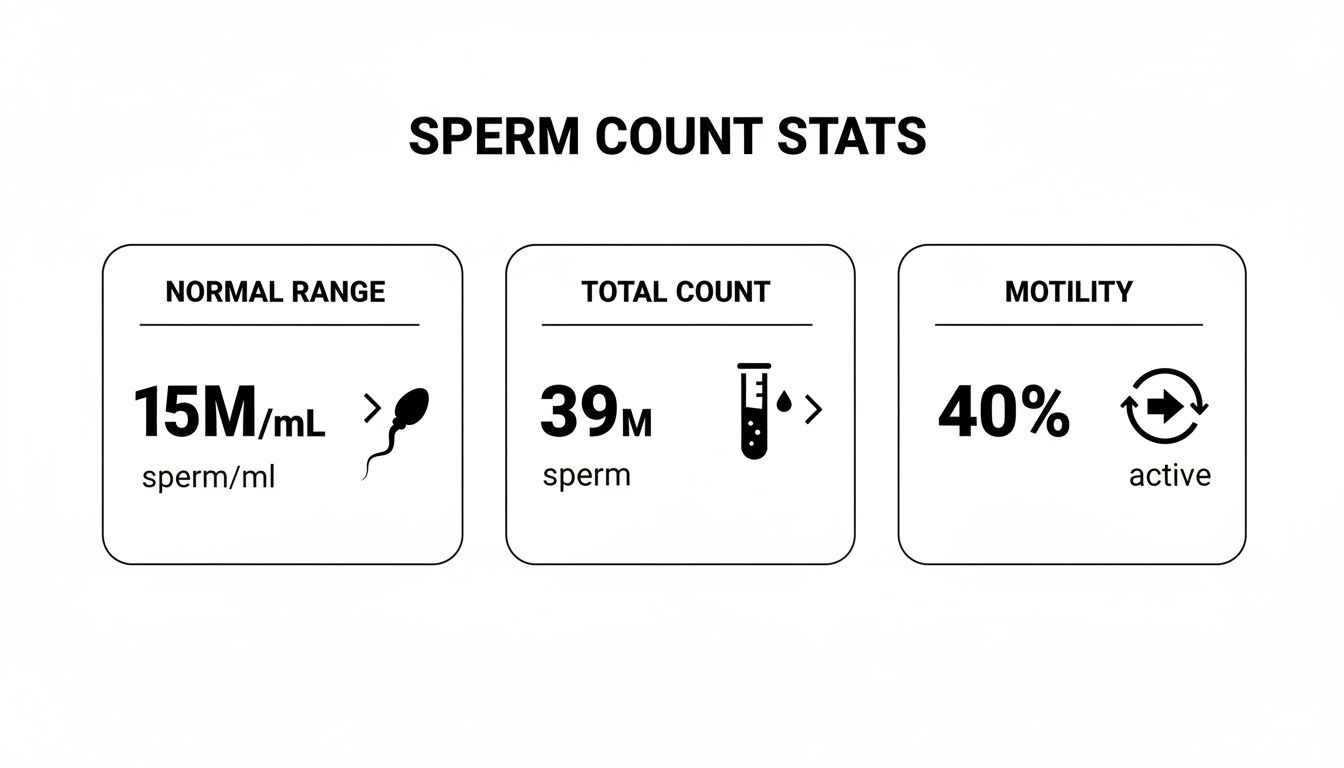
This graphic highlights the minimum thresholds for a "normal" sperm concentration and total count, which are the cornerstones of any male fertility evaluation.
The WHO Guidelines for Sperm Count
The gold standard for these numbers comes from the World Health Organization (WHO). Their guidelines are the benchmarks used by fertility labs across the globe.
According to the WHO, a normal sperm concentration is 15 million sperm per milliliter (mL) or more. For the entire sample, the total count should be at least 39 million sperm per ejaculate. These aren't just random numbers; they're based on data from thousands of fertile men who successfully fathered children within a year.
It's so important to remember that these numbers are just one piece of the male fertility puzzle. A man can have a count well within the normal range and still run into challenges, just as a man with a slightly lower count can still father a child naturally.
Simply put, higher numbers are generally better, but they don't guarantee success. It’s about having enough healthy "players on the field" to maximize the odds. You can see how these figures stack up against the general male population in our guide on the average sperm count.
Sperm Count Reference Ranges at a Glance
To make sense of your results quickly, it helps to see the different categories laid out. This table breaks down sperm concentration into clinical ranges based on the WHO guidelines, giving you a clearer idea of where you stand.
| Category | Sperm Concentration (per milliliter) | General Interpretation for Men |
|---|---|---|
| Normal | ≥ 15 million | Considered normal and sufficient for conception. |
| Mild Oligozoospermia | 10–14.9 million | A mild reduction in sperm count. Natural conception is still very possible. |
| Moderate Oligozoospermia | 5–9.9 million | A significant reduction. Natural conception may be difficult. |
| Severe Oligozoospermia | < 5 million | A severe reduction. Assisted reproductive technologies are often recommended. |
| Azoospermia | 0 | No sperm found in the ejaculate. Requires further investigation to find the cause. |
Remember, this table is a reference guide. Your doctor will interpret these numbers in the context of your complete semen analysis, which includes other vital male fertility factors like motility (how well sperm swim) and morphology (their shape).
How Sperm Count Is Measured and Why Results Fluctuate
Getting your sperm count checked might sound intimidating, but it's actually a straightforward lab procedure called a semen analysis. This test is the cornerstone of male fertility assessment, giving you and your doctor a clear snapshot of your reproductive health at that specific moment.
The process starts with you providing a sample. To get the most accurate numbers, you'll typically be asked to abstain from ejaculation for 2 to 5 days beforehand. This ensures the sample is representative of what your body is producing.
Once your sample gets to the lab, a trained technician takes over. They place a small amount on a special gridded slide called a hemocytometer and count the sperm under a microscope. That number is then plugged into a formula to calculate the sperm concentration per milliliter of semen.
The Full Story: Beyond Just the Count
A semen analysis gives you a lot more information than just a single number. Think of it less like a final exam and more like a detailed health report. It's a comprehensive look at several factors that, together, paint a full picture of your fertility.
To get a handle on what it all means, it’s helpful to understand the complete semen analysis and what each parameter means for you.
Here’s what a lab technician is typically looking for:
- Semen Volume: The total amount of fluid in your sample.
- Sperm Concentration: The number of sperm packed into each milliliter of semen.
- Total Sperm Count: The total number of sperm in the entire sample.
- Motility: What percentage of your sperm are actually swimming and moving forward.
- Morphology: The percentage of sperm that have a normal shape.
Each of these pieces is a crucial part of the puzzle. A great sperm count is a fantastic start, but a man also needs those sperm to be strong swimmers with the right shape to get the job done.
Why Your Sperm Count Can Fluctuate
This is one of the most important things for men to understand: your sperm count is not a fixed number. It’s a dynamic metric that can, and often does, change from one day to the next. Freaking out over a single test result is a common mistake that causes a lot of unnecessary stress.
A single sperm test is like a single photograph—it captures one moment in time. To get the full story, you often need to look at a series of snapshots taken over several weeks or months.
This variability is completely normal. Just think about how your energy levels, mood, or even weight can fluctuate based on daily life. Sperm production is just as sensitive to what's going on in your body. This is exactly why doctors often recommend repeating a semen analysis a few weeks later to establish a more reliable baseline.
So, what causes these ups and downs? A few common culprits can temporarily throw your sperm production off track.
- Recent Illness: A high fever can disrupt sperm production for up to three months.
- High Stress Levels: Serious physical or emotional stress can mess with the hormones needed for healthy sperm development.
- Abstinence Period: The number of days since you last ejaculated directly impacts how concentrated the sperm are in your sample.
- Lifestyle Factors: A few nights of terrible sleep, a nutrient-poor diet, or too much alcohol can all cause a temporary dip in your count.
Recognizing that your results can vary is key. One "off" day doesn't automatically mean you have a long-term problem. It just underscores the importance of looking at the bigger picture of your health over time.
What Your Semen Analysis Results Actually Mean

Getting your semen analysis report can feel like getting a final grade on your reproductive health. It’s natural to zoom in on the numbers—especially sperm count—and immediately start drawing conclusions. But it's crucial to see these numbers for what they are: reference points, not a final verdict on your ability to become a father.
The World Health Organization (WHO) sets the lower limit for a normal sperm count range at 15 million sperm per milliliter (mL). Think of this as the minimum height requirement for a roller coaster. Clearing that bar is a good sign, but it doesn’t tell you anything about the rest of the ride.
A "normal" count doesn't guarantee a quick conception any more than a "low" count makes it impossible. Your result is just a single snapshot in the much larger, more hopeful picture of your overall male fertility.
Beyond the Baseline: What the Numbers Really Indicate
While that 15 million/mL number is the standard cutoff, the real conversation among fertility experts is much more nuanced. Many specialists consider this the absolute bare minimum, not the ideal target for robust male reproductive health. The reality is, having more sperm can significantly improve a man's odds.
Imagine you're trying to win a lottery. One ticket gives you a chance, but a hundred tickets give you a much better one. In the same way, a higher sperm count provides more opportunities for one healthy, strong sperm to complete its journey.
The goal isn't just to pass a test; it's to understand where you stand. A single number rarely defines a man's fertility, as it's just one piece of a complex puzzle that also includes how well sperm swim (motility) and their shape (morphology).
Understanding this context is empowering. It helps you shift from a simple pass/fail mindset to a more holistic view of your reproductive wellness, where you can identify areas for improvement and take proactive steps.
The Debate Over the Optimal Sperm Count
There’s an ongoing scientific discussion about what truly constitutes a clinically meaningful ‘normal’ sperm count. While the WHO’s floor is 15 million/mL, some evidence suggests that the ability to conceive may start to decline at concentrations below 40 million/mL. Other research even proposes that cutoffs between 50–60 million/mL might be better indicators of a man's full reproductive potential.
This debate highlights a key point: "normal" is a range, not a single magic number. A count of 25 million/mL is technically normal, but a man with 55 million/mL likely has a statistical advantage. Looking at your results through this lens provides a more realistic and less stressful perspective.
Interpreting Your Unique Results
So, what should you do with your report? First, don't panic. See your results as a guide, not a judgment. Your sperm count is a dynamic number that can be influenced by your health, lifestyle, and even recent stress.
Making sense of a detailed lab report can be confusing. For men trying to understand the nuances, resources like an AI-powered lab result interpreter can help break down what each parameter means in a clearer, more accessible way.
Here are a few key takeaways to keep in mind when looking at your results:
- Below 15 million/mL: This is considered low (oligozoospermia) and is a clear signal to consult a doctor. It doesn't mean conception is impossible, but it does mean it's time to investigate potential underlying causes.
- 15-40 million/mL: You're within the normal sperm count range, which is great news. This is often seen as an opportunity to optimize your health and lifestyle to potentially boost your numbers even higher.
- Above 40 million/mL: This is a strong, healthy count that puts you in a great position. At this point, the focus often shifts from the quantity of sperm to their quality—ensuring they have excellent motility and morphology.
Ultimately, your semen analysis is a tool for empowerment. It provides valuable information that, when interpreted correctly, can guide you and your doctor toward the most effective next steps on your path to fatherhood.
Common Factors That Can Lower Sperm Count
Getting a semen analysis result that’s lower than the normal range can be unsettling, but the first step is to figure out why. It’s almost never one single thing. More often, it's a combination of lifestyle habits, environmental exposures, and underlying medical factors that are impacting sperm production.
Understanding these potential causes is empowering. It helps you have a much more productive conversation with your doctor and, most importantly, identify things you can actually change.
The good news? The sperm production cycle takes about three months from start to finish. That means positive changes you make today can lead to real, measurable improvements down the line.
Lifestyle Choices and Their Impact
Your daily habits have a massive influence on your overall health, and sperm production is no exception. These are some of the most common—and controllable—factors that can drag your numbers down.
- Diet and Nutrition: Think of sperm as tiny engines that need the right fuel. A diet low in key nutrients, especially antioxidants like zinc, selenium, and vitamins C and E, can seriously hamper production. On the flip side, a menu full of processed foods, sugar, and unhealthy fats creates oxidative stress, which is like rust for sperm cells.
- Smoking: This is a big one. Tobacco use is consistently linked to lower sperm counts, sluggish motility, and weirdly shaped sperm. The toxins in cigarettes can directly damage sperm DNA, making it harder for them to do their job.
- Excessive Alcohol: A beer or two probably won’t hurt, but heavy drinking can lower testosterone levels, slam the brakes on sperm production, and even change the physical structure of sperm.
- Substance Use: Recreational drugs, especially marijuana and anabolic steroids, have a well-documented negative effect on male fertility. Anabolic steroids are particularly bad news—they can completely shut down your body's natural sperm factory.
A specialist will almost always start by asking about these habits because they represent the low-hanging fruit—opportunities for you to make immediate and powerful changes.
Environmental and Heat-Related Factors
Here’s a simple biological fact: for sperm to be produced properly, the testicles need to be a little cooler than the rest of the body. Anything that consistently raises their temperature can throw a wrench in this delicate process, causing a temporary dip in your sperm count.
That's why the scrotum hangs away from the body—it's nature's own cooling system. But some modern habits can mess with its ability to regulate temperature.
Common sources of excess heat include:
- Hot Tubs and Saunas: We get it, they're relaxing. But frequent dips in hot tubs, saunas, or even super-hot baths can raise scrotal temperature enough to temporarily halt sperm production.
- Tight Clothing: Constantly wearing tight underwear or pants traps heat right where you don’t want it, creating an environment that’s just too warm for healthy sperm development.
- Prolonged Sitting: Men who sit for hours on end, like truck drivers or desk jockeys, can experience higher scrotal heat. The same goes for resting a laptop directly on your lap for long stretches.
Luckily, the effects of heat are usually reversible. Once you remove the source of the heat, sperm production typically bounces back to normal within a few months.
Medical and Health Conditions
Sometimes, a low sperm count is a red flag for an underlying medical issue that needs a closer look. These conditions can range from common and easily treatable problems to more complex hormonal or genetic issues.
A low sperm count isn't just a fertility number; it can be a window into your overall health. Getting to the root cause is a win-win, benefiting both your reproductive goals and your long-term well-being.
Hormonal balance, in particular, plays a critical role. Since testosterone is the key hormone driving sperm production, learning how to boost testosterone naturally can be a powerful step for many men looking to improve their fertility.
Here are a few medical conditions to be aware of:
- Varicocele: This is the most common reversible cause of male infertility. A varicocele is essentially a varicose vein in the scrotum. These enlarged veins can overheat the testicles and harm sperm production.
- Hormonal Imbalances: Issues with glands in the brain, like the pituitary or hypothalamus, can mess with the hormonal signals needed to make sperm. Low testosterone is a classic example.
- Infections: Certain infections can interfere with sperm production or cause scarring that blocks the tubes sperm travel through. This includes inflammation of the epididymis (epididymitis) or the testicles (orchitis).
- Genetic Conditions: In some cases, genetic disorders like Klinefelter syndrome can result in very low or even zero sperm production.
- Previous Surgeries: Operations in the pelvic region, such as hernia repairs or testicular surgeries, can sometimes accidentally impact the delicate plumbing involved in sperm production and transport.
Identifying any of these factors is the first step toward building a smart action plan. Working with your doctor, you can pinpoint what's contributing to your low sperm count and find the best path forward.
What to Do After You Get Your Sperm Count Results
Getting your semen analysis report back isn't the finish line—it's the starting block. Whether your numbers are right where you want them or a little lower than expected, you now have something incredibly valuable: a clear starting point for taking control of your fertility. Think of it as your personal roadmap, showing you exactly where to go next.
The path forward usually involves a smart combination of lifestyle adjustments and, when needed, a conversation with a specialist. The goal is simple: create the best possible environment for sperm production and move forward with confidence.
Proactive Lifestyle Adjustments for Sperm Health
One of the most empowering things about male fertility is how much your daily habits can influence it. Sperm production is an ongoing process, which means the positive changes you make today can directly impact the health of sperm you’ll produce over the next couple of months. It's a real opportunity to invest in your overall well-being.
Here are a few high-impact areas to focus on:
- Upgrade Your Nutrition: Your body needs the right raw materials to build healthy sperm. Focus on a diet packed with antioxidants like zinc, selenium, and vitamins C and E. Foods like leafy greens, nuts, seeds, and colorful fruits are your best friends in the fight against oxidative stress, which is a major cause of sperm cell damage.
- Get Moving (But Not Too Much): Consistent, moderate exercise is fantastic for circulation and hormone balance—both critical for making sperm. Aim for activities like brisk walking, jogging, or swimming. Be careful not to overdo it, though. Overtraining can actually backfire, so finding that healthy sweet spot is key.
- Master Your Stress: Chronic stress can throw a wrench in the hormonal signals required for sperm development. Find what works for you to decompress, whether that's mindfulness, meditation, or just carving out time for a hobby you love. Keeping your system in a calm, balanced state makes a difference.
If you’re looking for a more detailed game plan, our guide on how to increase sperm count offers more strategies and support. Remember, this isn't about a quick fix; it's about adopting a healthier lifestyle that pays off in the long run.
When to See a Fertility Specialist
While lifestyle changes are a fantastic first step, sometimes you need to call in an expert. If your results show a sperm count that’s significantly low, or if you've been trying to conceive for over a year with no success, it's time to talk to a urologist who specializes in male fertility.
A specialist can help you uncover the "why" behind your numbers. They’ll perform a thorough evaluation that usually includes:
- A Detailed Medical History: A deep dive into past illnesses, surgeries, and key lifestyle factors.
- A Physical Exam: Checking for common and often fixable issues like a varicocele (enlarged veins in the scrotum).
- Hormonal Blood Tests: Measuring levels of testosterone and other hormones that drive sperm production.
Seeing a specialist is a proactive move toward getting answers. It takes you from a place of uncertainty to one of clarity and action, with a plan tailored just for you.
Interestingly, where you live can even play a role. Studies have found that sperm counts can vary quite a bit by geography. For example, research in northern Europe showed median concentrations between 41 to 57 million/mL, while studies in the U.S. found mean concentrations ranging from 48 to 85 million/mL in different cities. This regional difference shows that a single "normal" value might not fit everyone, which is something a specialist can help you make sense of. You can learn more about these regional findings and how they influence clinical benchmarks.
Based on their findings, your doctor might recommend anything from a minor procedure to fix a varicocele to medication that helps rebalance your hormones. No matter the outcome, taking this step ensures you’re on the most effective path forward, armed with knowledge and a supportive team.
Frequently Asked Questions About Male Fertility

Starting the journey into male fertility can bring up a lot of questions, and frankly, a lot of uncertainty. Let's tackle some of the most common concerns men have about their reproductive health and sperm count with clear, straightforward answers.
Can I Improve My Sperm Count Through Lifestyle Changes?
Yes, absolutely. For many men, daily habits are a huge piece of the puzzle when it comes to sperm production. It helps to think of your body as a high-performance factory—the better the raw materials and operating conditions, the higher the quality of the final product.
Things like adopting a balanced diet packed with antioxidants, getting to a healthy weight with moderate exercise, and kicking a smoking habit can have a real, positive impact. Even simple tweaks, like avoiding overheating from hot tubs or not resting a laptop directly on your lap, can make a difference.
One of the most important things to remember is that sperm take roughly 72 days to fully mature. This means the healthy choices you start today will begin showing up in your semen analysis results in about three months. Patience and consistency are key.
Does a Low Sperm Count Automatically Mean I Am Infertile?
No, not at all. A low sperm count, known as oligozoospermia, is a signal that conceiving naturally might be more of a challenge, but it is far from a final verdict on your ability to become a dad. It's simply a sign that it’s time to look a little closer.
Male fertility is a complex equation, and sperm count is just one of the variables. Other factors from your semen analysis are just as crucial:
- Sperm Motility: This is all about how well your sperm can swim. A lower count can sometimes be offset if the sperm you do have are strong, forward-moving swimmers.
- Sperm Morphology: This examines the shape and structure of your sperm. Normally shaped sperm are better equipped for their task.
A low count is basically a prompt to talk with a specialist who can put all the pieces together and give you a complete picture of your reproductive health.
How Often Should I Have My Sperm Count Tested?
A single semen analysis is just a snapshot in time. Because the normal sperm count range can swing pretty wildly due to things like a recent illness, stress, or even differences between labs, a doctor will almost always recommend a second test to confirm any surprising results.
Typically, a man will provide at least two samples several weeks apart. This helps establish a reliable baseline and prevents any unnecessary stress that could come from a single, unusually low reading. Unless you're actively trying to father a child or undergoing fertility treatment, there's no need for constant, routine testing.
Is a Very High Sperm Count Always Better for Fertility?
Not necessarily. While a healthy, robust count is definitely a good thing, having an extremely high number doesn't automatically translate to higher fertility. Once a man's count is well within the healthy range—say, above 40 million sperm per milliliter—the quality of the sperm becomes much more important than the sheer quantity.
At that point, the focus shifts. It's less about having more players on the field and more about having enough healthy, high-functioning players. The goal is to have a sufficient number of sperm with excellent shape and the ability to swim effectively.
Ready to move from questions to clear answers? Hera Fertility uses an AI-powered platform to help you understand your reproductive health. You can order a lab test through one of our 250+ certified partners or upload your existing results for a free, instant interpretation. Get your personalized Hera SmartScore and actionable insights at https://herafertility.co.
Article created using Outrank
Related Resource Articles
-
What Does Low Sperm Count Mean for Male Fertility
Struggling to understand what does low sperm count mean? This guide breaks down the causes, testing, and actionable steps men can take to improve sperm health.
22 min read
-
What Is Sperm Concentration and How Does It Affect Male Fertility
Confused about your semen analysis? Learn what is sperm concentration, the normal ranges, and practical, actionable steps men can take to improve it.
19 min read
-
What Does Clear Semen Mean for Your Fertility?
Wondering what does clear semen mean? Learn the common causes, from harmless factors to potential fertility signals, and discover your next steps.
15 min read