Following the right instructions is critical for getting an accurate measure of your reproductive health, and it all starts 2-5 days before your test. This brief preparation period, which includes a specific window of abstinence and avoiding a few key things, is the single most important factor for an accurate result.
Proper prep ensures the sample you provide is the best possible representation of your true sperm health.
Preparing for Your Sperm Analysis
Getting an accurate picture of your fertility begins long before you arrive at the clinic. The few days leading up to your semen analysis are crucial—what you do (and don't do) directly impacts the quality of the sample and the reliability of your results.
Think of it as setting the stage for a big performance. You wouldn't show up unprepared, right? The same logic applies here.
This isn't just a friendly recommendation; it's a requirement for a valid test. Labs follow strict clinical guidelines, and a sample that doesn't meet the prep criteria might lead to inconclusive results. That means repeat tests, unnecessary delays, and added stress.
Taking these steps seriously is the first—and most important—part of your fertility evaluation.
The Critical Abstinence Window
This is the golden rule of sperm testing. You need to abstain from any and all forms of ejaculation for a minimum of two days, but no more than five days, before your scheduled collection. This timing is absolutely essential for getting the most accurate sperm concentration and volume.
So why is this 2-to-5-day window so specific?
Abstaining for less than two days often leads to a lower sperm count and a smaller semen volume. On the flip side, waiting longer than five days can give you a higher volume, but it will likely be full of older, less-motile sperm with poor morphology (shape). It's all about finding that perfect balance.
Key Takeaway: The 2-to-5-day abstinence window is non-negotiable for an accurate semen analysis. Mark your calendar and plan ahead to hit this target perfectly.
Your 5-Day Countdown Checklist for Analysis
To make it even simpler, here’s a quick-reference guide to follow in the days leading up to your appointment. This checklist will help you tick all the boxes and feel confident on test day.
| Timeframe | Action Item | Reason |
|---|---|---|
| 5 Days Before | Confirm your abstinence start date. | Ensures you hit the 2-5 day window perfectly. |
| 3-4 Days Before | Avoid all alcohol. | Alcohol can negatively impact sperm production and quality. |
| 2 Days Before | Limit excessive caffeine. | High caffeine intake can sometimes affect sperm parameters. |
| 1 Day Before | Review collection instructions & locate your sterile container. | Reduces stress and prevents last-minute mistakes. |
| Day Of Test | Check your clinic's drop-off hours. Stay hydrated. | Ensures a smooth process from collection to lab delivery. |
Following this simple timeline removes the guesswork and helps ensure your sample is a true reflection of your baseline health.
Lifestyle Factors to Consider Before Your Test
Beyond just the timing, a few other habits and health factors can temporarily throw your numbers off. For the most accurate results possible, it pays to be mindful of these things in the days before your collection.
Avoid Alcohol and Limit Caffeine: It's really best to skip alcohol completely for a few days before your test. It's known to negatively affect sperm production and quality. At the same time, try to keep your caffeine intake moderate.
Be Mindful of Medications: Give your doctor a full list of everything you're taking—prescriptions, over-the-counter meds, and even herbal supplements. Some common medications, like certain antibiotics, antifungals, and especially testosterone supplements, can directly interfere with sperm production.
Postpone if You're Sick: This is a big one. If you come down with a fever or are just feeling generally unwell, reschedule your appointment. A fever can tank your sperm production for weeks, and testing during or right after an illness can give a misleadingly poor result.
The focus on male fertility is growing rapidly. In fact, the global sperm count test market surpassed USD 2 billion in 2022 and is projected to keep climbing. This growth is largely driven by a greater awareness of male-factor infertility. You can discover more about the sperm count test market trends and what's driving this shift.
Making these small adjustments ensures that the sample you provide is a clean, accurate snapshot of your fertility, free from temporary negative influences. This helps you and your doctor make the most informed decisions based on clear, reliable data.
How to Find a Lab and Schedule Your Test
You’ve done the prep work, and now it’s time for the main event. Finding the right lab and scheduling your sperm analysis can feel like a logistical hurdle, but it’s a straightforward process once you know what to do. A quick search for "semen analysis near me" is a great start, but there's a bit more to it than just picking the closest location.
This step is all about making sure the lab is properly certified and that you’re crystal clear on their rules for collection and drop-off. Getting this right from the start saves you from any last-minute panic and ensures your sample is in perfect condition for an accurate analysis.
Finding a Certified Lab Near You
First things first: you need a reputable, CLIA-certified laboratory. This certification is non-negotiable, as it guarantees the lab meets strict federal standards for quality and accuracy. This isn't just a routine test; you want to trust the results.
While you can search online, some platforms make it much easier. For instance, we’ve built a network of over 250 certified partner labs across the USA and Canada. You can use our platform to easily find a lab for your semen analysis and book a trusted spot that works for you.
Once you’ve picked a few potential labs, you need to call them to schedule an appointment. You almost never can just walk in with a sample. Andrology labs operate on a very tight schedule because the samples they analyze are extremely time-sensitive.
Key Questions to Ask When Scheduling
That phone call to the lab is more than just booking a time slot—it’s your chance to gather critical information. A few smart questions now will prevent a lot of headaches later.
Here’s a checklist of what to confirm:
- Can I collect my sample at home? Let’s be honest, most men prefer this for comfort and privacy. If they say yes, make sure you understand their specific instructions and ask if you need to pick up a special collection kit beforehand.
- What is the exact drop-off window? This is probably the most important question. Most labs require the sample to be delivered within 30 minutes of collection. If you miss this window, the sample will be rejected, and you’ll have to do it all over again.
- What documents do I need to bring? Don't show up unprepared. You will need a valid government-issued photo ID to present upon drop-off and to verify your identity.
- Can you confirm the exact location and drop-off point? Hospital campuses can be a maze. Get the specific building, floor, and suite number so you’re not frantically searching for the right door when the clock is ticking.
Think of this call as your opportunity to get all the sperm analysis instructions you need, straight from the source.
Managing Your Appointment and Arrival
After you’ve booked your appointment, the clinic will likely send you an appointment confirmation and reminders. It's good to know that many clinics use health care SMS for modern practices to make communication easier, so keep an eye on your texts for any last-minute details and the exact location.
On the day of your test, give yourself plenty of time and plan to arrive a few minutes early. You’ll have to check in at the clinic's front desk, show your ID, and likely fill out some paperwork.
Pro Tip: Whether you’re collecting at home or at the clinic, take a minute to make sure the space is comfortable and private. If you’re at the lab, don't be afraid to check that the collection room is clean. Most clinics provide visual material to help with collection, but you’re typically welcome to bring your own material or use a video.
A little bit of planning makes all the difference. By finding a certified lab, scheduling ahead, and clarifying all the details, you can make the entire experience smooth and stress-free. This lets you focus on what really matters: providing a good sample for an accurate picture of your reproductive health.
A Guide to the Sample Collection Process
Whether you're providing your sample at a clinic or in the comfort of your own home, this is the moment where everything comes together. Following the proper sperm analysis instructions is non-negotiable for an accurate test—even small mistakes here can throw off the results. This part of the guide gives you clear, no-nonsense directions to ensure your sample is viable and ready for analysis.
The goal is simple: provide a clean, complete sample that accurately reflects your sperm health. This all comes down to hygiene, the collection method, and making sure the entire sample ends up in the sterile container from the lab.
The process of finding a lab and getting ready for your visit is actually quite straightforward.
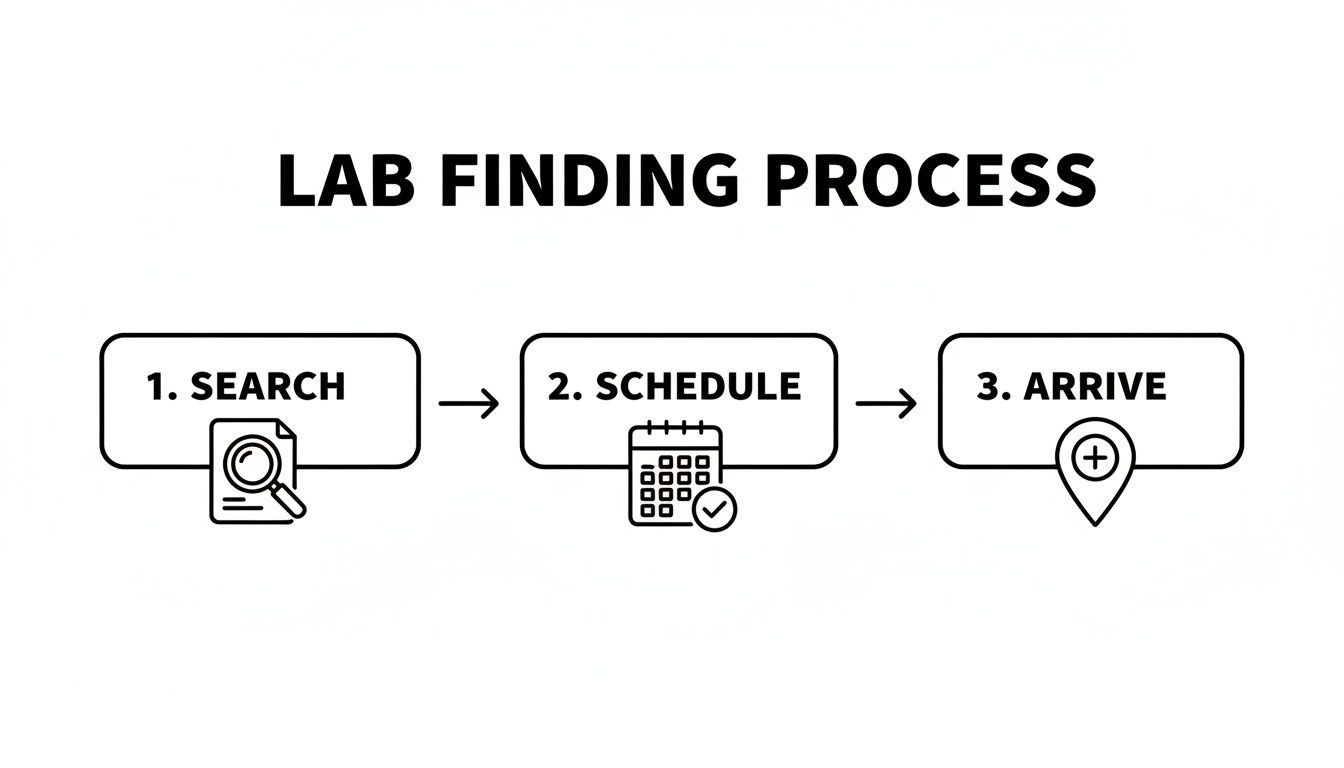
This just breaks down the logistics into three simple actions: finding a lab, scheduling your appointment, and showing up prepared.
At-Home vs. In-Clinic Collection
One of the first decisions you'll make is where to collect. Many men prefer the privacy of their own home, and most labs are perfectly fine with this. If you go this route, the lab will give you a sterile collection kit. The most critical rule here is that you must drop the sample off within 30 minutes of collection. Sperm motility starts to decline pretty quickly once outside the body.
If you opt for an in-clinic collection, you’ll be shown to a private room. Before you begin, just take a second to make sure the room is clean and the door locks. Clinics usually have visual materials to help, but you're almost always welcome to bring your own magazine or use a video on your phone. The environment should be as stress-free as possible.
The Standard Collection Method: Masturbation
Masturbation is the gold standard for collecting a semen sample. It's simply the most effective way to get the entire ejaculate directly into the sterile container without any contamination.
Before you start, hygiene is everything. You have to wash and thoroughly dry your hands and penis with soap and water. This is a crucial step to keep bacteria or other junk from getting into the sample and skewing the results. Do not use any lubricants, lotions, or even saliva. These substances can be spermicidal (they kill sperm) and will completely invalidate the test.
It's absolutely essential to collect the entire ejaculate. The first part of the semen is often the most concentrated with sperm, so missing even a small amount can lead to a falsely low sperm count.
Alternative Collection Methods
For some men, masturbation isn't an option due to personal or religious reasons. In these specific cases, a special non-spermicidal condom can be used to collect the sample during intercourse.
It's critical to know that you can't just use a regular condom. Standard condoms contain lubricants and chemicals that are toxic to sperm and will make the sample useless for analysis. If you need this option, you must bring it up with the lab when you schedule your appointment so they can provide you with the correct collection condom.
Why This Process Matters More Than Ever
Following these detailed sperm analysis instructions is more important now than ever, especially when you look at the bigger picture of male reproductive health. Global semen quality trends paint a stark picture: sperm concentration plunged by 0.87 million/ml per year from 1973 to 2018. More recently, that drop has accelerated, with total sperm counts declining by 3.06 million per year since 2000. You can read the full research about these global sperm count trends to really grasp the scope of the issue.
This data highlights why getting a precise, uncontaminated sample is so vital. It ensures your results are a true reflection of your personal health, giving you and your doctor a clear baseline to work from. Getting the collection process right is the final, and most hands-on, step you can take to set yourself up for a successful and informative analysis.
Properly Handling and Transporting Your Sample
Alright, you've done the hard part. But what you do in the next hour is just as important as all the prep work. The moments immediately after collection can make or break the accuracy of your results.
Think of the sample as being on a very sensitive clock. From the second you're done, its quality starts to change. Getting it to the lab quickly and safely ensures they analyze a sample that truly reflects your sperm health, not one that's been compromised by a bumpy ride or a long wait.
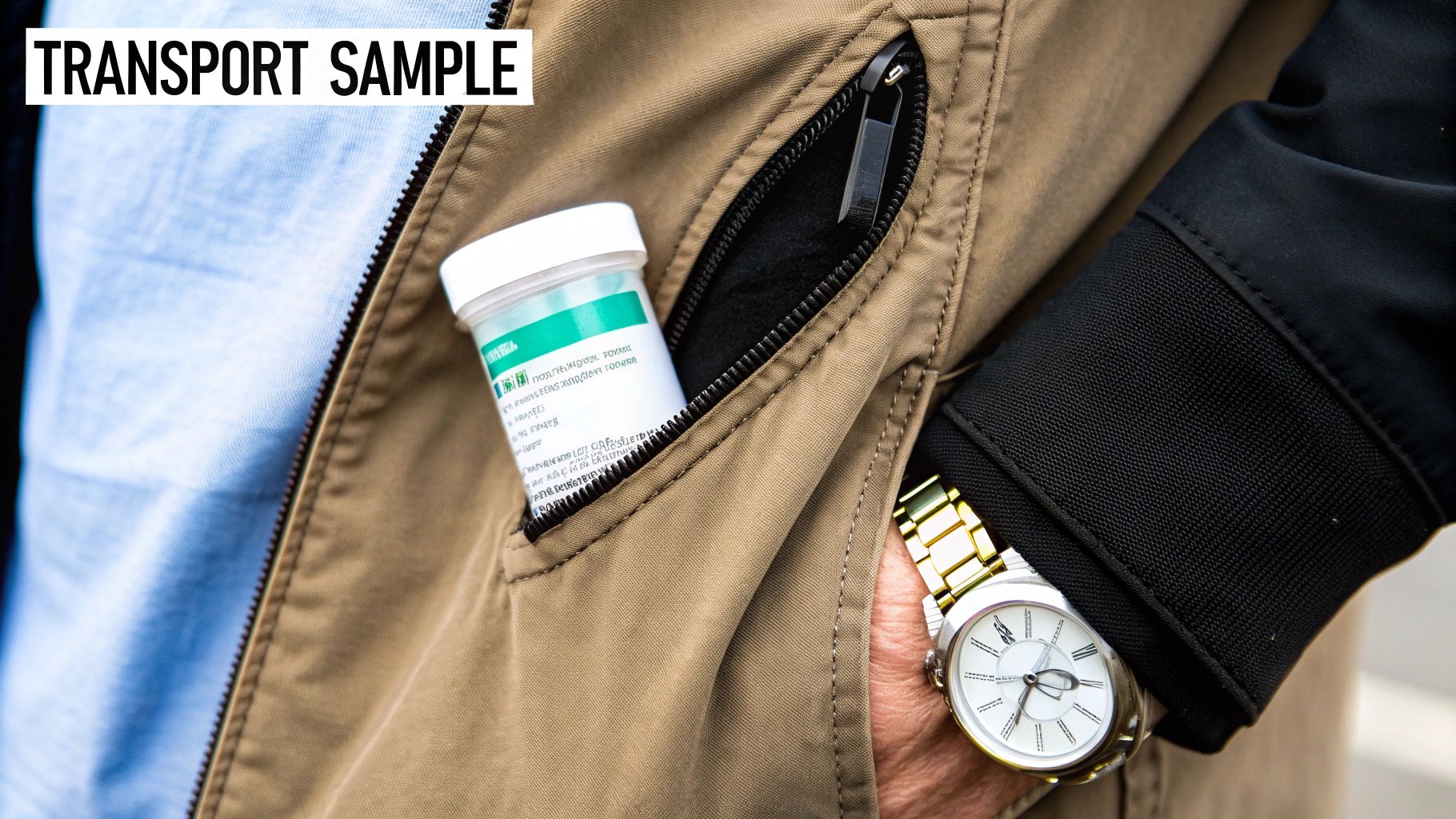
The Golden Rule: Get It There Fast
This is the single most important rule: you must deliver your sample to the lab within 30 minutes of collection. Some labs might give you a 60-minute window, but you should always aim for 30 minutes to be safe.
Why the rush? Sperm motility—their ability to swim forward—starts to drop as the sample cools down. If you're late, the lab might see a lower motility score that isn't accurate, which could lead to unnecessary stress and more tests.
Pro Tip: The second you finish collecting, set a timer on your phone. Plan your route to the lab before you start, accounting for traffic. Missing that 30-minute window is one of the top reasons labs have to reject a sample.
Keep It Warm, Not Hot
Temperature is the other critical factor. You have to keep the sample as close to body temperature as you can during the trip. Extreme cold or heat will shock the sperm, kill them off, and ruin the sample.
Here are a few simple, field-tested ways to get it right:
- Your inside pocket: The easiest and best method. Just place the container in an inside pocket of your jacket or shirt, close to your chest.
- Under the arm: Tucking the container securely in your armpit also works perfectly to maintain that gentle, consistent body heat.
- Avoid car vents and sunlight: Never, ever put the sample in front of a heater or A/C vent in your car. Don't leave it on the dashboard in the sun or in a freezing cold car, either.
You're protecting something incredibly fragile. Simple body warmth is all it needs.
Labeling and Paperwork: The Final Check
Before you even grab your car keys, make sure that container is labeled perfectly. The lab will give you specific instructions, but you can bet you'll need to write this information directly and clearly on the label:
- Your full legal name
- Your date of birth
- The exact time of collection (yes, down to the minute)
Forgetting to do this, or scribbling so no one can read it, can cause major delays or even get your sample rejected on the spot. It seems small, but this detail is non-negotiable.
Common Collection Mistakes and How to Avoid Them
We see the same simple mistakes trip men up all the time. Getting these details right from the start saves you the headache of having to repeat the whole process.
| Common Mistake | Why It's a Problem | How to Avoid It |
|---|---|---|
| Using a regular condom | Standard condoms contain spermicide and lubricants that kill sperm and interfere with motility tests. | Only use a lab-approved, sterile, non-spermicidal collection condom. |
| Abstaining for too long | Waiting more than 5 days can decrease sperm motility and increase the number of dead or dying sperm. | Stick to the 2-5 day abstinence window recommended by your doctor. |
| Losing part of the sample | The first part of the ejaculate contains the highest concentration of sperm. Losing it can skew the results. | Be careful to collect the entire sample directly into the sterile container. |
| Getting it to the lab late | Motility and viability drop rapidly after 30-60 minutes as the sample cools. | Plan your route and leave immediately after collection. Set a timer. |
| Exposing it to heat/cold | Extreme temperatures will kill the sperm, leading to an inaccurate motility count. | Keep the sample at body temperature by carrying it in an inside pocket. |
Following these guidelines ensures the lab gets the best possible sample to work with, giving you the most accurate snapshot of your fertility.
The Drop-Off: What to Expect at the Lab
When you arrive, the drop-off is usually quick and straightforward. You'll check in at the reception desk, and they'll ask for a valid government-issued photo ID. This is a mandatory step to verify your identity and ensure your sample is correctly matched to your file.
You'll hand over your labeled sample, and they'll confirm your details and the collection time. The lab staff does this all day, every day. It's a routine and discreet process, so there's no need to feel awkward.
The fact that this process is so routine highlights a bigger trend. Male reproductive health is finally getting the attention it deserves. In fact, North America is expected to command 34.1% of the global sperm count test market in 2025, a market projected to hit over USD 2.4 billion. This growth is driven by better awareness and access to care, making it easier for men to get answers.
For those interested in the technical side, especially regarding cryopreservation, you can find detailed safety information in documents like this Sperm Cryoprotectant Safety Data Sheet. Ultimately, careful handling from start to finish is the final piece of the puzzle for an accurate analysis.
Understanding Your Results and Next Steps
You did it. The collection is done, the sample is at the lab, and the most hands-on part of this whole process is officially behind you. Now comes the waiting game, which can sometimes be the hardest part.
Let's walk through what happens next, from what the lab is actually doing with your sample to how you'll get your results and what they mean for your male reproductive health.
While you wait, it helps to have a general idea of what the andrology lab is looking for. They aren’t just counting sperm. It's a detailed evaluation of several key health markers that, together, paint a clear picture of your fertility. Knowing a bit about this process will make your follow-up conversation with your doctor much more productive.
What Is the Lab Looking For?
Without getting bogged down in medical jargon, the lab is mainly focused on three core characteristics of your sperm. Think of them as the "big three" of male fertility.
- Sperm Count (Concentration): This is the one everyone knows about. It’s the total number of sperm in your sample, measured in millions per milliliter of semen. A higher number is generally a good sign, but it's just one piece of a much larger puzzle.
- Sperm Motility (Movement): This is all about how well your sperm swim. The lab measures what percentage of them are moving, and more importantly, how they're moving. What they really want to see is progressive motility—sperm swimming forward with purpose, not just wiggling in place.
- Sperm Morphology (Shape): This looks at the physical structure of the sperm. A "normal" sperm has a smooth, oval-shaped head and a single, long tail. The lab calculates the percentage of sperm in your sample that meet this ideal shape criteria.
These three metrics—count, motility, and morphology—are the foundation of every semen analysis report. They give your doctor a comprehensive snapshot of your reproductive health.
The Timeline for Receiving Your Results
So, when will you get the news? The turnaround time is usually pretty quick. Most clinics and labs will have your report ready within 24 to 72 hours. While some might be a bit faster, a few days is a perfectly standard timeframe.
Don't expect the lab to call you directly. In nearly all cases, the results are sent straight to the physician who ordered the test. This is standard medical procedure to ensure a qualified professional interprets the data and explains what it all means in the context of your personal health.
Your next move is to schedule a follow-up with your doctor once you get word that the results are in. This is where the numbers on the report get translated into real, meaningful information about your fertility.
Taking Action with Your Report
Getting the report isn't the finish line; it’s the start of the next phase. The numbers and percentages can look confusing on their own, but your doctor will put them into perspective for you. They'll walk you through where your numbers fall compared to established healthy ranges.
If your results come back normal, that’s fantastic news and can provide some serious peace of mind. If some of your numbers are outside the ideal range, don't panic. This is exactly why you did the test—to get crucial information that helps map out the best path forward.
Depending on what the report shows, your doctor might suggest a few different next steps:
- Lifestyle Adjustments: Simple tweaks to your diet, exercise routine, and daily habits can sometimes make a surprisingly big difference in sperm health.
- Repeat Testing: Sperm quality can fluctuate. It's common for doctors to recommend a second analysis in a few weeks or months just to confirm the initial findings.
- Further Consultation: In some situations, you might be referred to a urologist or a male fertility specialist for a more in-depth evaluation to pinpoint any underlying issues.
Ultimately, the semen analysis is an incredibly powerful diagnostic tool. It gives you and your doctor the clear, data-driven insights you need to make informed decisions about your reproductive health.
Common Questions About Sperm Analysis
Even with the clearest instructions, it’s completely normal to have a few lingering questions. Let's be honest, the whole process can feel a bit clinical and awkward, and you want to be sure you're getting it right. This section is here to tackle some of the most common worries we hear from men.
Our goal is to give you direct, no-nonsense answers so you can walk into your test feeling confident and prepared. Knowing what to do in specific situations—like if you just can't produce a sample on the spot—removes a ton of unnecessary stress.
What If I Can’t Produce a Sample at the Clinic?
This is probably the number one concern, and it's completely understandable. The pressure to perform on-demand in a sterile, unfamiliar room is a real challenge for many men. The good news? Labs are totally prepared for this.
When you call to schedule your appointment, simply ask, "Is it possible for me to collect the sample at home?" The vast majority of labs will say yes without hesitation. They'll give you a sterile collection kit and go over the specific instructions for an at-home collection.
If you go this route, just remember the two golden rules:
- Keep it warm. The sample must be kept at body temperature. The easiest way is to carry it in an inside pocket, close to your body.
- Deliver it fast. You have a 30-minute window from the moment of collection to get it to the lab. You will also need a valid government-issued photo ID with you when you drop it off.
Missing that tight delivery window can tank the results, especially for sperm motility (how well the sperm swim). Plan your route to the lab ahead of time.
Are the Instructions Different for a Post-Vasectomy Test?
Nope, the short answer is no. The actual process—how you collect, handle, and transport the sample—is exactly the same whether you're checking for fertility or confirming a vasectomy was successful. You still need to follow all the rules for hygiene, collecting the entire ejaculate, keeping it warm, and dropping it off quickly.
The only real difference is what the lab is looking for. In a post-vasectomy analysis, the goal is much simpler: to find zero sperm. Your urologist will tell you exactly when to get tested, which is usually after a specific number of ejaculations or a set amount of time has passed.
What Happens If I Spill Part of the Sample?
Accidents happen. If you spill some of the sample, the most important thing is to be upfront with the lab staff when you hand it over. Never, ever try to scoop up the spilled portion and add it to the cup. It will be contaminated with bacteria and skin cells, which will ruin the entire sample.
It's especially critical to tell them if you lost the first part of the ejaculate. This initial fraction is usually the most concentrated with sperm. Losing it can make your final sperm count look much lower than it actually is. By telling the lab, they can make a note on your report so your doctor can interpret the results accurately. In some cases, your doctor might just have you do a retest to get a clearer picture.
Can I Use Lubricant for Collection?
This is a hard no. You have to avoid all standard lubricants, lotions, and even saliva when collecting the sample. Pretty much all of these products are spermicidal, meaning they either kill sperm or stop them from swimming properly. Using any of them will give you a completely inaccurate analysis, especially for motility.
The sample absolutely must be collected by masturbation directly into the sterile container from the lab. Introducing any outside substance compromises the test and will likely mean you have to do the whole thing over again.
Following these instructions carefully is the best way to ensure you get accurate results from your test.
At Hera Fertility, we're focused on making male fertility testing clear and straightforward. You can order a physician-approved lab requisition online, get tested at one of our 250+ certified partner labs, and receive an easy-to-understand Hera SmartScore that breaks down your results into actionable next steps. Get started with Hera Fertility today.