Receiving your sperm analysis results can feel a little overwhelming, like being handed a complex blueprint with no instructions. The first step is to remember this report isn't a final judgment, but a detailed map—a starting point for understanding your reproductive health. Learning how to translate its numbers and terms is the key to taking informed action.
Your Sperm Analysis Report Is Here. What Now?
Getting that report in your hands often brings a mix of anticipation and anxiety. It’s usually filled with clinical terms and data points that can seem pretty confusing at first glance. But this document is a powerful tool, giving you a foundational snapshot of your fertility. It's designed to provide insights, not a definitive verdict.
Think of it as a single frame in a much longer movie. Its value has become even more clear recently. A major 2023 meta-analysis confirmed a startling trend: a significant decline in sperm concentration and total counts worldwide. In many regions, there was a drop of over 50% between 1973 and 2018.
This data really underscores the value of getting a baseline, especially since male factors are a key part of reproductive health. It’s all about having the right information to move forward. As an actionable next step, reviewing this report with a healthcare provider who specializes in male health is crucial.
Decoding the Core Components
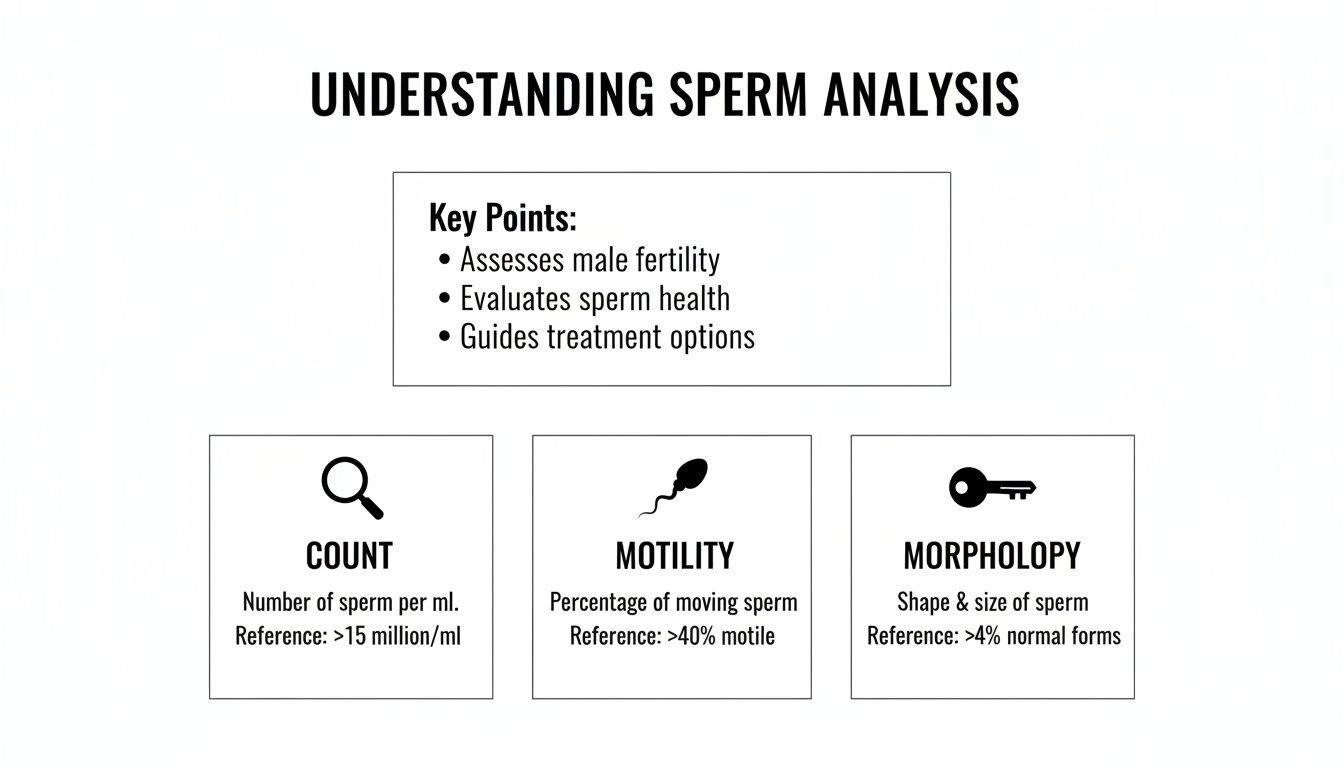
To get your bearings, start by focusing on the three most critical parameters. These give you a high-level view of your sperm health right away.
- Sperm Count: This is the total number of sperm in your sample. A higher count is generally beneficial for male fertility.
- Sperm Motility: This measures how well your sperm can swim. Strong, forward movement is essential for sperm function.
- Sperm Morphology: This refers to the size and shape of your sperm. A correct, "normal" shape is crucial for its function.
These three pillars—quantity, movement, and structure—are the first things a lab assesses. The infographic below helps visualize what they're looking for.
Sometimes, reports come in a language you don't speak, which adds another layer of confusion. If that’s the case, using professional medical records translation services can ensure every crucial detail is understood correctly.
Ultimately, your results are the starting point for a productive conversation with your doctor or a men's health specialist.
Breaking Down Count, Concentration, and Volume
When you get your semen analysis report, three numbers probably jump out at you first: volume, concentration, and total count. These figures are the foundation of your results, working together to paint a clear picture of sperm production. Getting a handle on what they mean is the first step to understanding the rest of your report.
Let’s use an analogy to make this easy. Think of your semen sample as a team of swimmers preparing for a big race.
- Volume is the size of the swimming pool.
- Sperm Concentration is how many swimmers are crammed into each lane.
- Total Sperm Count is the grand total of swimmers in the entire pool.
Each one of these tells a different part of the story. Put them together, and you have a powerful first look at your reproductive health.

What Is Semen Volume?
Semen volume measures the total amount of fluid you produced for the sample, recorded in milliliters (mL). It’s a common misconception, but the sperm themselves make up a tiny fraction of this fluid—less than 5%. The rest is a complex mix from glands like the prostate and seminal vesicles, which provide vital nutrients and protection for the sperm.
According to the World Health Organization (WHO), a normal volume is 1.4 mL or more. A result that falls below this threshold is called hypospermia.
Key Takeaway: You need enough semen volume to act as the vehicle, effectively transporting sperm where they need to go.
It’s also good to know that this number isn't set in stone. Things like your hydration level or even how you were feeling during the collection can cause it to fluctuate.
Understanding Sperm Concentration
Next up is sperm concentration. This number tells you how densely packed the sperm are within each milliliter of semen. In our swimming analogy, this is the "swimmers per lane." A healthy concentration means there are plenty of sperm in the fluid, which is an important factor for male fertility.
The WHO sets the lower reference limit for sperm concentration at 15 million sperm per milliliter. If your report shows a number below this, you might see the term oligozoospermia.
While a lower-than-average number can feel worrying, remember that it's just one piece of the puzzle. Men with lower concentrations can still have good reproductive potential because other factors, like how well the sperm swim (motility) and their shape (morphology), are just as critical. For a deeper dive, you can check out our guide on normal sperm count and what it all means.
Putting It All Together With Total Sperm Count
Finally, total sperm count gives you the big picture. It’s a simple calculation: your semen volume multiplied by your sperm concentration. This reveals the total number of sperm in your entire sample—or, "the total number of swimmers in the pool."
The benchmark for a normal total sperm count is 39 million or more per ejaculate. This is a really useful metric because it combines both volume and concentration, offering a more complete view of your body's overall sperm production.
Here’s a quick summary of the WHO reference values to keep in mind:
| Parameter | Normal Range (WHO 5th Percentile) |
|---|---|
| Semen Volume | ≥ 1.4 mL |
| Sperm Concentration | ≥ 15 million per mL |
| Total Sperm Count | ≥ 39 million per ejaculate |
Keep in mind that all these numbers can be influenced by how long you abstained from ejaculation before the test. Most labs recommend an abstinence period of 2 to 5 days to get the most accurate results. A shorter or longer time can temporarily throw off your count and volume, which is why following those pre-test instructions is so important.
How Well Do They Swim? Unpacking Motility and Progression
If sperm count tells you how many players are on the team, sperm motility is all about their athletic ability. It measures how well sperm actually swim, a skill that's non-negotiable for their function. You can have millions of sperm, but if they can't move with purpose, their potential is limited.
When you look at your report, you'll probably see two key numbers for motility: total and progressive. It's crucial to know the difference.
Think of it like a busy highway during rush hour:
- Total Motility: This is the percentage of all sperm that are moving in any way. In our highway analogy, this includes every car with its engine on—even those just idling, stuck in traffic, or driving in circles.
- Progressive Motility: This is the percentage of sperm that are moving forward in a relatively straight line. These are the cars making real headway, cruising down the fast lane toward their destination.
While any movement is better than none, progressive motility is the number that really matters. These are the sperm most likely to succeed in their journey.

What Are the Normal Ranges for Motility?
Labs around the world rely on reference standards set by the World Health Organization (WHO). For a sample to be considered in the normal range, it needs to hit these minimums:
- Total Motility: At least 42% of sperm should be moving.
- Progressive Motility: At least 30% of sperm should be moving forward.
If your results fall below these thresholds, your report might use the term asthenozoospermia. It sounds intimidating, but it's just the clinical name for low sperm motility. This is one of the more common issues found on a semen analysis, and the good news is, it's often something you can improve. For a deeper dive, you can learn more about improving sperm motility and the specific steps you can take.
It’s also important to know that these guidelines can change. The WHO updated its criteria in 2021, slightly lowering the "normal" motility thresholds from previous versions. A 2024 review of over 2,500 reports showed that these new limits reclassified a small but meaningful number of samples. It’s a perfect example of why expert interpretation is so key—a few percentage points can completely change the story.
Taking Action to Support Healthy Motility
Getting a low motility result isn't a dead end. Think of it as a starting point—an opportunity to make some proactive changes. Motility is one of the parameters most sensitive to your lifestyle and environment.
Key Insight: Unlike some other health metrics, sperm motility can often be improved significantly. The body generates a new batch of sperm roughly every 72 days, which means positive changes you make today can show up as better results in about three months.
Here are a few proven ways to get your sperm into a better training program:
- Keep It Cool: Sperm production works best in an environment that’s a few degrees cooler than your core body temperature. That means avoiding hot tubs, saunas, and even resting a warm laptop on your lap for long periods.
- Eat for an Edge: A diet packed with antioxidants helps protect sperm from cellular damage that can slow them down. Load up on fruits, vegetables, nuts, and seeds.
- Stay Active: Regular, moderate exercise is fantastic. It improves blood flow and reduces oxidative stress body-wide, creating a healthier environment for sperm to develop.
- Ditch the Toxins: This is a big one. Smoking and excessive alcohol have been directly linked to a drop in sperm motility. Cutting back or quitting is one of the most powerful moves you can make for your reproductive health.
Sperm Morphology: The Shape of Success
So, we've covered how many sperm you have and how well they swim. But there’s another critical piece of the puzzle: their quality. This is where we look at sperm morphology—their physical shape and structure—and sperm vitality, which tells us what percentage of the sperm in the sample are actually alive.
Think of it like this: you're trying to unlock a very specific, tricky door. It doesn't matter if you have a million keys (count) or if you can get them to the lock at lightning speed (motility). If none of them are the right shape, that door isn't opening. That's morphology in a nutshell.
A "normal" sperm has a very particular design: a smooth, oval head, a well-defined midpiece, and a long, single tail. This isn’t just about looking good; it's about function. The head carries the precious genetic cargo, and its streamlined shape is essential for its purpose. Any major defect in this structure can impact its function.

Decoding Your Morphology Score
When you get your report back, the morphology result is often the one that causes the most confusion and anxiety. That's because labs use what are called "strict criteria" to grade the sperm, and the standards are incredibly rigorous. A score that looks alarmingly low is often completely normal.
So, what's the magic number? According to the World Health Organization (WHO), having just 4% or more of your sperm with a normal shape is considered healthy.
You read that correctly. Even if 96% of your sperm have some kind of defect—a tapered head, a bent tail, you name it—your result is still considered normal. It's a number that sends a lot of men into a panic when they see it for the first time. A result below that 4% threshold is called teratozoospermia, but even that isn’t a final verdict on your reproductive potential.
While it's true that overall sperm counts have been on a downward trend globally, the story with quality is more nuanced. Interestingly, one clinic's long-term study found that average morphology actually improved over 24 years. Still, the WHO's ≥4% benchmark is what clinicians go by, as studies have connected morphology below this level to certain reproductive challenges.
This is where a precise analysis really matters. A report showing 3% morphology, for example, is an actionable insight. A men's health specialist might suggest specific actions, like adding antioxidants to your routine, which have been shown to help improve sperm shape.
Why Sperm Vitality Matters, Too
The final piece of this quality check is sperm vitality. It's a straightforward but crucial measurement: what percentage of the sperm in your sample are alive? This becomes especially important when motility is low.
Here’s why: if a lot of your sperm aren't moving, you need to know if they're just lazy swimmers or if they're no longer viable. Vitality testing answers that question. It helps your clinician distinguish between sperm that are immotile but alive versus those that are not, a condition sometimes referred to as necrospermia.
The WHO reference range for vitality is 54% or more live sperm. This gives your doctor a much clearer picture, helping them pinpoint the root cause of poor motility. For a deeper dive into the specifics of sperm shape, check out our dedicated article on sperm morphology.
Together, morphology and vitality move beyond simple counts and speed. They tell a story about the overall health and functional potential of your sperm, adding crucial context to your entire analysis and shaping the conversation about what comes next.
Other Important Clues in Your Report
Beyond the big-ticket items like sperm count and motility, your analysis report includes a few other important clues that help create a complete picture of your reproductive health. Think of them as the supporting cast in a movie—they might not get top billing, but the story wouldn't be complete without them.
Two of the most common are semen pH and the presence of white blood cells. Digging into these markers gives us a more detailed look at the environment your sperm are living in, turning a list of numbers into a genuinely meaningful health assessment.
Is Your Semen pH in the Safe Zone?
One of the less-discussed metrics on your report is semen pH, which is just a fancy way of saying how acidic or alkaline your semen is. For sperm to truly thrive, they need a very specific, slightly alkaline environment. This alkalinity is critical because it acts as a protective buffer for them.
The World Health Organization (WHO) sets the normal range for semen pH at 7.2 or higher.
Key Takeaway: A balanced, slightly alkaline pH is like a protective shield for sperm. If the environment becomes too acidic, it can damage sperm, making it harder for them to swim and do their job correctly.
If your pH comes back too low (acidic, or below 7.2), it can sometimes point to a plumbing issue. For example, it might suggest a blockage in the seminal vesicles, which are the glands responsible for producing most of the alkaline fluid that makes up your semen. On the flip side, an unusually high pH might signal an infection. An actionable step here is to discuss any abnormal pH reading with your doctor to explore potential causes.
Why Are White Blood Cells Being Counted?
It's totally normal for a semen sample to have a few other cells mixed in that aren't sperm, and that includes white blood cells (WBCs). The report will only flag it if the concentration of these cells gets too high. When that happens, it’s a condition known as leukocytospermia.
The official line in the sand for this condition is more than 1 million white blood cells per milliliter of semen.
Think of white blood cells as your body’s internal security team. Their mission is to fight off infection and respond to any inflammation. So, when you see a whole crowd of them show up in your semen, it’s a clear signal that your body's defense system has been activated somewhere in your reproductive tract.
This matters because a high WBC count can be bad news for your sperm. The inflammation that comes with an infection can create something called oxidative stress, which is very damaging to sperm health. This stress can torpedo sperm motility and even harm their precious DNA cargo.
If your report shows leukocytospermia, don't panic—it doesn't automatically mean there's a serious problem. But it's definitely a sign that warrants a follow-up conversation with your doctor. They'll likely want to investigate further to find and treat any underlying infection or inflammation, which can often lead to a major improvement in your overall sperm health.
From Numbers to Next Steps: Turning Your Results Into Action
Getting your sperm analysis report back is a big moment, but it’s crucial to see it as the start of the conversation, not the final word. The numbers on that page are a snapshot in time—a collection of valuable clues about your reproductive health. The real work begins now: turning that information into a clear, manageable plan.
It’s easy to look at your first set of results and feel like you have a definitive answer, but that’s rarely the full picture. Male reproductive health is dynamic. Sperm parameters can and do fluctuate, sometimes significantly, because of everything from a recent fever to a stressful month at work.
This is exactly why a single test isn’t considered a final diagnosis. If any of your numbers fall outside the typical reference range, the most common and logical first step is to schedule a repeat test.
The Importance of Retesting
Your body is constantly making new sperm, and the entire production cycle takes roughly 72 to 90 days from start to finish. This continuous regeneration means your sperm health can genuinely change—for better or for worse—over the course of a few months.
A follow-up test, usually scheduled 2 to 3 months after the first one, helps confirm the original findings. This second look gives you and your doctor a much more reliable picture, showing whether an abnormal result was just a blip on the radar or part of a more consistent pattern that needs attention.
Key Insight: Think of your first report as a baseline. A second test helps establish a trend, giving everyone a clearer and more accurate understanding of your health status before making any big decisions.
This waiting period between tests also creates a powerful window of opportunity. It gives you time to make positive lifestyle adjustments that can directly impact the quality of the sperm being made for your next analysis.
Actionable Lifestyle Changes to Support Sperm Health
One of the most empowering things about getting your semen analysis results is realizing how much control you have over improving them. Many of the key parameters, especially motility and morphology, are highly responsive to your daily habits.
Here are some evidence-based changes you can start making today to support healthy sperm production:
- Fine-Tune Your Diet: Focus on a diet rich in antioxidants, which act like bodyguards for your sperm, protecting them from cellular damage. Load up on fruits, vegetables, lean proteins, and healthy fats. Foods high in zinc, selenium, and vitamins C and E are known to support male reproductive health.
- Get a Handle on Stress: Chronic stress can throw the hormones responsible for sperm production completely out of whack. Weave stress-reducing activities into your routine, whether that’s exercise, mindfulness, meditation, or just carving out time for hobbies you love.
- Quit Smoking and Cut Back on Alcohol: The link between smoking and damaged sperm is crystal clear—it hits sperm count, motility, and morphology hard. Similarly, heavy drinking can lower testosterone levels and impair sperm quality. Quitting or cutting back is one of the single most impactful changes you can make.
- Avoid Overheating: Sperm production works best in an environment that’s slightly cooler than your core body temperature. That means minimizing time in hot tubs and saunas, avoiding a hot laptop directly on your lap for long stretches, and maybe switching to looser-fitting underwear like boxers.
These aren't overnight fixes, but because of that sperm production cycle, the positive effects of these changes can start to show up in your results in as little as three months.
When to Consult a Specialist
While lifestyle changes are a fantastic and often effective first step, some situations call for expert medical guidance. If your repeat semen analysis still shows abnormal results, or if your initial report revealed a very significant issue like an extremely low sperm count (oligozoospermia) or no sperm at all (azoospermia), it’s time to see a specialist.
The expert you're looking for is a urologist who specializes in male fertility. These doctors have advanced training in the male reproductive system and can dig deeper to identify underlying causes that lifestyle changes alone can't fix—things like varicoceles, hormonal imbalances, or physical blockages.
Seeing a specialist doesn’t automatically mean something is seriously wrong. It just means you're taking the most direct and effective path toward getting clear answers and a personalized treatment plan.
Your Sperm Analysis Questions, Answered
Even with a detailed report in hand, it’s completely normal to have more questions. Let's walk through some of the most common things that come up after getting a sperm analysis back.
Do All My Numbers Need to Be Perfect?
Not at all. It’s actually pretty common for a man to have one or two parameters fall slightly outside the "normal" range while maintaining good reproductive potential. A specialist is trained to look at the whole picture, not just one number in isolation. Think of it like a team—sometimes one player's weakness is covered by another's strength. For instance, exceptionally strong motility can often compensate for a slightly lower sperm count.
Can My Sperm Analysis Results Change Over Time?
Yes, and they often do. Your sperm health isn’t a fixed state; it can fluctuate quite a bit. Things like a recent fever, a period of high stress, or even just a few nights of bad sleep can temporarily throw your numbers off. The male body is constantly producing new sperm over a cycle that lasts roughly 72 to 90 days. This means your health and lifestyle choices during that three-month window have a direct impact on the quality of your next sample.
Key Insight: This is exactly why a single abnormal result is never the final word. A follow-up test in a few months is almost always the next step to see if there's a consistent issue or if the first result was just a temporary blip.
What Should I Do if My Results Are Abnormal?
First thing's first: don't panic. An abnormal result isn't a diagnosis—it's just a signal that it’s time to look a little closer. The initial game plan usually looks something like this:
- Schedule a repeat test in 2-3 months to confirm the findings.
- Make some positive lifestyle changes, like cleaning up your diet, getting moderate exercise, and cutting back on alcohol or tobacco.
- Talk to a specialist, like a urologist who focuses on male fertility, especially if your results are consistently low or significantly off. They can dig deeper to see if there are any underlying medical causes.
How Long Does It Take to Improve Sperm Health?
Because that sperm production cycle takes about three months, any positive changes you make today will start to show up in your sperm quality in about that much time. This gives you a clear and manageable window for taking action. Committing to a healthier lifestyle for just three months can lead to real, measurable improvements in your next analysis, giving you a powerful and proactive way to support your own reproductive health.
Feeling a bit lost in all the numbers and medical terms? Hera Fertility was designed to fix that. We transform complex lab data into a simple, easy-to-understand Hera SmartScore and give you a personalized action plan. You can upload an existing report for free or find a top-rated lab near you to get started. Take the guesswork out of your results by visiting https://herafertility.co.