Testosterone is more than just a hormone; it's a cornerstone of male vitality, strength, and, crucially, fertility. For men looking to start or grow their families, optimizing testosterone levels is a foundational step toward enhancing reproductive health. But navigating the sea of advice can be overwhelming, with countless sources offering conflicting or unsubstantiated claims. This guide cuts through the noise, providing a clear, evidence-backed roadmap specifically for men focused on their reproductive wellness.
We will explore ten powerful and sustainable ways to boost testosterone naturally, focusing on strategies that directly support sperm health and overall male vitality. You won't find quick fixes or confusing jargon here. Instead, you'll get actionable, science-supported steps you can start taking today to build a stronger hormonal foundation. From targeted exercise protocols and specific dietary adjustments to stress management and sleep optimization, each point is designed to be practical and effective.
Understanding the interplay between lifestyle and hormonal balance is key. For a comprehensive guide on enhancing male hormonal health, delve into insights on how to boost testosterone levels. This article will equip you with the knowledge to make informed decisions, whether you're just beginning your fatherhood journey, actively trying to conceive, or simply aiming to improve your overall health. Let’s dive into the proven methods that can help you unlock your body’s full potential.
1. Strength Training, Compound Lifting & Progressive Overload
Engaging in regular resistance training is one of the most effective and well-documented ways for men to boost testosterone naturally. The key lies not just in lifting weights, but in how you lift them. The process stimulates an anabolic hormonal response, signaling a man's body to repair muscle tissue and, in turn, increase testosterone production.
The most potent form of this training involves compound lifts. These are multi-joint movements like squats, deadlifts, bench presses, and overhead presses that recruit large muscle groups. The significant mechanical tension and metabolic stress they create are powerful catalysts for a man's hormonal adaptation.
Putting It Into Action
Implementing this strategy requires a structured plan, not just random gym sessions. The core principle is progressive overload: systematically increasing the demand placed on your muscles over time. This forces your body to adapt by getting stronger and producing more of the hormones that support growth, including testosterone.
To maximize the testosterone-boosting effects of your workouts, it's essential to understand effective training principles and learn more about how to get stronger faster.
Here’s a practical approach for men:
- Focus on Core Lifts: Build your sessions around 2-3 heavy compound exercises.
- Prioritize Form: Proper technique is crucial. It ensures you’re safely applying maximum tension to the target muscles, which is what triggers the hormonal benefit.
- Track Your Progress: Religiously log your lifts (weight, sets, reps) to ensure you are consistently adding weight or reps over weeks and months.
- Allow for Recovery: Rest is non-negotiable. Allow at least 48 hours before training the same muscle groups again. Rest 3-5 minutes between your heaviest sets to fully recover and maintain performance.
Programs like Mark Rippetoe's Starting Strength or Jim Wendler's 5/3/1 are excellent, time-tested frameworks built on these principles, making them ideal for men looking to optimize their hormonal health and fertility.
2. Optimize Sleep Quality and Duration
Prioritizing sleep is one of the most powerful and non-negotiable ways for a man to boost testosterone naturally. A man's primary testosterone production occurs during the deep restorative phases of sleep, particularly REM and slow-wave sleep. Consistently failing to get enough high-quality sleep directly short-circuits this crucial hormonal process, leading to suppressed testosterone levels and impaired recovery.

This isn't just theory; it's a core principle for peak male performance. Elite athletes and military special forces champion sleep optimization as a foundational pillar of health and performance. Studies have shown that restricting sleep to just five hours per night can reduce a healthy young man's testosterone levels by 10-15% in as little as one week.
Putting It Into Action
The goal is to align your lifestyle with your body's natural circadian rhythm, creating a consistent environment that promotes deep, uninterrupted sleep. This isn't about simply being in bed; it's about maximizing the quality and duration of your rest to support hormonal balance and overall male vitality.
Here’s a practical approach:
- Maintain a Strict Schedule: Go to bed and wake up at the same time every day, even on weekends. This consistency anchors your body's internal clock.
- Create a Sleep Sanctuary: Keep your bedroom dark, quiet, and cool (between 60-67°F or 15-19°C is ideal). Use blackout curtains and a white noise machine if needed.
- Implement a Digital Curfew: The blue light from phones, tablets, and TVs suppresses melatonin production. Stop using screens at least 60-90 minutes before bed.
- Be Mindful of Stimulants: Avoid caffeine after 2 p.m. and limit alcohol consumption, as it severely disrupts REM sleep and hormonal regulation.
Optimizing sleep not only supports testosterone but also has a significant positive impact on sperm health. To learn more about how lifestyle factors influence male fertility, you can explore strategies on how to increase sperm count.
3. Vitamin D3 Supplementation and Sun Exposure
Often called the "sunshine vitamin," Vitamin D functions more like a steroid hormone in a man's body, playing a crucial role in male reproductive health. Studies consistently show a strong correlation between optimal Vitamin D levels and higher total testosterone. Its direct involvement in testosterone synthesis within the Leydig cells of the testes makes it a foundational element for male hormonal balance.
For men in regions with limited sun exposure, especially during winter, or those with darker skin tones, a deficiency is common and can suppress testosterone production. This is why many sports medicine practitioners implement vitamin D protocols for male athletes to maintain peak performance and hormonal function year-round.

Putting It Into Action
The first step for any man is to know his status. A simple blood test can reveal your 25(OH)D levels, providing a clear target for supplementation or lifestyle changes. Aiming for an optimal range, rather than just avoiding deficiency, is key to unlocking the testosterone-boosting benefits of this essential vitamin.
To effectively raise and maintain your levels, you can combine sensible sun exposure with strategic supplementation. This approach is one of the most reliable ways for a man to boost testosterone naturally when a deficiency is present.
Here’s a practical approach:
- Get Tested: Ask your doctor for a 25(OH)D blood test. The optimal range for male hormonal health is often cited as 40-60 ng/mL.
- Supplement Smartly: If deficient, a daily dose of 2,000-4,000 IU of Vitamin D3 is a common starting point. Always consult your healthcare provider for personalized advice.
- Prioritize Sun Exposure: When possible, aim for 10-30 minutes of midday sun exposure on a large area of your skin 3-4 times per week without sunscreen.
- Improve Absorption: Take your Vitamin D3 supplement with a meal that contains healthy fats, as it is a fat-soluble vitamin.
- Consider K2: Pairing Vitamin D3 with Vitamin K2 can help ensure calcium is directed to your bones and not soft tissues, supporting overall male health.
4. Stress Reduction and Cortisol Management
Chronic stress is a formidable, yet often overlooked, antagonist to healthy testosterone levels in men. When you're constantly under pressure, your body produces high amounts of the stress hormone, cortisol. This isn't just a mental state; it triggers a direct physiological response where cortisol and testosterone have an inverse, seesaw-like relationship. Elevated cortisol can suppress testosterone production, creating a catabolic environment that undermines muscle growth, energy, and male fertility.
Managing stress is therefore a non-negotiable strategy for optimizing your hormonal health. The goal is to regulate the hypothalamic-pituitary-adrenal (HPA) axis, preventing cortisol from running rampant and interfering with the hypothalamic-pituitary-gonadal (HPG) axis, which governs testosterone synthesis in men. High-performing male athletes and military personnel use specific stress management protocols to maintain peak physical and cognitive function, demonstrating the power of these techniques.
Putting It Into Action
Implementing stress management isn't about eliminating stress entirely, but building a robust toolkit to control your physiological response to it. This involves proactive, consistent practices that buffer your body against the negative effects of cortisol, creating a more favorable environment for testosterone production.
Reducing stress is a powerful tool to preserve male hormonal balance, and you can discover more about how lifestyle factors influence male reproductive wellness by learning more about how to improve sperm health.
Here’s a practical approach:
- Practice Daily Mindfulness: Dedicate 10-20 minutes daily to meditation using apps like Headspace or Calm. This practice is proven to lower baseline cortisol levels.
- Master Your Breath: When acute stress hits, use the box breathing technique (inhale for 4 seconds, hold for 4, exhale for 4, hold for 4). This immediately calms your nervous system.
- Engage with Nature: Regularly spend time outdoors. Even a short walk in a park can significantly reduce cortisol and improve mental clarity.
- Set Firm Boundaries: Protect your personal time by establishing clear work-life boundaries. Schedule downtime and time off just as you would any other important commitment.
- Incorporate Active Relaxation: Before bed, try progressive muscle relaxation or journaling to offload mental tension and improve sleep quality, which is crucial for male hormonal regulation.
5. Dietary Zinc and Magnesium Intake
Micronutrients are the unsung heroes of male hormonal health, and zinc and magnesium stand out as two of the most critical minerals for testosterone synthesis. A man's body uses zinc as a building block for producing testosterone, while magnesium plays a key role in regulating its bioavailability, helping to free up testosterone that is bound to proteins in the blood.
A deficiency in either mineral can significantly impair your body's ability to produce and utilize this vital male hormone. Correcting these deficiencies is a foundational step in optimizing male hormonal health and one of the most direct ways to boost testosterone naturally through nutrition.
Putting It Into Action
The goal is to ensure you meet the Recommended Dietary Allowance (RDA) for these minerals, primarily through whole foods, and supplement only when necessary. This strategy helps restore and maintain the delicate hormonal balance required for both overall male vitality and fertility.
Optimizing your diet with key nutrients is a cornerstone of male reproductive health. For a deeper dive into how specific dietary choices impact male fertility, explore our comprehensive guide on how to improve sperm health.
Here’s a practical approach to ensure adequate intake:
- Prioritize Food Sources: For zinc, focus on oysters, beef, pumpkin seeds, and lentils. For magnesium, incorporate spinach, almonds, avocados, and dark chocolate.
- Target Daily Intake: Aim for the adult male RDA of approximately 11 mg of zinc and 400-420 mg of magnesium per day.
- Supplement Smartly: If your diet falls short, consider a combined ZMA (Zinc Magnesium Aspartate) supplement. Take magnesium 1-2 hours before bed, as it can promote relaxation and improve sleep quality.
- Be Mindful of Dosage: Avoid exceeding 40 mg of supplemental zinc per day, as excessive intake can interfere with copper absorption and cause other health issues. It's also best to take mineral supplements away from iron-rich meals or supplements to prevent absorption interference.
6. Intermittent Fasting and Strategic Caloric Management
Intermittent fasting (IF) is an eating pattern that cycles between periods of eating and voluntary fasting. Rather than focusing on what you eat, it emphasizes when you eat. When implemented correctly, short-term fasting can positively influence hormones that regulate testosterone in men, such as luteinizing hormone (LH), which signals the testes to produce more testosterone.
The key to using IF effectively is balance. While acute fasting can be beneficial, chronic, severe caloric restriction is a potent suppressor of testosterone production in men. The goal is to leverage fasting's metabolic benefits without sending your body into a state of prolonged energy deficit, which harms hormonal health and fertility.
Putting It Into Action
Adopting an IF protocol requires a strategic approach focused on sustainability and hormonal support for men. The most common method is the 16:8 protocol, where you fast for 16 hours and eat within an 8-hour window. This approach can help improve body composition and insulin sensitivity, which are both linked to healthier testosterone levels in men.
For men looking to support their hormonal profile, a well-managed IF plan is one of the most practical ways to boost testosterone naturally.
Here’s a practical approach:
- Start Gradually: If you're new to fasting, begin with a shorter 14-hour fast and gradually extend it to 16 hours as your body adapts.
- Prioritize Protein: During your eating window, consume adequate protein (around 0.8-1g per pound of body weight) to support muscle mass and provide the building blocks for hormone production.
- Avoid Extreme Deficits: Ensure your total daily calorie intake is at or near maintenance levels. If your goal is fat loss, aim for a small, controlled deficit rather than a steep drop.
- Stay Hydrated: Drink plenty of water, black coffee, or unsweetened tea during your fasting period to maintain hydration and manage hunger.
- Time with Training: Align your eating window with your workouts. Consuming the majority of your calories post-workout can optimize recovery and hormonal response. Monitor your strength and energy; if they decline, you may need to adjust your fasting schedule or calorie intake.
7. Healthy Fat Consumption and Cholesterol Optimization
Dietary fat and cholesterol often get a bad reputation, but they are the foundational building blocks for all steroid hormones in a man's body, including testosterone. The cholesterol molecule is the direct precursor from which your body synthesizes testosterone. Therefore, extremely low-fat diets can directly impair this production pathway, leading to suboptimal hormone levels in men.
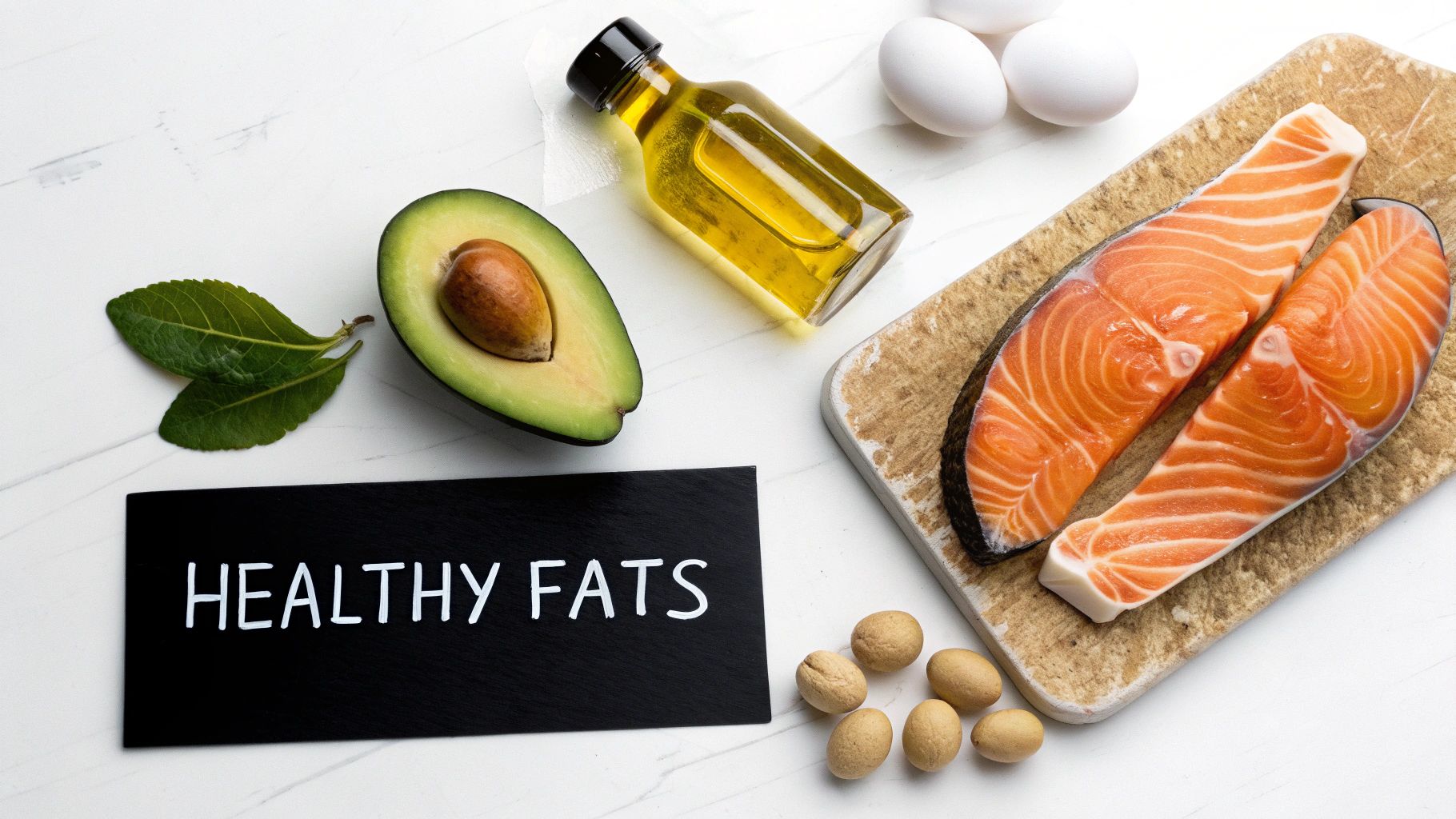
The key is to focus on the quality and quantity of fats. A balanced intake of monounsaturated fats, polyunsaturated fats (especially omega-3s), and even some saturated fats from whole food sources provides the necessary raw materials for robust hormone production. This dietary approach is one of the most fundamental ways for a man to boost testosterone naturally.
Putting It Into Action
Adopting a strategy centered on healthy fats means shifting your dietary focus away from processed, industrial fats and towards whole, nutrient-dense sources. This doesn't mean eating unlimited amounts of fat; rather, it's about making smart, targeted choices that directly support your hormonal and reproductive health. The Mediterranean diet, rich in olive oil, nuts, and fatty fish, is an excellent model associated with better hormonal profiles in men.
Here’s a practical approach to optimize your fat intake:
- Aim for Balance: Target 25-35% of your total daily calories from healthy fat sources. This provides ample substrate for hormone synthesis without excessive caloric intake.
- Prioritize Healthy Fats: Focus on monounsaturated fats from olive oil, avocados, and nuts. Include omega-3 fatty acids by eating fatty fish like salmon or sardines 2-3 times per week.
- Don't Fear Cholesterol: Consume whole eggs, including the yolk. The yolk contains the cholesterol and other vital nutrients like choline and vitamin D that are essential for testosterone production and overall male health.
- Limit Damaging Fats: Strictly avoid industrial trans fats found in many processed and fried foods, as they promote inflammation that can negatively impact hormonal function.
- Be Smart with Saturated Fats: Include natural sources of saturated fat from whole eggs, grass-fed meats, and coconut oil in moderation. These provide necessary building blocks for hormones.
8. Regular Cardiovascular Exercise and Aerobic Conditioning
While strength training gets most of the attention for male hormonal health, strategic cardiovascular exercise is another powerful tool among the ways to boost testosterone naturally. Moderate aerobic activity enhances metabolic health, improves insulin sensitivity, and reduces body fat, all of which create a more favorable environment for optimal testosterone production. The key for men is finding the right balance, as excessive endurance work can backfire.
The most effective cardio for hormonal balance often involves short, intense bursts rather than long, slow sessions. High-Intensity Interval Training (HIIT), for example, has been shown to provide a superior hormonal response in men compared to high-volume steady-state training. This approach stimulates testosterone and growth hormone with less risk of elevating the stress hormone cortisol, which can suppress testosterone levels.
Putting It Into Action
Integrating cardio effectively means treating it as a complement to your strength routine, not a replacement. The goal is to improve cardiovascular health and body composition without creating excessive systemic stress that compromises recovery and hormonal function. This strategic approach ensures men get the benefits without the potential downsides.
For men focused on both fitness and fertility, finding this balance is crucial for long-term hormonal health and sperm quality.
Here’s a practical approach:
- Prioritize HIIT: Incorporate 1-2 HIIT sessions per week. This could be sprints on a track, an assault bike, or a rower, following protocols like Tabata (20 seconds of work, 10 seconds of rest for 8 rounds).
- Moderate Steady-State: If you prefer traditional cardio, aim for 2-3 sessions of 20-30 minutes at a moderate intensity.
- Time It Right: When combining with strength training, perform your cardio after lifting. This prioritizes the heavy resistance work that provides the greatest testosterone stimulus.
- Fuel Adequately: Ensure your calorie and protein intake is sufficient to support the energy demands of both strength and cardio work to prevent a catabolic state.
- Listen to Your Body: Avoid excessive endurance training, especially during periods of heavy lifting or high life stress. The goal is to support your system, not break it down.
9. Alcohol Limitation and Avoidance
While a drink might seem like a good way to unwind, frequent alcohol consumption is a direct antagonist to healthy testosterone production in men. It works against your hormonal health on multiple fronts: it can directly impair the Leydig cells in the testes responsible for producing testosterone, disrupt the hormonal signals from the brain, and increase the conversion of testosterone to estrogen.
The negative impact doesn't stop there. Alcohol disrupts sleep architecture, specifically REM sleep, which is critical for peak nightly testosterone release in men. It also tends to raise cortisol levels, the body's primary stress hormone, which has an inverse relationship with testosterone. Limiting or eliminating alcohol is one of the most direct and effective ways for a man to boost testosterone naturally.
Putting It Into Action
Making a conscious decision to reduce your alcohol intake can yield significant hormonal benefits, especially for men focused on their fertility and reproductive health. Many elite male athletes and fitness professionals completely abstain during training cycles precisely for these reasons, understanding that alcohol undermines recovery, performance, and hormonal balance.
You can apply the same principle to optimize your own hormonal environment. Here’s a practical approach for men:
- Set a Hard Limit: For optimal hormonal health, aim for no more than 1-2 standard drinks per week. This minimizes the metabolic and hormonal disruption.
- Avoid Binge Drinking: Consuming five or more drinks in a single session has been shown to cause a significant, acute drop in testosterone levels in men.
- Run a Trial Period: Consider a complete "hormone reset" by eliminating all alcohol for 4-8 weeks. This allows you to objectively measure how you feel and see the impact on your energy, sleep, and performance.
- Make Smarter Choices: If you do drink, opt for clear spirits like vodka or tequila mixed with soda water over beer or sugary cocktails, which can have a more significant estrogenic and inflammatory impact.
10. Selenium and Antioxidant-Rich Foods
Protecting your testosterone-producing cells from damage is a critical, yet often overlooked, strategy for maintaining optimal male hormonal health. This is where selenium and other antioxidants play a vital role. Selenium is an essential trace mineral that acts as a cofactor for powerful antioxidant enzymes, like glutathione peroxidase, which defend testicular cells from oxidative stress.
Oxidative stress, caused by an imbalance between free radicals and antioxidants, can damage the delicate Leydig cells in the testes responsible for producing testosterone. By consuming foods rich in antioxidants, you provide your body with the necessary tools to neutralize these damaging compounds, creating a more favorable environment for robust testosterone synthesis and supporting overall male fertility.
Putting It Into Action
Integrating these micronutrients into your diet is a straightforward way to support your body's natural hormone production. The goal is to consistently supply your system with the protective compounds it needs to function efficiently, making it one of the simplest ways to boost testosterone naturally. For men looking to improve their fertility baseline, this dietary focus is fundamental.
Here’s a practical approach to increasing your intake:
- Go for Brazil Nuts: Just one to two Brazil nuts per day can often meet your entire daily selenium requirement. Be mindful not to overconsume them, as excessive selenium can be toxic.
- Eat the Rainbow: Aim for 2-3 servings of antioxidant-rich foods daily. This includes berries, dark leafy greens like spinach and kale, and colorful vegetables such as bell peppers and broccoli.
- Drink Green Tea: Enjoying 2-3 cups of green tea daily provides a potent dose of catechins, a powerful class of antioxidants known to support metabolic and cellular health.
- Prioritize Whole Foods: While supplements exist, obtaining antioxidants from whole foods is superior. The complex interplay of vitamins, minerals, and phytonutrients in food offers synergistic benefits that isolated supplements cannot replicate.
This approach, especially when combined with resistance training and adequate sleep, creates a powerful foundation for male hormonal balance and improved reproductive health.
10 Natural Testosterone Boosters Comparison
| Intervention | Implementation Complexity 🔄 | Resource Requirements ⚡ | Expected Outcomes ⭐📊 | Ideal Use Cases 💡 | Key Advantages ⭐ |
|---|---|---|---|---|---|
| Strength Training — Compound Lifting & Progressive Overload | High — technical programming, periodization | Moderate — gym equipment, coaching, time for recovery | ⭐⭐⭐⭐📊 Significant acute/chronic T increases; muscle, bone, strength gains | Men seeking large T and muscle increases | Proven, measurable, sustainable hormonal + strength benefits |
| Optimize Sleep Quality and Duration | Low–Medium — consistency and sleep hygiene | Minimal — schedule, dark/cool environment, potential trackers | ⭐⭐⭐⭐📊 Large impact; prevents major T declines (7–9 h optimal) | All men, especially those prioritizing recovery | Free, broad health, recovery and hormonal improvements |
| Vitamin D3 Supplementation & Sun Exposure | Low — supplementation/safe sun + testing | Low — sun exposure, supplements, occasional blood tests | ⭐⭐⭐📊 Moderate benefit when deficient; measurable changes with correction | Men in low-sun regions or with documented deficiency | Inexpensive, measurable, supports bone, immune and mood |
| Stress Reduction & Cortisol Management | Medium — daily practices and habit change | Low — time, mindfulness tools, possible therapy | ⭐⭐⭐📊 Moderate; prevents cortisol-driven T suppression | High-stress men, overtrained athletes | Improves sleep, recovery, mental health and hormonal balance |
| Dietary Zinc & Magnesium Intake | Low — dietary focus or targeted supplementation | Low — food sources or OTC supplements, labs if needed | ⭐⭐⭐📊 Moderate; restores T quickly if deficient (weeks) | Men with deficiencies, heavy sweaters, athletes | Rapid correction of deficiency; supports recovery and sleep |
| Intermittent Fasting & Strategic Caloric Management | Medium — timing plus energy/protein control | Low — meal planning and monitoring | ⭐⭐📊 Variable — acute LH effects possible; chronic deficits suppress T | Men with body-composition goals where energy and protein are adequate | Metabolic and insulin-sensitivity benefits; simple protocols |
| Healthy Fat Consumption & Cholesterol Optimization | Low — adjust macronutrient distribution | Low — whole-food fats (fish, eggs, avocado) | ⭐⭐⭐📊 Moderate; prevents declines from very low-fat diets | Men on low-fat diets or optimizing hormones | Supports steroid synthesis and fat‑soluble nutrient absorption |
| Regular Cardiovascular Exercise & Aerobic Conditioning | Low–Medium — balance with strength training | Low — equipment/space and time | ⭐⭐⭐📊 Moderate; HIIT often better for T, excessive volume suppresses T | Men seeking metabolic health, fat loss, and conditioning | Improves cardiovascular health and reduces body fat (indirect T benefit) |
| Alcohol Limitation & Avoidance | Low — behavioral change, consistency required | Minimal — alternatives and planning | ⭐⭐⭐⭐📊 High when reduced/removed; rapid improvements in sleep and T | Men who drink regularly, athletes during prep or competition | Quick measurable benefits to hormones, recovery and sleep |
| Selenium & Antioxidant-Rich Foods | Low — dietary inclusion and moderation | Low — nuts, fish, fruits, vegetables | ⭐⭐📊 Supportive; protects testicular cells and fertility, prevents oxidative damage | Men with dietary gaps or fertility concerns | Protects mitochondrial/testicular function and reduces inflammation |
From Knowledge to Action: Your Next Steps in Male Fertility
You've just explored a comprehensive toolkit of evidence-backed strategies, from mastering compound lifts and optimizing your sleep to managing stress and refining your diet with key micronutrients. The journey to enhancing your hormonal health is not about a single magic bullet; it's about building a sustainable, synergistic system where each positive change amplifies the next. Understanding the ways to boost testosterone naturally is the critical first step, but true progress lies in consistent, deliberate action.
The power of this approach is that it puts you in the driver's seat of your own health. You are not a passive bystander. The choices you make every day regarding exercise, nutrition, sleep, and stress directly influence the hormonal environment that governs your energy, vitality, and, crucially, your reproductive potential.
Turning Insights into a Sustainable Routine
Feeling overwhelmed by the ten different strategies? That's a normal reaction. The key is not to attempt a complete life overhaul overnight. Instead, focus on incremental, sustainable changes.
- Start Small, Build Momentum: Choose just two or three strategies from this guide that feel most manageable and impactful for your current lifestyle. Perhaps it's committing to 7-8 hours of quality sleep and adding a zinc-rich food like pumpkin seeds to your daily diet.
- Track Your Inputs: Don't just "try to sleep more." Use a wearable or a simple journal to track your sleep times. Log your workouts. Note your meals. This simple act of tracking transforms a vague intention into a measurable habit.
- Embrace Consistency Over Intensity: A 30-minute walk and a balanced meal every day is far more effective for long-term testosterone support than a punishing, unsustainable workout and crash diet once a week. Your endocrine system thrives on routine and predictability.
The ultimate goal is to create an internal ecosystem that naturally supports robust testosterone production. By focusing on foundational health pillars like minimizing cortisol through stress management and providing your body with essential building blocks like healthy fats and zinc, you are creating the optimal conditions for your body to function at its peak.
The Missing Piece: Measuring What Matters
While you will likely feel the benefits of these changes through improved energy, mood, and physical performance, how do you truly measure their impact on your fertility? Subjective feelings are valuable, but objective data is what provides clarity and direction. Your testosterone levels are intrinsically linked to spermatogenesis, the process of sperm production. Therefore, the most direct and meaningful way to assess the outcome of your efforts is through a comprehensive semen analysis.
This is where knowledge meets confirmation. A detailed analysis moves you from hoping your lifestyle changes are working to knowing they are. It provides a concrete baseline from which you can measure progress over time. Seeing an improvement in sperm count, motility, or morphology after three months of dedicated effort is incredibly motivating and confirms that your hard work is paying off where it counts the most.
You don't have to guess about your reproductive health. The strategies outlined in this article are powerful tools, but they are most effective when paired with clear, actionable data about your unique biological landscape. Taking proactive steps to understand your fertility status is the definitive next step in your journey, transforming your newfound knowledge into a focused, data-driven plan for success.
Ready to move from theory to tangible results? Hera Fertility provides the clear, comprehensive semen analysis you need to understand your baseline and track your progress. Our AI-powered reports and personalized SmartScore translate complex data into actionable insights, giving you the confidence to build a strategic path forward on your fertility journey. Get your lab requisition today at Hera Fertility and take control of your reproductive health.
Related Resource Articles
-
How Long Does Sperm Live: A Complete Guide for Men
Curious about how long does sperm live? Get clear, evidence-based answers on sperm survival in different environments and what it means for your fertility.
21 min read
-
1 a Day Vitamin for Male Fertility: Is It Enough?
Considering a 1 a day vitamin for male fertility? Learn which nutrients matter for sperm health and if a daily multivitamin is the right choice for you.
17 min read
-
Unlock Male Fertility: The Power of 1 Ounce of Almonds Daily
Discover how 1 ounce of almonds daily can boost male fertility. Improve sperm health with science-backed insights & actionable tips.
17 min read