Receiving a diagnosis of azoospermia means that a semen analysis found no sperm in your ejaculate. Hearing this can feel like hitting a brick wall, but it's crucial to see it for what it really is: the starting point of a focused investigation into your reproductive health, not the end of the road.
This diagnosis gives you and your doctor a clear direction to follow.
What an Azoospermia Diagnosis Really Means
Hearing the word “azoospermia” for the first time can be a shock. In simple terms, it means “zero sperm count.” It’s a very specific finding from a semen analysis, which is the cornerstone test for understanding male fertility. If you're trying to make sense of your lab report, our guide on how to read semen analysis results can help clear things up.
Think of this diagnosis less like a final verdict and more like a check engine light on your car's dashboard. It tells you there's a specific issue that needs a closer look, but it doesn't mean the car can't be fixed. It just tells you exactly where to start looking under the hood.
To give you a quick snapshot, here's a simple breakdown of the condition.
Azoospermia at a Glance
| Key Aspect | Simple Explanation |
|---|---|
| What It Is | The complete absence of sperm in the ejaculated semen. |
| Prevalence | Affects about 1% of all men and 10-15% of men experiencing infertility. |
| Primary Types | Obstructive (a blockage) and Non-obstructive (a production issue). |
Understanding these basics is the first step toward figuring out the "why" behind the diagnosis and what comes next.
The Two Main Paths of Investigation
Your doctor’s immediate goal is to figure out why there is no sperm. The investigation immediately splits into two main paths, because azoospermia almost always falls into one of two categories.
This distinction is the most critical piece of the puzzle:
- Is it a production problem? This means the testicles aren't producing sperm effectively, or at all. This is called non-obstructive azoospermia.
- Is it a delivery problem? This means the body is making healthy sperm, but a blockage is preventing it from getting out. This is called obstructive azoospermia.
Each path has entirely different causes and, most importantly, different treatment options. Pinpointing which one you’re dealing with is the key that unlocks your next steps.
Azoospermia isn't just a low sperm count—it's a complete absence of sperm that affects roughly 10-15% of all infertile men. For these men, natural conception is impossible without intervention, making an accurate diagnosis the first step toward exploring advanced fertility treatments.
Moving Forward with Clarity
While the initial news is tough, an azoospermia diagnosis replaces uncertainty with a concrete medical plan. The guesswork is over. Now, you can begin a focused journey with your medical team to find answers and explore real solutions.
Ultimately, this diagnosis empowers you to take control. It allows you and your doctor to build a personalized strategy based on what's actually happening inside your body. The following sections will dive deeper into the two types of azoospermia, shedding light on the specific pathways available to you.
Obstructive vs. Non-Obstructive Azoospermia
Once your doctor confirms azoospermia from the semen analysis, the next crucial step is figuring out why there's no sperm. This single distinction is everything—it dictates every test and treatment option that follows. The diagnosis will fall into one of two buckets: Obstructive Azoospermia (OA) or Non-Obstructive Azoospermia (NOA).
The difference is actually pretty simple. Think of your reproductive system as a factory and a highway, both designed to make and ship sperm.
With Obstructive Azoospermia, the factory (the testes) is humming along just fine, producing plenty of healthy sperm. The problem is a roadblock on the highway—a blockage somewhere that prevents the sperm from ever making it into the ejaculate.
On the other hand, Non-Obstructive Azoospermia is a totally different issue.
With Non-Obstructive Azoospermia, the highway is wide open, but the factory itself has a production problem. The testes are either making very few sperm or no sperm at all.
This core difference—a delivery problem versus a production problem—is the key to unlocking the right path forward for your specific situation.
Understanding Obstructive Azoospermia
For the roughly 40% of men with azoospermia who have the obstructive type, the news is often quite hopeful. It means your body is making sperm; we just have to find and clear the blockage.
The most common causes of these roadblocks include:
- Previous Surgeries: A vasectomy is the classic example of an intentional blockage. However, other surgeries in the pelvic area, like hernia repairs, can sometimes cause accidental scarring that blocks the tubes.
- Infections: A bad infection in the past, like an STI or epididymitis (inflammation of the tube behind the testicle), can leave behind scar tissue that seals the pathway shut.
- Congenital Conditions: Some men are born with a blockage. The most common is a condition where the vas deferens—the main sperm highway—never developed on one or both sides.
Because sperm production itself is usually normal, the outlook for men with OA is often very positive. In many cases, a surgical procedure can repair the blockage and restore sperm to the ejaculate, making natural conception possible again.
Understanding Non-Obstructive Azoospermia
Non-Obstructive Azoospermia (NOA) is more common, affecting about 60% of men with this diagnosis. Here, the problem isn't a blockage; it’s an issue inside the testicles that’s hurting sperm production. The causes for NOA can be more complex and require a deeper dive to figure out.
Pinpointing the cause of NOA often means looking into the fundamental drivers of sperm production. Some common reasons include:
- Genetic Factors: Certain genetic conditions like Klinefelter syndrome or Y-chromosome microdeletions can directly prevent the testicles from making sperm properly.
- Hormonal Imbalances: Sperm production relies on a delicate hormonal dance. When key players like testosterone are too low or Follicle-Stimulating Hormone (FSH) is too high, it's a major clue that the system is off-kilter. These issues can point to bigger problems, so it's vital to recognize all potential male infertility signs.
- Varicoceles: These are essentially varicose veins in the scrotum. They can raise the temperature inside the testicles, creating a hostile environment for sperm development.
- Past Medical Treatments: Cancer treatments like chemotherapy and radiation are lifesavers, but they can unfortunately damage the sensitive sperm-producing cells in the testes.
- Testicular Failure: Sometimes, the testicles just don't function correctly for reasons that doctors can't identify. This is known as idiopathic testicular failure.
While NOA presents a tougher challenge, it's critical to know that it is not a dead end. Advanced techniques can often find small pockets of sperm production within the testicles, even when none shows up in the ejaculate.
The Path to a Clear Diagnosis
Getting a semen analysis that shows zero sperm is the first step, not the final word. Think of it as the opening scene in a mystery. Now, it's your doctor's job to follow the clues with a series of tests to figure out why there's no sperm. This process is less about scary procedures and more about a logical, step-by-step search for answers.
Your journey will always start with a thorough physical exam and a deep dive into your medical history. Your doctor will check for physical signs that might point to a blockage or a production issue, like varicoceles (enlarged veins in the scrotum), and ask about any past surgeries, illnesses, or infections that could be part of the puzzle.
This initial evaluation is crucial because it helps narrow down the possibilities right from the start.
The Crucial Role of Hormone Testing
Next up is almost always a blood test to check your hormone levels. Your reproductive system runs on a delicate balance of hormones, and these results give your doctor a window into how well that system is communicating. It’s like a mechanic checking the electrical signals in an engine to see if the core components are getting the right messages.
We look at several key hormones:
- Follicle-Stimulating Hormone (FSH): This one is a major clue. FSH is the signal your brain sends to your testicles telling them to get to work making sperm. High FSH levels often mean the testicles aren't responding, pointing strongly toward a sperm production problem (non-obstructive azoospermia).
- Testosterone: As the primary male sex hormone, testosterone is essential for sperm production. Low levels can be another sign that the "factory" isn't running properly.
- Luteinizing Hormone (LH): This hormone works alongside FSH to help regulate testosterone. Abnormal LH can also signal a breakdown in communication between the brain and the testes.
The hormone panel is one of the most powerful tools for telling the difference between a blockage and a production issue. For example, if your FSH is high but testosterone is normal, it strongly suggests your brain is shouting instructions, but the testicles just aren't able to follow them.
Looking Deeper with Imaging and Genetics
While hormone tests check the system's function, we also need tools to check its structure. This is where imaging and genetic testing come in. They help us see the bigger picture, confirm the diagnosis, and pinpoint a specific cause.
A scrotal ultrasound is a common, non-invasive first step. It uses sound waves to create a picture of your testicles and the surrounding tubes. This lets your doctor see if there are any physical blockages, cysts, or other abnormalities that could be stopping sperm from getting out.
The flowchart below shows how that first semen analysis result guides the entire diagnostic journey.
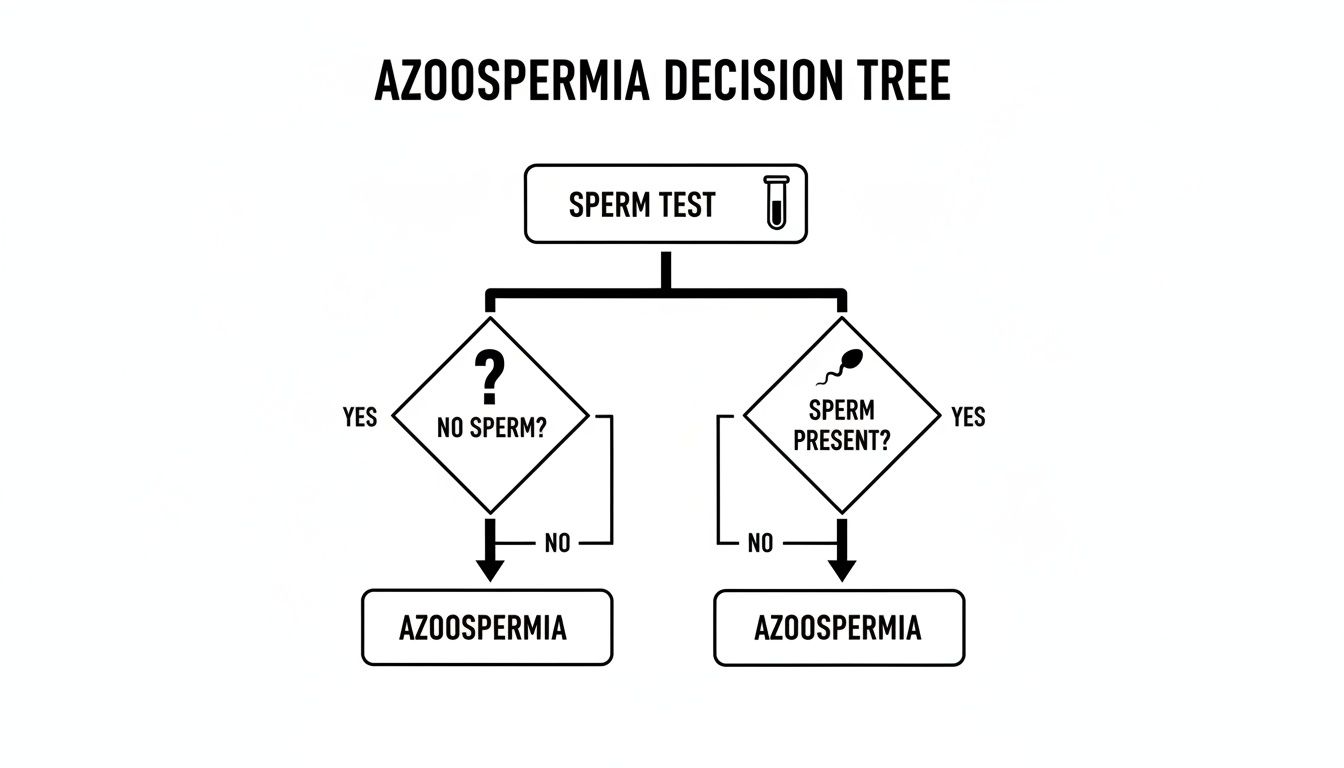
As you can see, that single result immediately splits the path, determining all the next steps.
Genetic screening is another vital piece, especially if a production problem (NOA) is suspected. Certain genetic conditions are known culprits for interfering with sperm production. Testing can identify issues like Klinefelter syndrome (an extra X chromosome) or Y-chromosome microdeletions, where tiny, essential pieces of the Y chromosome responsible for sperm-making are missing.
Finding a genetic cause provides a definitive answer. It explains why sperm production is impaired and helps guide you and your doctor toward the most effective fertility treatments, such as specialized sperm retrieval procedures.
Your Azoospermia Diagnostic Journey
Navigating the diagnostic process can feel overwhelming, but each test has a clear purpose. This table breaks down the common steps, what they involve, and what they reveal about your fertility.
| Diagnostic Step | What It Is | What It Tells Your Doctor |
|---|---|---|
| Semen Analysis | A lab test examining a semen sample. It's repeated at least twice for confirmation. | Confirms the absence of sperm in the ejaculate, establishing the initial diagnosis. |
| Physical Exam & History | A physical examination of the scrotum and a detailed discussion of your medical past. | Identifies physical clues like varicoceles or missing vas deferens and uncovers relevant history. |
| Hormone Blood Test | A simple blood draw to measure levels of FSH, LH, and testosterone. | Helps differentiate between a sperm production problem (NOA) and a blockage (OA). |
| Scrotal Ultrasound | A non-invasive imaging test using sound waves to view the testes and reproductive tract. | Reveals structural issues, blockages, tumors, or other abnormalities in the scrotum. |
| Genetic Testing | A blood or saliva test to screen for specific genetic conditions. | Pinpoints underlying genetic causes like Klinefelter syndrome or Y-chromosome microdeletions. |
| Testicular Biopsy | A minor surgical procedure to take a small tissue sample from the testicle. | Provides the definitive answer on whether sperm are being produced at all inside the testicles. |
Each of these steps provides another valuable piece of the puzzle, bringing the full picture into focus.
Putting All the Pieces Together
By combining the findings from your physical exam, hormone levels, imaging, and genetic tests, your specialist can build a complete picture of your reproductive health. If you need a certified lab to complete any of these important diagnostic tests, Hera Fertility can help you find labs in your area and get the process started.
This methodical approach ensures you don’t just get a diagnosis; you get a clear understanding of its specific type and cause. That knowledge is power—it's what allows for a personalized treatment plan that gives you the best possible chance of becoming a father.
Exploring Your Treatment and Fertility Options

Getting an azoospermia diagnosis can feel like a heavy blow, but it’s crucial to understand this isn't the end of your fatherhood journey. Far from it. This is where modern medicine steps in, offering incredible pathways forward.
The key thing to remember is that there's no one-size-fits-all fix. The right treatment plan depends entirely on why there's no sperm in the ejaculate—whether it's a plumbing issue or a production issue. This section will walk you through the options, giving you a clear, positive view of how you can move toward building a family.
Solutions for Obstructive Azoospermia
For men with Obstructive Azoospermia (OA), the outlook is often very bright. This diagnosis means your body is doing its job—it's making sperm just fine. The problem is simply a physical blockage preventing them from getting out. Think of it like a roadblock on a highway; the goal of treatment is to clear the road.
The most direct solution is surgery. A skilled urologist specializing in male reproductive medicine can often repair the blockage, restoring the natural flow of sperm. These are highly precise procedures aimed at reconstructing the delicate tubes of the reproductive tract.
Common surgical approaches include:
- Vasoepididymostomy: This intricate procedure bypasses a blockage in the epididymis (the coiled tube behind the testicle) by connecting the vas deferens directly to it.
- Vasovasostomy: You probably know this as a vasectomy reversal. It reconnects the ends of the vas deferens that were cut during a vasectomy.
Success rates for these surgeries can be quite high. Many men see sperm return to their ejaculate, which can open the door to conceiving naturally and completely resolve the issue.
Pathways for Non-Obstructive Azoospermia
When the diagnosis is Non-Obstructive Azoospermia (NOA), the focus shifts. Instead of fixing a blockage, we need to address the sperm production issue itself. This might sound more daunting, but there have been remarkable advancements that provide real, tangible hope.
In some cases, if a hormonal imbalance is the root cause, medication might be an option to kickstart or boost sperm production. Some exciting recent research has even shown that a form of vitamin A could induce sperm production in men who previously had none.
For most men with NOA, however, the cornerstone of treatment is a procedure called sperm retrieval.
Even when no sperm is found in the ejaculate, it's often possible to find small pockets of active sperm production within the testicular tissue itself. Specialized surgical techniques allow doctors to locate and extract these sperm directly from the source.
These procedures are performed by a urologist in coordination with a fertility clinic. Any sperm found can be used right away for IVF or frozen for future attempts.
Advanced Sperm Retrieval Techniques
Sperm retrieval is a total game-changer for men with NOA, opening a direct path to biological fatherhood that was once considered impossible. The two most common and effective techniques are TESE and micro-TESE.
1. Testicular Sperm Extraction (TESE) In a standard TESE procedure, a surgeon makes a small incision in the testicle and removes several tiny samples of tissue. These are immediately handed to an embryologist who examines them under a high-powered microscope, hunting for sperm. It's a well-established and effective method.
2. Microdissection TESE (micro-TESE) This is the high-tech version of TESE. Using a powerful operating microscope, the surgeon can see the tiny tubules inside the testicle. Healthy, sperm-producing tubules often look plumper and more opaque. This allows the surgeon to be incredibly precise, removing tissue only from the most promising areas. The result? A higher chance of finding sperm while taking out less tissue.
For men with NOA, finding even a small number of sperm with TESE or micro-TESE is a massive win. It gives you the biological material you need to build a family.
Using Retrieved Sperm to Build a Family
Once sperm has been successfully retrieved—whether from blockage surgery or a TESE procedure—the next step is assisted reproductive technology (ART). Because these sperm aren't in the ejaculate, they can't be used for natural conception or simple insemination.
This is where In Vitro Fertilization (IVF) comes in, specifically with a technique called Intracytoplasmic Sperm Injection (ICSI).
Here's how it works in a nutshell:
- An embryologist selects a single, healthy-looking sperm from the retrieved sample.
- Using a microscopic needle, they carefully inject that one sperm directly into an egg in the lab.
- If fertilization is successful, the resulting embryo develops for a few days before being transferred.
ICSI was a revolutionary breakthrough for male infertility. It bypasses all the natural barriers sperm would normally face, making it possible to achieve a pregnancy with a very small number of sperm—which is the exact situation for men undergoing sperm retrieval.
Taking Proactive Steps in Your Fertility Journey
Getting a complex diagnosis like azoospermia can feel overwhelming. It’s completely normal. But this is also the moment you can start taking back control of your reproductive health, beginning with getting the solid data you need to move forward with confidence.
The first real step is always a confirmed diagnosis. This starts with a proper semen analysis from a certified lab, ordered by a physician. Think of this test as the foundation for your entire journey—it provides the definitive evidence required to truly understand where you stand.
From Complex Data to Clear Answers
So you have your lab report. Now what? The next hurdle is figuring out what it all means. Medical reports are often packed with technical terms and numbers that can look like another language. This is where getting a clear, simple interpretation becomes non-negotiable.
Instead of getting lost in Google searches trying to decipher medical jargon, you can use tools built to translate these results for you. They turn that dense lab data into straightforward insights about your health.
For example, you can upload an existing lab report and get an instant breakdown of what each parameter actually means for you. This simple step cuts through the confusion and anxiety, replacing it with immediate clarity.
Getting a clear, understandable analysis of your lab results is not just about information—it's about empowerment. It transforms a confusing medical document into a personalized roadmap, showing you exactly where you stand and what your next steps should be.
This puts you in the driver's seat for your conversations with your doctor.
Building Your Personalized Action Plan
Understanding your results is half the battle. The other half is knowing what to do about them. An azoospermia diagnosis isn't a dead end; it's a signpost pointing you toward specific, targeted actions.
Based on your unique lab results, you can get a personalized plan. This isn't generic advice. It’s a set of concrete, actionable steps tailored to your specific situation, whether that means more diagnostic tests, seeing a specialist, or exploring certain treatment paths.
This might include guidance on:
- Finding a Specialist: Getting connected with a urologist or male fertility expert who specializes in azoospermia.
- Next-Level Testing: Outlining why hormonal, genetic, or imaging tests might be needed to find the root cause.
- Lifestyle Adjustments: Providing evidence-based recommendations that can support your overall reproductive health during treatment.
This kind of structured approach gives you a clear path forward when everything feels uncertain.
By taking these proactive steps—getting tested, understanding your results, and following a personalized plan—you regain a sense of control. You're no longer just reacting to a diagnosis. You are actively managing your health and taking confident, informed steps toward building your family. This journey is yours to lead, and with the right support, you can navigate it with strength and clarity.
Common Questions About Azoospermia
Getting an azoospermia diagnosis opens the door to a flood of questions. Feeling confused, worried, or just desperate for straight answers is a completely normal reaction. We’ve put together this FAQ to tackle the most common concerns head-on, giving you clear, reliable information to help you figure out what comes next.
Can Lifestyle Changes Reverse Azoospermia?
This is one of the first things most men want to know, and for good reason—it feels like something you can control. The honest answer is: it depends entirely on the cause of your azoospermia.
For men with a low sperm count, a healthy lifestyle—eating well, exercising, quitting smoking, and cutting back on alcohol—can definitely help improve sperm quality. But for true azoospermia, it’s a different story.
If your azoospermia is caused by a physical blockage (Obstructive Azoospermia), like from a prior surgery, no amount of diet and exercise will unblock that tube. Likewise, if it’s a genetic issue preventing your body from making sperm in the first place (Non-Obstructive Azoospermia), lifestyle tweaks won't rewrite that genetic instruction manual.
That doesn't mean you should give up on your health. Being in the best possible physical shape supports your body’s overall function and can improve your chances of success with any medical treatments you decide to pursue. Think of it as getting your body ready for the road ahead.
Is Azoospermia a Permanent Condition?
This isn't a simple yes-or-no question. Whether azoospermia is permanent boils down to its root cause, which is exactly why a thorough diagnosis is so critical. It tells you and your doctor what’s actually possible.
Here’s a breakdown by type:
- Obstructive Azoospermia: In many cases, this is not permanent. Surgeries to repair the blockage, like a vasectomy reversal or a vasoepididymostomy, can be very successful. A successful repair can restore sperm to the ejaculate, opening the door for natural conception.
- Non-Obstructive Azoospermia: This is more complex. If the problem is a treatable hormonal imbalance, medication can sometimes kickstart sperm production. However, if the issue is testicular failure or a specific genetic condition, it might not be possible to restore sperm to the ejaculate.
The most important thing to remember is this: even if sperm can't be restored to the ejaculate, it does not mean the door to biological fatherhood is permanently closed. Advanced sperm retrieval techniques can often find sperm directly from the source.
This is a crucial distinction. "Permanent azoospermia" doesn't have to mean "permanent infertility."
What Is the Difference Between Azoospermia and Aspermia?
These two terms sound incredibly similar, but they describe two totally different conditions. Getting them straight is important for having clear conversations with your doctor.
Here's the easiest way to think about it:
- Azoospermia: This literally means "no sperm." A man with azoospermia still produces and ejaculates seminal fluid during orgasm, but that fluid is completely empty—zero sperm. The problem is with the contents of the fluid.
- Aspermia: This means "no ejaculate." A man with aspermia doesn't produce or expel any fluid at all during orgasm. The problem is with the physical act of ejaculation itself.
Both conditions obviously prevent natural conception, but their causes, diagnostic tests, and treatments are completely different. One is a sperm problem; the other is a fluid problem.
If Sperm Is Found with TESE, What Are the Chances of Success?
Finding sperm during a Testicular Sperm Extraction (TESE) procedure is a huge breakthrough, especially for men with Non-Obstructive Azoospermia. For many, it's a moment of incredible hope—the first concrete proof that biological fatherhood is a real option.
Once sperm are retrieved, they're used in a procedure called Intracytoplasmic Sperm Injection (ICSI). This is a highly advanced form of IVF where a single, healthy-looking sperm is carefully injected directly into an egg.
Success rates for a TESE-ICSI cycle can vary quite a bit, depending on factors like:
- The quality and maturity of the retrieved sperm
- How many sperm were found
- The age and health of your partner
On average, you can expect pregnancy success rates per TESE-ICSI cycle to fall somewhere in the 20% to 50% range. It's vital to have an in-depth talk with your fertility specialist. They can give you a much more personalized prognosis based on your specific situation and help you set realistic expectations for the journey.
Navigating the path after an azoospermia diagnosis requires clear information and a solid plan. Hera Fertility simplifies the first crucial steps. You can order a physician-approved semen analysis at over 250 certified labs, or upload your existing reports for an instant, easy-to-understand breakdown of your results. Take control of your journey with clear insights and personalized next steps. Learn more at https://herafertility.co.
Related Resource Articles
-
Azoospermia: Understanding Zero Sperm Count & Options
Facing a zero sperm count diagnosis can be overwhelming. This article breaks down azoospermia, exploring obstructive and non-obstructive causes, diagnostic tests, and paths to parenthood. Learn about sperm retrieval, lifestyle changes, a...
6 min read
-
6 Male Fertility Myths, Debunked
Can men stay fertile forever? Does testosterone help sperm count? Get clear, evidence-based answers to six common male fertility myths.
6 min read
-
Sertoli cells only syndrome: A Man's Guide to Fertility 2026
Understanding sertoli cells only syndrome: Explore its impact on male fertility, causes, diagnosis, & actionable steps for 2026.
21 min read