Wondering how to know if you're infertile without a test? The biggest, most unavoidable clue is time.
If you have been actively trying to conceive for over a year with no luck, that's the clearest sign you can get that it's time to dig a little deeper.
The Most Obvious Sign of Male Infertility
Trying to start a family is an exciting chapter, but when the months keep rolling by without a positive outcome, it’s completely normal for worry to creep in. That 12-month mark isn’t just some random number; it's the standard medical benchmark doctors use before suggesting a fertility workup.
For a lot of men, this is the first real red flag that something might be off. It’s crucial to remember this isn't about failure or blame. Think of it as your body sending a signal that it’s time to get more information.
Why Does One Year Matter?
The one-year timeframe is really about probability. Most fertile couples will conceive within that window. If it hasn't happened, it suggests there might be an underlying reason worth looking into from the male side.
For men, these issues are almost always invisible. You can feel great, have a healthy sex drive, and still have problems with your sperm that you’d never know about without a proper test.
This infographic lays out some of the key numbers, showing just how common this situation really is.
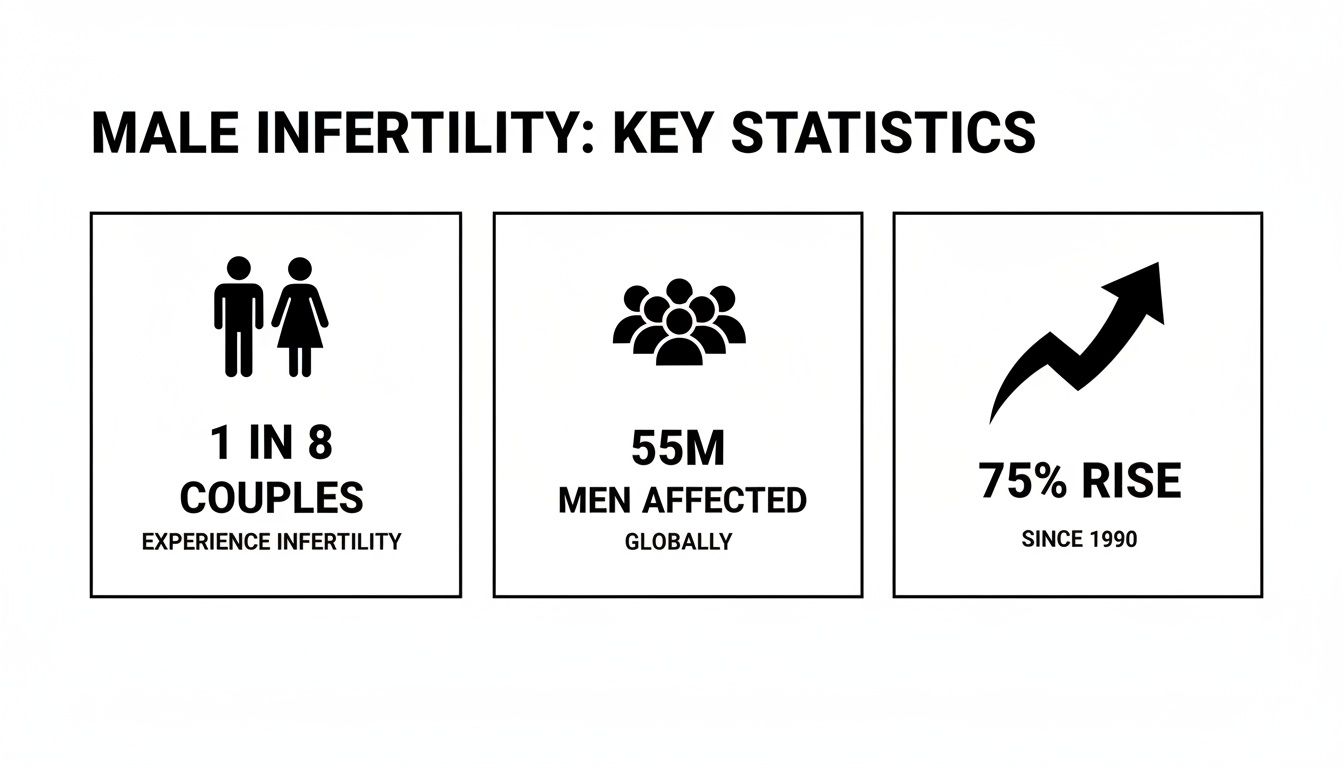
The data makes it pretty clear: male factor infertility is a significant issue for a huge number of men trying to build their families.
It's a Shared Struggle
The emotional toll of this process is real, and it’s easy to feel like you’re the only one going through it. You’re not. The frustrating experience of trying for over a year is a reality for millions of men.
In fact, the Global Burden of Disease Study 2021 estimated that around 55 million men were dealing with infertility that year—a huge jump since 1990. This rise underscores why a long period of trying to conceive is such a critical sign to pay attention to. You can read the full research on global male infertility trends.
Hitting the one-year mark is more than just waiting; it’s the most powerful reason to shift from wondering to knowing. It turns a vague worry into a concrete reason to get answers.
Ultimately, not conceiving is a major clue, but it's also an imperfect one. It doesn't tell you why. It can't tell you about your sperm count, how well your swimmers are moving, or what shape they're in. These are microscopic details that have a massive impact on fertility.
That’s exactly why the best test is a semen analysis. It’s the only way to get the facts about your reproductive health. If you’re ready to stop guessing, the next step is often a quick search for a "semen analysis near me" to get the clear information you need to move forward.
Physical Signs That Can Point to Fertility Issues

While the biggest clue is not conceiving after a year of trying, your body can sometimes throw up a few signals that something might be off with your fertility. Think of these as yellow flags—not definitive proof of a problem, but worth paying attention to as you build the bigger picture.
It’s easy for men to brush these things off. We chalk them up to stress, getting older, or just a bad week. But if you start noticing a consistent pattern, it’s a good cue to tune in and listen to what your body might be telling you.
Issues with Sexual Function
This is often where men first notice something isn't quite right. Persistent problems in the bedroom can sometimes be linked to the same hormonal or physical issues that mess with fertility.
- Trouble Maintaining an Erection: Look, it happens to every guy occasionally. But if erectile dysfunction is becoming a regular thing, it could be a sign of low testosterone—the same hormone that’s critical for sperm production.
- Difficulty with Ejaculation: This could mean anything from struggling to ejaculate at all to noticing there’s not much volume when you do. Issues here might point to a blockage or a condition called retrograde ejaculation, where semen goes into the bladder instead of out the penis.
- A Nosedive in Sex Drive: If your libido has packed its bags and left town for a while, that can also signal hormonal shifts that impact sperm health.
If you want to dig deeper into this, you can learn more about these and other common male infertility signs and what they mean. Remember, these are just clues, not a diagnosis.
Changes in Your Testicles
This one’s straightforward. Your testicles are the sperm factory, so any changes down there are important to monitor. Every man should get in the habit of doing a quick self-check every so often.
Any pain, swelling, or lumps in the testicular area should never be ignored. One of the most common culprits here is a varicocele, which is basically a bundle of enlarged veins in the scrotum. It can sometimes feel like a "bag of worms" and might cause a dull ache.
A varicocele can heat things up down there, creating a hostile environment for sperm production. The good news? It's one of the most common correctable causes of male infertility.
Other Subtle Physical Clues
Some physical signs are sneakier and don't seem connected to making babies at first glance. These are often clues of a system-wide hormonal imbalance that happens to affect your sperm production, too.
Things to watch for include:
- Changes in Hair Growth: A significant drop-off in facial or body hair can be a subtle sign of hormonal trouble.
- Gynecomastia: This is when men develop breast tissue, and it’s often tied to an imbalance between testosterone and estrogen levels.
To help you keep track, here's a quick summary of the physical indicators you can look out for.
Potential Physical Indicators of Male Infertility
| Symptom Area | What to Look For | Possible Connection to Infertility |
|---|---|---|
| Sexual Function | Persistent erectile dysfunction, difficulty ejaculating, low libido | Can indicate low testosterone or other hormonal imbalances. |
| Testicles | Pain, swelling, lumps, or a "bag of worms" feeling (varicocele) | A varicocele can overheat the testicles, damaging sperm. |
| Hair & Body | Decreased facial or body hair, development of breast tissue | Often linked to hormonal imbalances that affect the entire body. |
Keep in mind that these signs aren't always present. Many men with significant fertility issues feel perfectly healthy and have none of these symptoms. These observations are a good starting point, but they can’t tell you what’s really going on with your sperm count or quality. Only a proper semen analysis can give you that clarity.
Connecting Your Health History to Fertility
Your personal health history is like a roadmap that can offer some powerful clues about your fertility. A lot of the time, the dots connecting something that happened years ago to your reproductive health today aren't obvious. But taking a moment to review your medical past can build a much clearer picture.
Think of it as a personal health audit, where you're on the lookout for key events that might be playing a role now.
Many men don't realize that past surgeries, even ones that seemed totally unrelated, can have a lasting impact. For instance, any procedure down in the groin area—think a hernia repair or surgeries on the testicles—carries a small but real risk of affecting the delicate tubes that transport sperm. It's not a guarantee of a problem, but it’s a definite piece of the puzzle worth remembering.
Previous Illnesses and Infections
Sometimes, an illness you had years ago can have surprisingly long-term consequences. Certain infections are known to potentially interfere with male reproductive function, especially if they weren't treated quickly or happened at a critical time in your development.
A couple of key examples come to mind:
- Mumps after puberty: Getting the mumps as a little kid is one thing. But contracting it as a teen or adult can sometimes lead to inflammation of the testicles (orchitis), which has the potential to damage sperm-producing tissues.
- Sexually Transmitted Infections (STIs): Infections like chlamydia or gonorrhea can cause scarring and blockages in the reproductive tract. This essentially creates a roadblock, preventing sperm from getting where they need to go.
Chronic Conditions and Genetics
Ongoing health conditions can absolutely influence fertility. Your body is a complex system, and when one part is under chronic stress, it can throw other functions out of whack—including sperm production. Chronic illnesses such as diabetes, autoimmune disorders, or cystic fibrosis can all have an impact on a man's reproductive health.
Your family's health history matters, too. If you know that other men in your family, like your father or a brother, struggled to conceive, it could point to a potential genetic link. It's not a certainty, but it's valuable information to have.
And it’s not just about the big medical events. Subtle shifts in your energy levels, libido, or even body composition can sometimes suggest underlying hormonal imbalances. For more insights on supporting male hormonal health, supplements like Test1 Boost are something you could look into.
Putting all this information together—your surgical history, past illnesses, chronic conditions, and family background—is incredibly useful. It helps you understand your own potential risk factors and gives you a comprehensive overview to share with a doctor.
But it’s crucial to remember this health audit is just for gathering clues. Many men with these risk factors have zero fertility issues, while others with a perfectly clean bill of health might struggle. The only way to know for certain what’s happening with your sperm is to get concrete data. That means the next step is a semen analysis.
How Lifestyle and Environment Impact Sperm Health

It’s easy to feel like fertility is out of your hands, but so many of the factors that influence sperm health are entirely within your control. The choices you make every day—what you eat, how you move, and the environment you're in—play a massive role in sperm production and quality.
Getting a handle on these connections is one of the most powerful first steps you can take, long before you ever set foot in a lab. You can't see your sperm, but you can definitely see the daily choices that either support your reproductive health or create unnecessary hurdles.
Your Daily Habits: The Good, The Bad, and The Fixable
Let's be real: we all know certain habits aren't doing our health any favors, and that extends directly to fertility. But here's the great news—sperm are constantly being produced. The entire cycle takes about 74 days, which means positive changes you make right now can result in a healthier batch of sperm in just a few months.
- Smoking and Vaping: It’s not just about your lungs. Tobacco, nicotine, and the countless chemicals in cigarettes and vape juice can wreak havoc on sperm DNA, slash your sperm count, and cripple their ability to swim (motility).
- Heavy Alcohol Use: A beer with friends is one thing, but excessive drinking is another. It can cause your testosterone levels to tank, and testosterone is the primary hormone driving sperm production.
- Recreational Drugs: Substances like marijuana and, perhaps most significantly, anabolic steroids are notorious for throwing the delicate hormonal symphony required for sperm development completely out of tune.
This isn't about being perfect; it's about being informed. Knowing how these things impact the process gives you the power to decide what's right for your health and your future family.
Diet, Weight, and Hormonal Balance
Your metabolic health is directly wired into your reproductive system. Think of it like this: if your body is running on low-quality fuel, you can't expect high performance from any of its systems, including the one that makes sperm.
Being significantly overweight or underweight can knock your hormones off-kilter, affecting everything from libido to the very process of sperm creation. On the flip side, a diet packed with antioxidants, vitamins (like C and E), and minerals (like zinc and selenium) gives your body the raw materials it needs to build strong, healthy sperm. A diet heavy on processed foods, however, fuels inflammation and oxidative stress—two of sperm's biggest enemies.
For a deeper look at what to eat, check out our guide on practical ways to increase sperm count through diet and lifestyle.
The takeaway is simple: What's good for your heart is good for your sperm. You don't need a flawless diet, just a consistent effort to give your body the right fuel.
Environmental Exposures to Watch Out For
Sometimes the biggest risks are the ones you can't see. Your environment can pose hidden threats to sperm health, and one of the most common culprits is something we all encounter: heat.
There's a biological reason your testicles are located outside the body—they need to stay a few degrees cooler than your core temperature for optimal sperm production.
Frequent or extended exposure to high heat can put a temporary pause on this process. Key things to be mindful of include:
- Regular soaks in hot tubs or long sessions in a sauna
- Working with a laptop directly on your lap for hours at a time
- Wearing very tight underwear that traps heat against the body
Beyond heat, exposure to industrial chemicals, pesticides, and heavy metals can also interfere with hormones and sperm production. While these factors can be harder to control depending on your job or where you live, just being aware of potential risks is a critical first step.
Making these small adjustments can make a surprising difference. But remember, they are just pieces of a larger puzzle. While improving your lifestyle is always a win, the only way to get a definitive, crystal-clear picture of your sperm health is through a professional semen analysis.
Why Physical Signs Aren't the Full Story
It’s completely natural to look for physical clues when you’re worried about your fertility. If something’s off inside your body, you expect to see or feel a sign, right? The problem is, when it comes to male fertility, the most common symptom is often no symptom at all.
This is the tough reality of what many call ‘silent’ infertility. A man can feel perfectly healthy, have a great sex drive, and see nothing unusual with his ejaculate, yet still have serious fertility issues lurking beneath the surface. Relying only on what you can see and feel is, at best, a shot in the dark.
The Microscopic Truth
Here's the bottom line: the factors that truly define a man's fertility are impossible to see on your own. They’re happening on a microscopic level, way beyond what the naked eye can detect. You simply can’t look in the mirror and know if your body is producing enough healthy, functional sperm.
Three core metrics determine sperm health, and none of them come with obvious physical warning signs:
- Sperm Count: This is the total number of sperm in your ejaculate. You can have what looks like a normal amount of semen but have a very low sperm count hidden within it.
- Motility: This is all about movement—how well your sperm can "swim." You could have a sky-high count, but if the sperm can't travel effectively, they’ll never reach their target.
- Morphology: This refers to the shape and structure of your sperm. Abnormally shaped sperm often can't function correctly, no matter how many there are.
A man can have problems with one, two, or all three of these critical factors and feel absolutely nothing. This is exactly why male factor infertility so often goes completely unnoticed until a man has been trying to start a family for a while without any luck.
The disconnect between how a man feels and his actual fertility is massive. You can be at peak physical fitness and still have a sperm count near zero. Health does not equal fertility.
Moving From Guessing to Knowing
This is a critical reality check for any man concerned about his fertility. Going through the self-checks, reviewing your health history, and cleaning up your lifestyle are all fantastic steps for your overall well-being. But they can’t give you a definitive answer. They provide clues, not conclusions.
The only way to stop wondering and start knowing is through a clinical evaluation. This isn’t about finding something wrong; it’s about getting real data so you can make informed decisions about your future.
The one test that provides this data is a semen analysis. It’s the gold standard for a reason—it measures the microscopic factors that truly matter. To take that next step, you can easily find a "semen analysis near me" and finally get the clarity you need.
The Only Way to Know for Sure: A Semen Analysis

After looking at all the possible physical signs, health history, and lifestyle factors, we arrive at one clear conclusion. While those things give you valuable clues, they’re really just educated guesses.
The only way to get a concrete, factual answer about your fertility is through a semen analysis.
This simple lab test is the undisputed gold standard for checking male reproductive health. It takes you from a world of worry and what-ifs into one of clear, actionable data. It's the definitive next step for any man who is serious about understanding where he stands.
What a Semen Analysis Actually Measures
A semen analysis demystifies your fertility by looking at microscopic details that are completely impossible to assess on your own. It’s a straightforward process that provides an incredibly detailed snapshot of your sperm health. The process is simple, private, and unbelievably informative.
The test zeroes in on three critical parameters:
- Sperm Count (Concentration): This tells you the exact number of sperm present in your sample.
- Motility: This measures what percentage of your sperm are moving—and just as importantly, how well they’re moving forward.
- Morphology: This evaluates the shape and structure of your sperm. Only properly formed sperm can do their job effectively.
Together, these numbers paint the complete picture of your fertility potential. Understanding them is key, and you can get a full breakdown in our guide on how to read semen analysis results.
Taking Control of Your Fertility Journey
In the past, getting this essential test could feel like a real hassle. Fortunately, modern platforms have made the process easier and more private than ever before. You no longer have to wait for multiple doctor's appointments just to get the ball rolling.
For example, platforms like Hera Fertility let you order a physician-approved lab request online in just a few minutes. From there, you can choose a convenient location from a network of over 250 certified labs across the USA and Canada. It puts you in control, letting you get tested on your own terms and schedule.
Stop guessing about your fertility. A semen analysis isn’t just a test; it’s the first real step toward taking control, getting answers, and building a clear path forward.
Once your results are ready, the journey doesn't end with a confusing lab report. Advanced tools can translate that complex medical data into something you can actually use. The Hera SmartScore, for instance, breaks down your results into a clear, understandable score, giving you personalized insights and actionable steps to improve your sperm health.
The message is simple and empowering. If you've been asking how to know if you're infertile male without a test, the real answer is that you can’t. The best test is a semen analysis. It's time to stop the guesswork and start your journey with facts. Find a semen analysis near me and get the clarity you deserve.
Ready to stop wondering and get real answers about your fertility? Hera Fertility makes it simple. Order your physician-approved semen analysis online, test at a convenient lab near you, and receive a clear, AI-powered Hera SmartScore that tells you exactly where you stand. Take control of your reproductive health today at https://herafertility.co.