When you're looking to start a family, understanding every detail of male fertility is crucial. One of the most important terms you'll encounter is motility sperm, which simply refers to the ability of sperm to move effectively. Think of it as the engine of a man's fertility—without strong swimmers, the journey to fatherhood can be significantly more challenging. Low motility, clinically known as asthenozoospermia, is a common factor in male infertility, yet it's often misunderstood.
This isn't just about whether sperm are moving; it's about how they move. Are they swimming forward with purpose, a characteristic called progressive motility, or are they just twitching in place or moving in circles? The distinction is vital because only sperm with strong, forward movement can successfully complete their journey. For men who have received a semen analysis report or are just starting to investigate their reproductive health, grasping the concept of motility sperm is the first step toward taking control.
This comprehensive guide is designed for men who want clear, supportive, and actionable information. We will demystify what good sperm motility looks like, explore the common reasons it might be low, and provide a detailed roundup of specific tests and actionable steps you can discuss with a specialist. Our goal is to empower you with the knowledge needed to navigate your reproductive health with confidence. We'll cover everything from advanced diagnostic tools like Computer-Assisted Sperm Analysis (CASA) to practical lifestyle adjustments that can make a real difference.
1. Adopt a Fertility-Focused Diet
What a man eats provides the fundamental building blocks for his body to produce healthy, energetic sperm. A diet rich in specific nutrients can directly combat oxidative stress, a primary cause of damage to sperm cells that impairs their ability to swim effectively. Think of your diet as fuel; providing the right kind gives your system the best resources to optimize sperm production and function.
The goal is to reduce systemic inflammation and supply a steady stream of antioxidants, vitamins, and minerals essential for male reproductive health. This isn't about a restrictive or temporary diet, but rather a sustainable shift toward whole foods that support overall wellness and specifically enhance factors contributing to healthy motility sperm.
Why It Works for Sperm Motility
Sperm cells are particularly vulnerable to damage from unstable molecules called free radicals. Antioxidants neutralize these harmful molecules, protecting sperm from damage to their DNA and cellular structure, which is crucial for their swimming ability. Key nutrients play specific roles:
- Zinc: Essential for sperm formation, motility, and testosterone metabolism.
- Selenium: A powerful antioxidant that contributes to sperm morphology and movement.
- Vitamin C: Protects sperm from oxidative damage and improves overall sperm quality.
- Coenzyme Q10 (CoQ10): Acts as an antioxidant and is vital for the energy production within sperm cells, directly fueling their movement.
How to Implement a Fertility-Focused Diet
Making consistent, small changes can lead to significant improvements over time. The sperm production cycle (spermatogenesis) takes about 74 days, so dietary changes need about three months to show a measurable effect.
Sample Meal Ideas:
- Breakfast: Oatmeal topped with walnuts, fresh berries, and a sprinkle of flaxseed.
- Lunch: A large salad with spinach, grilled salmon (rich in Omega-3s), bell peppers, and a simple olive oil vinaigrette.
- Dinner: Lean chicken breast or a lentil curry with a side of steamed broccoli and brown rice.
- Snacks: A handful of Brazil nuts (an excellent source of selenium), an orange for Vitamin C, or plain Greek yogurt.
Key Insight: Aim to eat a "rainbow" of fruits and vegetables daily. The different colors signify a wide variety of antioxidants and phytonutrients, creating a powerful defense against oxidative stress.
For more detailed guidance on specific foods and supplements, you can learn more about how to improve sperm health. Consulting with a nutritionist or a fertility specialist can also help create a personalized plan.
2. Semen Culture and Infection Testing
Hidden infections within the male reproductive tract can be a significant, yet often overlooked, cause of poor sperm motility. A semen culture and infection test is a diagnostic procedure designed to identify the presence of bacteria or other pathogens in a semen sample. Even infections that do not cause noticeable symptoms can trigger an inflammatory response, releasing substances that damage sperm cells and significantly impair their ability to swim.
This testing is crucial because it can uncover a treatable root cause of low motility. Identifying and resolving an underlying infection with a course of antibiotics can lead to a direct and significant improvement in motility sperm parameters. This approach shifts the focus from managing a symptom (poor motility) to curing the underlying problem.
Why It Works for Sperm Motility
Infections harm sperm motility through several direct and indirect mechanisms. The presence of pathogens like Chlamydia trachomatis or Ureaplasma can lead to a condition called leukocytospermia, an elevated white blood cell count in semen. These immune cells release reactive oxygen species (ROS), which cause oxidative stress and damage sperm.
- Direct Damage: Some bacteria can attach directly to sperm, hindering their movement or damaging their cellular membranes.
- Inflammatory Response: The body's immune reaction to the infection creates a hostile environment in the semen, impairing sperm function and viability.
- Obstructive Issues: Chronic infections can lead to inflammation and scarring in the reproductive tract (like the epididymis), creating blockages that affect sperm transport.
- Altered Seminal Fluid: Infections can change the biochemical composition of seminal plasma, making it less supportive of sperm health and energy.
How to Implement Semen Culture and Infection Testing
If you have received results showing poor sperm motility, discussing infection screening with your doctor is a critical next step. The process is straightforward and typically involves providing a semen sample under specific sterile conditions.
Actionable Testing Tips:
- Abstinence Period: Abstain from ejaculation for 2 to 5 days before collection for an optimal sample.
- Sterile Collection: Use a sterile, wide-mouth container provided by the lab to prevent contamination.
- Comprehensive Screening: Ask your doctor for both a standard bacterial culture and a more sensitive PCR test for pathogens like Chlamydia, Mycoplasma, and Ureaplasma, which standard cultures can miss.
- Follow-Up: A retest 1 to 2 weeks after completing the full course of antibiotics is recommended to confirm the infection has been successfully cleared.
Key Insight: Don't assume a lack of symptoms means you are infection-free. Many urogenital infections that impact male fertility are asymptomatic, making targeted testing the only way to uncover them.
This type of diagnostic test is a fundamental part of a comprehensive semen analysis workup. Identifying and treating an infection could be the most direct path to improving your sperm motility.
3. Sperm Viability Testing (Live/Dead Staining)
When a semen analysis reveals low or zero sperm motility, the immediate question is whether the sperm are non-functional or simply non-moving. Sperm viability testing, also known as live/dead staining, provides a definitive answer. This diagnostic technique uses special dyes to distinguish between immotile sperm that are alive (viable) and those that are truly dead.
This assessment is crucial for men with very low motility sperm counts, a condition known as severe asthenozoospermia or necrozoospermia. Knowing the viability percentage provides critical information for determining the best path forward for assisted reproductive technologies, as it separates sperm that are merely motionless from those that are no longer functional.
Why It Works for Sperm Motility
Standard semen analysis measures movement but cannot differentiate between a living, non-motile sperm cell and a dead one. Viability staining solves this problem by using dyes like eosin-nigrosin that can only penetrate sperm cells with damaged plasma membranes, a key indicator of cell death.
This distinction is vital for fertility treatments. Viable but immotile sperm may still possess intact DNA and cellular machinery, making them potentially suitable for procedures like Intracytoplasmic Sperm Injection (ICSI). Identifying these living cells can significantly improve the chances of successful fertilization. Key reasons this test is important include:
- Informs Treatment Decisions: Guides clinicians on whether ICSI is a feasible option versus using donor sperm.
- Diagnoses Necrozoospermia: Confirms if a lack of motility is due to a high percentage of dead sperm.
- Assesses Reversal Success: Evaluates the functional health of sperm after procedures like a vasectomy reversal.
- Provides Clarity: Offers a more detailed picture of sperm health beyond just movement, impacting the overall fertility strategy.
How to Implement Sperm Viability Testing
This is a laboratory procedure performed by an andrologist as part of an advanced semen analysis. If you receive a report with significantly low motility, your fertility specialist or urologist will likely recommend this test to gain deeper insight into your sperm health. The process is standardized by guidelines from the World Health Organization (WHO) to ensure accuracy.
Common Scenarios for Testing:
- IVF Clinics: Used to determine ICSI candidacy for men with severe male factor infertility.
- Fertility Centers: Essential for evaluating sperm function post-vasectomy reversal or for men with suspected necrozoospermia.
- Andrology Laboratories: A standard procedure for a comprehensive male fertility workup when initial motility results are very low.
- Sperm Banks: Confirms sperm viability before cryopreservation to ensure the quality of donor samples.
Key Insight: A high viability score, even with low motility, is a positive sign. It means that while the sperm aren't swimming well, they are alive and may still be used successfully with advanced fertility treatments like ICSI.
4. Sperm DNA Fragmentation Testing (TUNEL, SCSA, Comet Assay)
Beyond the standard measures of sperm count and movement, the genetic integrity of sperm is a critical, yet often overlooked, factor in fertility. Sperm DNA fragmentation testing assesses the level of damage to the DNA within sperm cells. This damage may not be visible in a standard semen analysis, even one showing good motility sperm, but can significantly impact fertility outcomes.
Think of sperm as a delivery vehicle for genetic material. While motility measures how well the vehicle moves, DNA fragmentation testing checks the quality of the package being delivered. High levels of fragmentation can lead to failed fertilization, poor embryo development, or recurrent miscarriages. Understanding this metric provides a deeper, more precise view of male reproductive health.
Why It Works for Sperm Motility
While DNA fragmentation doesn't directly measure sperm movement, it reveals a key aspect of overall sperm health that is closely linked to motility. The same cellular stress, particularly oxidative stress, that damages sperm DNA also damages the mitochondria, the tiny "engines" that power the sperm's tail and fuel its movement. Therefore, high DNA fragmentation is often an indicator of underlying cellular damage that also impairs the ability of sperm to swim effectively and sustain their journey.
This advanced testing is particularly useful in cases where standard semen analyses appear normal, yet achieving a successful pregnancy remains a challenge. Three primary methods are used:
- TUNEL Assay: Directly measures broken DNA strands within the sperm.
- SCSA (Sperm Chromatin Structure Assay): Assesses the susceptibility of sperm DNA to damage when exposed to stress.
- Comet Assay: Measures DNA breaks by observing how DNA fragments migrate in an electric field, resembling a comet's tail.
How to Implement Sperm DNA Fragmentation Testing
This test is typically recommended by a fertility specialist or urologist after initial semen analyses or in specific clinical situations. If you are experiencing unexplained infertility or recurrent pregnancy loss, discussing this test with your doctor is a proactive step. The process is similar to a standard semen analysis, requiring a semen sample provided at a specialized lab.
Actionable Steps and Considerations:
- Find a Validated Lab: Ensure the laboratory uses a standardized, validated methodology for testing, as results can vary.
- Combine with Standard Analysis: View DNA fragmentation results alongside your complete semen analysis to get a comprehensive picture of your fertility status.
- Take Action on Results: If fragmentation is high, your doctor may recommend lifestyle changes like quitting smoking, increasing antioxidant intake, or treating underlying conditions like a varicocele.
- Retest After Interventions: Since the sperm production cycle is about three months, retesting after implementing lifestyle or medical interventions can measure their effectiveness.
Key Insight: A high DNA fragmentation score can guide decisions about fertility treatments. It might influence the choice between standard IVF and ICSI (Intracytoplasmic Sperm Injection), where a single sperm is injected directly into the egg, potentially bypassing some issues related to poor sperm quality.
5. Assess Reactive Oxygen Species (ROS) and Antioxidant Status
While lifestyle changes are foundational, sometimes a deeper biochemical imbalance is the root cause of poor sperm motility. Assessing Reactive Oxygen Species (ROS) and antioxidant status goes beyond a standard semen analysis to measure the level of oxidative stress within the semen. This provides a precise, scientific look at the cellular environment where your sperm mature and function.
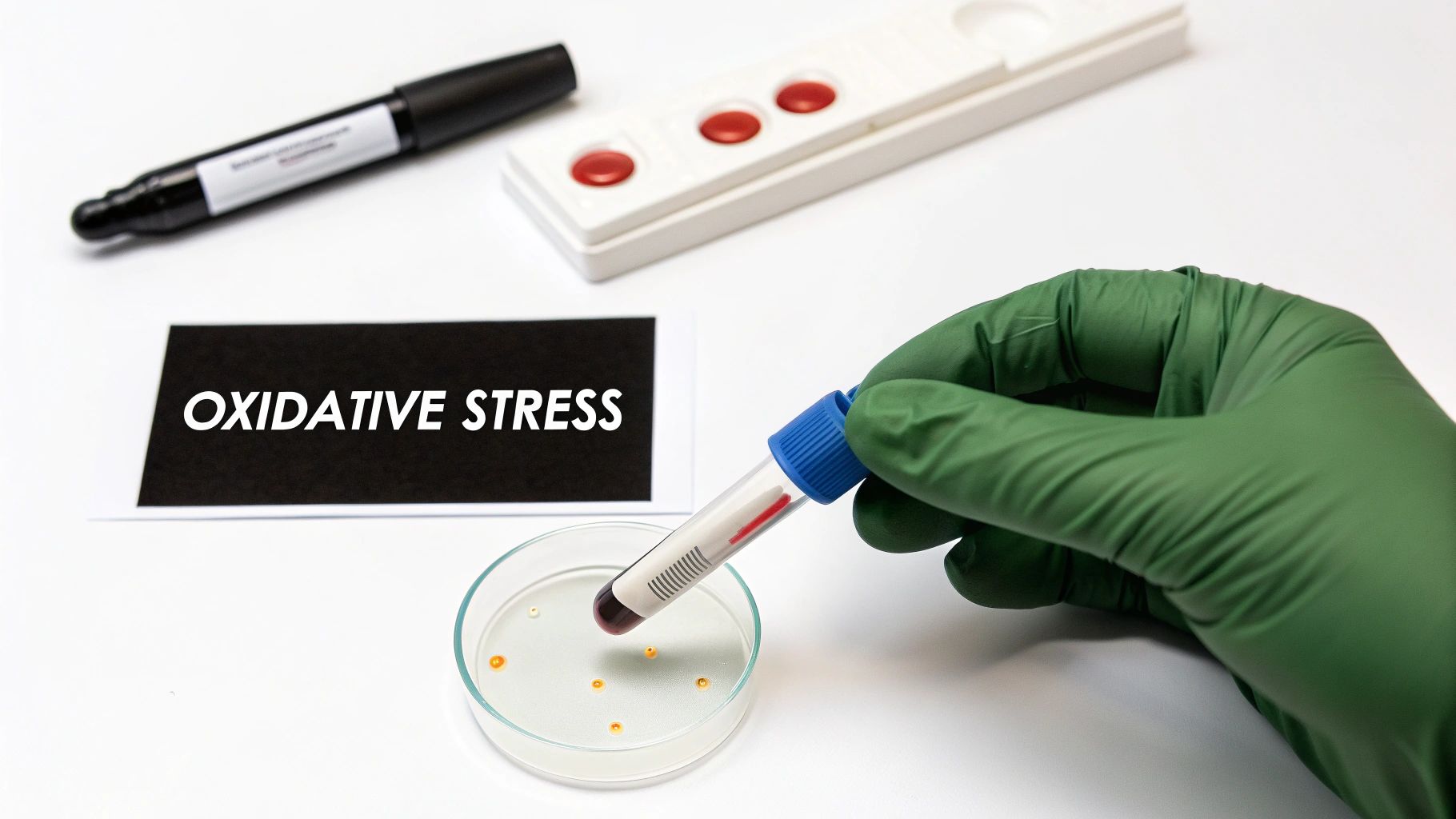
Think of ROS as cellular "exhaust" or pollution. While a small amount is normal, excessive ROS damages sperm cell membranes, impairs mitochondrial energy production, and fragments their DNA. This direct damage is a major cause of poor motility sperm, as it robs them of the energy and structural integrity needed to swim effectively. An antioxidant status assessment measures your body's natural defense system against this damage.
Why It Works for Sperm Motility
This assessment provides a clear diagnosis for what may be an invisible problem. If standard semen analysis shows low motility without an obvious cause, high ROS levels could be the culprit. Identifying an imbalance between ROS and antioxidants allows for a highly targeted intervention instead of guesswork.
- Pinpoints the Problem: It determines if oxidative stress is the primary factor harming sperm motility.
- Guides Treatment: The results directly inform whether antioxidant supplementation (like CoQ10, L-carnitine, or Vitamin E) is likely to be an effective treatment.
- Measures Progress: It establishes a baseline to track the effectiveness of lifestyle changes and supplements over time.
- Protects DNA: Lowering ROS not only improves motility but also protects the crucial genetic material inside the sperm.
How to Implement This Assessment
This is an advanced diagnostic test that you will need to request from a fertility specialist or an andrology lab. It is often recommended for men with unexplained poor sperm parameters or those who have not seen improvement from initial lifestyle adjustments.
Actionable Steps:
- Ask your urologist or fertility specialist about ROS testing alongside your next semen analysis.
- Request a comprehensive test that measures both ROS levels and Total Antioxidant Capacity (TAC).
- If results show high ROS, discuss a targeted antioxidant supplementation plan with your doctor.
- Combine supplementation with lifestyle changes known to reduce oxidative stress, such as quitting smoking, reducing alcohol intake, and avoiding environmental toxins.
- Plan to retest after three months of intervention to measure improvement and adjust the treatment plan accordingly.
Key Insight: Viewing sperm health through the lens of oxidative balance shifts the focus from just numbers on a report to the underlying cellular health. This test provides a direct, actionable target for improving the very engine that powers motility sperm.
6. Consider Sperm Functional Competence Testing
Beyond measuring how well sperm swim, advanced functional tests evaluate their ability to perform the crucial tasks required for fertilization. These assays assess if motility sperm are truly "job-ready" by testing their capacity to interact with and prepare to penetrate an egg. This provides a deeper, more comprehensive understanding of a man's fertility potential that standard semen analysis alone cannot offer.
This level of testing moves past simple counts and movement, examining the complex biological processes sperm must execute. It helps identify subtle functional defects that could explain cases of unexplained infertility, even when basic sperm parameters appear normal. Think of it as a performance review for sperm, ensuring they have the skills, not just the speed, to succeed.
Why It Works for Sperm Motility
Standard semen analysis confirms sperm can move, but functional testing reveals if that movement is effective and purposeful. It assesses critical capabilities that are essential for fertilization and are directly linked to the quality of a sperm's motility. These tests can provide a clearer diagnosis when other results are inconclusive.
Key functional aspects evaluated include:
- Acrosome Integrity: The ability of the sperm head to release enzymes necessary to penetrate an egg's outer layers.
- Hyperactivation: The change in swimming pattern sperm undergo as they approach an egg, which provides the thrust needed for penetration.
- Hyaluronan Binding: A test that shows if mature, healthy sperm can bind to hyaluronan, a substance found around the egg. This capacity is a strong indicator of fertilization potential.
How to Implement Functional Competence Testing
This advanced diagnostic step is typically recommended by a fertility specialist or urologist after initial semen analysis, especially in cases of unexplained infertility or repeated IVF failures. It provides crucial data for guiding treatment decisions.
When to Consider These Tests:
- Initial Evaluation: Combine with a standard semen analysis for a complete and highly detailed fertility picture from the start.
- Treatment Planning: Use the results to help decide between treatment options like IUI versus IVF with ICSI (Intracytoplasmic Sperm Injection).
- Investigating Failures: Evaluate why previous fertility treatments may not have succeeded despite seemingly adequate sperm numbers.
- Baseline Assessment: Document a man's full functional sperm capacity before starting any medical or lifestyle interventions.
Key Insight: Functional competence testing answers the "why" behind poor fertilization. It can reveal that even if sperm motility numbers are acceptable, a functional problem might be preventing conception, pointing toward more targeted and effective treatments.
For those looking to understand the full spectrum of male fertility diagnostics, you can learn more about how to improve sperm health. Discussing these advanced options with a reproductive specialist is the best way to determine if they are the right next step for your journey.
7. Hormonal Assessment and Endocrine Evaluation
The hormones in a man's body act as a command center, directing the intricate process of sperm production. If these hormonal signals are out of balance, it can directly impact sperm development, leading to issues with sperm motility. An endocrine evaluation involves a series of blood tests to measure key hormones, providing a clear picture of how well a man's reproductive system is being regulated.
This assessment is crucial because it helps distinguish between a problem originating within the testicles and a problem caused by the hormonal system that controls them. Poor motility sperm might not be due to a direct defect in the sperm themselves, but rather a correctable imbalance in the hormones that govern their creation and maturation. Identifying and treating an underlying endocrine issue can be a highly effective way to restore healthy sperm function.
Why It Works for Sperm Motility
A man's brain, specifically the pituitary gland, releases hormones like Luteinizing Hormone (LH) and Follicle-Stimulating Hormone (FSH) that tell the testicles to produce testosterone and sperm. If these signals are weak, disrupted, or if other hormones like prolactin or thyroid hormones are abnormal, the entire sperm production line can falter. This directly impacts the quality and energy of sperm.
- Testosterone: Essential for all stages of spermatogenesis. Low levels can severely impair sperm production and function.
- FSH: Directly stimulates the cells responsible for nurturing developing sperm.
- LH: Signals the testicles to produce testosterone.
- Prolactin & Thyroid Hormones: Imbalances in these can disrupt the primary reproductive hormone axis, indirectly harming sperm motility.
How to Implement a Hormonal Assessment
If a semen analysis reveals poor motility and other lifestyle factors have been addressed, your doctor may recommend a hormonal workup. This is a straightforward process that provides powerful diagnostic information.
Actionable Steps for Testing:
- Schedule a blood draw for early in the morning, ideally between 8 AM and 10 AM, when testosterone levels are at their natural peak.
- Ask your doctor to test for a full panel, including total and free testosterone, LH, FSH, prolactin, and thyroid-stimulating hormone (TSH).
- Be prepared to repeat the test if results are borderline. Hormone levels can fluctuate daily, so a second test confirms any potential issues.
- Discuss the results in detail with your doctor, who can interpret the ratios between hormones (like testosterone to LH) to pinpoint the source of the problem.
Key Insight: A hormonal imbalance is one of the most treatable causes of male infertility. Unlike some structural issues, endocrine problems can often be corrected with medication, leading to significant improvements in sperm parameters, including motility.
Consulting with a urologist or a reproductive endocrinologist is the best next step if you suspect a hormonal issue. They specialize in interpreting these results and can create a targeted treatment plan to optimize your hormonal health and improve your motility sperm.
8. Post-Ejaculation Urinalysis and Retrograde Ejaculation Testing
Sometimes, low sperm count or poor motility in a semen analysis isn't caused by a production issue but by a delivery problem. Post-ejaculation urinalysis (PEU) is a diagnostic test designed to identify a specific condition called retrograde ejaculation, where semen travels backward into the bladder during orgasm instead of exiting forward through the urethra. This results in a very low volume of ejaculate or even a "dry" orgasm.
This test is crucial because it can uncover a completely treatable or manageable reason for what appears to be a severe male fertility issue. Rather than assuming the body isn't making enough healthy sperm, PEU investigates if the sperm are simply being diverted. Identifying retrograde ejaculation shifts the entire treatment focus from trying to boost sperm production to simply retrieving the healthy sperm that are already being produced.
Why It Works for Sperm Motility
While retrograde ejaculation is primarily a problem of sperm delivery, it directly impacts the assessment of motility sperm in a standard semen analysis. When most of the semen goes into the bladder, the sample collected will have a very low volume and concentration of sperm, making it difficult to accurately assess motility or even find enough sperm for fertility treatments.
By analyzing a urine sample collected immediately after ejaculation, andrologists can confirm if sperm are present. Finding a large number of sperm in the urine confirms the diagnosis and opens up new pathways for conception. The issue isn't that the sperm can't swim; it's that they are trapped in the bladder. Specific procedures can then be used to retrieve these sperm from the urine for use in assisted reproductive technologies like IVF with ICSI.
How to Implement Post-Ejaculation Testing
If you have consistently low ejaculate volume (less than 1.5 mL) alongside a low sperm count, your doctor may recommend this test. The process is straightforward but requires careful timing and coordination with the lab.
Steps for the Test:
- Preparation: You may be asked to alkalinize your urine by taking a supplement like sodium bicarbonate beforehand, as the acidic environment of urine can harm sperm.
- Collection: You will masturbate and collect the ejaculate (if any) in a standard sample cup. Immediately after, you will urinate into a separate collection cup.
- Analysis: Both the semen and urine samples are taken to the lab for analysis. The lab will check the urine for the presence and quantity of sperm.
Key Insight: A diagnosis of retrograde ejaculation is often a relief. It provides a clear explanation for low sperm numbers and shifts the focus to sperm retrieval, a highly successful procedure, rather than trying to fix a production problem that may not exist.
If retrograde ejaculation is confirmed, your specialist will discuss options. This may involve stopping certain medications that can cause the condition, or proceeding with sperm retrieval from your urine to be used in fertility treatments. This targeted approach ensures that perfectly viable sperm are not overlooked due to a mechanical issue.
Sperm Motility Assessment: 8-Method Comparison
| Method | Implementation Complexity 🔄 | Resource Requirements & Cost ⚡ | Expected Outcomes 📊 | Ideal Use Cases 💡 | Key Advantages ⭐ |
|---|---|---|---|---|---|
| Computer-Assisted Sperm Analysis (CASA) | Medium–High; requires calibrated instrumentation and trained operators | High initial equipment cost ($50k–$150k), software/licenses, maintenance; lab infrastructure | Precise, reproducible quantitative motility metrics that inform treatment planning | High-volume fertility clinics, andrology labs, situations needing standardized motility data | ⭐ Objective, reproducible WHO‑compliant motility analysis; fast batch processing |
| Semen Culture & Infection Testing | Medium; standard microbiology workflows with contamination precautions | Low–Medium; culture media, PCR for specific pathogens; 48–72 h turnaround | Identification of treatable pathogens and antibiogram to guide therapy | Poor motility with infection risk, STI screening, pre-treatment evaluation | ⭐ Detects treatable causes of motility loss; cost‑effective and actionable |
| Sperm Viability Testing (Live/Dead Staining) | Low; simple staining but requires microscopy skill and timely processing | Low cost; rapid (5–10 min); fresh sample handling | Differentiates viable immotile vs. dead sperm to guide ICSI suitability | Immotile samples, ICSI candidacy, necrozoospermia assessment | ⭐ Quick, low‑cost clarification of viability that changes treatment decisions |
| Sperm DNA Fragmentation (TUNEL, SCSA, Comet) | High; specialized assays with variable standardization and interpretation | High cost ($200–$400/test), flow cytometry/equipment, expert interpretation | Quantitative measure of DNA damage; prognostic for fertilization, pregnancy outcomes | Recurrent pregnancy loss, unexplained ART failure, donor screening | ⭐ Detects hidden genomic defects; guides treatment and lifestyle interventions |
| ROS & Antioxidant Status Assessment | Medium–High; specialized biochemical assays (chemiluminescence, TAC) | High cost ($300–$500), limited availability, specialist interpretation | Identifies oxidative stress and antioxidant deficits affecting motility and DNA integrity | Suspected oxidative contributors (smoking, heat), unexplained poor motility | ⭐ Identifies modifiable oxidative causes and guides targeted antioxidant therapy |
| Sperm Penetration & Functional Competence Testing | High; time‑consuming functional assays requiring expertise | High cost ($400–$800), specialized reagents/equipment, limited labs | Evaluates fertilization‑related functions (zona binding, acrosome, hyperactivation) beyond motility | Unexplained fertilization failure, deciding IVF vs. ICSI, sperm selection for micromanipulation | ⭐ Predicts functional fertilization potential and informs ART strategy |
| Hormonal Assessment & Endocrine Evaluation | Low–Medium; routine blood tests but requires contextual endocrine interpretation | Low cost for assays; requires morning sampling and possible repeat testing | Detects endocrine causes of impaired spermatogenesis amenable to medical therapy | Suspected hypogonadism, abnormal semen parameters, systemic endocrine symptoms | ⭐ Identifies treatable hormonal drivers with direct therapeutic pathways |
| Post‑Ejaculation Urinalysis (Retrograde Ejaculation) | Low; simple urinalysis protocol but dependent on correct timing/collection | Low cost; same‑day results possible; patient cooperation required | Detects sperm in urine indicating retrograde ejaculation and quantifies retrograde component | Low ejaculate volume, medication‑induced ejaculation issues, neurologic injury | ⭐ Clear, non‑invasive diagnosis that enables urine sperm recovery and tailored management |
Your Proactive Path to Better Sperm Health
Understanding the nuances of sperm motility is a powerful step toward taking control of your reproductive health. Throughout this guide, we've explored the critical role that "motility sperm" plays in fertility, moving from what it means to how it's measured and, most importantly, how it can be improved. The journey from a complex semen analysis report to a clear, actionable plan is no longer a path a man has to walk alone.
The key takeaway is that sperm health is not a fixed state; it's a dynamic reflection of a man's overall well-being from the last three months. This means the choices you make starting today have a direct and measurable impact on your future fertility. By combining informed lifestyle adjustments with precise diagnostics, you can create a proactive strategy for enhancing your sperm quality.
Summarizing Your Path to Improved Motility
We've covered a wide range of assessments, from advanced Computer-Assisted Sperm Analysis (CASA) to crucial hormonal evaluations. Each test provides a unique piece of the puzzle, helping to identify underlying issues like infections, DNA damage, or hormonal imbalances that could be hindering sperm's ability to swim effectively. The central theme is clear: knowledge is power. Understanding why motility might be low is the first step toward effectively addressing it.
Remember, a low sperm motility score is not a final verdict. It is a starting point. It's a data point that, when interpreted correctly, provides a clear roadmap for what to do next. Whether the cause is oxidative stress, a varicocele, or a simple nutritional deficiency, there are targeted interventions available.
Your Top 5 Actionable Steps to Boost Sperm Motility
Taking action is the most critical part of this process. While consulting a specialist for a personalized plan is essential, you can begin making a positive impact right now. Here are the top five high-impact strategies to focus on for improving motility sperm.
Overhaul Your Diet with Antioxidant-Rich Foods: Oxidative stress is a primary enemy of sperm motility. Combat it by loading your plate with antioxidants.
- Actionable Tip: Aim to eat a "rainbow" of fruits and vegetables daily. Specifically, incorporate foods high in Vitamin C (citrus fruits, bell peppers), Vitamin E (nuts, seeds, spinach), zinc (oysters, lean meats, beans), selenium (Brazil nuts), and lycopene (tomatoes, watermelon). A handful of walnuts and one Brazil nut each day can provide a significant boost.
Optimize Your Exercise Routine (Don't Overdo It): Regular, moderate exercise is fantastic for circulation and hormone balance. However, excessive, high-intensity workouts can increase oxidative stress and scrotal temperature.
- Actionable Tip: Strive for 30-45 minutes of moderate activity, like brisk walking, jogging, or swimming, 3-5 times a week. If you're a cyclist, consider reducing long-duration rides or investing in a sperm-friendly saddle to minimize pressure and heat.
Prioritize Quality Sleep and Stress Reduction: Chronic stress and poor sleep elevate cortisol levels, a hormone that can suppress testosterone production and negatively affect sperm development.
- Actionable Tip: Establish a consistent sleep schedule, aiming for 7-8 hours per night. Incorporate stress-management techniques into your daily routine, such as 10 minutes of mindfulness meditation, deep-breathing exercises, or yoga.
Cool Down Your Environment: The testes function optimally at a temperature slightly cooler than the rest of the body. Consistently exposing them to high heat can severely impair sperm motility and production.
- Actionable Tip: Avoid hot tubs, saunas, and long, hot baths. Wear loose-fitting cotton underwear instead of tight briefs. If you work at a desk for long hours, make a point to stand up and walk around every 30-60 minutes to improve air circulation.
Re-evaluate Your Vices: Smoking, excessive alcohol consumption, and recreational drug use are directly toxic to sperm. The chemicals in cigarette smoke, for example, can damage sperm DNA and impair their swimming ability.
- Actionable Tip: If you smoke, quitting is the single most effective lifestyle change you can make for your fertility. Reduce alcohol intake to no more than a few drinks per week. Making these changes will improve not just your sperm motility but your overall health.
By focusing on these concrete steps, you are not just hoping for a better outcome; you are actively building it. Consistency is the key. These changes, implemented over the next 90 days, can lead to significant improvements in the health and motility of your sperm, giving you confidence and control on your path to fatherhood.
Ready to move from uncertainty to action? Don't let confusing lab reports stand in your way. Hera Fertility transforms your semen analysis results into a clear, understandable SmartScore and a personalized action plan. Get the insights you need to improve your "motility sperm" and take the next step with confidence. Visit Hera Fertility to order your test and start your proactive journey today.
Related Resource Articles
-
CoQ10 Male Fertility Supplement: 2026 Science and Guide
Improve sperm health with a CoQ10 male fertility supplement. Our 2026 guide covers clinical benefits and how to create an action plan for your journey.
17 min read
-
Understanding Teratozoospermia and Improving Sperm Health
Struggling with teratozoospermia? Learn what abnormal sperm shape means for male fertility and discover actionable steps to improve your sperm health.
22 min read
-
Understanding Low Sperm Motility Causes and How to Improve Them
Discover the main low sperm motility causes, from lifestyle choices to medical factors. Learn actionable steps to support and improve male fertility.
24 min read