Low sperm motility, a condition clinically known as asthenozoospermia, is when a man's sperm don't swim as well as they should. This sluggish movement can make it challenging for a man to achieve his fertility goals.
What Is Low Sperm Motility and Why Does It Matter?

When we talk about male fertility, sperm motility is a huge piece of the puzzle. Imagine a team of swimmers trying to cross a massive lake. It doesn’t really matter how many swimmers you have if none of them can actually move forward.
Sperm motility is simply the ability of sperm to move efficiently. For men, having strong swimmers is every bit as important as having a high sperm count.
The Importance of Forward Progression
Fertility specialists actually look at two different kinds of sperm movement during a semen analysis:
- Total Motility: This is the percentage of sperm that are moving at all. It includes the ones that are just twitching in place or swimming in tight circles.
- Progressive Motility: This is the metric that really counts. It measures the percentage of sperm that are swimming purposefully forward, either in a straight line or in large, sweeping circles. These are your Olympic swimmers—the ones capable of completing their journey.
Low sperm motility is diagnosed when a semen analysis shows that too few sperm are making that effective forward progress. While it's one of the most common reasons men face fertility challenges, the good news is that it’s often something that can be improved. You can dive deeper into how to read your results and understand your sperm motility in our detailed guide.
A diagnosis of low sperm motility is not the end of the road; think of it as a starting point. Figuring out the potential causes is the first and most critical step toward making a plan to boost your reproductive health.
An Overview of Potential Causes
The reasons why sperm might not be strong swimmers are incredibly varied, but they generally fall into a few key categories. Pinpointing the specific cause is crucial for finding the right path forward.
This guide will walk you through each of these areas, explaining what’s happening and what you can do about it.
To give you a bird's-eye view, here's a quick summary of the main factors we'll be exploring that can contribute to low sperm motility.
Key Causes of Low Sperm Motility at a Glance
| Cause Category | Common Examples | How It Can Affect Motility |
|---|---|---|
| Lifestyle | Poor diet, smoking, excessive alcohol, obesity | Creates oxidative stress and hormonal imbalances that damage sperm cells. |
| Medical | Varicoceles, infections, hormonal issues | Can physically obstruct sperm, disrupt production, or alter seminal fluid. |
| Environmental | Exposure to heat, toxins, heavy metals | Overheating the testicles or chemical exposure can impair sperm development. |
| Genetic | Chromosomal abnormalities, inherited conditions | Can result in structural defects in the sperm's tail, hindering movement. |
Each of these factors—from the food you eat to underlying medical issues—can have a real impact on how well your sperm can swim. Understanding which one might be at play is the key to taking control of your fertility.
How Everyday Lifestyle Choices Affect Sperm Motility

When we talk about the causes of low sperm motility, it's easy to get lost in complex medical topics. But the truth is, many of the most significant factors are tied to our everyday habits. That's actually great news because it puts a lot of the control right back in your hands.
Think of sperm production like a high-precision assembly line. To create healthy, energetic sperm, the body needs specific raw materials (nutrients), a stable and cool environment, and clear communication from its hormones. When our lifestyle choices throw a wrench into that system, the quality of the final product—especially motility—takes a direct hit.
The Impact of Diet on Sperm Health
What you eat quite literally builds your sperm. A diet that’s short on key nutrients starves the production line, often leading to sperm that are either too weak or just don’t have the fuel to swim effectively. On the flip side, a nutrient-rich diet acts like a shield.
Certain foods are full of antioxidants, which are crucial for fighting something called oxidative stress. You can think of oxidative stress as rust building up inside your body's machinery; it damages cells, and sperm are particularly vulnerable. By neutralizing these rogue molecules, antioxidants help keep sperm healthy, strong, and motile.
Here are some of the key players you want on your team:
- Zinc: An absolute powerhouse for sperm formation and testosterone metabolism. You'll find it in oysters, beef, pumpkin seeds, and lentils.
- Selenium: Essential for protecting sperm from damage and helping their tails move properly. Brazil nuts, tuna, and sardines are great sources.
- Omega-3 Fatty Acids: These healthy fats improve the flexibility of the sperm cell membrane, which is critical for swimming. Load up on fatty fish like salmon, plus walnuts and chia seeds.
- Vitamin C: This classic antioxidant, found in citrus fruits, bell peppers, and broccoli, does a fantastic job of protecting sperm DNA.
Even small changes here can add up. Swapping your afternoon bag of chips for a handful of walnuts or adding a side of broccoli to dinner are simple but powerful moves.
Weight and Exercise: A Delicate Balance
Your body weight and activity level play a massive role in your reproductive health. Both being significantly overweight and underweight can throw the delicate hormonal symphony needed for sperm production completely out of tune.
Excess body fat, especially around the stomach, creates a double-whammy. First, it can raise the temperature of the scrotum—a big problem since sperm production demands a cooler-than-body-temperature environment. Second, fat tissue actually converts testosterone into estrogen, which creates a hormonal imbalance that is a direct cause of poor sperm motility.
Lifestyle factors, particularly obesity and sedentary behavior, are strongly linked to low sperm motility. Sedentary lifestyles can halve progressive motility in obese men, as fat tissue converts testosterone to estrogen, slashing motile sperm by 15-20%. Diets high in fruits and omega-3s can boost motility by 10-15%, highlighting the power of prevention. Find out more about how the latest science views the decline in male fertility on mensreproductivehealth.com.
This is where regular, moderate exercise comes in. It helps you maintain a healthy weight and boosts circulation, both of which are fantastic for sperm production. But it’s all about balance. Over-the-top, intense exercise can sometimes put too much physical stress on the body, temporarily lowering sperm quality. Stick to things like moderate jogging, swimming, or weight training for the best results.
Harmful Habits to Ditch
Some common habits are notoriously bad for sperm health, and motility is often the first thing to suffer. Cutting these out—or at least, cutting back—is one of the most effective things you can do.
Smoking Tobacco and Marijuana
When you smoke, you're flooding your bloodstream with thousands of toxins. These chemicals can directly mangle sperm DNA, lower sperm counts, and slam the brakes on motility. The more you smoke, the worse the damage gets.
Excessive Alcohol Consumption
While a drink here and there isn't likely to cause an issue, heavy and chronic alcohol use is a different story. It can tank testosterone levels, mess with sperm shape, and torpedo motility. At high levels, alcohol is a toxin that interferes directly with the hormones that run the entire sperm production show.
Changing long-standing habits is never easy, but the link between these choices and your fertility is undeniable. Taking proactive steps to clean up your diet, manage your weight, and ditch harmful substances is the single best foundation for boosting your sperm motility and overall reproductive health.
Medical Conditions That Can Hinder Sperm Movement
While your lifestyle habits are a huge piece of the fertility puzzle, sometimes low sperm motility stems from an underlying medical issue. Getting to the bottom of these conditions is often the quickest way to see real improvement. Think of it like a car that keeps stalling—you can fill it with the best gas on the market, but if the problem is a faulty spark plug, you won’t get far until you fix that specific part.
Many of these health issues throw a wrench into the complex machinery that produces and transports sperm. They might raise the temperature, mess with critical hormone signals, or trigger inflammation that damages sperm along their journey. The only way to know for sure what's going on is to get a proper medical evaluation.
Varicoceles: The Most Common Culprit
One of the most common reasons men struggle with infertility is a condition called a varicocele. Simply put, it's a bundle of enlarged veins in the scrotum, similar to varicose veins. This isn't a rare disorder; varicoceles are found in about 15% of all men and show up in as many as 40% of men seeking help for infertility.
So, what's the big deal about some swollen veins? They cause blood to pool, which cranks up the heat inside the scrotum. Sperm production is incredibly sensitive to temperature, so this warmer environment can seriously disrupt how sperm develop, leading directly to poor motility and lower counts. The good news is that varicoceles are often fixable with a minor surgical procedure, which can bring the temperature back down and create a healthier space for sperm to be made.
The Impact of Reproductive Tract Infections
Infections in the male reproductive system can be another major, and often silent, cause of low sperm motility. When bacteria or viruses set up shop, your body's natural defense system kicks in, causing inflammation. While this is great for fighting off the bug, it can create a really hostile environment for sperm.
This inflammation releases damaging molecules that can attack sperm cells, making them less effective swimmers. In some situations, an infection can even create blockages in the tiny tubes that transport sperm, physically stopping them from getting where they need to go. Thankfully, many of these infections, like those in the prostate or epididymis, can be cleared up with antibiotics, which often results in a solid boost to sperm health.
Hormonal Imbalances and Their Effects
The entire sperm production process is directed by a delicate symphony of hormones, with testosterone playing the lead. If that hormonal balance gets thrown off, the whole system can start to struggle. Low testosterone, a condition called hypogonadism, is a well-known cause of low sperm motility because it directly weakens sperm production.
But it’s not just about testosterone. Other hormones, like those from the pituitary gland, are responsible for telling the testes to get to work in the first place. A hormone imbalance can be triggered by anything from genetic conditions and thyroid problems to lifestyle factors that impact your endocrine system.
A professional medical evaluation is essential. Trying to self-diagnose based on symptoms alone can be really misleading. A doctor can run specific blood tests to check your hormone levels and give you an accurate picture of what's happening inside your body.
Here’s a quick breakdown of how these medical issues typically sabotage sperm motility:
- Varicoceles: Mainly cause the testicles to overheat, which damages developing sperm and saps their energy.
- Infections: Create inflammation and oxidative stress that directly harm sperm cells, messing with their structure and ability to move.
- Hormonal Issues: Disrupt the fundamental signals needed for sperm to mature properly, resulting in weaker, less motile sperm.
For any man worried about his fertility, the first step is always a thorough check-up. Finding out that a medical issue is behind your low sperm motility isn't bad news—it’s actually empowering. It gives you a clear target for treatment and a real path toward improving your reproductive health.
Age and Your Environment: The Unseen Influences on Sperm Health
When we talk about what causes low sperm motility, it's easy to focus on diet, exercise, or obvious medical issues. But two of the biggest players are often working in the background: your age and your everyday environment. Their effects are more of a slow burn than a sudden problem, but over time, their impact on sperm health can be huge.
Getting a handle on these factors is about seeing the bigger picture of your reproductive health. It means understanding that male fertility has its own timeline and that our modern world is full of hidden stressors. The good news is, you can take steps to manage these risks and protect your fertility for the long run.
Does Age Really Affect Male Fertility?
Men have a biological clock too—it just ticks a bit differently. It's a simple biological reality that as men get older, the complex machinery inside the body that produces sperm starts to lose some of its efficiency. This can lead to a gradual slide in key sperm health markers, and motility is often one of the first things to decline.
This isn't an overnight cliff-drop. Think of it more as a gentle, downward slope that often becomes more noticeable after a man hits 35. That’s why advanced paternal age is now recognized as a significant factor in low sperm motility. Study after study shows that both total motility (how many sperm are moving) and progressive motility (how many are moving forward effectively) tend to decrease as men enter their late 30s and beyond.
For instance, one major study found that total sperm motility takes a significant hit in men aged 35-39 and an even bigger one for those over 40. Progressive motility—the real MVP for successful conception—seems to peak before age 30 and then starts to decline, with the steepest drop happening after 40. You can dive deeper into the research on how age impacts male fertility here.
Everyday Environmental Risks to Your Sperm
Your sperm are surprisingly sensitive. The process of making them is a delicate one, and it can be thrown off by things you might not even think about, especially heat and chemical exposure.
There’s a reason the testicles are outside the body: they need to be a few degrees cooler than your core temperature to do their job right. When they get too warm, sperm production can slow down, and the sperm that are made might not be great swimmers or have the right shape.
Think of the scrotum as a built-in, highly effective cooling system. Anything that messes with its ability to regulate temperature—even for a little while—can disrupt the entire 74-day sperm production cycle and hurt your motility.
Here are some common culprits that can crank up the heat or expose you to harmful substances:
- Your Laptop: It might seem harmless, but resting a warm laptop on your lap for hours can raise the scrotal temperature enough to cause problems.
- Hot Tubs & Saunas: Regularly soaking in a hot tub, sitting in a sauna, or even taking super hot baths can temporarily tank your sperm count and motility.
- Your Job: Some professions come with built-in risks. Long-haul truck drivers who sit for hours or chefs and factory workers in high-heat environments can be more susceptible to overheating.
- Chemicals: Exposure to things like pesticides, heavy metals (lead, mercury), industrial solvents, and other chemicals can be directly toxic to sperm or mess with the hormones that control their production.
The best part is that many of these environmental risks are totally within your control. Simple changes—like putting your laptop on a desk or cutting back on hot tub time—can make a real difference. And if your job involves chemical exposure, being diligent about using protective gear is one of the most important things you can do to protect your fertility from these external causes of low sperm motility.
Getting a Clear Diagnosis for Low Sperm Motility
Knowing the potential causes is one thing, but getting a clear, accurate diagnosis is the crucial next step. This is where the guesswork stops and you get a solid baseline to work from. The entire diagnostic journey hinges on one key test: the semen analysis.
While the thought of a fertility test can be a bit daunting, the process itself is actually quite simple. It’s a non-invasive way to get a powerful snapshot of your sperm health. With modern options like at-home testing kits and private lab appointments, it’s never been easier or more comfortable for men to get these important answers.
What a Semen Analysis Actually Measures
A semen analysis isn't just a sperm count. It's a comprehensive evaluation of several key health markers, but when we're talking about motility, two metrics really stand out.
Think of it like a performance review for a team of swimmers. You don't just want to know how many swimmers are in the pool; you need to know how many are actually making forward progress toward the finish line.
- Total Motility: This is the percentage of sperm that are moving in any way. This includes the strong forward swimmers, but also the ones just twitching in place or swimming in circles.
- Progressive Motility: This is the one that really counts for fertility. It measures the percentage of sperm that are actively moving forward in a straight line. These are the "all-stars" capable of completing their journey.
When a doctor diagnoses asthenozoospermia (the medical term for low sperm motility), it specifically means that the percentage of these forward-moving sperm is lower than the healthy reference range.
This decision tree shows how various factors, from your age to environmental exposures, can all play a role in overall sperm health.
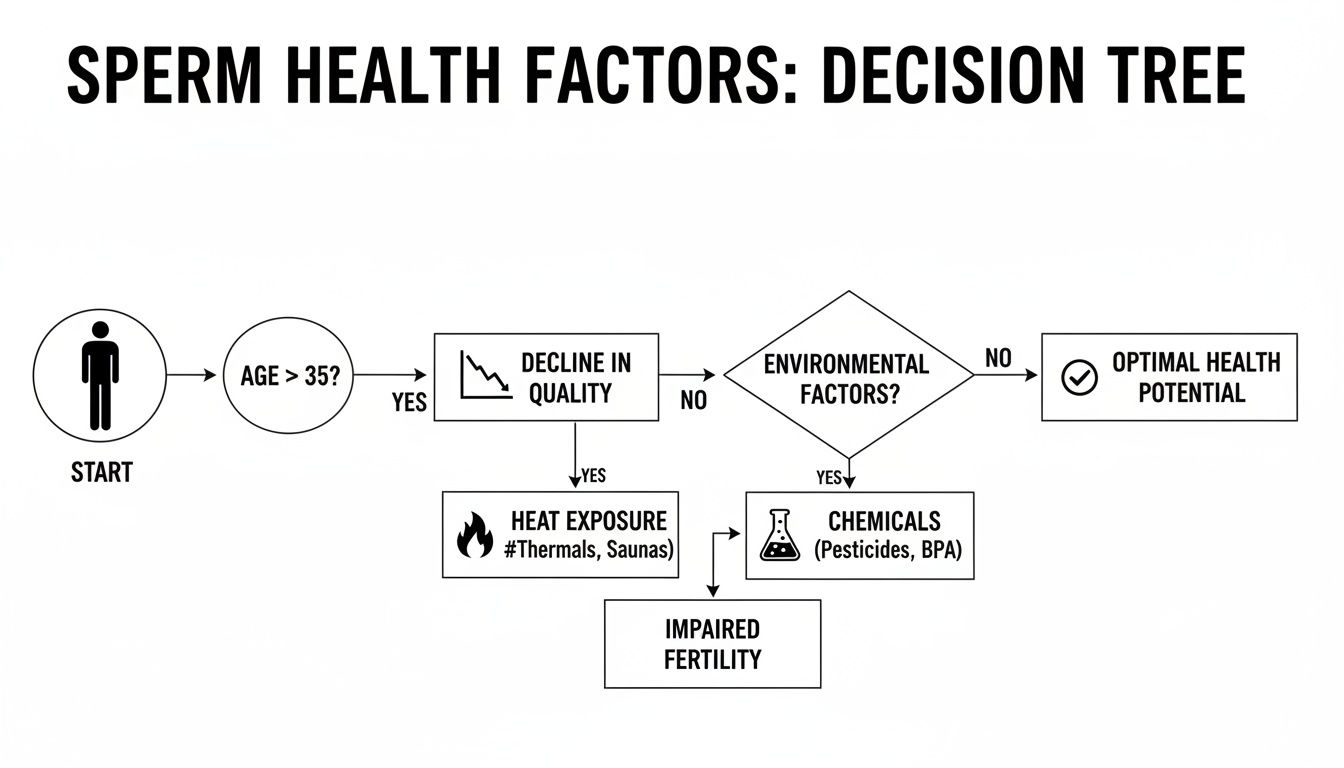
The flowchart makes it clear that both internal factors like aging and external ones like heat can directly impact sperm quality.
Interpreting Your Semen Analysis Results
Getting a lab report full of technical terms and percentages can feel overwhelming at first. But breaking it down is simpler than you might think. The World Health Organization (WHO) sets the global standards that labs use to define what's considered "normal."
For motility, these are the key numbers to look for:
- At least 40% of your sperm should be moving (total motility).
- At least 32% of your sperm should be swimming forward purposefully (progressive motility).
If your results fall below these thresholds, it points to a potential motility issue. It's also important to know that these numbers can fluctuate. One test is just a snapshot in time, so a doctor will often recommend a second analysis a few weeks later to confirm the results. For a more detailed walkthrough, check out our guide on how to read semen analysis results.
It's not just you. Large-scale studies show that sperm health is on a global decline, making it more common for men to see results below these WHO benchmarks. A major 2023 review revealed that sperm concentration has plummeted by 51.6% since 1973, with motility showing similar downward trends.
This trend really highlights why getting tested is so valuable. It gives you a clear, personalized starting point. With Hera Fertility, you can book a test at a lab near you and get an AI-powered analysis that breaks down the complex data into a simple Hera SmartScore, helping you understand exactly where you stand and what your next steps should be.
Actionable Steps to Improve Sperm Motility
Getting a diagnosis of low sperm motility can feel like a setback, but it’s really just a starting point. Think of it as a clear signal showing you exactly where you can make impactful changes. The great news is that many causes are reversible, and taking targeted action can make a real difference in your sperm health.
Let's walk through a practical roadmap, breaking down the solutions into three key areas: lifestyle tweaks, powerful supplements, and proven medical treatments. Understanding your options is the first step toward building a plan with your doctor that gives your sperm the best possible shot at becoming stronger swimmers.
Targeted Lifestyle Adjustments for Better Motility
The bedrock of better sperm health is built on your daily habits. It’s a lot like taking care of a car—the right fuel and maintenance can dramatically improve performance. In the same way, simple shifts in your diet, exercise, and daily routines can directly influence sperm production and their ability to swim.
Making positive changes here is often the most effective place to start.
- Load Up on an Antioxidant-Rich Diet: Your goal is to protect sperm from cellular damage. You can do this by focusing on whole foods packed with antioxidants. Think fruits like berries, oranges, and pomegranates; leafy greens like spinach and kale; and healthy fats from avocados, nuts, and seeds.
- Maintain a Healthy Weight: Excess body fat can raise the temperature in the scrotum and throw your hormones out of whack—both of which can directly harm sperm motility. Getting to a healthy body mass index (BMI) through a balanced diet and regular activity is key.
- Exercise the Smart Way: Moderate, consistent exercise is a game-changer for circulation and hormone regulation. Things like jogging, swimming, or lifting weights for 30-45 minutes on most days of the week is the sweet spot. A healthy lifestyle is a huge part of improving sperm health, and this includes finding physical activities you enjoy; you can explore various workout routines to help keep you moving.
- Cut Back on Smoking and Alcohol: Tobacco is filled with toxins that are known to damage sperm DNA and slow them down. Heavy drinking can also tank your testosterone levels. Reducing—or even better, eliminating—these habits is one of the fastest ways to see positive changes.
The Strategic Use of Supplements
While a good diet is non-negotiable, certain supplements can give you a concentrated dose of the specific nutrients that fuel sperm and build their structure. These compounds are crucial for the sperm cell's powerhouse—the mitochondria—and help shield it during its long journey.
It's always a good idea to chat with your doctor before starting any new supplements to make sure they're right for you and to get the dosage just right.
Here are some of the most well-researched supplements for boosting sperm motility:
- Coenzyme Q10 (CoQ10): A powerful antioxidant that's highly concentrated right where sperm need it most: in their mitochondria. It helps generate the massive amount of energy sperm need to swim effectively.
- L-Carnitine: This amino acid is like a shuttle service for energy. It transports fatty acids into the mitochondria so they can be converted into fuel, ensuring your sperm have the gas they need for their marathon swim.
- Zinc and Selenium: These two minerals are the cornerstones of male reproductive health. Zinc is critical for creating sperm and producing testosterone, while selenium acts as a bodyguard, protecting sperm from damage and helping build a strong, functional tail.
Think of supplements as a specialized support crew. Your diet provides the general fuel, but these key nutrients offer the high-octane boost and protective gear needed for peak performance.
Proven Medical Treatments for Underlying Causes
Sometimes, lifestyle changes alone aren’t enough because there's an underlying medical issue getting in the way. In these cases, treating the root cause is the most direct path to improving sperm motility. A thorough check-up with a urologist or fertility specialist is the best way to find out if one of these issues is a factor for you.
If a medical condition is found, there are several highly effective treatments available.
- Varicocele Repair: Since varicoceles are a leading cause of male infertility, fixing them can lead to major improvements. The fix is usually a minor surgery (a varicocelectomy) that ties off the enlarged veins. This brings down the scrotal temperature and creates a much healthier environment for sperm production.
- Hormone Therapy: If blood work shows a hormone imbalance, like low testosterone, your doctor might prescribe medication to get your levels back to normal. This treatment helps restore the right hormonal signals your body needs to produce healthy, motile sperm.
- Antibiotics for Infections: When an infection in the reproductive tract is the culprit, a simple course of antibiotics can often clear it right up. Once the inflammation and stress from the infection are gone, sperm health and motility can bounce back surprisingly quickly.
Taking these steps puts you back in control of your reproductive health. For even more detailed guidance, you can check out our complete overview on how to improve sperm health.
Common Questions About Sperm Motility
When you start digging into male fertility, it's natural for a lot of questions to pop up. Let's tackle some of the most common ones men have about sperm motility, with clear answers to help you figure out what to do next.
Can I Fix Low Sperm Motility?
Yes, in many cases, you absolutely can. The first step is to pinpoint what's causing it. If the problem is linked to lifestyle choices—think poor diet, smoking, or not getting enough exercise—making positive changes can make a real difference.
Sometimes, a specific medical issue is the culprit. For instance, if a varicocele (an enlarged vein in the scrotum) is diagnosed, treating it can often get sperm function back on track. While genetic causes can be trickier, getting a proper diagnosis from a doctor is the only way to build a plan that actually works for you.
How Long Until I See a Change?
Improving sperm motility takes time and commitment. A full cycle of sperm production, from creation to maturity, takes about 74 days. This is a hardwired biological timeline.
It means any changes you make today—whether it's supplements, a new diet, or a medical treatment—will need about three months to fully impact a new batch of sperm. So, if you clean up your diet and start working out, stick with it for at least that long before you get another semen analysis. This gives your body the time it needs to produce new sperm under better conditions, so you can see the true impact of your efforts.
Think of it like planting a garden. You don't see results the day after you plant the seeds. It takes time, care, and the right conditions for growth to happen. The same principle applies to improving sperm health.
Does Stress Really Hurt Sperm Motility?
It sure can. When you're constantly stressed out, your body is flooded with the hormone cortisol. High cortisol levels can mess with testosterone production, which is a cornerstone of healthy sperm development and a known cause of low sperm motility.
On top of that, stress often pushes us toward unhealthy habits like comfort eating, skipping sleep, or drinking more, all of which are bad news for sperm quality. Learning to manage stress is a huge, often-missed piece of the puzzle. Whether it's through exercise, meditation, or just making time for a hobby you love, it helps balance your hormones and creates a better environment for your body to do its job.
Ready to move from uncertainty to clarity? Hera Fertility provides a simple path to understanding your reproductive health. Order a physician-approved semen analysis at a lab near you, and our AI-powered platform will translate your results into a clear Hera SmartScore with personalized next steps. Get the answers you need at https://herafertility.co.
Related Resource Articles
-
How to Improve Sperm Motility Naturally
Discover how to improve sperm motility naturally with actionable, science-backed advice on diet, exercise, and lifestyle changes to boost male fertility.
20 min read
-
A Guide to Male Supplements for Fertility and Sperm Health
Discover how male supplements for fertility can support sperm health. Our guide explains key nutrients, how they work, and what to look for in a quality blend.
22 min read
-
Male Fertility Supplements: A Guide to Supporting Sperm Health
Discover top male fertility supplements to support sperm health. Our guide covers key nutrients like CoQ10, Zinc, and Omega-3s for men's reproductive health.
11 min read