When you hear the term "sperm morphology," it can sound pretty technical and maybe even a little intimidating. But let's break it down in a clear, supportive way.
Think of it like this: every sperm is on a mission, and to succeed, it needs the right equipment. Morphology is just the study of a sperm's shape and structure—its physical form. For men, understanding this is a key part of managing their reproductive health.
What Is Sperm Morphology, Really?
Imagine each sperm is a tiny, highly specialized vehicle designed for one very specific journey. For this vehicle to work, all its parts have to be just right: a smooth, oval-shaped head to carry the genetic cargo, a strong midsection packed with energy, and a long, powerful tail to propel it forward.
A semen analysis measures what percentage of these "vehicles" are perfectly built. While it's easy to think a high score is what you want, the reality of male fertility is a bit different. The vast majority of sperm in any given sample aren't perfectly formed, and believe it or not, that’s completely normal for men. The focus isn't on perfection across the board, but on having enough of the correctly shaped sperm to get the job done.
What’s a “Normal” Morphology Score?
The standards for what counts as normal have changed over the years as our understanding of male fertility has deepened. Today, normal sperm morphology is all about the percentage of sperm with the ideal shape needed for fertilization.
According to the World Health Organization's (WHO) latest guidelines (the 6th edition manual), a normal morphology score is at least 4%.
That number can be a real shocker for many men. 4%? It sounds incredibly low, like a failing grade on a test. But it’s not. This benchmark comes from extensive research into male fertility, showing that men at or above this level can and do become fathers.
The key takeaway is this: a morphology score of 4% or higher is considered normal. It's not a pass/fail of 4 out of 100, but a clinical indicator that a healthy percentage of your sperm have the optimal structure for their mission.
To give you a clearer picture of what the lab is looking for, let's break down the ideal anatomy of a sperm cell.
Anatomy of a Healthy Sperm
Here's a simple breakdown of the ideal parts of a sperm cell, helping you visualize what labs are looking for under the microscope.
| Sperm Part | What Makes It 'Normal' |
|---|---|
| Head | A smooth, oval shape, roughly 2.5-3.5 micrometers wide and 4.0-5.0 micrometers long. The acrosome (the cap) should cover 40-70% of the head. |
| Midpiece | Slender, straight, and properly attached to the head. This is the "engine room" that powers the tail. |
| Tail | A single, uncoiled tail that's about 45 micrometers long. It should be thinner than the midpiece and free of kinks or breaks. |
This detailed inspection helps technicians identify the sperm that have the best chance of successfully completing their journey.
Of course, this score is just one piece of a much larger puzzle. It provides valuable insight, but it’s always evaluated alongside other critical male fertility factors, such as:
- Sperm Count: The total number of sperm you have.
- Sperm Motility: How well your sperm can swim.
Together, these numbers create a complete picture of your reproductive health, helping to guide the best next steps. You can learn more about how these standards were developed and what they mean for male fertility.
How Labs Analyze Your Sperm Shape
When you get a semen analysis report back, the numbers can feel a bit abstract. But behind that morphology score is a highly detailed, scientific process carried out by skilled lab technicians. Let's pull back the curtain and see exactly how they figure out your sperm's shape.
The whole thing starts with a powerful microscope. A trained andrologist places a small part of your semen sample onto a slide, adds a special stain to make the sperm visible, and then meticulously examines them one by one. Think of it as a quality control inspection for your sperm.
The Criteria for Normal Morphology
Technicians don’t just eyeball it and make a guess. They compare each individual sperm against very specific, standardized guidelines to keep things consistent from lab to lab. Historically, two main sets of criteria have been the gold standard:
- WHO Criteria: The World Health Organization provides guidelines that are used all over the globe.
- Kruger's Strict Criteria: Developed back in the 1980s, this is a much more stringent method that holds sperm to much tighter, "perfect" specifications.
Over the years, the WHO has actually folded principles from the stricter Kruger criteria into its own standards. This is why the modern benchmark for normal morphology is 4% or higher. It’s a number that reflects a more precise, updated understanding of what really makes a sperm cell ideally shaped for its function. This whole approach ensures the analysis is a standardized scientific assessment, not just one person's subjective opinion.
The use of strict, internationally recognized criteria means your morphology score is based on objective, measurable data. It's a consistent process designed to provide the most accurate picture of your sperm health.
To really get what's being evaluated, it helps to visualize the three main parts of a sperm cell. This diagram breaks down the basic anatomy that technicians are looking at.
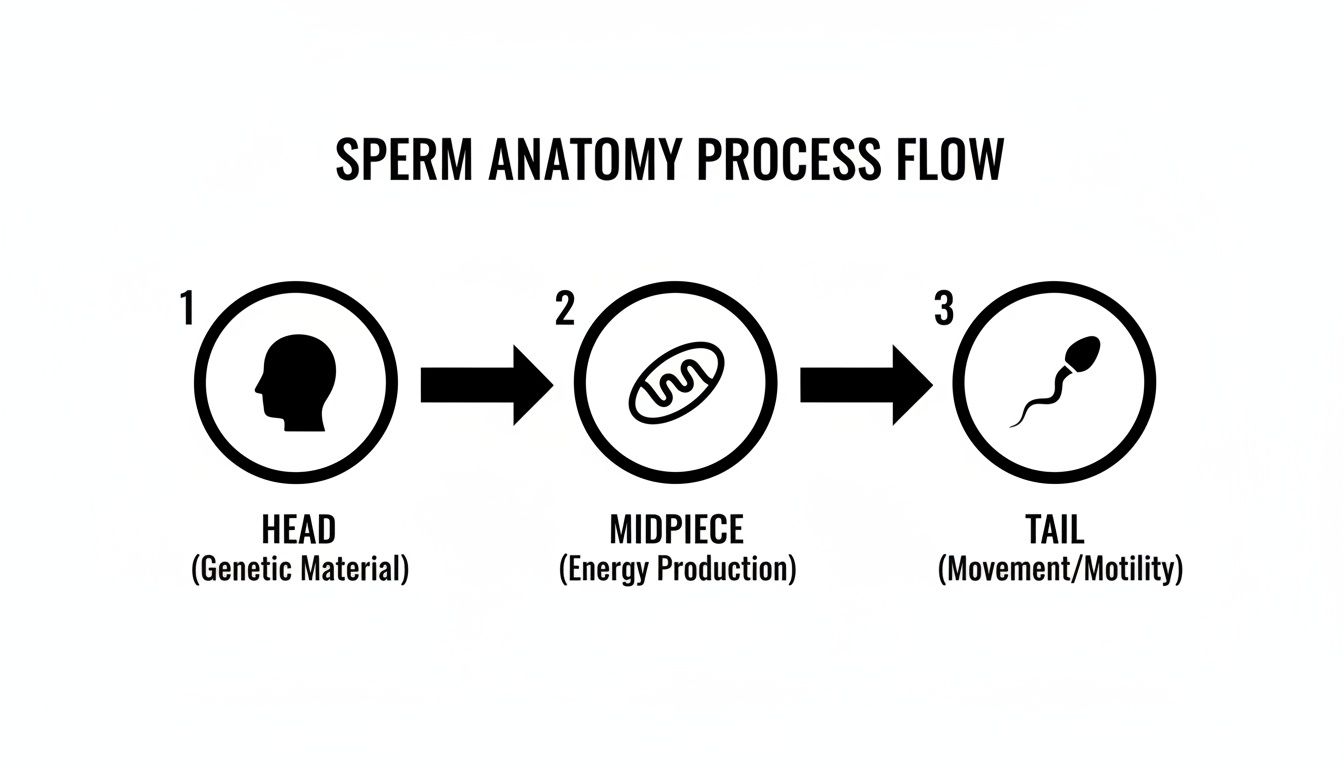
Each of these parts—the head holding the genetic material, the midpiece providing energy, and the tail driving movement—has to meet precise size and shape requirements to get counted as "normal." Any deviation, like a head that’s too big or a tail that's coiled up, gets that sperm classified as abnormal.
When you get your semen analysis report back and see a number like 5% or 6% for normal sperm morphology, it’s easy to feel a little panicked. In almost any other context, a score that low would feel like a failing grade. But in the world of male fertility, that’s actually a perfectly healthy, reassuring result.
Over the years, as scientists have gotten better at understanding male fertility, the standards have been fine-tuned. It turns out that having a low percentage of perfectly shaped sperm is the norm for men, not some rare problem. Think of it less like a final exam and more like a simple inventory check—the lab is just confirming you have a healthy number of sperm with the ideal structure.
Putting Your Percentage into Perspective
So, what do the numbers on your report actually mean for you? It really comes down to understanding the threshold that separates a normal result from one that might need a closer look.
- Above 4%: A score in this range is considered normal. This tells you that you have a sufficient population of correctly shaped sperm to support becoming a father.
- Below 4%: A score under this cutoff is classified as teratozoospermia. While the term sounds intimidating, it just means that fewer than four out of every one hundred sperm have a normal shape.
It's so important to remember that a teratozoospermia diagnosis doesn't mean you can't be a father. It’s simply an indicator that the shape of your sperm might be a contributing factor, and it’s time to look a bit deeper into your overall reproductive health. A helpful next step is to discuss these results with a fertility specialist or urologist.
A low morphology score isn't a final verdict on your fertility. It's just one piece of data that helps build a complete picture of your sperm health, pointing you toward the most effective next steps.
Sperm Morphology Is Never a Solo Act
Your sperm morphology score is a crucial piece of the puzzle, but it's just that—one piece. It should never be looked at all by itself. To get a real sense of your fertility potential, that number has to be considered alongside two other critical factors from your semen analysis.
For a deep dive into every parameter on your report, our complete guide on how to read semen analysis results is a great place to start.
The clearest picture of male fertility emerges when you look at how these three key elements work together:
- Sperm Count (Concentration): How many sperm are in your sample? A really high count can often make up for a lower morphology score because, even with a smaller percentage, the total number of normal sperm is still substantial.
- Sperm Motility: How well do your sperm swim? Strong, forward-moving sperm are absolutely essential. Great motility can significantly improve your chances, even if you have fewer perfectly shaped sperm.
- Sperm Morphology: What percentage of your sperm have the correct shape? This is the final piece that completes the profile.
Let's put your score into a bit more context with a simple guide.
Sperm Morphology Score Interpretation Guide
This quick-reference table can help you understand what your morphology percentage means at a glance. Remember, this is just one part of your overall male fertility picture.
| Morphology Score | Classification | What This Means for You |
|---|---|---|
| Above 4% | Normal | Your score is within the healthy range. You have a sufficient number of normally shaped sperm for natural fatherhood. |
| 1% to 3% | Mild Teratozoospermia | Your score is slightly below the normal threshold. It might be a contributing factor, but other parameters (count, motility) are key. Discussing next steps with a specialist is a good idea. |
| 0% | Severe Teratozoospermia | No normally shaped sperm were observed. This requires further investigation by a urologist or fertility specialist. |
It's all about seeing the big picture. One number doesn't define your fertility journey.
The 4% normal morphology benchmark, established by the WHO's 2021 guidelines, is a powerful fertility predictor. It's backed by global statistics from millions of analyses. While men can and do become fathers with lower scores, hitting that 4% or higher mark is consistently linked with better outcomes.
What Affects Sperm Morphology?

Seeing your sperm morphology score is one thing, but understanding why it is what it is—that’s what empowers you to take meaningful action. Sperm development is a remarkably sensitive process, and a whole host of factors can interfere with it and affect the final shape of the sperm.
The good news? Many of these influences are actually within your control. Your score isn't a life sentence; it’s more like a snapshot of your body's environment over the last three months. So, let’s dig into the common culprits that can impact the journey to normal morphology of sperm.
Lifestyle and Environmental Influences
Your day-to-day habits and your surroundings play a huge role in sperm production. This is great news, because these are often the easiest areas to start making changes.
Excessive heat is a well-known enemy of healthy sperm. There’s a biological reason the testicles are outside the body—they need to stay a bit cooler than your core temperature. Things like frequent dips in a hot tub, regular sauna sessions, or even just resting a hot laptop on your lap for hours can raise the scrotal temperature enough to mess with sperm formation and morphology.
On top of that, certain lifestyle choices can trigger something called oxidative stress. This is basically a type of cellular damage that is especially harmful to developing sperm.
- Smoking: Tobacco use has been consistently tied to lower sperm quality across the board, including poorer morphology.
- Excessive Alcohol: Heavy drinking can mess with testosterone production and directly impair the sperm development process.
- Poor Diet: If your diet is low in antioxidants, vitamins, and crucial minerals like zinc and selenium, your body won't have the essential building blocks it needs to create properly shaped sperm.
Think of sperm production like a delicate assembly line. Factors like excess heat or oxidative stress are like wrenches thrown into the machinery, causing defects in the final product. By managing these external influences, you help ensure the assembly line runs smoothly.
Medical and Genetic Factors
Sometimes, the root cause of abnormal morphology lies in an underlying medical condition. These issues can directly interfere with the environment where sperm are made and stored, leading to a higher percentage of misshapen cells.
One of the most common medical culprits is a varicocele, which is essentially an enlargement of the veins inside the scrotum. This condition can raise testicular temperature and increase oxidative stress—a double whammy for sperm morphology. Other potential medical factors include hormonal imbalances, infections in the reproductive tract, and certain genetic conditions.
Because these causes are medical, they almost always require a proper diagnosis from a urologist or fertility specialist. This is a crucial next step if you have concerns. The upside is that identifying and treating an underlying issue like a varicocele can sometimes lead to dramatic improvements in all sperm parameters, morphology included. This just goes to show how important a thorough evaluation is if your semen analysis results come back outside the normal range.
Actionable Steps to Improve Your Sperm Morphology

So you've got your sperm morphology score. The first step is understanding it, but the next—and most important—is taking action. While some things that influence sperm shape are genetic, many factors are tied directly to your lifestyle and environment. And that’s actually great news, because it means you have a surprising amount of control over your reproductive health.
The key thing to remember is that sperm production isn't an overnight process. It’s a continuous cycle that takes roughly three months from start to finish. That means any positive changes you make today will need about that long to show up in your semen analysis. Patience and consistency are your two best friends.
Fueling Your Body for Better Sperm Production
Think of it this way: you wouldn't put cheap fuel in a high-performance engine. Your body is no different—it needs the right nutrients to produce high-quality sperm. A diet loaded with antioxidants is one of your best defenses against something called oxidative stress, which can damage developing sperm cells and lead to those abnormal shapes.
Try to focus on incorporating foods that are packed with these heavy hitters:
- Vitamin C and E: Found in things like citrus fruits, berries, nuts, and seeds, these antioxidants are like bodyguards for your sperm, protecting them from cellular damage.
- Zinc: Oysters, beef, and pumpkin seeds are fantastic sources. This mineral is absolutely crucial for sperm formation and healthy testosterone production.
- Selenium: Brazil nuts are famous for their high selenium content for a reason. It's a mineral that helps improve both sperm motility and structure.
- Folic Acid: Leafy greens like spinach and kale are full of this B vitamin, which is vital for healthy sperm development.
By making simple swaps and additions to your daily meals, you’re giving your body the fundamental building blocks it needs to produce sperm with normal morphology.
Smart Lifestyle Adjustments for Male Fertility
Beyond what you eat, your daily habits play a huge role in the environment where your sperm develop. Small, consistent adjustments can add up to measurable improvements in your sperm health over time.
One of the most critical factors you can control is heat. Your testicles are designed to hang out where it's a little cooler than the rest of your body, and that’s for a very good reason—it’s the optimal temperature for sperm production.
Overheating is a well-documented risk factor for poor sperm morphology. Making conscious choices to keep things cool can protect developing sperm from heat-related damage and support a healthier production cycle.
Here are a few practical next steps you can take to manage heat and other lifestyle influences:
- Limit Hot Tubs and Saunas: We get it, they're relaxing. But frequent exposure to those high temperatures can temporarily knock down your sperm quality.
- Keep Laptops Off Your Lap: The heat coming off your laptop can directly raise scrotal temperature. It’s a simple fix: just use a desk.
- Stay Active, But Smart: Regular, moderate exercise is fantastic for your overall health and testosterone levels. Just be mindful of overly tight athletic wear that can trap heat.
- Manage Stress: Chronic stress can throw the hormones that regulate sperm production completely out of whack. Find healthy outlets that work for you, like exercise, meditation, or just making time for your hobbies.
Taking these proactive steps creates a much better environment for sperm development. For a more detailed walkthrough, you can check out our guide on how to improve sperm health.
It's interesting to see how the standards for a "normal" sperm morphology score have changed over time. The benchmark has dropped from ≥30% back in 1992 to the current ≥4%, which reflects much stricter evaluation criteria. This shift matters because research shows that even as overall sperm parameters have declined since 1980, a morphology score below 4% can be a factor in male fertility. These numbers really highlight why taking proactive steps is so important for a man's reproductive health.
Common Questions About Sperm Morphology
Diving into the details of sperm morphology can definitely bring up a lot of questions. Let’s tackle some of the most common ones men have. The goal here is to clear up any lingering doubts and make sure you feel confident about what comes next.
Can I Still Become a Father With Low Sperm Morphology?
The short answer is yes, absolutely. A low sperm morphology score (teratozoospermia) isn't a final verdict on a man's fertility.
A score below 4% just means that a smaller percentage of your sperm have that ideal, textbook shape. It can make their journey a bit tougher, but it's far from impossible. Remember, your fertility is a bigger picture—sperm count and motility play huge roles. If you have a really high sperm count, for instance, the total number of perfectly shaped sperm might still be plenty high. A specialist can look at all your numbers to give you the full story. As a next step, consulting a urologist or male fertility expert is highly recommended.
How Long Does It Take to Improve Sperm Morphology?
This is a great question, and the answer lies in your body's natural rhythm. Your body is constantly making new sperm, and that entire production cycle—from start to finish—takes about 74 days. Think of it as a two-and-a-half to three-month process.
This timeline is actually good news. It means that positive changes you make today—cleaning up your diet, cutting out smoking, or avoiding that hot tub—will start showing up in a new semen analysis in about three months. It's why consistency is so important and why your doctor will often suggest re-testing after that 3-month mark to see how things are progressing.
That three-month sperm development cycle is your window of opportunity. The healthy habits you start today are literally building the sperm that will be ready in about 90 days. It's a tangible way to invest in your future male fertility.
Does Sperm Morphology Affect the Health of the Baby?
This is a common worry, but the current science is reassuring. There's no strong, conclusive evidence showing that abnormally shaped sperm directly cause birth defects or health problems for a baby.
The main job of a sperm's shape is to help it swim efficiently. The critical genetic material—the DNA that actually contributes to the baby's health—is tucked away safely inside the sperm's head. While some very severe shape issues can be linked to DNA damage, nature has a pretty tough quality-control system that usually ensures only the healthiest sperm make it to the finish line. Of course, if you have specific concerns, it's always best to bring them up with your doctor or a fertility specialist.
How Can I Get a Clearer Understanding of My Results?
Let's be honest, trying to decipher a traditional semen analysis report can feel like reading a different language. It often leaves you with more questions than you started with. Thankfully, you don't have to go it alone.
Modern male fertility platforms are designed to cut through that confusion. You can find services that connect you with certified labs for easy testing right from the get-go. Once your results are in, these platforms translate all that complex data—morphology, count, motility, and more—into clear, simple insights you can actually understand. The best ones will also give you a personalized action plan with science-backed steps for improving your sperm health. And if you already have a lab report, some services even let you upload it for an instant analysis, giving you the clarity you need to move forward with confidence.
At Hera Fertility, we turn complex lab reports into clear insights for men. Order a test through our network of 250+ labs or upload your existing results to get your personalized Hera SmartScore and an actionable plan for your fertility journey. Get the clarity you deserve at https://herafertility.co.