So, you’ve had your vasectomy. Congratulations! Now comes the most important part of the entire process: making sure it actually worked. Following the post vasectomy sperm test instructions is the final, critical step to get the all-clear. It’s the only way to get total peace of mind and know your family planning goals are officially locked in.
The Final Checkup: Why This Test Is Crucial
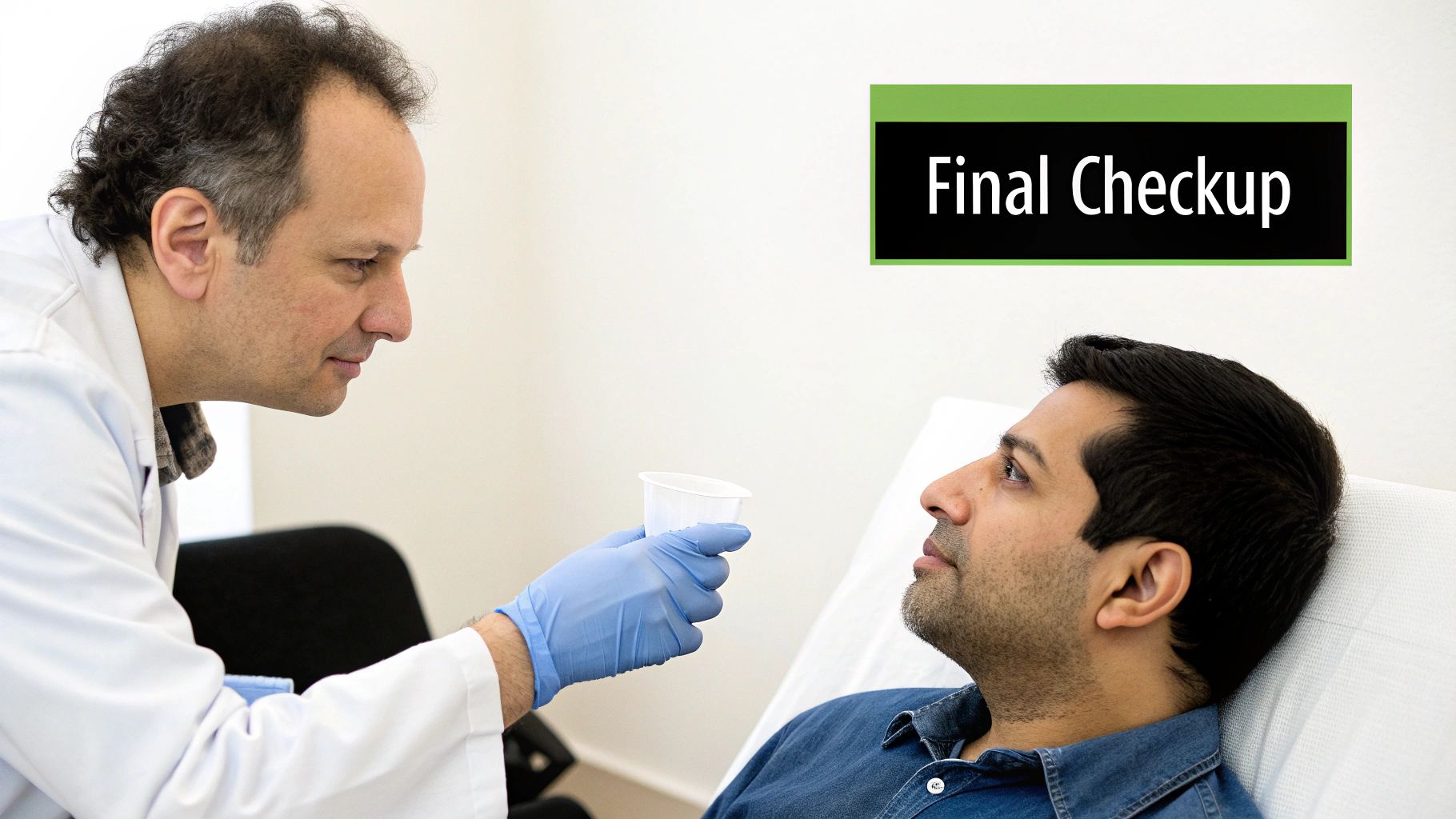
Think of your vasectomy like a plumbing job where a pipe has been sealed off. The post-vasectomy sperm test, or post-vasectomy semen analysis (PVSA), is the official inspection to confirm that seal is watertight and no sperm are getting through. This isn't just a friendly suggestion—it’s the only definitive proof that the procedure was a success.
You can't feel whether a vasectomy worked, and it's definitely not effective right away. Sperm can hang out in a man's system for weeks, or even months, after the procedure. This test is what confirms your semen is completely free of sperm, giving you the green light. Skipping it means you’re just guessing, which defeats the whole purpose of getting a vasectomy in the first place.
Why Following Through Is So Important
Despite how critical this step is, a surprising number of men don't actually do it. For years, getting men to complete their follow-up testing has been a real challenge. Studies show that between 25% and 42% of men never submit their sample, often due to busy schedules, forgetfulness, or mistakenly thinking they’re sterile immediately. Learn more about the historical challenges of PVSA compliance and why modern solutions are finally changing the game.
At the end of the day, this simple analysis is what provides the final confirmation you need. It replaces guesswork with certainty.
This isn't just a follow-up appointment; it's the official confirmation that gives you total confidence in your vasectomy. Completing the test is the most important part of the entire process for any man.
By following the clear instructions in this guide, you can navigate this last step without any confusion. Our goal is to give you the clarity and assurance you deserve, making your entire vasectomy journey a success from start to finish.
Understanding the Right Time to Get Tested
Timing is everything when it comes to your post-vasectomy sperm test. Think of the male reproductive system like a plumbing network. The vasectomy seals the main supply line, but there are still sperm left in the tubes "downstream."
Testing too early is like checking for leaks before the pipes have been fully flushed. A man is likely to get a positive result, which can cause a lot of unnecessary stress and confusion. The goal is to give your system enough time to completely clear out any remaining sperm. This doesn't happen overnight; it takes both time and a certain number of ejaculations.
The Standard Timeline for Testing
Most urologists have a standard recommendation for that first, crucial test. Following this timeline gives men the highest probability of an accurate result, confirming the procedure was a success.
Here’s the typical schedule a man should plan for:
- Time Since Vasectomy: You'll need to wait at least 8 to 16 weeks after your procedure before your first test. This period allows your body to naturally absorb and clear out the vast majority of lingering sperm.
- Number of Ejaculations: During that waiting period, you should aim for a minimum of 20 ejaculations. Each one helps to physically flush sperm out of the vas deferens, getting you closer to a completely clear sample.
Sticking to both of these guidelines is critical. Just waiting the 8-16 weeks isn't enough on its own, and trying to rush through 20 ejaculations in a short time won't speed up the biological process. It's the combination of time and activity that ensures the pipes are thoroughly cleared for a reliable test. Your clinician will give you specific post-vasectomy sperm test instructions, but this is the general framework they'll be based on.
Following the timeline isn't just a suggestion—it's the most effective way to ensure your test results are accurate and provide the peace of mind you're looking for.
Why Individual Results Can Vary
It’s important to remember that every man's body is different, and the clearing process can vary. While the guidelines are solid, they aren't foolproof. A successful vasectomy is typically defined as having either zero sperm (azoospermia) or a very low number of non-moving sperm (fewer than 100,000 non-motile sperm per milliliter).
However, studies show just how much this can vary. For example, one study found that even at 12 weeks post-procedure, only about 60 out of 100 men had achieved azoospermia. Similarly, after 20 ejaculations, only around 28 out of 100 men had reached that zero-sperm goal. You can dive deeper into these findings in published male fertility research.
This data really drives home why a lab-confirmed test is the only way for a man to be 100% certain his vasectomy worked. Never just assume you're in the clear based on time or ejaculations alone—always get that official confirmation.
Your Simple Pre-Test Preparation Checklist
To get an accurate result from your post-vasectomy sperm test, a little prep work goes a long way. Think of it like prepping a clean surface before painting—you have to clear away anything that could mess up the final result. Following these simple steps ensures your sample is perfect for analysis, helping you avoid the headache of an invalid result and the need for a re-test.
The whole point is to provide a sample that tells the true story of your post-vasectomy status. This means getting the timing right, steering clear of certain products, and using the proper gear.
The Abstinence Period
The single most important step is timing your last ejaculation. Your urologist will give you a specific window, but the standard advice is to abstain from any ejaculatory activity for 2 to 7 days before collecting your sample.
Why is this timing so critical?
- Abstaining for less than 2 days: This can lead to a lower semen volume, which might make the lab’s job a bit trickier.
- Abstaining for more than 7 days: Waiting too long can cause the opposite problem. Old sperm cells start to break down, which can muddy the results.
Sticking to this 2-to-7-day window gives the lab the best possible sample to work with, making it easier to confirm your procedure was a success. For men curious about their overall reproductive health, knowing these factors is useful.
What to Avoid Before Your Test
It’s a little-known fact, but many common products can kill or immobilize sperm on contact. This kind of contamination makes it impossible for the lab to know if your vasectomy worked, since they’re looking specifically for any motile (moving) sperm.
To keep your sample clean, you absolutely must avoid:
- Lubricants: Do not use any personal lubricants, lotions, or even saliva during collection. Almost all of them contain spermicidal chemicals that will ruin the test.
- Standard Condoms: Never use a regular condom to collect the sample. They are almost always coated with spermicide or lubricants that will instantly invalidate the test.
The rule is simple: nothing should come into contact with your semen except the inside of the sterile container provided by the lab. This is a non-negotiable part of proper post-vasectomy sperm test instructions.
Use Only the Official Collection Cup
Finally, you have to use the sterile collection cup given to you by the clinic or lab. It might just look like a plastic cup, but these containers are specifically designed for medical analysis and are guaranteed to be free of contaminants.
Using any other container—even one you’ve washed and think is clean—is a huge risk. You could introduce dust, soap residue, or other random particles that will interfere with the test. Sticking to the official cup is the final, easy step to getting a clear, accurate result on your first try.
How to Correctly Collect and Handle Your Sample
This next part is easily the most critical step in your post-vasectomy follow-up. Getting the collection and handling process right is the key to an accurate result, and it’s something you have complete control over.
It might feel a little clinical or awkward, but think of it as a simple scientific procedure. Following these post-vasectomy sperm test instructions to the letter ensures the sample you drop off is a perfect reflection of what’s going on inside. Get this right, and you’ll avoid the headache of having to do it all over again.
The Collection Process Step-by-Step
When it’s go-time, the most important rule is to get the entire ejaculate into the sterile container. This is a bigger deal than most men realize. Different parts of the ejaculate can actually have different concentrations of sperm, so capturing the whole sample is non-negotiable for an accurate count.
- Wash Your Hands: First things first, wash your hands and penis thoroughly with soap and water. This gets rid of any surface bacteria that could mess with the sample.
- Collect by Masturbation: The only way to collect the sample is through masturbation. A big watch-out here: avoid all lubricants, lotions, and even saliva. These substances can damage or kill any sperm that might be present, making your sample useless.
- Use the Sterile Cup: Deposit the entire sample directly into the sterile cup your doctor or the lab gave you. Be careful not to touch the inside of the cup or the lid to keep it sterile.
This simple visual breaks down the pre-collection prep into three essential rules.
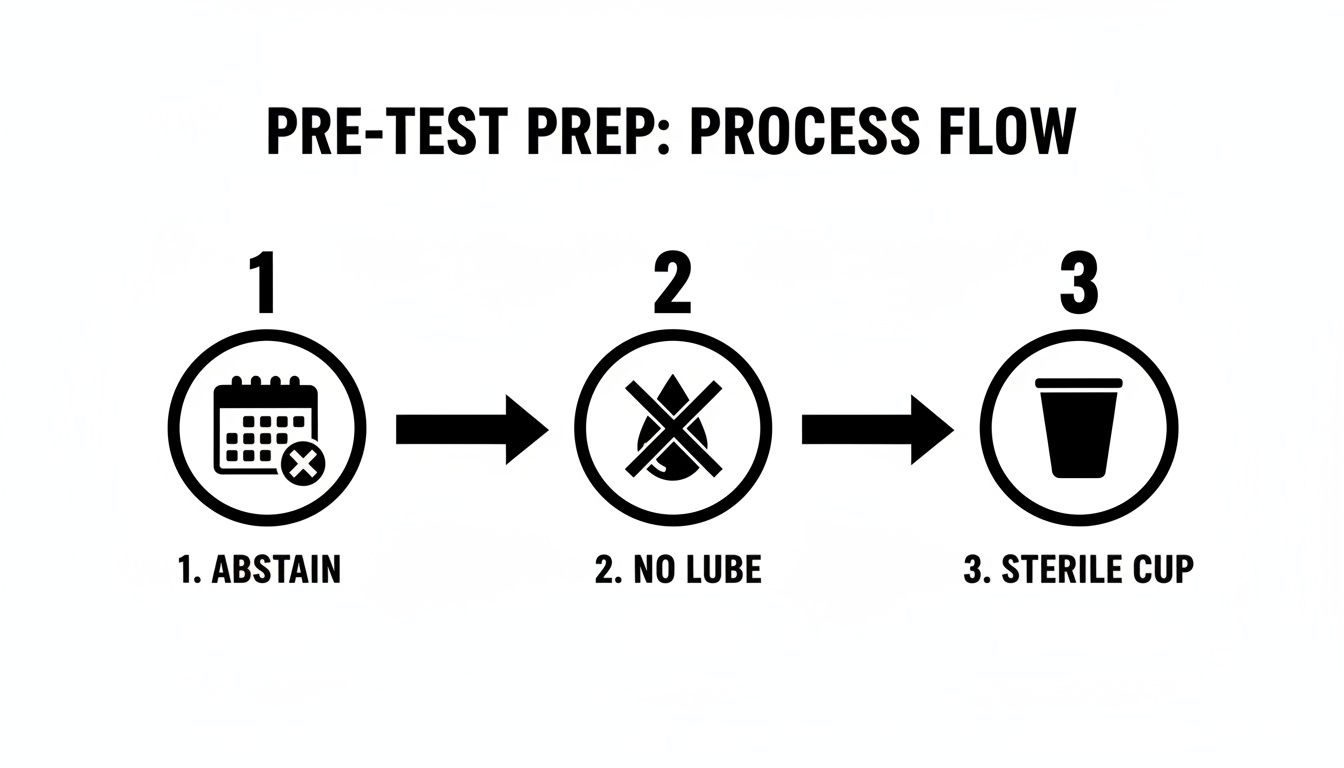
Think of these three things—abstinence, no lube, and a sterile cup—as the foundation for a successful test.
Handling and Transporting Your Sample
Once the sample is collected, the clock officially starts ticking. Semen is extremely sensitive to temperature changes and needs to be analyzed fast.
Crucial Tip: Your sample must be kept at or near body temperature while you transport it. The easiest way to do this is to tuck the container into a pocket close to your body—like an inside jacket pocket or your pants pocket. This works perfectly.
Most labs will tell you to deliver the sample within 30 to 60 minutes of collection. This is a strict deadline. If you live a good distance from the lab, you’ll need to plan your timing carefully to make the drop-off without any delays.
Letting the sample get too hot or too cold can ruin it and force a re-test. And if you're finding the logistics of a lab drop-off tricky, it might be worth learning more about how to check sperm count at home with convenient mail-in kits.
By being meticulous with these collection and handling steps, you’re giving yourself the best possible chance of getting a clear, definitive "all clear" from a single test. This attention to detail is your ticket to the peace of mind you've been waiting for.
Making Sense of Your Semen Analysis Results
Getting your post-vasectomy sperm test report back can feel a little intimidating, but the good news is that it’s usually very straightforward. The entire point of this test is to answer one simple question: is there any sperm left in your semen?
Once you know what to look for, you’ll be able to understand your status in seconds.

The magic word you're hoping to see is azoospermia. This is just the clinical term for "zero sperm found." If your report says this, it’s the definitive all-clear you’ve been waiting for.
Sometimes, the report might mention finding a small number of non-motile sperm. These are sperm that are present but can't move. Think of them as leftover soldiers with no way to march forward—they pose no risk.
What Is a Successful Result
A successful vasectomy is typically confirmed in one of two ways. Both outcomes give a man the green light, but it helps to understand the difference.
- Azoospermia (Zero Sperm): This is the ideal and most common result. It means the lab couldn't find a single sperm in your sample. Your vasectomy is considered a complete success.
- Rare, Non-Motile Sperm: Occasionally, the test might spot a few leftover sperm that aren't moving. If the count is very low (usually under 100,000 per mL) and none of them are swimming, most urologists will still consider the vasectomy successful.
The presence of any motile (moving) sperm, no matter the number, is a red flag. This means the vasectomy might not have been successful and will always require follow-up testing and a chat with your doctor.
To help you quickly decipher your lab report, here's a simple breakdown of what each finding means.
Interpreting Your Post-Vasectomy Sperm Test Results
| Result Finding | What It Means | Likely Next Step |
|---|---|---|
| Azoospermia | The lab found zero sperm. This is the best possible outcome. | You get the green light. Your vasectomy is a success. |
| <100,000 non-motile sperm/mL | A few non-moving sperm were found, but not enough to be a concern. | Most doctors will consider this a success. You're likely clear. |
| >100,000 non-motile sperm/mL | More leftover sperm than expected, but they can't swim. | You'll likely need to retest in a few weeks to confirm the numbers are dropping. |
| Any motile sperm | Moving sperm were detected. This indicates the vasectomy may not be working. | A retest is mandatory. You must continue using another form of contraception. |
Ultimately, your urologist will make the final call based on their clinical judgment and the specific guidelines they follow.
When Retesting Is Necessary
If your results come back showing moving sperm or a high number of non-moving sperm, don't panic. This isn't an automatic sign of failure. More often than not, it just means you need a little more time to flush out the remaining sperm from your system.
Your urologist will probably ask you to wait a few more weeks, keep ejaculating regularly, and then bring in another sample. For a more detailed breakdown of lab reports, take a look at our guide on how to read semen analysis results.
True vasectomy failure is rare, happening in less than 1% of cases. Following your doctor's plan for retesting is the surest way to get a final, conclusive answer.
Common Questions About Post-Vasectomy Testing
It’s totally normal to have some last-minute questions as you head into the home stretch. Getting clear, straightforward answers is the best way to feel confident about this final step. Here are the most common questions we hear from men about their post-vasectomy sperm test.
Our goal is to clear up any confusion so you can finish this process with absolute certainty.
What Happens If Sperm Are Found in My Sample?
First off, don't panic. Finding some sperm in your first test—especially if you did it on the early side of the recommended timeline—is actually pretty common. It takes a while for the pipes to clear out.
The next step is straightforward: Your urologist will most likely tell you to just wait a few more weeks and submit another sample. In the vast majority of cases, a little more time is all it takes for the sperm count to drop to zero.
If you still have motile (swimming) sperm after several months and a couple of tests, your doctor will then talk you through the rare possibility that the vasectomy didn't work and discuss what to do next.
Why Can I Only Use the Sterile Cup for Collection?
This is a non-negotiable rule, and it’s all about getting an accurate result. Everyday containers, plastic bags, or cups from your kitchen can have residues or chemicals on them that kill sperm on contact. If that happens, the lab can’t give you a true assessment of your sample.
You absolutely cannot use a standard condom to collect your sample. Nearly all condoms contain spermicides or lubricants that are designed to kill sperm, which will instantly ruin your test.
Using only the sterile, medical-grade container the lab provides is the only way to guarantee your sample is pure enough for a proper analysis.
When Is It Officially Safe to Stop Using Other Birth Control?
This is the most critical point: never stop using other forms of contraception until your urologist has personally reviewed your results and given you the official all-clear. This confirmation from your doctor is the final, absolute step.
Even if you get a lab report that says "azoospermia" (which means zero sperm), you are not officially sterile yet. Your doctor’s final sign-off is the only thing that confirms your vasectomy was a success.
Ready for clear, actionable insights into your reproductive health? Hera Fertility makes understanding your post-vasectomy results simple. Order a physician-signed lab requisition in minutes, test at one of our 250+ certified labs, and get your AI-interpreted results delivered as a clear Hera SmartScore. Get the peace of mind you deserve at https://herafertility.co.