Semen Analysis Normal Range Explained Simply

March 19, 2026
21 min read
By Hera Fertility Team
Finally understand the semen analysis normal range. This guide decodes your sperm health report and explains what your numbers mean for male fertility.

A semen analysis is the single most important test in a male fertility evaluation. Think of it as a comprehensive report card on your sperm health, giving you a clear look at crucial factors like how many sperm you have and how well they move. These results are then compared to a semen analysis normal range to see where you stand.

Your Quick Guide to Semen Analysis Normal Ranges

Getting a lab report filled with medical terms and numbers can feel intimidating. But learning what those numbers mean is the first step toward taking charge of your reproductive health. A semen analysis measures several key metrics that, when looked at together, paint a picture of your fertility potential. It’s never about just one number; it's about the whole story.

The values on your report are compared against established reference ranges. It's crucial to remember these aren't pass/fail grades. They are simply benchmarks based on studies of large groups of fertile men.

Understanding the WHO Benchmarks

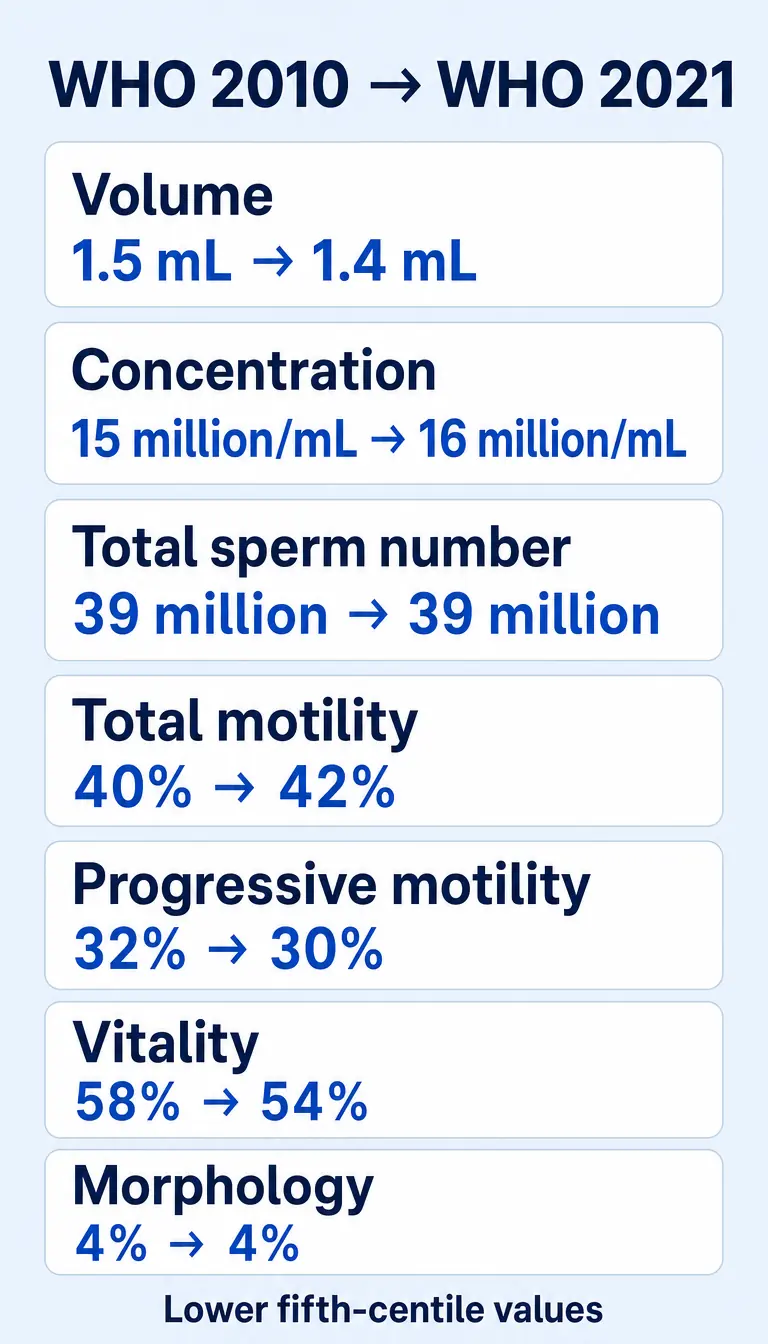
So where do these "normal" numbers come from? The modern standards for a semen analysis normal range are published by the World Health Organization (WHO). In a major update, the WHO established new reference values based on the semen parameters of over 4,500 fertile men from five continents.

This created a much more accurate and globally relevant benchmark for what's considered "fertile." For instance, the minimum sperm concentration was set at 15 million per mL, and the minimum total sperm count was updated to 39 million per ejaculate.

This quick infographic highlights the baseline values for the three most important sperm health factors: count, movement, and shape.

These icons represent the minimum thresholds for sperm count, motility (movement), and morphology (shape), giving you a fast visual reference for what's needed for healthy male fertility.

A semen analysis is a snapshot in time, not a final verdict on your fertility. Your numbers can fluctuate quite a bit due to things like a recent fever, stress, or even how long it’s been since you last ejaculated. An abnormal result isn't a dead end—it's usually a signal that it’s time to repeat the test and have a conversation with a specialist.

Before we get into the nitty-gritty of each parameter, let's look at the "normal" ranges all in one place.

Semen Analysis Normal Range at a Glance (WHO Lower Limits)

This table shows the minimum values considered 'normal' for key semen analysis parameters based on studies of fertile men. Falling below these numbers may indicate a need for further investigation.

Parameter Lower Reference Limit (Minimum 'Normal' Value)
Semen Volume 1.5 milliliters (mL)
Total Sperm Count 39 million per ejaculate
Sperm Concentration 15 million per mL
Total Motility 40%
Progressive Motility 32%
Sperm Morphology 4% normal forms

Again, these are just the lower limits. Having numbers above these thresholds is great, but falling slightly below in one category doesn't automatically mean you have fertility issues. It's just a starting point for a deeper conversation.

What Are the Key Parameters?

Your semen analysis report will break down your results into several measurements. While we'll explore each one in detail later in this guide, here are the main players you’ll see on the report:

  • Semen Volume: The total amount of fluid you produced in your sample.
  • Sperm Concentration: How densely packed the sperm are in your semen, measured in millions per milliliter.
  • Total Sperm Count: The total number of sperm in your entire sample (Volume x Concentration).
  • Motility: The percentage of sperm that are actually moving.
  • Morphology: The percentage of sperm that have a "normal" shape, according to strict criteria.

Getting familiar with these core components is the key. It turns a confusing page of data into a clear, actionable summary of your current sperm health, helping you confidently plan your next steps.

Your Sperm Health Report Card: Making Sense of the Numbers

Getting a semen analysis report can feel like trying to decipher a secret code. It’s a sheet filled with medical jargon and numbers that, on their own, don't tell you much. Let's translate that report into something that makes sense—a clear and practical "report card" for your sperm health.

Think of it this way: your sperm are like a specialized team on a critical mission. For that mission to succeed, the team needs a few things. It needs enough members (concentration), they need to be strong swimmers who can reach their destination (motility), and they need the right shape and structure to do their job (morphology). We'll break down each of these key players so you can understand your team's stats.

A laboratory desk with a microscope, test tubes, and a document displaying 'NORMAL RANGES' for analysis.

Sperm Concentration: How Many Players on the Field?

The first thing we look at is sperm concentration, which you might also see called sperm count or density. This answers a pretty straightforward question: how many sperm are packed into each milliliter (mL) of your semen? More is generally better, as it boosts the odds of success.

According to the World Health Organization (WHO), the lower reference limit for sperm concentration is 15 million sperm per mL. Anything above this number is a good sign. If you fall below this, a men's health specialist can help you figure out why and what to do next.

You'll also see a total sperm count. This is just your concentration multiplied by the total volume of your sample. The WHO's cutoff for this is 39 million sperm per ejaculate. While concentration is about density, the total count gives you an idea of the size of the entire "army" you're working with in one go.

Sperm Motility: How Well Your Team Moves

Having millions of sperm doesn't mean much if they can't swim. That's where sperm motility comes in. It measures the percentage of your sperm that are actually moving. In the lab, technicians look closely at how they're moving to get a full picture of their performance.

Your report will likely break motility down into two categories:

  • Progressive Motility: These are the star players. This is the percentage of sperm moving forward, either in a straight line or in large, purposeful circles. They're the ones making real progress.
  • Total Motility: This includes the progressive swimmers plus any sperm that are moving but not going anywhere, like wiggling in place or swimming in tight little circles.

The WHO guidelines suggest a minimum of 32% for progressive motility and 40% for total motility. Strong swimmers are absolutely essential for male fertility.

Key Takeaway: A useful metric that combines both count and movement is the Total Motile Sperm Count (TMSC). This number, which specialists often rely on, represents the total number of moving sperm in the entire ejaculate. A TMSC of over 20 million is generally considered a good benchmark for fertility potential.

Sperm Morphology: The Shape of Success

Finally, there's sperm morphology—the shape and structure of the sperm. To do its job, a sperm needs a very specific build: an oval head carrying the genetic payload and a long tail to power its movement. Morphology simply measures the percentage of sperm in your sample that have this "normal" structure.

This is often the most shocking number on the report. The standards for a "perfect" sperm are incredibly strict, so it's completely normal for the vast majority of sperm to be considered abnormally shaped. Because of this, the WHO's lower reference limit for normal forms is just 4%.

You read that right. If as few as 4% of your sperm have a perfect shape, you fall within the semen analysis normal range. A result below this might suggest that sperm could struggle with their function, but just like every other number, it's only one piece of the puzzle.

While count, motility, and morphology are the "big three," a full semen analysis also considers semen volume (at least 1.5 mL), pH (7.2–7.8), and liquefaction time (how fast the semen turns from a gel to a liquid, usually within 20-30 minutes). As one study on male fertility points out, odd results in these supporting metrics can sometimes hint at underlying issues like an infection or a hormonal imbalance. You can read more about these benchmarks in this deep dive into semen analysis standards.

Putting It All Together: What Your Report Card Means

No single number tells the whole story. A fertility specialist looks at all these results together to get a complete picture of your fertility potential. For instance, a man with a slightly low sperm count but fantastic motility and morphology might still have a very good fertility outlook.

Understanding these parameters is the first step toward taking charge of your health. If your results are confusing or concerning, the most important thing is not to guess what they mean.

Your Actionable Next Steps:

  • Upload Your Report: If you already have a semen analysis, you can get instant clarity. The Hera Fertility AI interpreter offers a free, easy-to-understand breakdown of what your numbers mean.
  • Schedule a Test: If you haven't been tested yet, you can order a physician-approved test through Hera Fertility and get your results at a lab near you.
  • Consult a Specialist: Always review your results with a men's health specialist or a urologist. They can give you a full evaluation and recommend a personalized plan based on your unique health profile.

Why Your Semen Analysis Numbers Can Fluctuate

A pen rests on a report card displaying symbols and text, on a wooden table outdoors.

It’s easy to feel a jolt of anxiety when your semen analysis results come back, especially if the numbers aren’t what you hoped for. But take a deep breath. A single lab report is just a snapshot, not the full movie. It shows your sperm health on one particular day, and it's definitely not a final judgment on your fertility.

Think of it this way: if you took your blood pressure right after a stressful meeting, the reading would probably be high. That doesn't mean you have chronic hypertension. A semen analysis is similar. Your body isn't a static machine, and sperm production is surprisingly sensitive to what's happening in your life.

The Sperm Production Cycle

Here’s something most men don't realize: the sperm in today's sample started their journey about 2-3 months ago. Sperm are constantly being made, but the full process—from a stem cell to a mature swimmer—takes time.

This long production runway means that a fever you had two months ago, a week of intense stress last month, or even a few nights of poor sleep can all show up in your results today. This is exactly why one "off" test isn't cause for panic. If your numbers are below the semen analysis normal range, the first and most important step is usually to test again in a few weeks or months. This helps figure out if the result was just a blip or part of a more consistent trend.

Common Reasons for Fluctuations

So many things can temporarily throw your numbers off. Once you see the list, you’ll understand why your results can look so different from one test to the next.

Some of the most common culprits include:

  • Recent Illness or Fever: Being sick, especially with a high fever, can hit sperm production hard. The effects can linger for up to three months, so a recent illness could easily explain a low count.
  • Abstinence Period: How long you wait between ejaculations really matters. Less than 2 days can mean a lower sperm count, while waiting more than 5 days can result in more sperm that are less motile (poor swimmers).
  • Stress and Lifestyle: High levels of emotional or physical stress, not getting enough sleep, or drinking too much alcohol can all tank your numbers.
  • Sample Collection Issues: It happens. Spilling part of the sample, waiting too long to get it to the lab, or exposing it to heat or cold can all skew the results.

It's also worth knowing that the "normal range" itself is a bit of a moving target. For example, there was a huge debate when the WHO lowered its guideline for minimum sperm concentration from 20 million/mL to 15 million/mL. Some researchers argue that fertility potential actually starts to decline once concentration drops below 40 million sperm per mL. This just goes to show that these ranges are statistical guidelines, not a black-and-white cutoff for being fertile. You can read more on this in a detailed review of semen analysis standards.

At the end of the day, a single number is just one piece of the puzzle. It’s the trend over time and the bigger picture that give you the real story. If a result worries you, don’t spiral. See it as the starting point for a conversation. The first step is almost always to repeat the test and get a second data point before jumping to any conclusions.

Your Results Are In: What Are Your Next Steps?

Getting your semen analysis report back can feel like a pretty big deal. Whether you’re relieved, confused, or a little worried, it's easy to get caught up in the numbers. But try to think of this report not as a final verdict, but as the starting point for a clear path forward.

Let’s break down what to do next, step-by-step. Your journey will obviously depend on your specific results, but the end goal is always the same: putting you in the driver's seat of your own reproductive health.

If Your Results Are Within the Normal Range

First off, take a breath and feel good about this. Seeing numbers that hit or surpass the established reference ranges is fantastic news. It means that on paper, key factors like your sperm count, how they move, and their shape are all looking solid.

But this isn't the time to coast. A good result is a snapshot of your health over the last three months. The goal now is to protect what you’ve built. Think of it as maintenance.

  • Keep up the good food: A diet packed with antioxidants, vitamins, and minerals is your best friend. Keep loading up on fruits, veggies, nuts, and quality proteins.
  • Stay active (but don't overdo it): Regular, moderate exercise is a win for your whole body, including your sperm. Just be mindful of extreme workouts, which can sometimes put too much stress on the system.
  • Keep stress in check: We all have stress, but chronic, high-level stress can mess with the hormones needed for sperm production. Whatever works for you—hobbies, meditation, just getting outside—make it a priority.
  • Watch the heat: Sperm production is a delicate process that doesn't like high temperatures. Try to limit long, hot soaks in the tub, skip the sauna, and avoid keeping a hot laptop directly on your lap for hours.

Basically, whatever you've been doing to get this good report, keep doing it. It’s clearly working.

If Some Numbers Are Below the Normal Range

Seeing a result flagged as "low" can definitely be a gut punch. Before you jump to any conclusions, the most important thing to do is not to panic. Seriously. A single test is just one piece of information, not a final diagnosis of infertility.

A Quick Reality Check: The sperm in your sample today started their journey about three months ago. A fever you had last month, a super stressful period at work, or even just a week of terrible sleep can temporarily throw your numbers off. This is precisely why one abnormal test is never the last word.

If one or more of your parameters came back low, here’s a simple, logical plan to follow.

Step 1: Confirm the Results with a Repeat Test

Sperm parameters are known to fluctuate—a lot. That’s why the standard medical advice is always to repeat the analysis. This helps figure out if that first result was just a blip on the radar or part of a more consistent pattern.

Most specialists will recommend retesting in about 2 to 4 weeks. That window is short enough that you’re not waiting around for another full three-month cycle, but it's long enough to see if things have changed. A second test gives you a much more trustworthy baseline.

Step 2: Review and Adjust Your Lifestyle

The waiting period before your next test is the perfect opportunity to be proactive. Take an honest look at your daily habits and see where you can make some supportive changes. You'd be surprised how much impact small tweaks can have.

  • Diet: Try to dial back the processed foods, sugar, and heavy alcohol consumption. Swap them for whole foods.
  • Exercise: If you’re not very active, now’s a great time to start with something simple like brisk walking. If you’re an elite athlete, maybe ease back on the intensity just a bit.
  • Sleep: Make getting 7-9 hours of quality sleep a non-negotiable part of your routine.
  • Smoking and Vaping: If you use tobacco or vape, there has never been a better time to quit. The chemicals in both are well-known toxins for sperm.

Making these positive changes will benefit your overall health anyway, so it’s a true win-win.

Step 3: Schedule a Consultation with a Specialist

This is arguably the most critical step you can take. A urologist who specializes in male fertility can look at your report and see the bigger picture, placing those numbers in the context of your overall health and history. They dig deeper to find underlying causes that a lab report alone just can't show.

For instance, a specialist will investigate things like:

  • Physical conditions like a varicocele (which is essentially a swollen vein in the scrotum that can overheat the testicles).
  • Potential hormonal imbalances that could be hindering sperm production.
  • Genetic factors that might be at play.

A specialist can turn what feels like a confusing sheet of data into a personalized action plan. It's the fastest way to get clarity and direction.

If you have your report and want some immediate perspective, you can plug your numbers into the Hera Fertility AI interpreter for a free, instant analysis of what they mean. It can be a helpful tool while you're waiting for that specialist appointment.

When a Semen Analysis Is Used Beyond Fertility

Overhead view of a workspace with a phone showing 'Test Results' next to a notebook and 'Next Steps' pad.

So far, we’ve talked about the semen analysis normal range in the context of a man's fertility goals. But this test is surprisingly versatile and plays a key role in a few other scenarios where conception isn't the goal at all.

It’s a great example of why context is everything. A "good" result for one man might be the exact opposite for another, which is why expert interpretation is so important. Let's look at two of the most common non-fertility uses: post-vasectomy checks and sperm donor screening.

Confirming Sterility After a Vasectomy

When a man gets a vasectomy, the semen analysis is the only surefire way to know if the procedure worked. Here, the goal is the complete opposite of fertility. You're not looking for healthy sperm—you're looking for zero sperm.

It takes time for the pipes to clear, so to speak. Sperm can linger in the reproductive tract long after the vasectomy is done. That’s why labs don’t perform the test right away.

The follow-up analysis is usually scheduled 8 to 16 weeks after surgery, and only after at least 20 ejaculations. This timeframe gives the system a chance to flush out any remaining sperm.

The objective couldn't be clearer: the lab is searching for a complete absence of sperm. A successful test result is azoospermia, meaning zero sperm were found in the sample. If any sperm are detected, especially motile (moving) ones, another test will be needed down the line.

Screening for Sperm Donors

Sperm donation is another area where the standard semen analysis normal range is just a starting point. To qualify as a sperm donor, a man's parameters can't just be "normal"—they have to be exceptional.

Sperm banks and fertility clinics have incredibly high standards. They need to maximize the chances of success, so simply meeting the minimum thresholds for fertility isn't nearly enough.

A potential donor needs to have what some might call "super sperm." This typically means:

  • Significantly Higher Sperm Counts: Far above the baseline of 15 million/mL.
  • Excellent Motility: A very high percentage of strong, forward-moving sperm.
  • Superior Morphology: A score well above the 4% threshold for normal shape.
  • Proven Resilience: The sperm must also prove they can survive being frozen and thawed (a process called cryopreservation), since donor sperm is almost always stored frozen.

This means a man whose results are perfectly fine for his own fertility goals might not even come close to qualifying as a donor. The bar is set much, much higher. It all goes to show that interpreting a semen analysis report always comes down to the individual man’s goals.

Frequently Asked Questions About Semen Analysis

When you're diving into male fertility testing, it's completely normal to have a lot of questions. Let's walk through some of the most common ones we hear, so you can feel confident and clear about the process.

How Long Should I Abstain Before a Semen Analysis?

Your clinic will ask you to abstain from ejaculation for 2 to 5 days before your test, and this window is incredibly important. There's a clinical reason for this specific timing.

If you abstain for less than 2 days, your sperm count and overall semen volume might look artificially low. But if you wait longer than 5 days, the opposite can happen—your count might be higher, but a lot of those sperm could have poor motility (movement), which doesn't give an accurate picture of their health. Think of that 2-5 day window as the sweet spot for getting the truest snapshot of your sperm health.

Can My Lifestyle Really Change My Sperm Count?

Yes, absolutely. This is one of the most powerful things to understand about male fertility. The sperm in your sample today actually began developing about three months ago. That means the choices you make over a few months can have a direct and measurable impact on your results.

Simple, positive changes can make a real difference:

  • Diet: A diet full of antioxidants—think fruits, vegetables, and nuts—acts like a shield, protecting developing sperm from damage.
  • Exercise: Getting regular, moderate exercise helps keep your hormones balanced, which is crucial for healthy sperm production.
  • Stress Management: Chronic stress can throw your hormones out of whack and interfere with sperm creation. Finding ways to de-stress is more than just good for your mind; it's good for your sperm.
  • Avoid Toxins: Cutting back on alcohol and quitting smoking are two of the biggest wins. Both are well-known to be toxic to sperm count and quality.

Is a Home Sperm Test as Good as a Lab Test?

Home sperm tests and a clinical semen analysis are really two different tools for two different jobs. A typical home test is just a basic screening. It usually only checks sperm concentration, giving you a simple "yes or no" answer as to whether your count is above a certain baseline.

A clinical semen analysis, on the other hand, is a full-blown diagnostic workup done by trained andrologists in a lab.

A lab test goes way beyond a simple headcount. It measures critical factors that home kits miss, like progressive motility (how well sperm actually swim forward) and morphology (what percentage of them have a normal shape). You need these details to get a complete picture of your fertility.

What Does a High White Blood Cell Count Mean?

Finding a high number of white blood cells (WBCs) in your semen is a red flag that needs a closer look. A few WBCs are normal, but a count over 1 million per mL suggests there might be an infection or inflammation somewhere in a man's reproductive tract. This condition is known as leukocytospermia.

That inflammation can create a hostile environment for sperm, causing damage and hurting their function. If your report flags a high WBC count, the next step is to see a urologist or a men's health specialist. They can pinpoint the cause and might recommend a course of antibiotics or other treatments to clear things up.


Ready to take the next step in understanding your reproductive health? With Hera Fertility, you can order a physician-approved semen analysis, get tested at a certified lab near you, and receive AI-powered results that are clear and actionable. If you already have a report, get a free, instant analysis today. Take control of your journey at https://herafertility.co.