When men are prescribed Clomid, it's typically to help with their reproductive health. While the side effects of Clomid in males are a valid concern, they are usually mild and reversible. We’re talking about things like mood swings, headaches, or maybe some hot flashes. More serious issues like vision changes are rare, but it's important to know they require immediate medical attention.
Before we get into the potential side effects, let’s first understand how this medication actually works in the male body. Knowing the "why" makes the "what" much easier to grasp.
How Clomid Works for Male Fertility
So, what does Clomid (clomiphene citrate) do for men? Think of your body’s hormone production like a thermostat in your house. Your brain is constantly monitoring hormone levels, trying to keep your testosterone in that perfect, healthy range.

Clomid essentially tricks this thermostat. It works by blocking estrogen receptors in a man's brain. When the brain can't "see" estrogen, it thinks overall hormone levels are too low. This prompts it to send out stronger signals to the testes, telling them to kick production into a higher gear.
Boosting Key Hormones
These "get to work" signals from the brain come in the form of two crucial hormones: Luteinizing Hormone (LH) and Follicle-Stimulating Hormone (FSH). Turning up the volume on these hormones has two major benefits for male fertility:
Elevated Testosterone Production: LH is the primary signal that tells the testes to make more testosterone. For men with low T, this can lead to improvements in energy, libido, and overall sense of well-being.
Enhanced Sperm Development: FSH is the main driver of sperm production (a process called spermatogenesis). Bumping up FSH levels can directly improve sperm count and quality.
The key here is that Clomid encourages a man's body to make its own testosterone, rather than giving an external source (like testosterone replacement therapy, which shuts down natural production). This is precisely why it helps preserve and even enhance fertility, making it a common off-label treatment for men with certain types of infertility or low testosterone.
What's "off-label" use? It simply means a doctor is prescribing a medication for a reason other than what the FDA originally approved it for. This is a completely legal and common practice when a physician determines it's a safe and effective option for a man's specific situation.
Understanding this mechanism is everything. The hormonal shifts that Clomid triggers are the very reason it works—and they're also the source of its potential side effects. By knowing why your body is responding in a certain way, you can feel much more prepared and in control during your treatment.
Navigating Common Physical and Mood Changes
When you start taking Clomid, you’re essentially nudging your body’s hormonal conversation in a new direction. This is exactly what we want for boosting testosterone and sperm production, but like any recalibration, it can cause a few noticeable physical and emotional side effects.
Knowing what to expect can make these changes feel much more manageable—and a lot less alarming.

The good news? Most men find these effects to be mild and temporary. Think of them as signs that the medication is getting to work, not as a reason for immediate concern.
The Most Frequent Physical Effects
Since Clomid works by influencing hormone levels, it’s no surprise that the most common physical side effects are tied directly to these shifts. As a man's body gets used to the treatment, he might notice a few different things.
These feelings are typically mild and often fade as the system adjusts over the first few weeks or months. Many men report:
Hot Flashes: A sudden, intense feeling of warmth that often spreads across the face, neck, and chest, sometimes causing sweating. This happens because hormonal fluctuations can temporarily mess with the body's internal thermostat.
Breast Tenderness or Enlargement (Gynecomastia): Clomid is great at increasing testosterone, but a little bit of that can convert to estrogen. This might lead to some temporary tenderness or slight swelling in the chest area. This is one of the more well-known side effects of Clomid in males.
Headaches: Mild to moderate headaches can pop up as hormone levels find their new normal. Staying well-hydrated often makes a big difference in keeping them at bay.
Some men might also see other physical changes like acne breakouts. If this happens, a guide for men dealing with acne can offer some helpful advice.
Emotional and Mood-Related Side Effects
It's not just physical. Adjusting your hormonal thermostat can also have an impact on your mood from day to day. These changes are a direct result of the medication’s influence on brain chemistry.
You might find yourself feeling more irritable, experiencing mood swings, or just having a shorter fuse than usual. For some men, this is a completely normal response and doesn't mean anything is wrong.
The most frequently reported symptomatic side effects in men taking clomiphene are hot flashes, mood swings, breast tenderness, and visual disturbances. Recognizing these is the first step in managing them effectively during your treatment.
The list of common experiences also includes things like headaches and nausea. Many clinical reviews and patient resources highlight these as typical responses while the body adapts.
To help you keep track, here's a quick summary of what to look out for.
Common Clomid Side Effects in Men at a Glance
| Side Effect Category | Specific Symptoms | What It Feels Like | When to Contact Your Doctor |
|---|---|---|---|
| Physical | Hot flashes, headaches, breast tenderness, nausea | A sudden warmth, a dull ache in your head, chest sensitivity, or a slightly upset stomach. | If headaches are severe or tenderness becomes painful or worse. |
| Mood-Related | Irritability, mood swings, feeling more emotional | Feeling on-edge, easily annoyed, or having emotional ups and downs that aren't typical for you. | If mood changes interfere with your daily life or relationships. |
| Visual (Less Common) | Blurry vision, seeing floaters or flashes of light | Your vision seems "off," or you notice new spots or flashes in your field of vision. | Immediately. Any changes to your vision should be reported. |
This table is a simple reference, but remember that your experience is unique. Always communicate with your doctor about what you're feeling.
Actionable Steps for Managing Side Effects
Feeling in control starts with having a plan. If you begin to experience these common side effects, here are a few practical things you can do:
Track Your Symptoms: Keep a simple log of what you’re feeling and when. This helps you and your doctor spot patterns and decide if any adjustments are needed.
Communicate Openly: Let your partner and doctor know about any mood changes. Just acknowledging them can make a big difference in how you handle them.
Stay Consistent: Try to take your medication at the same time each day. This helps keep your hormone levels as stable as possible, which can minimize side effects.
Most importantly, don't forget that these effects are usually not severe. However, if any symptom feels overwhelming or starts to significantly impact your quality of life, reaching out to your doctor is always the right move.
Recognizing Less Common but Serious Side Effects
Most men who take Clomid experience either mild side effects or none at all. That being said, it's smart to know about the less common but more serious signs that mean you need to stop taking it and call your doctor. This isn't to scare you; it’s about being prepared. Think of it like knowing where the fire extinguisher is—you hope you never need it, but you're glad you know how to use it just in case.
Of all the potential issues, visual disturbances are the big one. These aren't just a minor annoyance; they are a clear stop sign from your body.
When to Stop Clomid and Call Your Doctor
Visual changes are the primary reason a doctor will tell a man to discontinue Clomid. The symptoms can be subtle at first, so it’s crucial to pay close attention to any shifts in your eyesight.
If you experience any of the following, stop taking Clomid and contact your healthcare provider right away:
Blurred Vision: If things suddenly appear hazy or out of focus.
Seeing Spots or "Floaters": Noticing new dark specks drifting across your vision.
Flashes of Light: Seeing unexplained streaks or flickers, especially in your peripheral vision.
Increased Light Sensitivity: Finding that normal light levels feel uncomfortably bright.
These symptoms are rare, but they are not something to ignore or wait out. Your doctor needs to know immediately to make sure there are no lasting effects.
Understanding the Broader Safety Picture
While it's important to focus on vision changes, the overall safety profile of Clomid is actually quite good. Major issues are uncommon. A large retrospective analysis looked at over 12,000 men prescribed clomiphene and found no increased risk for serious problems like blood clots (thrombotic events), mental health disorders, or liver damage. You can read the study's findings on Clomid safety in men for yourself.
This data is reassuring. It shows that while side effects are possible, the risk of something truly serious is low. Most men who stop taking Clomid tend to do so within the first few months, and it’s often for reasons other than severe side effects.
To put this in perspective, it helps to remember that many medications carry potential risks. For example, various medications can lead to serious cardiac complications such as prolonged QT interval, which just highlights why being aware is so important for any treatment.
Ultimately, being an informed and proactive patient is your best tool. By knowing these specific warning signs—especially the visual ones—you can move forward with your treatment confidently, knowing exactly when to raise a flag and get professional advice.
The Unexpected Impact on Sperm Health
While most men take Clomid to kickstart testosterone and sperm production, it doesn't always go according to plan. For a small but significant group of men, the medication can actually have the opposite effect, causing a surprising drop in sperm count, concentration, or motility.
If this happens, it’s not something you did wrong. It’s simply a reflection of how differently individual bodies can react to major hormonal shifts. This is precisely why regular follow-up testing isn't just a good idea—it's an essential part of making sure your treatment is safe and effective.
Why Follow-Up Semen Analysis Is Non-Negotiable
Monitoring is your single most important tool. Without it, you and your doctor are essentially flying blind, with no way to know if Clomid is helping or hurting your sperm health. A semen analysis gives you the hard data needed to make smart decisions on your fertility journey.
It's also crucial to remember that sperm production is a marathon, not a sprint. The entire cycle, from initial creation to full maturity, takes about 70 to 90 days. This biological timeline dictates the schedule for your follow-up tests.
You won't see the true impact of Clomid on your sperm for at least three months. Testing any sooner just won't give you an accurate picture of how your body is responding, so patience and proper timing are key.
This infographic breaks down some of the key risks to be aware of during treatment, highlighting why careful monitoring is so important.
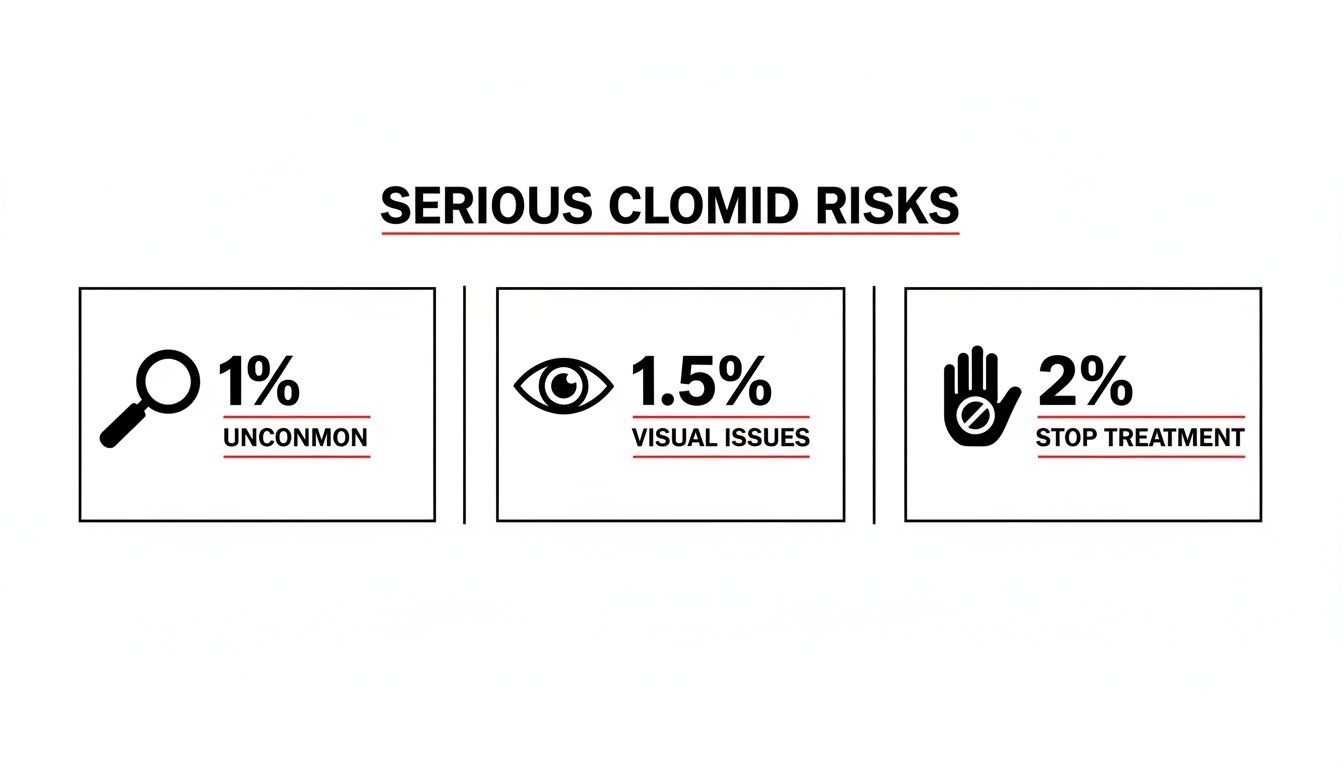
The visualization underscores that while serious side effects are uncommon, being aware of them—especially visual issues—is critical for knowing when to stop treatment.
What the Numbers Say About Worsening Sperm Health
This isn't just an occasional fluke; research backs up the fact that a measurable percentage of men experience this paradoxical effect. One major systematic review, which combined data from 11 different studies, found that roughly one-fifth of men on Clomid saw their sperm metrics decline.
To be specific, 21% of men experienced a decrease in sperm concentration, and 24% saw a drop in their total motile sperm count. These numbers make it crystal clear why a "set it and forget it" approach to Clomid is a bad idea.
Your first semen analysis sets the baseline, but the test at the three-month mark is the one that truly reveals if this treatment is right for you. If you want to dive deeper into proactive ways to support your reproductive health, our comprehensive sperm health course is designed to give you actionable strategies for your journey.
If your numbers do drop, your doctor will almost certainly tell you to stop taking Clomid immediately. This is the right move, as it prevents any further negative impact and allows your body’s natural production to get back on track.
Critical Monitoring for Safe and Effective Treatment
Taking Clomid involves more than just a daily pill. It's important for you and your doctor to monitor how your body responds. This is a collaborative effort, with regular check-ins to maximize benefits and minimize any potential
Clomid side effects in males.
Think of it like using a map and compass. Without regular checks, you might head in the wrong direction. These follow-up tests act as your compass, providing crucial data to ensure your treatment is on the right path.
Baseline and Follow-Up Bloodwork
Before starting Clomid, your doctor will order baseline blood tests. This provides a clear picture of your hormonal starting point. As treatment progresses, you'll undergo these tests periodically. This helps your doctor track hormonal changes and ensure they are moving in the desired direction. Key hormones to monitor include:
Testosterone: The aim is usually to increase this hormone, but balance is crucial. Excessive testosterone can convert into estrogen or adversely affect sperm production.
Luteinizing Hormone (LH): This hormone signals the testes to produce testosterone. Rising LH levels indicate that Clomid is effectively stimulating testosterone production.
Follicle-Stimulating Hormone (FSH): This hormone drives sperm production (spermatogenesis). Monitoring FSH confirms that the medication is promoting increased sperm production.
Your doctor isn’t solely focused on increasing numbers.
The goal is to guide your hormones into an *optimal range*—supporting both your overall health and specific fertility goals. It's about balance, not just force.
The Essential Semen Analysis
While bloodwork provides hormonal insights, a semen analysis reveals the status of your sperm. This is the definitive measure of whether the treatment is effective. The initial semen analysis establishes a baseline. A critical follow-up test is typically scheduled about three months into treatment. This timeframe is significant because it takes approximately 90 days for the body to produce a new batch of mature sperm. The follow-up analysis will indicate if there are improvements in sperm count, motility (movement), and morphology (shape). Understanding these results can be empowering. You can [learn more about how to read semen analysis results](https://herafertility.co/how-to-read-semen-analysis-results) to better track your progress. This step confirms whether you are on the right track or signals your doctor to adjust the plan.
Taking Control of Your Fertility Journey
When you start any fertility treatment, it's easy to feel like you're just along for the ride. But that couldn't be further from the truth. Clomid can be a game-changer for many men, but understanding the potential side effects of Clomid in males is just as crucial as the treatment itself. This knowledge puts you in the driver's seat.
Your journey should always start with an open, honest conversation with your doctor. Talking through all the potential risks and benefits sets clear expectations and lets you know exactly what to watch for as you get started. Think of it as mapping out your route before a road trip—it prepares you for the path ahead.
Your Action Plan for Success
To make this work safely and effectively, sticking to the recommended monitoring schedule is non-negotiable. This means showing up for your follow-up blood work and, most importantly, the semen analysis tests. These check-ins provide the hard data to show whether the treatment is actually doing its job.
Here are a few practical steps to stay on top of things:
Create a Symptom Log: This doesn't have to be complicated. Just keep a simple daily or weekly journal in your phone or a notebook to track how you're feeling. Note any physical shifts or mood changes you notice.
Schedule Your Follow-Ups: As soon as you get your prescription, book your three-month semen analysis and any required blood tests. Putting them on the calendar in advance makes it much harder to forget.
Stay Proactive: Your medical treatment is one piece of the puzzle. Keep learning about other ways to support your fertility. For example, explore lifestyle adjustments that can complement your treatment and learn more about how to increase sperm count.
By taking these proactive steps, you shift from simply being a patient to becoming the driver of your own health journey. You are equipped with the knowledge to make the best decisions for your future.
Common Questions About Taking Clomid
Starting any new treatment can bring up a lot of "what ifs" and practical questions. Let's tackle some of the most common things men ask when they start taking Clomid, so you can move forward feeling confident and informed.
How Long Until Clomid Starts Working?
A man will probably see a change in his hormone levels, like testosterone, within the first few weeks of treatment. But the real goal—improving sperm—takes a lot more time. It takes the male body roughly 70 to 90 days to complete a full cycle of sperm production.
This means you won't see the true impact on your semen analysis for at least three months. It’s a marathon, not a sprint. Patience is key, and the only way to know if it's working is through consistent follow-up testing with your doctor.
Are the Side Effects of Clomid Permanent?
For most men, the common side effects of Clomid—like mood swings or hot flashes—are temporary. These symptoms almost always go away once a man stops taking the medication.
However, any changes to your vision are a different story. If you notice blurry vision or floaters, you need to tell your doctor right away. While rare, this can signal a more serious issue, and you'll likely need to stop the treatment. It's also worth knowing that for the small number of men who see their sperm count drop on Clomid, their numbers might not always bounce back to where they were before starting.
Can I Drink Alcohol While on Clomid?
There’s no hard-and-fast rule against it, but it's a smart idea for a man to limit his alcohol intake. We know that heavy drinking can harm both testosterone levels and sperm quality all on its own.
Basically, drinking too much can actively work against what a man is trying to achieve with Clomid. The best plan is to have an honest chat with your doctor about your drinking habits so you can get advice that supports your fertility goals, not sabotages them.
The entire point of taking Clomid is to create the best possible hormonal environment for a man's body to produce healthy sperm. Limiting things that interfere with that process, like heavy alcohol use, is just a smart move.
What if My Sperm Count Gets Worse on Clomid?
If a follow-up semen analysis shows your numbers have gone down instead of up, you need to let your doctor know immediately. This doesn't happen to most men, but it is a known (and frustrating) risk for a minority of patients.
Your doctor will almost certainly tell you to stop taking Clomid right away. From there, they'll monitor you to see if your sperm parameters return to their previous baseline and start talking about what's next, whether that's a different approach or an alternative treatment.
At Hera Fertility, we believe understanding your sperm health should be simple and clear. Our AI-powered platform turns complex lab results into actionable insights, helping you take control of your fertility journey. Get physician-backed analysis and personalized guidance by ordering a test or uploading your existing results today. Learn more about how Hera Fertility can support you.