While many men hear about the potential side effects of clomid in men, not everyone understands how it actually works to improve male fertility. Clomid isn't a hormone itself; it’s more like a clever switch that gets your own body to ramp up its natural hormone production.
How Clomid Works to Boost Male Fertility
So, how does this medication help men? It all starts in the brain.
Clomid is a selective estrogen receptor modulator, or SERM. In simple terms, it gently blocks the estrogen receptors in your brain's hormone control center. When this happens, your brain gets a false signal that estrogen levels are too low.
This trick triggers the pituitary gland to send out a surge of two critical hormones for male fertility:
- Luteinizing Hormone (LH): This is the direct signal that tells your testes to produce more testosterone.
- Follicle-Stimulating Hormone (FSH): This hormone is the key player in kick-starting sperm production, a process called spermatogenesis.
This creates a powerful positive feedback loop, starting in the brain and ending with higher testosterone and more sperm.
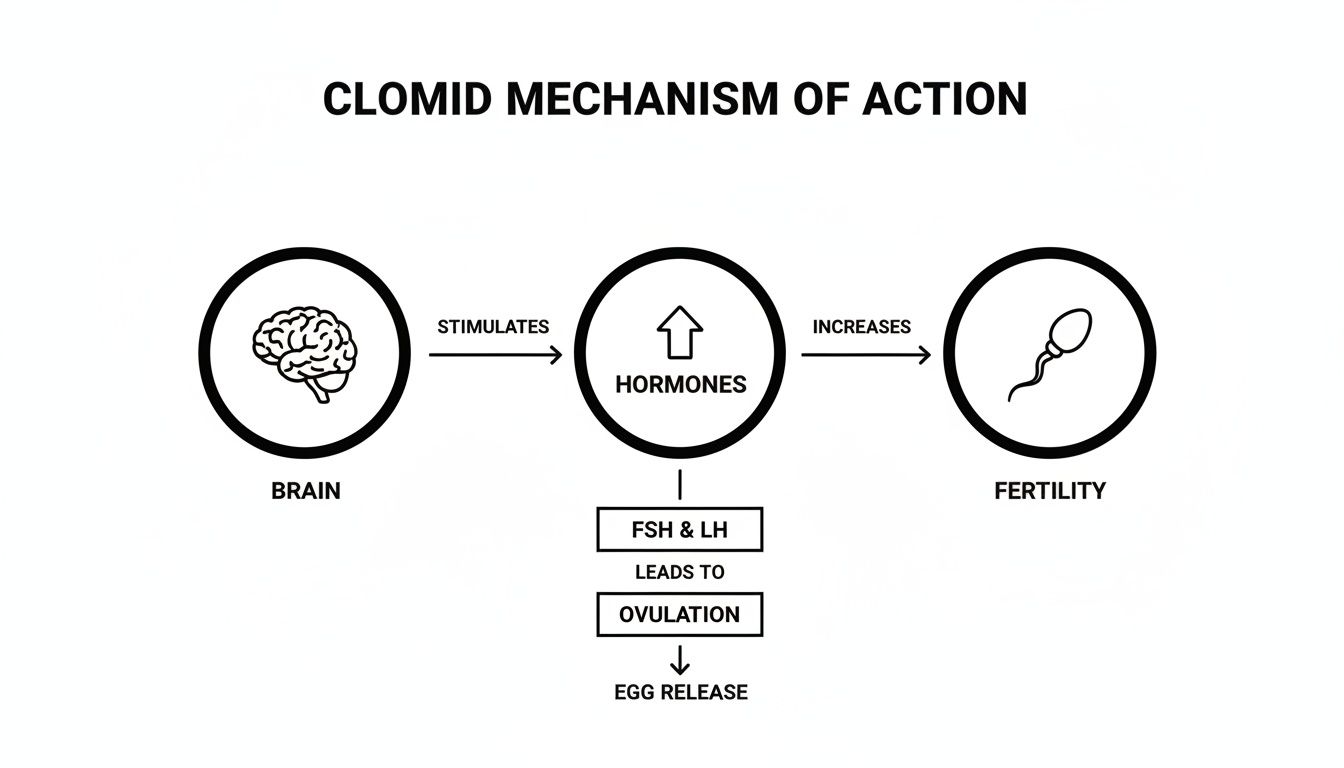
As you can see, Clomid’s job is to get your own system running more efficiently.
The Impact on Sperm and Testosterone
By boosting LH and FSH, Clomid encourages your body to make more of its own testosterone. This is a crucial distinction from testosterone replacement therapy (TRT), which can actually shut down your natural hormone production and tank your sperm count.
The whole point of using Clomid for male fertility is to see measurable improvements in your semen analysis. This hormonal boost is designed to enhance:
- Sperm Count: Increasing the total number of sperm.
- Sperm Motility: Improving how well sperm can swim.
- Sperm Morphology: Helping your body produce correctly shaped sperm.
Remember, the full sperm production cycle takes about 72 to 90 days. This means you won’t see changes in your semen analysis a week after starting Clomid. Patience is key, and consistent monitoring is the only way to track your progress.
A semen analysis is non-negotiable. Getting a baseline test done before you start Clomid and follow-up tests a few months in is the only way to know for sure if it’s working. For a deeper dive, check out our guide on how to increase sperm count. Understanding this process helps you appreciate both the benefits and the potential side effects of clomid in men, which we'll cover next.
Common Physical and Mood-Related Side Effects

Starting any new medication comes with questions, and it’s smart to ask, "What should I expect?" When it comes to the side effects of Clomid in men, the good news is that most guys tolerate it really well.
Significant side effects are pretty uncommon, popping up in less than 10% of patients. The effects men do notice are usually tied directly to the hormonal shifts Clomid is designed to create. It’s tweaking your body's hormone feedback loop, so it’s not surprising to feel some changes as your system adjusts.
Physical Side Effects You Might Notice
The first things men typically report are physical symptoms. These are usually more of a minor annoyance than a major problem and rarely get in the way of daily life.
Common physical side effects include:
- Hot Flashes: A sudden, brief feeling of warmth that spreads across your upper body and face.
- Headaches: These are generally mild and don't happen too often.
- Blurred Vision: Some men notice temporary blurry vision, or they might see spots or flashes.
Hot flashes are probably the most well-known symptom. It can feel like anything from a mild, occasional warmth to a more intense wave of heat. This is a direct result of the hormonal signals Clomid is changing in your brain.
Pro Tip: A simple but effective trick for managing daytime side effects is to take your Clomid dose at night before bed. Many men find they can sleep right through any initial discomfort from headaches or hot flashes.
Mood and Emotional Changes
It’s not just physical. The same hormonal recalibration that boosts your testosterone can also nudge your emotional state. Being aware of this possibility helps you recognize it if it happens.
You might experience:
- A shorter fuse or increased irritability.
- More noticeable mood swings than usual.
- A sense of anxiousness or restlessness.
While less common, some men find these feelings are similar to those seen in various anxiety disorders. If you notice your mood is changing in a way that feels significant or persistent, it's crucial to bring it up with your doctor. A simple dose adjustment might be all that's needed.
Here’s a quick summary of the most common side effects and what you can do about them.
Common Clomid Side Effects in Men and Management Tips
| Side Effect | What It Feels Like | Management Strategy |
|---|---|---|
| Hot Flashes | A sudden, intense feeling of warmth, mainly in the face and upper body. | Take Clomid at night; dress in layers; avoid triggers like caffeine or spicy foods. |
| Headaches | Mild to moderate headaches that may come and go. | Stay well-hydrated; take Clomid before bed; use over-the-counter pain relievers if needed. |
| Mood Swings/Irritability | Feeling more easily annoyed, emotionally sensitive, or having a shorter temper. | Be aware of the potential for mood changes; practice stress-reduction techniques like exercise or meditation. |
| Blurred Vision | Temporary blurriness, seeing spots or flashes of light. | Take the dose at night; avoid driving if vision is affected; report any persistent vision changes to your doctor immediately. |
Keeping a simple log of how you're feeling—both physically and mentally—is a fantastic tool. It allows you to spot patterns and give your doctor clear, specific feedback at your follow-up appointments.
Remember, the whole point of this treatment is to improve your male fertility. While you're paying attention to how you feel, your doctor is tracking the real results with blood work and, most importantly, a semen analysis. Getting that follow-up semen analysis is the only way to know for sure if the treatment is doing its job and boosting your sperm health.
Less Common Side Effects to Be Aware Of
While most men find Clomid easy to take, it’s smart to know about the less common side effects of Clomid in men. These issues are rare, but being aware of what to look for helps you stay on top of your health and have productive conversations with your doctor.
The goal here isn't to cause alarm but to make sure you're fully informed. The vast majority of men will never experience these effects, but your well-being is always the top priority.

Monitoring Your Vision
Temporary blurred vision can be a common, mild side effect, but more significant changes are something to watch closely. Although very rare, a small number of men report more persistent visual disturbances.
If you experience any of the following, it’s critical to stop taking the medication and call your doctor right away:
- Seeing flashes of light or new "floaters" or spots.
- Lasting blurred vision that doesn't clear up.
- Unusual sensitivity to light.
These aren't symptoms to ignore or "wait out." Your vision is too important, and letting your healthcare provider know immediately is the only right move.
Liver Health and Allergic Reactions
In very rare cases, Clomid can affect liver function. This is exactly why your doctor may want to run a baseline blood test to check your liver enzymes before you start treatment and possibly monitor them along the way. Think of it as a standard safety check to ensure the treatment is a good fit for you.
Similarly, though extremely uncommon, allergic reactions are a possibility with any medication. Signs of an allergic reaction could include hives, a sudden rash, or difficulty breathing. If you notice any of these symptoms, seek medical attention right away.
Your doctor's monitoring plan is your safety net. Regular check-ins and blood tests aren't just for tracking progress; they're for confirming that the treatment is both effective and safe for your body.
Ultimately, your journey with Clomid is a partnership between you and your doctor. Keeping track of how you feel is just as important as tracking your lab results. The most crucial part of this process is the semen analysis. This test provides the hard data to show whether Clomid is successfully improving your sperm health. If you are looking for a semen analysis near me, finding a certified lab is a key next step to measure your success.
Why a Semen Analysis Is Key to Your Success
Taking Clomid isn't just a matter of swallowing a pill and hoping for the best. It's an active strategy, and like any good strategy, you need a way to measure if it's working. The single most important tool for this is the semen analysis.
Think of it as your personal performance report. It provides the hard data you and your doctor need to see if the treatment is actually moving the needle on your fertility. Without it, you’re basically flying blind. Your testosterone might be up on a blood test, but the real goal here is better sperm. Testing for a semen analysis is key as you are taking Clomid.
Decoding Your Personal Performance Report
A semen analysis looks at several key factors that are absolutely critical for male fertility. Getting familiar with these metrics will empower you to have much more productive conversations with your doctor.
The three most important measurements are:
- Sperm Count (Concentration): This is the total number of sperm in your sample. Since Clomid’s primary job is to boost the hormones that drive sperm production, a jump in this number is a huge sign of success.
- Motility: This tells you how well your sperm can swim. It’s not enough to have a high head count; they need to be strong swimmers.
- Morphology: This refers to the shape and structure of your sperm. Properly shaped sperm are better equipped for their journey.
Each of these numbers tells a piece of the story. A high count is great, but if motility is low, it’s like having a full team of runners who can't even get off the starting block. For a deeper dive into what each number means, check out our guide on how to read semen analysis results.
The semen analysis provides objective, undeniable proof of progress. While side effects are about how you feel, this test is about what's actually happening with your fertility. It separates feelings from facts.
The Importance of Timing Your Tests
When you get your semen analysis is just as important as the test itself. Your doctor will almost certainly order a baseline test before you even start Clomid. This gives everyone a clear "before" picture of your sperm health.
Once you start treatment, don’t expect to see changes overnight. It takes your body roughly 72 to 90 days to produce a completely new batch of sperm. Because of this natural cycle, your doctor will likely schedule a follow-up semen analysis about three months after you start. This is the first real chance to see the medication's impact.
From there, you’ll likely do periodic tests every few months to track your progress and make sure the treatment stays on track. This consistent monitoring is the absolute cornerstone of a successful Clomid strategy. If you need to find a lab, a quick search for a "semen analysis near me" is the perfect next step to take control of your journey.
How to Monitor Your Health While on Clomid
Taking Clomid isn't a "set it and forget it" kind of treatment. Think of it as a partnership between you, your doctor, and your body. Staying on top of your health monitoring is just as critical as remembering to take the pill itself. This is how you ensure the treatment is actually working and, just as importantly, that it's safe for you.
Your doctor will lay out a schedule for follow-up appointments and blood work. These aren't just routine check-ins; they're essential for tracking how your body is responding and making sure the right hormonal shifts are happening.

Key Lab Tests to Expect
The main tools in the monitoring toolkit are blood tests and the all-important semen analysis. The blood work gives your doctor a direct look under the hood at the hormonal engine Clomid is meant to tune up.
You can expect regular testing for:
- Testosterone Levels: This is the primary checkpoint to confirm the medication is successfully boosting your body's own T production.
- LH and FSH Levels: These tests verify that your brain is getting the message and sending the right signals down to the testes.
- Liver Function Tests: As a precaution, your doctor might check your liver enzymes before you start and periodically during treatment just to ensure everything is humming along smoothly.
This data, combined with a follow-up semen analysis every 2-3 months, paints the full picture of your progress. If you're looking for more ways to support your journey, our guide on how to improve sperm health is a great place to start.
When to Call Your Doctor Immediately
While most men have a smooth ride with Clomid, it's vital to know the "red flag" symptoms that need immediate medical attention. These are rare, but you shouldn't ignore them.
Peace of mind comes from knowing what’s normal and what requires a quick phone call to your healthcare provider. Don't hesitate to reach out if something feels off—it's always better to be safe.
Get in touch with your doctor right away if you experience any of these:
- Significant Vision Changes: This includes persistent blurred vision, seeing flashes of light, or noticing new "floaters" that don't go away.
- Severe Headaches: A headache that is unusually intense or feels completely different from any you've had before.
- Signs of an Allergic Reaction: Watch out for symptoms like hives, a sudden skin rash, or any difficulty breathing.
By staying on top of the monitoring process and knowing which signs to watch for, you can navigate your Clomid treatment with confidence.
Long-Term Use and Treatment Alternatives
While Clomid can be a game-changer for boosting male fertility, it’s not meant to be a forever fix. Most urologists use it for defined treatment cycles, typically lasting 3-6 months at a time. The simple reason is that most of the research we have focuses on its safety and effectiveness in that shorter timeframe.
So, what if your journey takes a bit longer? That’s a conversation you’ll definitely want to have with your doctor. They might bring up things like monitoring your bone density down the road, since long-term hormonal shifts can sometimes impact bone health. But the key thing to remember is that Clomid is just one of several paths you can take.
Exploring Other Male Fertility Options
If Clomid isn't delivering the results you'd hoped for, or if it's just not the right fit for you long-term, it is far from the end of the road. Your doctor has other tools in their toolkit, each working in a slightly different way to get your reproductive health on track.
Some of the most common alternatives include:
- HCG Injections (Human Chorionic Gonadotropin): This is another type of hormone therapy. Instead of working on the brain like Clomid, HCG directly stimulates the testicles to ramp up both testosterone and sperm production.
- Anastrozole (Arimidex): This medication takes a different approach altogether. It works by blocking the enzyme that converts testosterone into estrogen. For some men, lowering estrogen can help rebalance the hormonal scales in favor of better sperm production.
Feeling like you have multiple options is key to staying hopeful and proactive. Clomid is an excellent starting point for many men, but it's just one tool in a much larger toolkit available for improving male fertility.
It's also worth remembering that medication is just one piece of the puzzle. Things like diet, exercise, and stress management play a huge role.
The most important takeaway here is that you have choices. Your progress will be guided by data, and that means continuous monitoring with a semen analysis. If you're ready to take the next step, a quick search for a "semen analysis near me" will help you find a trusted local lab to get the ball rolling.
Frequently Asked Questions About Clomid for Men
Starting any new treatment brings up a handful of practical questions. Let's clear up some of the most common things men wonder about when they start Clomid on their path to fatherhood.
How Long Does It Take for Clomid to Improve Sperm Count?
This is where patience really comes into play. Think of sperm production as a factory assembly line—a full cycle from start to finish takes your body roughly 72 to 90 days.
Because of this timeline, you won't see changes overnight. Your doctor will typically schedule a follow-up semen analysis about three months after you start treatment. That first test will give you the real-world data on how well it's working.
Are the Testosterone Gains from Clomid Permanent?
No, the hormonal boost you get from Clomid is temporary. It works by actively stimulating your body's own hormone production system, but it only does this while you're taking it.
Once you stop the medication, your testosterone and other hormone levels will usually drift back to their previous baseline. It’s a treatment to optimize your chances, not a permanent fix for low testosterone.
Is It Safe to Drink Alcohol While Taking Clomid?
There isn't a major direct clash between Clomid and alcohol, but it's smart to be cautious. Heavy drinking is known to negatively impact both sperm quality and your overall liver health.
Since Clomid can, in very rare instances, affect liver function, it’s a good idea to minimize any extra strain on your body. The best move is always to chat with your doctor about your personal habits so they can give you advice tailored to your situation.
Key Takeaway: The only way to know for sure if Clomid is working is through proper monitoring. A semen analysis is what provides the hard data needed to see your progress and decide if the treatment plan needs any tweaks for the best possible outcome.
Ready to track your progress and take the next step? Hera Fertility makes it easy to order a lab requisition for a semen analysis at a certified lab near you. Our AI-powered reports break down your results in a way that's easy to understand, putting you in control of your fertility journey. Learn more at https://herafertility.co.