A sperm analysis report can feel like it's written in a different language, full of medical jargon and numbers. But once you know what to look for, you can start to piece together a clear picture of your reproductive health. This guide is here to translate that report for you, so you can understand what each number means and feel confident about your next steps.
This initial test is the cornerstone of assessing a man's fertility, and it zeroes in on a few core components of your semen, each playing a critical role in reproductive health.
Your Guide to Reading a Sperm Analysis Report
When you first look at the report, your eyes will probably jump to a few key metrics. These are the foundational elements that labs evaluate:
- Sperm Count (Concentration): How many sperm are in a given sample.
- Motility: The percentage of your sperm that are actively moving and swimming forward.
- Morphology: The percentage of sperm that have a normal, healthy shape.
- Volume: The total amount of semen you produced for the sample.
Why This Test Matters
A sperm analysis isn't just another lab test; it's the single most important diagnostic tool for male reproductive health. There's a growing understanding that male factors play a significant role in fertility challenges.
Because of this, the focus on male reproductive health is sharper than ever—so much so that the male infertility market is projected to reach USD 6.4 billion by 2034. Getting a handle on these key parameters is the first and most powerful step a man can take. You can learn more about this growing emphasis on male reproductive health and what it means for men's health.
The chart below gives you a quick visual of the standard, healthy ranges for the most important semen analysis parameters.
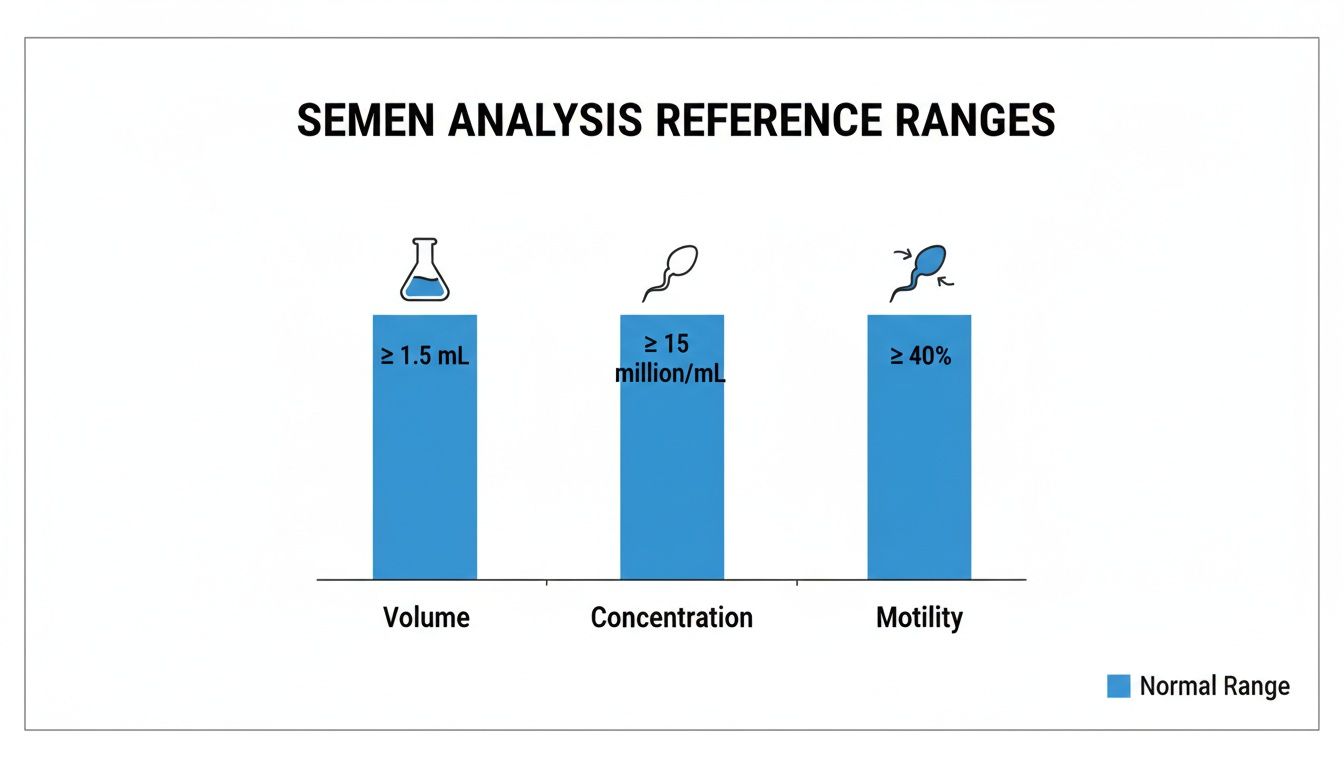
These numbers come directly from the World Health Organization (WHO) and are the baseline that labs use to evaluate your results. Think of them as a reference point. Each of these metrics—from volume to motility—offers a piece of the male fertility puzzle. The following sections will break down exactly what each one means for you.
Quick Reference for Semen Analysis Parameters
Use this table to quickly compare your results against the normal reference ranges from the World Health Organization (WHO) 6th edition guidelines.
| Parameter | What It Measures | Normal Reference Range (WHO) |
|---|---|---|
| Semen Volume | The total amount of fluid in an ejaculate. | ≥ 1.4 mL |
| Sperm Concentration | The number of sperm per milliliter of semen. | ≥ 16 million/mL |
| Total Sperm Count | The total number of sperm in the entire ejaculate. | ≥ 39 million |
| Total Motility | The percentage of sperm that are moving. | ≥ 42% |
| Progressive Motility | The percentage of sperm swimming forward. | ≥ 30% |
| Morphology | The percentage of sperm with a normal shape. | ≥ 4% |
| pH | The acidity or alkalinity of the semen. | ≥ 7.2 |
| Vitality | The percentage of live sperm. | ≥ 54% |
| White Blood Cells | The number of white blood cells present. | < 1 million/mL |
Remember, seeing a number outside of the normal range doesn't automatically mean you are infertile. It simply provides valuable information to help guide your next steps with your doctor.
Understanding Sperm Count and Concentration
When you get your sperm analysis report back, one of the first numbers most men look for is the sperm count. It’s a cornerstone of male fertility, but you’ll probably see two different figures on the page: sperm concentration and total sperm count. Knowing what each one means is the first step to really understanding your results.
Sperm concentration is pretty straightforward—it’s the number of sperm packed into each milliliter (mL) of semen. According to the World Health Organization (WHO), anything 16 million sperm per mL or higher is considered in the normal range. Total sperm count, on the other hand, is the grand total of sperm in your entire sample. For that number, you want to see 39 million or more.
Defining Low Sperm Count
If your numbers dip below these thresholds, you might see some medical jargon on your report. Don’t let it throw you off; the terms are simpler than they sound.
- Oligozoospermia: This is the clinical term for a low sperm count, specifically when concentration is below 16 million per mL. It’s one of the most common findings linked to male fertility issues.
- Azoospermia: This means there was a complete absence of sperm in the sample. A result like this definitely requires a follow-up with a specialist to figure out what’s going on.
It’s really important to remember that a lower-than-average count doesn't automatically mean you can't have children. Plenty of men with oligozoospermia go on to father children naturally. This number is just one piece of a much larger puzzle. You can dive deeper into what makes a normal sperm count and what your numbers mean in our detailed guide.
Why Your Sperm Count Matters
A healthy sperm count is critical because nature requires large numbers of sperm to increase the chances of fertilization. Think of it as a numbers game—a higher starting count simply improves the odds of success.
Unfortunately, we've been seeing a downward trend in sperm counts across the globe for decades. Research shows that between 1973 and 2018, average sperm counts have dropped significantly. A man today might have 50-60% fewer sperm than his father's generation. This trend makes understanding your personal results more important than ever, as it’s becoming more common for men to fall below the standard reference ranges. You can read the full study about declining sperm counts and its implications for more detail.
Actionable Next Step: A single sperm analysis is just a snapshot in time, not the final word. Sperm production is incredibly sensitive to things like a recent illness, high stress, or even just a few nights of bad sleep. An abnormal result often calls for a repeat test a few weeks later to get a more accurate picture.
For men who have had a vasectomy, the sperm count is just as crucial. A finding of azoospermia is the goal—it confirms the procedure was a success and gives you peace of mind. If any sperm are present, especially motile (swimming) sperm, you’ll need to follow up with your urologist.
Decoding Sperm Motility and Morphology
While sperm count gives you the raw numbers, sperm motility (how they swim) and sperm morphology (their shape) are all about quality. These two factors are critical for understanding the bigger picture. After all, a high count doesn't mean much if the sperm can't swim properly or are shaped in a way that prevents them from working correctly.
A healthy sperm is a strong, determined swimmer. To even have a chance at conception, it needs to move with purposeful, forward motion. This is what we call progressive motility.
Understanding Sperm Movement
Your report will likely break down motility into a few different figures. You'll see "total motility," which is just the percentage of all sperm that are moving in any fashion. But the number that really matters is progressive motility—this measures the fraction of sperm that are swimming strongly forward, either in straight lines or in large, powerful circles.
According to the latest WHO guidelines, a healthy sample should have:
- At least 42% total motility (all moving sperm combined).
- At least 30% progressive motility (the all-important forward swimmers).
If your report shows a low percentage of motile sperm, the clinical term you might come across is asthenozoospermia. While it sounds technical, it’s a very common finding. To get a better handle on these numbers, our comprehensive guide offers more detail on improving sperm motility and what your results mean.
Why Sperm Shape Is Important
Next up is sperm morphology, which is a close look at the physical structure of the sperm. A "normal" or ideal sperm has a smooth, oval-shaped head, a well-defined midpiece, and a long, single tail. Any deviations from this classic shape—like having a double head, a bent tail, or a misshapen midpiece—can potentially interfere with its ability to function.
The clinical term for poor sperm morphology is teratozoospermia. This one can sound particularly alarming, but it's crucial to know that it's completely normal for the vast majority of sperm in any given sample to be abnormally shaped.
Key Insight: The bar for "normal" morphology is surprisingly low. As long as 4% or more of your sperm have a normal shape, your sample falls within the healthy range. That's right—having up to 96% abnormally shaped sperm is still considered perfectly normal.
The root causes for poor motility and morphology often overlap. They can include lifestyle factors like smoking or too much heat exposure, as well as medical issues like a varicocele (enlarged veins in the scrotum).
Actionable Next Step: The good news is that simple lifestyle adjustments—like cleaning up your diet, getting regular exercise, and steering clear of hot tubs—can often lead to real, measurable improvements in sperm quality within a few months.
Going Beyond the Basics: Advanced Semen Analysis Parameters
A standard sperm analysis is a great starting point, focusing on the "big three": sperm count, motility, and morphology. But what happens when those results are inconclusive, or you and your doctor suspect something more is going on? That's when it's time to dig a little deeper.
Advanced parameters give clinicians a more detailed look under the hood. Think of them as specialized diagnostic tools that a urologist or male fertility expert uses to investigate specific issues, helping to pinpoint problems and create a much more precise action plan for your reproductive journey.
Sperm Vitality: The Live vs. Dead Count
One of the most crucial advanced tests is for sperm vitality. This test answers a simple but vital question: what percentage of the sperm in the sample are actually alive? This is fundamentally different from motility, which only tells you how many are moving.
So why does this distinction matter so much? It's especially critical for men diagnosed with severe low motility (asthenozoospermia). A vitality test helps determine if the non-moving sperm are dead or if they're alive but just can't swim.
According to WHO guidelines, a normal result is having 54% or more live sperm. If your vitality is high but your motility is low, it tells your doctor the problem isn't that the sperm are dead—it's likely an issue with their tails or the energy production needed for movement.
This insight helps your specialist zero in on the specific cause of the motility problem instead of just treating the symptom.
White Blood Cells: A Sign of Inflammation
Your sperm analysis report will also note the presence of white blood cells (WBCs), sometimes called leukocytes or round cells. A few are perfectly normal, but seeing a high number can be a red flag.
An elevated WBC count—generally defined as more than 1 million per mL—often points to an infection or inflammation somewhere in the male reproductive tract. This is a big deal because inflammation generates oxidative stress, a process that can seriously damage sperm, hurting their count, their ability to swim, and even the integrity of their DNA. If your report shows a high WBC count, your doctor will likely investigate further to find and treat the underlying cause.
Sperm DNA Fragmentation: Protecting the Genetic Cargo
Perhaps the most sophisticated advanced test is the sperm DNA fragmentation analysis. This test doesn't look at the sperm's shape or movement, but at the precious cargo it carries inside its head: the DNA. It specifically measures the amount of damage, or breaks, within those DNA strands.
Healthy, intact DNA is absolutely essential for successful fertilization and healthy embryo development. It's now understood that high levels of sperm DNA fragmentation are linked to conception difficulties, sometimes even when all other parameters like count and motility look perfectly normal.
A specialist might recommend this test if:
- You've been trying to conceive, but initial sperm analyses are normal.
- Lifestyle factors that cause oxidative stress, like smoking or significant toxin exposure, are part of the picture.
How AI Is Modernizing Sperm Analysis Interpretation
Getting a sperm analysis report back can be overwhelming. You're faced with rows of data and medical jargon that are tough to decipher on your own. For a long time, figuring out what these results really meant required a specialist's eye and a deep knowledge of male reproductive health. But today, technology is making the whole process much clearer and more accessible for every man.
Artificial intelligence (AI) is leading this change. Instead of just handing you a list of raw numbers for sperm count, motility, and morphology, AI-powered platforms can connect the dots between all these factors. The end result is a single, understandable score that gives you a snapshot of your overall reproductive potential. It takes the guesswork out of it and helps you see the bigger picture.
For instance, a platform like Hera Fertility uses an AI-driven Hera SmartScore to translate your complicated lab report into a simple, personalized summary.
Turning Complex Data into a Clear Roadmap
The true value of AI in male fertility isn't just about simplifying the numbers—it's about creating practical guidance. An AI system can spot subtle patterns across all your results that might not be obvious at first glance. It links your specific parameters to offer recommendations tailored just for you.
This approach can point to specific lifestyle adjustments, nutritional supplements, or medical advice based on your unique profile. You can see how this works by getting an instant interpretation of your existing semen analysis results. This turns a confusing report into a supportive roadmap for improving your reproductive health.
The Future of Male Fertility Analysis
This shift is happening fast. The market for automated semen analysis systems, many of which are now boosted by AI, is expected to hit USD 1.9 billion by 2035. These tools help reduce the risk of human error in labs, leading to more consistent and reliable results.
For a man using a service like Hera Fertility, this means your report gets accurately translated into a meaningful SmartScore, which then guides a personalized plan to support your goals. As you can see above, modern platforms are designed to be user-friendly, putting clear insights right in your hands. This screenshot shows how complex lab data is transformed into an easy-to-read dashboard, empowering men to take control of their reproductive health journey.
This use of technology is part of a much larger movement in medicine. For a great overview of how AI is changing diagnostics and treatment across the board, check out this guide on Artificial Intelligence (AI) in Healthcare: A Practical Guide. By making sperm analysis easier to understand, AI helps you move from confusion to confident action.
What to Do Next with Your Semen Analysis Results
Getting your sperm analysis report back is the starting line, not the finish. Whether your numbers look great or point to an area for improvement, think of the report as a roadmap. It gives you a factual, clear-headed starting point to protect, maintain, or improve your reproductive health.
For Men with Normal Results
If all your parameters came back in the normal range, that's fantastic news. Your job now shifts from diagnosis to maintenance. It's crucial to protect that healthy foundation, since male fertility isn't set in stone—it can change over time based on your lifestyle and environment.
To keep your results strong, focus on these proactive steps:
- Eat a Pro-Fertility Diet: Load up on foods rich in antioxidants. Think colorful fruits, vegetables, and nuts, which help shield sperm from cellular damage.
- Stay Active (But Not Too Active): Regular, moderate exercise is great for boosting testosterone and overall sperm quality.
- Manage Your Stress: Chronic stress messes with the hormones essential for sperm production. Find healthy ways to unwind.
- Keep Things Cool: High temperatures are the enemy of healthy sperm. Limit your time in hot tubs and saunas, and try to keep laptops off your lap.
These simple habits create the best possible environment for your body to continue producing healthy sperm.
For Men with Abnormal Results
First, don't panic. Seeing one or more parameters outside the normal range is incredibly common. It's not a final verdict on your fertility, just a clear signal that it's time to dig a little deeper and take action.
Actionable Next Step: A single test is just a snapshot in time. The full sperm production cycle takes about 74 days, and anything from a recent flu, a period of high stress, or even a couple of bad nights' sleep can temporarily throw your numbers off.
Because of this, the first step is almost always a repeat test. A specialist will typically want to see a second analysis 4 to 6 weeks later to confirm if the initial findings are part of a consistent pattern. If the results are still abnormal, it’s time to consult an expert.
You'll want to see a urologist or a male fertility specialist (sometimes called a reproductive urologist). They can perform a physical exam and may order more tests to check for underlying issues like a varicocele (enlarged veins in the scrotum) or hormonal imbalances. From there, they'll build a targeted plan that could include specific lifestyle changes, supplements, or medical treatments to get your sperm health on the right track.
Frequently Asked Questions About Sperm Analysis
Going through a sperm analysis often raises a few key questions. Getting straight answers can help you feel more confident about the process and what your results really mean. Here are some of the most common things men ask.
How Long Should I Abstain Before Providing a Sample?
For the most accurate sperm analysis interpretation, fertility specialists recommend you abstain from any kind of ejaculation for 2 to 5 days before your test.
Any shorter, and you risk having a lower sperm count and semen volume. But if you wait longer than five days, the volume might go up, but the percentage of actively swimming sperm (motility) can drop, giving a misleading picture of your sperm health.
Can One Abnormal Test Diagnose Male Infertility?
No, a single sperm analysis is just a snapshot in time—it’s not a final diagnosis. Sperm production is a delicate process, easily thrown off by temporary issues like a recent flu, a period of high stress, or even just a few nights of bad sleep.
If your results fall outside the normal range, your doctor will almost always suggest a second test a few weeks later. This follow-up helps confirm if the first result was a fluke or part of a consistent pattern before drawing any conclusions about your fertility.
Key Insight: Think of your first report as a baseline, not a final verdict. It’s a starting point for a conversation with your doctor about what to do next, which usually means retesting to get the full picture.
Does an Abnormal Result Mean I Cannot Have Children?
Absolutely not. An abnormal result simply flags potential challenges and gives you a clear starting point for taking action. Plenty of men with below-average parameters go on to father children naturally.
Your results are a powerful tool, guiding you toward lifestyle changes that work, targeted treatments, or a visit with a male fertility specialist to go over all your options. For those looking to expand their knowledge on other health topics, you might find some useful additional medical guides online.
At Hera Fertility, we translate your complex lab report into a simple, personalized action plan, so you always know what to do next. Upload your existing report for a free, instant analysis.
Related Resource Articles
-
Sperm Analysis Results Explained: A Guide for Men
Confused by your report? This guide to sperm analysis results explained breaks down every number, helping you understand your male fertility and next steps.
21 min read
-
Sperm Test Results Explained: A Clear Guide for Men
Sperm test results explained: plain language guide to count, motility, and morphology for your fertility (sperm test results explained) - find your next steps.
21 min read
-
A Man's Guide to the Sperm Check Test Kit
Thinking about a sperm check test kit? Our guide explains how at-home sperm tests work, their accuracy, and how to understand your male fertility results.
21 min read