Getting your first sperm analysis report can feel like you've been handed a complex scientific document, full of terms and numbers you've never seen before. It’s totally normal to feel a bit overwhelmed or even anxious.
But try to think of it this way: this isn't a scary judgment. It's an incredibly powerful tool.
This report is a detailed health check for your reproductive system. It gives you a crucial snapshot of your current fertility, creating a baseline that's essential for any man on a family-building journey. The whole point is to replace guesswork with real, hard data, empowering you with knowledge about your own body.
Your First Look at a Semen Analysis Report
This report is the starting point for understanding your reproductive health. It looks at several key metrics that, when viewed together, paint a complete picture of your sperm health. You don't need a biology degree to get the gist, and our comprehensive guide on how to read semen analysis results can walk you through it in even more detail.
Essentially, the analysis zeroes in on a few core areas:
- Sperm Count and Concentration: How many sperm are actually in your sample.
- Sperm Motility: How well your sperm are swimming, which is critical for male fertility.
- Sperm Morphology: The shape and structure of your sperm.
These parameters are then compared to established benchmarks to see how your numbers stack up. The most widely used standards come from the World Health Organization (WHO), which compiled data from thousands of fertile men across 45 countries to set the global benchmarks for "normal" semen parameters.
For example, a normal sperm concentration is considered ≥15 million per mL, total motility should be ≥40%, and morphology should have ≥4% normal forms. These values represent the 5th percentile, which simply means that 95% of men who have recently fathered a child have results above these levels.
It's important to remember that a single report is just one data point in time. Sperm health can fluctuate a lot due to things like a recent illness, high stress, or even just a few nights of bad sleep. Your results reflect your health over the past couple of months, not a permanent verdict.
To give you a quick reference, here’s a simple breakdown of the main things your report will cover.
Key Semen Analysis Parameters at a Glance
This table provides a quick summary of the most important metrics you'll find on your sperm analysis report and what each one measures.
| Parameter | What It Measures |
|---|---|
| Volume | The total amount of semen produced in one ejaculation. |
| Concentration | The number of sperm per milliliter (mL) of semen. |
| Total Count | The total number of sperm in the entire sample. |
| Motility | The percentage of sperm that are moving. |
| Morphology | The percentage of sperm that have a normal shape. |
| pH | The acidity or alkalinity of the semen. |
| WBCs | The presence of white blood cells, which could indicate infection. |
This quick look is meant to help you feel more comfortable with the basics. In the sections that follow, we’ll dive deep into each of these metrics, breaking them down one by one. Our goal is to demystify the numbers on the page, turning what looks like confusing data into a clear, actionable guide for your health journey.
Decoding Each Number on Your Semen Analysis
Getting a semen analysis report can feel a bit like looking at a car's diagnostic printout—a lot of numbers and technical terms that don't mean much without context. But this report is a detailed roadmap of your reproductive health, and each number tells a crucial part of the story.
Instead of a simple pass/fail grade, think of it as a panel of individual health markers. Understanding what each one represents is the first step in turning this data into actionable knowledge. So, let's walk through your report line by line, breaking down what each parameter actually means for your fertility.
Semen Volume and pH Balance
One of the first things you'll see is semen volume—the total amount of fluid in your sample. It's a common misconception, but sperm themselves make up less than 5% of this volume. The rest is a complex, supportive fluid produced by glands like the seminal vesicles and prostate, designed to nourish and protect sperm.
According to the World Health Organization (WHO), a normal volume is 1.4 milliliters (mL) or more. A lower volume might mean there's less fluid to help transport the sperm, but it can also be influenced by simple things like being dehydrated or feeling stressed during the collection.
Right alongside volume, you'll find semen pH, which measures how acidic or alkaline the fluid is. The right pH is a protective measure for the sperm. The WHO standard is a pH of 7.2 or higher. If the balance is off, it can sometimes point to an issue with the glands producing the seminal fluid.
Sperm Concentration and Total Count
This is where many men look first: the actual numbers. Sperm concentration, also called sperm density, tells you how many million sperm are packed into each milliliter of semen. It’s a direct snapshot of how efficiently your body is producing sperm.
The WHO defines a normal concentration as 15 million sperm per milliliter or more. Think of it as population density—a higher concentration improves the odds of success.
From concentration, we get the total sperm count, which is simply the total number of sperm in your entire sample (concentration multiplied by volume). The benchmark for a normal total count is 39 million or more per ejaculate. A strong total count is a cornerstone of your overall fertility potential. If you want to dig deeper into this metric, our guide on what makes a normal sperm count is a great resource.
This diagram gives you a quick visual of the three most important metrics on your report.
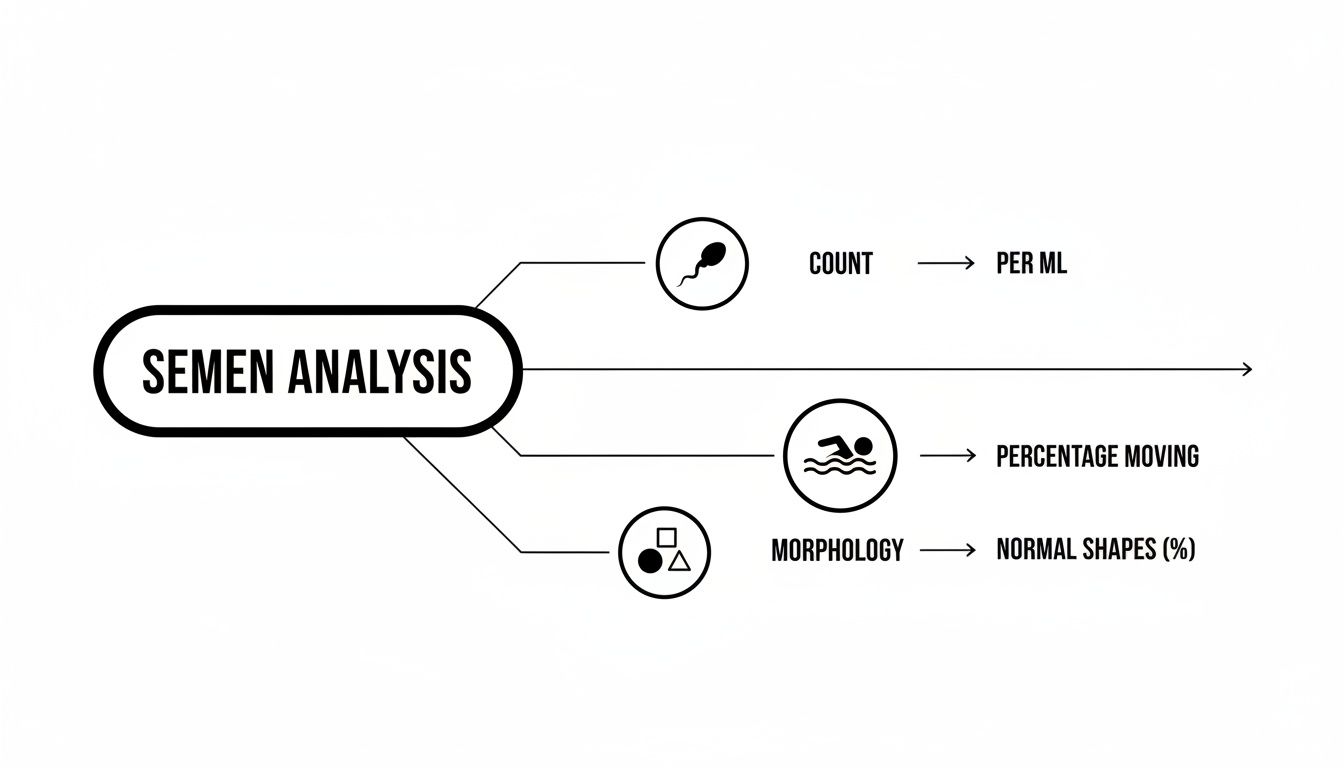
As you can see, count, motility, and morphology are really the three pillars of a solid semen analysis.
Sperm Motility: The Swimmers
Having a high count is great, but it's only half the battle. Those sperm need to be able to move. Sperm motility measures the percentage of your sperm that are actively swimming forward. For male fertility, sperm need the horsepower to complete their journey.
Your report will probably break motility down into a few classes:
- Progressive Motility: These are the all-stars. They're the sperm moving forward, either in a straight line or in large circles. They are actively making progress.
- Non-Progressive Motility: These sperm are moving, but they aren't going anywhere useful. Think of them as treading water or swimming in tight little circles.
- Immotile: This one is straightforward—it’s the percentage of sperm that aren't moving at all.
The WHO has two key benchmarks here. First, total motility (progressive + non-progressive) should be 42% or higher. Even more critically, progressive motility should be at least 30%, because these are the sperm capable of reaching their destination.
Sperm Morphology: The Shape and Structure
Next up is sperm morphology, which is all about size and shape. Under a microscope, embryologists are looking for sperm with a "normal" structure: a smooth, oval-shaped head, a distinct midpiece connecting it to the tail, and a long, single tail.
Why does shape matter so much? A sperm with a misshapen head or a defective tail could have trouble with its task. But here’s the surprising part: it's completely normal for the overwhelming majority of sperm in a sample to be abnormally shaped.
Because of this, the threshold for a "normal" result is much, much lower than for other parameters. The WHO considers a sample healthy if just 4% or more of the sperm have a normal shape.
Vitality and Other Cellular Clues
Finally, your report might include a few other important details. Sperm vitality measures the percentage of sperm that are alive. This test is especially important if motility is very low, because it helps distinguish between sperm that are dead and those that are alive but just not moving. A normal vitality score is 54% or more live sperm.
You might also see a count for other cells, like white blood cells (WBCs). While a few are expected, a high number of WBCs could be a red flag for an infection or inflammation somewhere in the male reproductive tract, which can harm sperm health. It's one of those subtle clues a doctor will look at to get the full picture of what's going on.
Making Sense of Common Diagnostic Terms
After you've looked over the individual numbers on your report, you might see a specific medical term in the summary section. Seeing a complex, scientific-sounding word like "oligoasthenoteratozoospermia" can be pretty alarming, but don't panic. These terms are just the doctor's shorthand for describing a particular pattern in your results.
They aren't a final verdict on your fertility. Think of them as a starting point for a clearer, more focused conversation about your reproductive health.
It’s like getting a diagnosis for a "common cold" based on symptoms like a cough and a runny nose. A fertility specialist uses these terms to summarize the key findings from your sperm analysis. This helps them immediately pinpoint the area that might need attention. For a deeper dive into the language on your report, a good medical terminology study guide can be really helpful.

Let's break down the most common diagnoses you're likely to see, what they actually mean, and what they signify for your journey.
Issues with Sperm Count
Most of the time, the main diagnosis relates to the number of sperm in the sample. These terms are a direct reflection of the concentration and total count metrics we covered earlier.
- Oligospermia: This is the medical term for a low sperm count. It simply means the concentration of sperm is below the 15 million per milliliter threshold. It’s often broken down by severity—mild, moderate, or severe—which helps your doctor figure out the best next steps.
- Azoospermia: This term is used when there are zero sperm found in the semen sample. While that can sound final, it's crucial to understand it doesn't always mean your body isn't producing sperm at all. The next step is usually to figure out if it’s a production issue or a blockage that’s preventing sperm from getting out.
It's so important to remember that these results can fluctuate. A single report showing oligospermia might just be the result of a recent fever or a period of high stress, which is why a repeat test is almost always the first recommendation.
Diagnoses Related to Movement and Shape
It's not all about the numbers. The quality of the sperm—how they move and what they look like—is just as important for fertilization.
Asthenozoospermia is the clinical term for poor sperm motility. This diagnosis is made when less than 30% of the sperm are swimming forward effectively (progressive motility). You can have a sky-high count, but if the sperm can't complete their journey, it presents a challenge.
Teratozoospermia points to abnormal sperm morphology, or shape. This is diagnosed when fewer than 4% of the sperm have a normal structure. It sounds like a low number, but the vast majority of sperm are naturally misshapen. This diagnosis just focuses on whether there’s a sufficient percentage of well-formed sperm to get the job done.
A diagnosis is simply a signpost. It points you and your medical team in the right direction. It transforms a page of numbers into a clear, focused starting point for creating an effective action plan.
When Multiple Factors are Involved
Sometimes, a report will show that more than one parameter is outside the normal range. When this happens, you might see a combination of the terms we've just discussed.
For example, you could be diagnosed with Oligoasthenoteratozoospermia (OAT). It's a mouthful, but it’s really just three words mashed together:
- Oligo-: Low sperm count
- Astheno-: Poor motility
- Terato-: Abnormal shape
This single term efficiently tells your doctor that all three major sperm parameters—count, movement, and shape—are below the ideal reference ranges. While a diagnosis like OAT indicates a more significant challenge, it gives your doctor a complete picture, allowing for a much more targeted investigation into potential causes and treatments.
The key takeaway is that each of these terms, whether alone or combined, moves you from uncertainty to clarity. And that’s the most important first step you can take.
Why Your Sperm Health May Be Low and How to Improve It
Getting a sperm analysis report back with numbers that are lower than you hoped for can feel like a gut punch. It’s easy to jump to worst-case scenarios, but it's critical to see these results for what they are: not a final verdict, but a starting point.
Think of your report as a set of clues that can guide you toward making positive, powerful changes. Many of the factors that influence sperm health are well within your control, turning what feels like a setback into a genuine opportunity to take charge of your health.
The first step is understanding the "why" behind your results. For most men, suboptimal sperm parameters aren't caused by some major underlying medical issue. Instead, they're often a direct reflection of lifestyle and environment. The body's sperm production cycle is surprisingly sensitive, and everyday things like your diet, stress levels, and even sleep habits can have a huge impact.
The Big Picture: A Global Trend in Male Fertility
Before zooming in on your personal habits, it helps to zoom out and see the bigger picture. If your results showed a low sperm count, you are far from alone. This is part of a much larger, well-documented global trend that scientists have been tracking for decades.
A landmark 2023 meta-analysis, which reviewed studies from 1973 to 2018, found a staggering worldwide decline in sperm concentrations. On average, they've been dropping by 0.87 million sperm per mL every single year. This decline has actually accelerated since 2000, which means far more men today are getting a diagnosis like 'oligospermia' than their fathers' or grandfathers' generations.
This isn't meant to dismiss your results, but to reassure you. It helps shift the focus from "What's wrong with me?" to "What can I do to support my health in this modern environment?"
Key Lifestyle Factors That Impact Sperm Health
Your daily habits lay the foundation for your overall well-being, and sperm production is no exception. Let's break down the key areas where small, consistent adjustments can make a surprisingly big difference.
1. Diet and Nutrition
Imagine your body is a high-tech factory that produces sperm. The quality of the raw materials you put in—the food you eat—directly determines the quality of the final product. A diet packed with antioxidants, vitamins, and minerals is one of the best ways to protect developing sperm from damage.
- Antioxidants: Foods like berries, dark leafy greens, and nuts are loaded with antioxidants that fight oxidative stress, which is a major enemy of healthy sperm.
- Key Nutrients: Zinc (found in oysters and lean meats) and selenium (found in Brazil nuts) are absolutely critical minerals for both sperm production and function.
- Healthy Fats: Omega-3 fatty acids, found in fish like salmon and in walnuts, are essential for building healthy sperm membranes.
On the flip side, a diet high in processed foods, trans fats, and sugar can fuel inflammation and oxidative stress, hurting your sperm quality. Looking into natural supplements can also be a game-changer. You can learn about the top Ayurvedic herbs for male fertility to give your balanced diet an extra boost.
2. Heat Exposure
Sperm production is a cool process—literally. There’s a biological reason the testicles are located outside the body: they need to maintain a temperature that's slightly cooler than the rest of you for optimal sperm development.
Exposing the testicles to excess heat can temporarily tank both sperm production and motility. Common culprits include hot tubs, saunas, and even resting a warm laptop directly on your lap for long stretches.
Making simple swaps can help. Opt for showers instead of hot baths and switch to looser-fitting underwear like boxers instead of briefs to help maintain that ideal, cooler temperature.
Actionable Next Steps for Improving Your Sperm Health
Seeing your sperm analysis results laid out clearly can be the catalyst you need to make meaningful changes. It’s all about taking proactive, manageable steps to create a healthier environment for sperm production to thrive.
- Manage Stress: Chronic stress floods your body with cortisol, a hormone that can mess with testosterone and sperm production. Finding a way to decompress—whether it's through exercise, meditation, or just taking short walks—can have a real, positive impact.
- Prioritize Sleep: This one is non-negotiable. Aim for 7-9 hours of quality sleep per night. Sleep is when your body does its most important repair work and regulates the hormones essential for fertility.
- Move Your Body (Moderately): Regular, moderate physical activity is fantastic for boosting antioxidant levels and keeping your hormones balanced. Just don't overdo it—overly intense exercise can sometimes have the opposite effect, so finding a healthy middle ground is key.
Remember, these lifestyle changes take time to show up in your results. The full sperm production cycle takes about three months. By adopting these habits now, you are making a direct investment in your future reproductive health.
For a more comprehensive roadmap, check out our guide on how to improve sperm health with practical, evidence-based strategies.
Creating Your Action Plan After Getting Your Results

Getting your sperm analysis report is a big step, but it’s just the beginning. Think of it as a snapshot in time—a piece of data to help you move forward, not a final verdict on your fertility.
Now, the focus shifts from just understanding the numbers to using them to build a clear, proactive plan. Having a roadmap helps reduce anxiety and gives you a real sense of direction, one step at a time.
Why a Repeat Test Is Almost Always Step One
Before you jump to any conclusions, the most important thing to do is confirm the results. Sperm production takes about three months, and your numbers can swing quite a bit based on temporary things like a recent sickness, a stressful week at work, or even just a few nights of bad sleep.
Because of this natural fluctuation, a single test isn't enough to get a reliable baseline. Scheduling a second analysis, usually a month or two after the first, gives a much more accurate picture of your true sperm health. This confirmation step prevents unnecessary worry and makes sure your action plan is built on solid, consistent data.
It's like having your blood pressure taken. One high reading at the doctor’s office doesn't automatically mean you have hypertension. They'll take multiple readings over time to spot the real trend. The same logic applies here.
When to Make Lifestyle Changes vs. See a Specialist
Your results will point you toward the right immediate actions. Generally, the path forward splits into two main categories depending on what your report shows.
For results that are borderline or just slightly below the normal range:
- Start making proactive lifestyle changes right away. There's no need to wait for a follow-up appointment to start supporting your body’s sperm production.
- Focus on improving your diet, getting regular moderate exercise, managing stress, and locking in 7-9 hours of quality sleep each night.
- Also, try to limit heat exposure from things like hot tubs, saunas, or even long hours with a laptop directly on your lap.
For results showing very low numbers or a finding like azoospermia (no sperm):
- Schedule a follow-up appointment with a specialist promptly. While lifestyle changes are always a good idea, these kinds of results call for a deeper medical look.
- You'll want to see a urologist who specializes in male fertility. They can perform a physical exam and may order more tests to check for underlying causes like hormonal imbalances or physical blockages.
Preparing for Your Doctor’s Appointment
Walking into your follow-up appointment prepared can make a huge difference. Don't be afraid to jot down your questions beforehand so you don’t forget anything in the moment.
Here are a few key questions you might want to ask your specialist:
- Looking at my specific results, what do you think are the most likely reasons for these numbers?
- What other tests, like hormone blood work or an ultrasound, would you recommend we do next?
- Are there any specific lifestyle changes or supplements you’d suggest for my situation?
- What's the next step in our plan, and what does the timeline look like?
Taking this structured approach turns your sperm analysis results from something that might feel confusing or stressful into the foundation of a clear and effective plan.
Frequently Asked Questions About Semen Analysis
Getting your semen analysis results back can bring up a lot of questions. Even after you've gone through the report, it's completely normal to have some lingering concerns. Let's tackle some of the most common questions head-on to clear up any confusion and help you figure out what to do next.
Does an Abnormal Sperm Analysis Mean I Can Never Have Children?
Absolutely not. This is probably the biggest and most common fear, so let's set the record straight right away. An abnormal result is not a final verdict on your fertility.
Think of it as a diagnostic tool—like a check engine light for your reproductive health. It gives you and your doctor critical information about what's happening right now. It’s a starting point, not the end of the road. Many men with less-than-perfect numbers go on to have kids, either naturally or with some help. The results simply point you toward the right path forward.
How Long Should I Wait Before Retesting My Sperm?
It's standard practice to wait a bit before doing another test, and there’s a really good reason for it. Your body is constantly making new sperm, and that entire production cycle—from start to finish—takes about 72 to 90 days.
A single test is just a snapshot in time. It can be thrown off by all sorts of things, like a recent fever, a stressful week at work, or even a couple of bad nights of sleep. That’s why doctors usually suggest waiting at least a month, and often up to three months, before a retest. This gives your body time to produce a completely new batch of sperm, which provides a much more accurate picture of your baseline health.
A single abnormal test shows a potential issue on one specific day. Two abnormal tests, spaced a couple of months apart, show a pattern that needs a closer look.
Can I Improve My Sperm Health with Diet and Supplements?
Yes, you absolutely can. Lifestyle factors, especially what you eat, can make a real, positive difference in your sperm quality. Think of it as creating the best possible environment for your body to produce healthy, strong sperm.
- Load up on nutrient-rich foods: Focus on foods packed with antioxidants, like berries and leafy greens. Zinc from lean meats, selenium from Brazil nuts, and healthy omega-3 fats from fish are also crucial.
- Cut out the bad stuff: Limiting processed foods, cutting back on alcohol, and quitting smoking are some of the most powerful moves you can make. These habits can create oxidative stress that damages developing sperm.
- Talk to a pro first: While targeted supplements can be very helpful, it’s critical to talk to your doctor before starting any new routine. They can recommend a plan based on your specific results to make sure it's safe and effective for you.
Taking control of these lifestyle factors is one of the most empowering steps you can take on this journey.
Trying to make sense of your sperm analysis results can feel overwhelming, but you don’t have to do it alone. Hera Fertility is here to simplify the entire process, from getting your test to understanding what your numbers actually mean. Upload your existing report for a free, instant analysis, or let us help you find a lab and get your clear, AI-powered Hera SmartScore. Take the next step toward clarity and control by visiting https://herafertility.co today.
Article created using Outrank
Related Resource Articles
-
A Man's Guide to Sperm Analysis Interpretation
Understand your sperm analysis interpretation with this clear guide. Learn what sperm count, motility, and morphology results mean for male fertility.
17 min read
-
Urologist for Infertility: When to Seek Help for Male Fertility
Discover when to see a urologist for infertility, what tests to expect, and practical steps toward understanding your reproductive health.
22 min read
-
What Is Semen Analysis? A Clear Guide for Men
Wondering what is semen analysis? Our clear guide explains the test, what results mean for your fertility, and your next steps. Get empowered with knowledge.
24 min read