When it comes to boosting male fertility, there's no single magic bullet. Instead, the best approach is a smart combination of key nutrients. Think of antioxidants like Coenzyme Q10, Vitamins C, and E, along with minerals such as Zinc and Selenium. These are the frontline defense, protecting sperm from damage and supporting healthy development from the ground up.
Focusing on these specific nutrients is a powerful first step in using nutrition to enhance your reproductive health.
Your Quick Guide to Boosting Male Fertility With Vitamins
When a man is trying to start a family, his health is a crucial factor. The good news? You have a powerful tool at your disposal: nutrition.
Think of it like building a high-performance car; you need the absolute best raw materials for it to function at its peak. Vitamins and minerals are those essential materials for a man's body. They act as the building blocks that influence everything from sperm count and their swimming ability (motility) to their shape (morphology).
The Role of Diet and Supplementation
A balanced diet lays the foundation, no question. But targeted supplementation can provide the specific, concentrated nutrients needed to really optimize a man's reproductive function. This is especially true when modern diets and hectic lifestyles sometimes fall short.
Choosing the right vitamin for men fertility isn't about guesswork. It’s about understanding which specific nutrients have the science behind them to support the delicate processes of sperm production and maturation.
Your body is constantly producing millions of sperm, a process that demands a steady supply of specific vitamins and minerals. A deficiency in even one key nutrient can throw a wrench in the entire system.
Because the quality of what you put in your body matters immensely, we've partnered with FullWell. They are committed to providing the highest quality, research-backed supplements to support men's reproductive health. You can explore their formulations at FullWell supplements.
For a broader look at the lifestyle and dietary changes that can make a real difference, check out our detailed guide on how to improve sperm health.
Key Nutrients for Men's Fertility at a Glance
To help you get started, we've put together a quick-reference table of the most important nutrients for male fertility. This gives you a clear snapshot of what each nutrient does and where you can find it in your diet.
| Nutrient | Primary Role in Male Fertility | Common Food Sources |
|---|---|---|
| Zinc | Essential for sperm formation, testosterone metabolism, and sperm motility. | Oysters, beef, pumpkin seeds, lentils, shiitake mushrooms. |
| Selenium | Acts as a powerful antioxidant, protecting sperm from damage and supporting motility. | Brazil nuts, tuna, sardines, beef, chicken, cottage cheese. |
| Coenzyme Q10 | Boosts energy production in sperm cells, improving motility and overall function. | Organ meats (heart, liver), fatty fish, beef, spinach, broccoli. |
| Vitamin C & E | Work together as antioxidants to reduce DNA damage in sperm. | Berries, citrus fruits, bell peppers (Vit C); sunflower seeds, almonds, spinach (Vit E). |
| Folate (Vitamin B9) | Crucial for sperm DNA synthesis and preventing chromosomal abnormalities. | Leafy greens (spinach, kale), asparagus, Brussels sprouts, beans, lentils. |
| L-carnitine | Plays a key role in sperm energy metabolism and maturation. | Red meat (especially beef), fish, poultry, milk. |
| Vitamin D | Linked to improved testosterone levels and better sperm motility. | Fatty fish (salmon, mackerel), fortified milk, sunlight exposure. |
While a food-first approach is always best, supplementation can help fill any gaps and ensure you're getting optimal levels of these critical nutrients.
How Nutrition Directly Impacts Your Sperm Health
Think of building healthy sperm like constructing a high-performance engine; you need the absolute best raw materials for it to function at its peak. Your diet provides these essential materials, making what you eat a true cornerstone of male fertility.
Every single day, your body is tasked with producing millions of sperm. This is an incredibly demanding process that requires a constant and very specific supply of vitamins and minerals. These nutrients aren’t just optional add-ons; they are the fundamental building blocks for healthy sperm development. To really get the full picture, it helps to start by understanding the role of macronutrients and micronutrients in how your body works overall.
The Building Blocks of Male Fertility
The entire sperm production cycle takes roughly three months, and certain vitamins and minerals are critical for every single stage. These nutrients have very specific jobs that directly impact the three key measures of sperm health:
Sperm Count (Concentration): Having enough sperm is the first hurdle. Nutrients like Zinc and Folate are absolutely essential for the DNA synthesis and cell division required to produce an adequate army of sperm.
Sperm Motility (Movement): It's not just about numbers; sperm need to be strong swimmers to reach their destination. Nutrients such as L-carnitine and Coenzyme Q10 act as the high-octane fuel for the mitochondria—the tiny "engine" inside every sperm cell—giving them the raw energy they need to travel effectively.
Sperm Morphology (Shape): A sperm's shape is crucial for its function. Proper development, supported by minerals like Selenium, ensures sperm have the correct structure to complete their mission.
Protecting Sperm from Damage
Beyond just building new sperm, your diet plays a vital protective role. Sperm cells are incredibly delicate and vulnerable to damage from an imbalance known as oxidative stress. This happens when unstable molecules, called free radicals, overwhelm your body’s natural antioxidant defenses.
Think of oxidative stress like rust forming on the intricate parts of an engine. It corrodes the delicate machinery of sperm cells, including their precious DNA cargo. A diet rich in antioxidants acts like a protective, rust-proof coating, neutralizing these damaging free radicals before they can cause harm.
Antioxidants like Vitamin C, Vitamin E, and Selenium are your body's personal security team, safeguarding sperm from this cellular-level damage. By focusing on a nutrient-dense diet, you’re providing your body with the exact tools it needs to both build and protect healthy sperm, directly influencing your fertility potential.
The A-List Nutrients for Improving Male Fertility
Now that we've covered how nutrition lays the groundwork for sperm health, let's get specific about the vitamins and minerals doing the heavy lifting. Think of these as your A-list team of nutrients, each with a specialized job in building and protecting your fertility. Getting enough of these key players is one of the most direct and powerful ways to support your body’s reproductive engine.
The journey to create a single healthy sperm is a complex one, taking nearly three months from start to finish. A steady supply of these critical nutrients ensures that this production line runs smoothly, giving you the best possible outcome.
This visual breakdown makes the connection crystal clear: what you eat directly impacts the quality of your sperm.
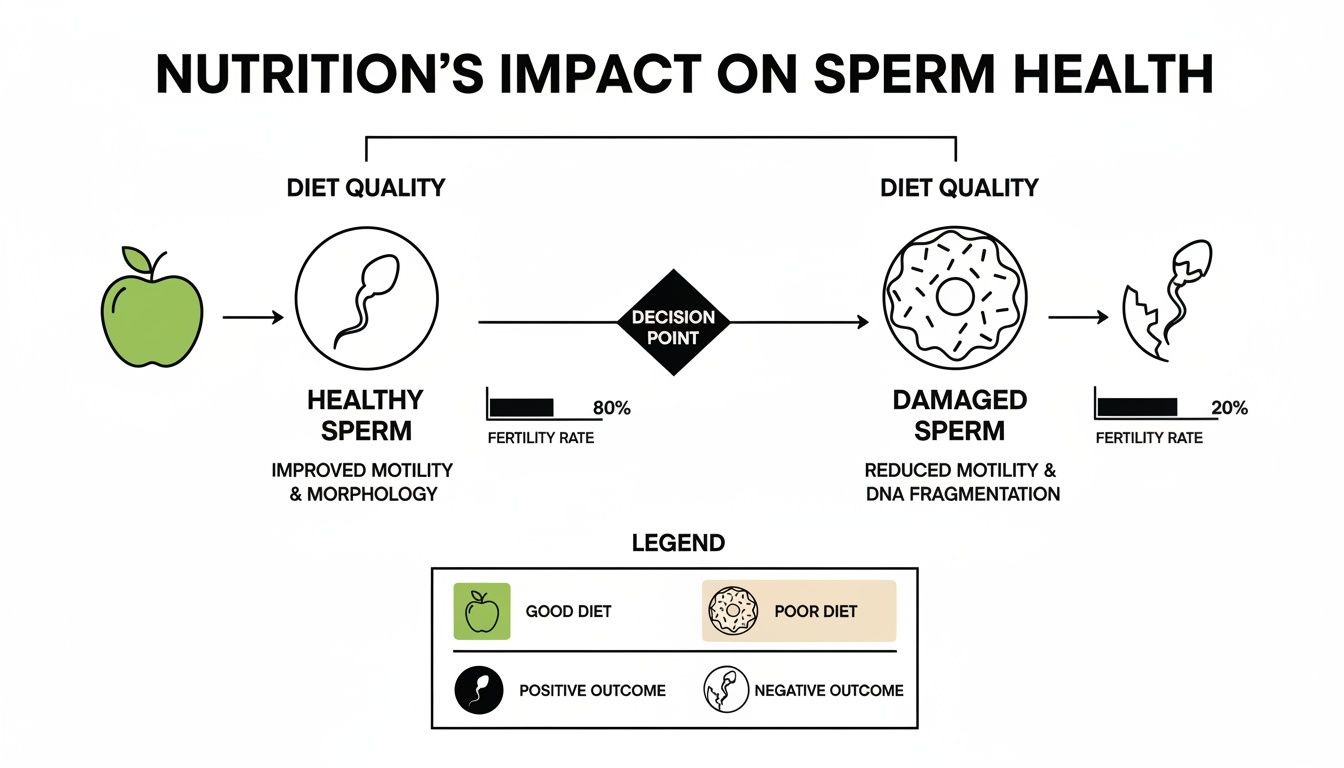
Simply put, a diet rich in these building blocks gives your body the raw materials for robust sperm, while a poor diet can seriously compromise their quality.
Vitamin D: The Sunshine Vitamin
Often overlooked in men's health, Vitamin D is stepping into the spotlight as a major player in male reproductive function. It's more than just a vitamin; it acts like a hormone that influences everything from testosterone production to overall sperm quality.
Recent research has really hammered this home. A major review found a significant link between higher Vitamin D levels and better fertility markers, pointing out that men struggling with infertility often had strikingly low levels. This deficiency was tied directly to poor sperm motility and abnormal shape.
- Food Sources: Fatty fish like salmon and mackerel, fortified milk, and good old-fashioned sunlight.
- Actionable Next Step: Ask your doctor for a blood test to check your Vitamin D levels. A typical supplement dose is 1,000–4,000 IU daily, but testing will pinpoint your exact needs.
Zinc: The Master Mineral for Men
If there’s one mineral that’s a true superstar for male fertility, it’s zinc. It’s absolutely essential for sperm formation, playing a make-or-break role in developing the sperm’s tail and its protective outer membrane. On top of that, it’s vital for testosterone metabolism.
A zinc deficiency can be a direct hit to your fertility, leading to lower testosterone, a reduced sperm count, and sluggish motility. For any man serious about his fertility, ensuring adequate zinc is non-negotiable.
- Food Sources: Oysters are the most famous source, but you can also load up with beef, pumpkin seeds, and lentils.
- Actionable Next Step: If you don't eat many zinc-rich foods, consider a supplement. A typical dose is 15–30 mg daily.
Vitamins C and E: The Bodyguard Duo
Think of Vitamins C and E as the personal bodyguards for your sperm. They are powerhouse antioxidants that work in tandem to shield delicate sperm cells from oxidative stress—that cellular damage we talked about earlier.
Vitamin C concentrates in the seminal plasma (the fluid surrounding sperm) and helps protect their precious DNA cargo. Vitamin E, meanwhile, embeds itself in the sperm's cell membrane, defending it from attack. This teamwork is absolutely critical for maintaining sperm integrity from production to destination.
- Food Sources: For Vitamin C, think citrus fruits, berries, and bell peppers. For Vitamin E, turn to sunflower seeds, almonds, and spinach.
- Actionable Next Step: Aim to eat a variety of these foods daily. A typical supplement dose is 500–1,000 mg of Vitamin C and 200–400 IU of Vitamin E daily.
Selenium: The Morphology Manager
Selenium is another crucial antioxidant mineral that is vital for proper sperm morphology, or shape. A sperm needs a perfectly formed structure to function correctly, and selenium is essential for that.
It works hand-in-hand with Vitamin E to protect sperm and is a key component of the proteins that make up the sperm's structure. It's no surprise that studies often find low selenium levels in men dealing with fertility challenges.
- Food Sources: Brazil nuts are a fantastic source—just one or two a day is all you need. You can also find it in tuna, sardines, and beef.
- Actionable Next Step: Eat a couple of Brazil nuts each morning. A typical supplement dose is 100–200 mcg daily.
Folate: The DNA Guardian
You might be familiar with folate (Vitamin B9), and it's just as important for men. Folate is essential for healthy DNA synthesis. Since sperm are basically tiny packages of DNA, getting enough folate is critical for producing genetically sound sperm and preventing chromosomal abnormalities.
Folate often works as a team with zinc. In fact, some research suggests that combining these two nutrients can significantly boost sperm count in certain men.
- Food Sources: Leafy greens like spinach and kale, asparagus, beans, and lentils.
- Actionable Next Step: Add a serving of leafy greens or beans to your daily meals. A typical supplement dose is 400–1,000 mcg daily.
CoQ10 and L-Carnitine: The Energy Crew
Finally, meet the energy powerhouses: Coenzyme Q10 (CoQ10) and L-carnitine. Think of these as the high-octane fuel that powers sperm on their incredibly long journey.
CoQ10 is concentrated in the mitochondria—the "engine" of the sperm cell—and is vital for generating the raw energy needed for movement. L-carnitine acts like a shuttle, transporting fatty acids into the mitochondria to be burned for fuel. Together, they supercharge sperm motility and support proper maturation.
- Food Sources: CoQ10 is found in organ meats and fatty fish. L-carnitine is most abundant in red meat.
- Actionable Next Step: Since getting therapeutic doses from food is tough, supplementation is often the most effective approach. Typical doses are 200–400 mg of CoQ10 and 1,000–3,000 mg of L-carnitine daily.
For a structured plan to improve these and other key sperm health metrics, our Sperm Health Course offers in-depth guidance and practical, actionable strategies.
Supplement Dosing Guide for Male Fertility Support
Sorting through supplement options can be overwhelming. This table provides a quick reference for the typical daily dosage ranges of the key nutrients we've discussed.
| Supplement | Typical Daily Dose Range | Best Practice Notes |
|---|---|---|
| Vitamin D | 1,000–4,000 IU | Best to test blood levels first to determine your specific need. |
| Zinc | 15–30 mg | Taking with food can prevent stomach upset. Don't exceed 40 mg long-term. |
| Vitamin C | 500–1,000 mg | Works best when taken with Vitamin E. Can be split into two daily doses. |
| Vitamin E | 200–400 IU | Choose a natural form (d-alpha-tocopherol) for better absorption. |
| Selenium | 100–200 mcg | Be mindful of the upper limit (400 mcg) to avoid toxicity. |
| Folate | 400–1,000 mcg | Often combined with Zinc for a synergistic effect on sperm count. |
| Coenzyme Q10 | 200–400 mg | Look for Ubiquinol form, as it's often more bioavailable. |
| L-Carnitine | 1,000–3,000 mg | Can be taken as L-carnitine or Acetyl-L-carnitine (ALCAR). |
Remember, while this guide offers a solid starting point, it's always wise to chat with a healthcare provider before beginning any new supplement regimen. They can help you tailor a plan that’s right for your body and your specific fertility goals.
Why Vitamin D Is a Crucial Factor for Men
Often called the “sunshine vitamin,” Vitamin D plays a surprisingly powerful role in a man's reproductive health. While we usually think of it in terms of bone strength, its influence runs much deeper. In male fertility, it acts more like a hormone, helping to regulate the entire male reproductive system.
This single nutrient is directly involved in producing healthy testosterone, which is the foundational hormone for making sperm. More than that, researchers have found Vitamin D receptors right on the sperm cells themselves, which tells us it has a hands-on job in their development and function.
When a man’s Vitamin D levels are low, it can set off a ripple effect, potentially leading to lower sperm quality. This makes checking your levels a simple but incredibly smart move for any man on a fertility journey.
The Link Between Vitamin D and Sperm Motility
One of the clearest ways Vitamin D affects male fertility is its connection to sperm motility—the ability of sperm to swim forward effectively. You can think of motility as the fuel in a car's engine; without enough of it, sperm can't complete their critical journey.
The research shows a clear pattern: men with higher Vitamin D levels tend to have sperm with better forward movement. For a deeper look at this vital nutrient, check out this guide on understanding Vitamin D. Stronger, more energetic swimmers have a much better shot at success. To learn more about this crucial sperm health metric, explore our guide on improving sperm motility.
How Supplementation Can Make a Difference
The evidence connecting Vitamin D to positive outcomes is compelling, especially for men who are deficient. Fixing that deficiency isn't just a small tweak; it can be a genuine game-changer that directly impacts your chances of success.
In a landmark randomized controlled trial of 330 infertile men in Denmark, researchers found something remarkable. For men with low sperm concentration, the group that received high-dose Vitamin D achieved a live birth rate of 35.6%, compared to just 18.3% in the placebo group.
This study drives home a powerful point: for certain men, supplementation isn't just about improving numbers on a lab report—it can translate directly into real-world success.
Because the quality of your supplements matters so much, we've partnered with FullWell. They are dedicated to producing the highest quality, evidence-based supplements designed specifically to support men’s reproductive health. Checking your Vitamin D level and supplementing if needed is a proactive, powerful step toward optimizing your fertility.
Choosing High-Quality Male Fertility Supplements

Knowing which nutrients to take is only half the battle. The other, arguably more critical half, is picking a supplement that actually works. The vitamin aisle is a crowded place, and it’s crucial to understand that not all bottles are created equal. The quality of what's inside can make or break your efforts.
When you're investing in your health and future family, you have to see past the flashy marketing. The real value of a men's fertility vitamin comes down to three things: quality, purity, and bioavailability. Bioavailability is just a simple way of saying how well your body can actually absorb and use the nutrients. A cheap, low-quality product might be packed with fillers, contaminants, or forms of nutrients your body simply can't process.
What to Look for on the Label
So, how do you sort the good from the bad? Look for proof of third-party testing. This means an independent, unbiased organization has put the supplement through its paces to verify that what’s on the label is what’s in the bottle—and that it’s free from harmful junk.
Keep an eye out for these certifications:
- NSF International: A trusted name that verifies the product's formulation and screens for contaminants.
- U.S. Pharmacopeia (USP): This seal confirms the identity, strength, purity, and quality of the ingredients.
- Informed-Sport/Informed-Choice: These certifications test for banned substances, which indicates an extremely high standard of quality control.
Finding one of these seals on a product gives you an extra layer of confidence. It tells you you’re dealing with a reputable brand that values safety and transparency as much as you do.
Simply put, a high-quality supplement is formulated with the most effective forms of each nutrient at dosages backed by scientific research. This focus on evidence and quality is non-negotiable when supporting your reproductive health.
Because we believe so strongly in this principle, we've partnered with FullWell. Their male fertility supplements are developed by actual experts and rigorously tested to meet the highest standards for purity and potency. They specifically focus on using the most bioavailable forms of each ingredient, ensuring your body gets the maximum benefit from every dose.
For men who are ready to invest in a premium, research-backed supplement, we recommend exploring what FullWell has to offer. It's a reliable and effective way to take proactive control of your fertility journey.
When to Call in a Professional
Think of supplements and lifestyle changes as tuning up your car's engine. They make a huge difference in performance and can solve a lot of common problems. But if there’s a deeper mechanical issue, no amount of high-octane fuel or premium oil is going to fix it. That's when you need a mechanic to look under the hood.
The same goes for your fertility. Nutrition and supplements support your body's natural systems, but sometimes you need a specialist to diagnose an underlying problem.
Taking the Next Step: When to See a Doctor
Booking a consultation with a urologist or a male fertility specialist (a reproductive urologist) is the best way to get a clear picture of what's going on. These are the experts who can connect the dots.
You should definitely schedule a visit if you're dealing with:
- Concerning Semen Analysis Results: If your report came back with a low sperm count, poor motility, or a high number of abnormally shaped sperm, a specialist can tell you what those numbers really mean and what to do next.
- A Known Medical Condition: If you have something like a varicocele, a diagnosed hormonal imbalance, or have had testicular surgery in the past, professional guidance isn't just helpful—it's essential.
- Other Health or Lifestyle Worries: Maybe you're concerned about how your job, environment, or a past illness might be affecting your fertility. A doctor can help you sort through those variables.
What to Expect From Your Doctor's Visit
A specialist will usually start by going over your complete health history. From there, they might recommend more specific tests to pinpoint the root cause of any issues. This could involve blood work to check your hormone levels (like testosterone) or even advanced sperm DNA fragmentation tests, which look at the genetic health of your sperm.
It's also the best way to find out if you have a specific nutrient deficiency that needs to be corrected. For example, a man's vitamin D status can have a surprisingly big impact on fertility outcomes.
One U.S. study found a shocking ninefold increased risk of clinical pregnancy loss for couples where the male partner had insufficient vitamin D levels. You can read more about these important findings.
This is a perfect example of how a simple blood test ordered by a doctor, followed by a targeted plan, can make all the difference. Don't guess when you can test.
Common Questions About Male Fertility Vitamins
Stepping into the world of fertility supplements can feel a bit overwhelming, and it's natural to have questions. Let's clear up a few of the most common ones that come up.
How Long Does It Take for Vitamins to Improve Sperm Quality?
It’s all about the sperm production cycle, a process called spermatogenesis. This entire journey, from start to finish, takes about 74 days.
Because of this timeline, you’ll want to take any vitamin for men fertility consistently for at least three months. This gives your body the runway it needs to produce a completely new batch of sperm that has benefited from those better nutrient levels. This is a great actionable step: commit to at least 90 days of consistent supplementation to see a potential impact.
Can I Get All These Nutrients From Diet Alone?
A healthy diet is non-negotiable—it's the foundation of everything. But when you’re aiming for the specific, therapeutic doses of certain nutrients known to support sperm health, food alone often isn't enough.
For example, getting enough Vitamin D or CoQ10 from your plate to make a real impact on reproductive health is incredibly difficult. A high-quality, targeted supplement is the most reliable way to bridge those nutritional gaps and ensure your body has what it needs.
Are There Any Risks With Taking Male Fertility Supplements?
For the most part, these supplements are very safe when you stick to the recommended dosages. Always follow the instructions on the product label—more is not always better.
It's always a smart move to chat with your doctor or a healthcare provider before starting any new supplement plan, especially if you have any pre-existing health conditions or are taking other medications.
The quality of what you put in your body is important. That's why we have a partnership with FullWell for supplements. They have the highest quality supplements, specifically designed with evidence-backed ingredients to support men’s reproductive health. Learn more about FullWell’s offerings.
Related Resource Articles
-
Supplements for Sperm DNA Fragmentation: Boost Male
Explore supplements for sperm DNA fragmentation. Learn how antioxidants like CoQ10 & Zinc support male fertility, testing, and actionable steps.
18 min read
-
Can Vasectomies Cause Low Testosterone? Debunking the Myths
Can vasectomies cause low testosterone? Get clear, science-backed answers about vasectomies, male hormones, and what to expect for your reproductive health.
16 min read
-
Male Fertility Supplements: A Guide to Supporting Sperm Health
Discover top male fertility supplements to support sperm health. Our guide covers key nutrients like CoQ10, Zinc, and Omega-3s for men's reproductive health.
11 min read