Certain vitamins play a foundational role in male fertility, directly impacting sperm count, how well sperm swim, and their overall quality. Think of key players like Vitamin C, D, Zinc, and Folate as the essential toolkit for building stronger, healthier sperm from the ground up.
The Building Blocks of Stronger Sperm
When you're trying to improve male fertility, it’s easy to get overwhelmed by complex medical information. But the fundamental idea is surprisingly simple: what a man puts into his body directly affects the quality of what his body produces. This is especially true for sperm.
Sperm aren't just simple cells; they're intricate biological engines that need specific fuel to perform at their best.
Imagine you're building a high-performance car. You wouldn't use cheap parts or low-grade fuel and expect it to win a race, right? The same logic applies to vitamins and sperm health. Sperm cells need the right raw materials to be built correctly, powered up, and protected from damage.
Why Nutrition Is a Man's First Line of Defense
Every single day, a man’s body produces millions of new sperm. This constant production line is incredibly sensitive to its environment, especially to what you eat. Key vitamins and minerals serve three critical functions in this process:
- Structure: They act as essential components for building physically sound sperm, ensuring they have the right shape (morphology) and intact genetic material.
- Energy: They fuel the mitochondria—the tiny powerhouses inside each sperm cell—giving them the energy needed to swim effectively (motility).
- Protection: They function as powerful antioxidants, defending sperm from the daily grind of cellular damage.
The Hidden Threat to Male Fertility
One of the biggest culprits behind poor sperm health is something called oxidative stress. Think of it as a form of biological rust. It happens when there's an imbalance between harmful molecules called free radicals and the antioxidants that keep them in check.
This "rust" can damage sperm DNA, weaken their structure, and cripple their ability to swim.
This is exactly where specific vitamins come into play. Many essential nutrients are potent antioxidants that act as a shield, protecting vulnerable sperm cells from the damaging effects of oxidative stress and preserving their precious genetic cargo.
Understanding this connection is the first step toward taking control. By focusing on nutrition, you're not just crossing your fingers; you're actively giving your body the tools it needs to support your reproductive health.
The vitamins we'll cover in this guide are your proactive toolkit for building a stronger foundation for male fertility. A great starting point is to understand your baseline with advanced testing, like the Hera Fertility DNA Fragmentation Test, which measures the genetic health of your sperm.
The Essential Nutrients For Optimal Sperm Health
Think of your body as a high-performance factory. To produce top-quality sperm, it needs the right raw materials. These essential vitamins and minerals are the building blocks for everything—from the initial creation of a sperm cell to powering its long journey and protecting its precious genetic cargo.
Focusing on these key nutrients is one of the most direct and powerful ways a man can support his own fertility. Let's walk through the specific vitamins and minerals that research has shown make the biggest impact.
The Antioxidant Powerhouses: Vitamin C And E
One of the biggest threats to sperm health is oxidative stress. This is a type of cellular damage caused by unstable molecules called free radicals. Vitamins C and E are a powerful antioxidant duo, working together as a team to protect sperm from this damage.
Vitamin C: This vitamin is like a bodyguard for your sperm's DNA. It circulates in the seminal plasma, neutralizing free radicals before they can cause harm. Studies show that getting enough Vitamin C can improve sperm count, motility (how well they swim), and morphology (their shape).
Vitamin E: This fat-soluble antioxidant works from the inside, protecting the sperm cell membrane itself from damage. It works hand-in-hand with Vitamin C, creating a comprehensive defense system that keeps each sperm cell structurally sound.
To boost your intake, start adding more citrus fruits, berries, bell peppers, almonds, and sunflower seeds to your meals.
Zinc: The Master Architect Of Sperm Production
If there's one mineral that's absolutely fundamental to male fertility, it's Zinc. It's found in high concentrations in sperm and is non-negotiable for their creation. Zinc acts as the master architect, overseeing multiple critical stages of sperm development.
A Zinc deficiency can have serious consequences, often leading to low testosterone levels, a reduced sperm count, and poor sperm quality. That's because Zinc is a key component in building the sperm's outer layer and tail. Without enough of it, sperm just can't form correctly or build the strength needed for their journey.
Oysters are famously packed with Zinc, but you can also find this vital mineral in beef, poultry, beans, and nuts. Getting your Zinc levels right is a foundational step in any male fertility-focused nutrition plan.
Folate: The DNA Integrity Specialist
Folate, also known as Vitamin B9, is another major player in producing healthy sperm. Its main job is DNA synthesis—the process of creating and repairing genetic material. Since each sperm carries half the genetic blueprint for a potential child, the integrity of that DNA is everything.
When Folate levels are low, it can lead to errors in sperm DNA, increasing the risk of abnormalities.
That's why getting enough Folate is so crucial. You can load up on it by adding leafy green vegetables like spinach and kale, plus beans, lentils, and fortified grains to your diet.
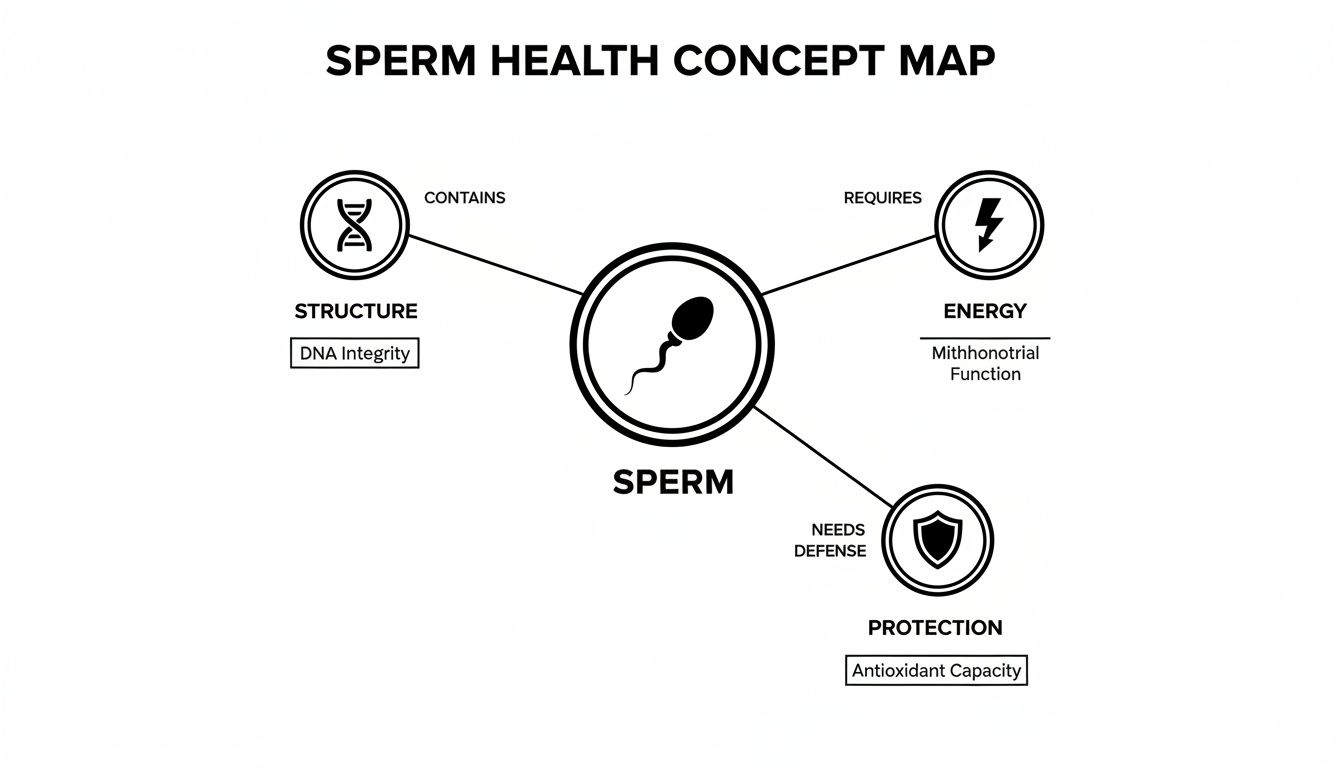
This diagram breaks down the three pillars of sperm health—structure, energy, and protection. As you can see, the vitamins and nutrients we're discussing directly support all three. The big takeaway here is that a man needs a well-rounded nutritional approach to build a truly healthy sperm cell from the inside out.
Coenzyme Q10: The Energy Generator
Sperm need a tremendous amount of energy to swim, and that power comes from the mitochondria—the tiny power plants inside each cell. Coenzyme Q10 (CoQ10) is a compound that is absolutely essential for this energy production.
Think of CoQ10 as the spark plug that ignites the fuel in the sperm's engine. Higher concentrations of CoQ10 in seminal fluid have been directly linked to better sperm motility and count. As men age, natural CoQ10 levels tend to decline, which is why paying attention to this nutrient can be especially helpful. Your body makes it, but you can also find it in foods like organ meats, fatty fish, and whole grains. For more on fueling your body, check out this guide on the best snacks for energy that combine protein, healthy fats, and complex carbohydrates.
L-Carnitine: The Fuel Transporter
Working right alongside CoQ10 is L-Carnitine, an amino acid derivative that acts like a fuel delivery truck. It transports fatty acids into the mitochondria so they can be burned for energy. This process is vital for sperm development and maturation, and it provides the sustained power they need for strong motility.
Research suggests that supplementing with L-Carnitine can significantly improve sperm movement—a critical factor for male fertility. You can find it in red meat, poultry, and dairy products.
For a deeper dive into how you can make targeted improvements, check out our guide on how to improve sperm health.
Key Nutrients for Sperm Health at a Glance
To make this information easy to reference, we've put together a quick summary of the most important vitamins and minerals for male fertility. This table highlights their main job and where you can find them in your diet.
| Nutrient | Primary Role in Sperm Health | Excellent Food Sources |
|---|---|---|
| Vitamin C | Acts as an antioxidant to protect sperm DNA from damage and improves count and motility. | Oranges, strawberries, bell peppers, broccoli |
| Vitamin E | Works with Vitamin C to protect the sperm cell membrane from oxidative stress. | Almonds, sunflower seeds, spinach, avocados |
| Zinc | Essential for sperm formation, testosterone production, and the structure of sperm. | Oysters, beef, poultry, beans, nuts |
| Folate (B9) | Crucial for DNA synthesis and repair, reducing the risk of sperm abnormalities. | Leafy greens, lentils, asparagus, fortified cereals |
| Coenzyme Q10 | Boosts energy production within sperm mitochondria, enhancing motility. | Fatty fish (salmon), organ meats, whole grains |
| L-Carnitine | Transports fatty acids into mitochondria for energy, critical for sperm maturation and motility. | Red meat, fish, poultry, milk |
Remember, a balanced diet rich in these nutrients is a proactive and effective way for a man to support his reproductive health and improve his fertility outcomes.
The Science Behind Vitamin B12 and Male Fertility
While a lot of nutrients for male fertility seem to be trending now, the link between Vitamin B12 and sperm health isn’t new. It’s built on decades of solid scientific research. The idea that a man can support his reproductive goals with targeted nutrition is a well-established principle, and Vitamin B12 has always been a cornerstone of that conversation.
Its role is fundamental to the creation and function of healthy sperm.
Vitamin B12 is absolutely essential for cell division and the synthesis of DNA. Sperm production is one of the most rapid processes of cell creation in the male body, making a steady supply of B12 non-negotiable. It helps ensure the genetic blueprint within each sperm is copied correctly, maintaining its integrity from the very beginning.
Think of it as the quality control manager on a high-speed assembly line. Without B12 overseeing the process, errors can slip through, leading to sperm with damaged DNA or structural defects. This foundational role makes it a key player in any man's reproductive toolkit.
Landmark Research Paved the Way
The powerful connection between B12 and male fertility isn't just theory; it's backed by pivotal research that still informs our approach today. One of the most influential studies goes all the way back to 1984, establishing a clear, direct line between B12 supplementation and real-world improvements in key sperm parameters.
This research gave us some of the earliest solid proof that what a man consumes can directly impact his fertility.
The landmark 1984 vitamin B12 supplementation study showed some remarkable results. When men were given 1,500 micrograms of vitamin B12 over an 8-week period, the improvements were significant:
- Nearly 40% of participants saw a measurable increase in sperm concentration.
- 50% of the men showed an increase in their total sperm count.
- Another 50% demonstrated improved sperm motility—the sperm's ability to swim effectively.
These findings were groundbreaking. They shifted the conversation from general health advice to specific, actionable nutritional strategies. The study proved that for a significant number of men, a targeted boost in Vitamin B12 could lead to tangible, positive changes in the metrics that matter most for male fertility.
Modern Science Reinforces B12's Importance
Decades later, modern science has only strengthened our understanding of Vitamin B12’s role. We now know that beyond just boosting count and motility, it plays a vital part in protecting sperm from oxidative stress—the cellular "rust" that can damage DNA.
By helping to neutralize harmful free radicals, B12 acts as a shield, preserving the critical genetic payload inside each sperm. This is especially important because sperm DNA integrity isn't something a standard semen analysis typically measures. A man might have a "normal" sperm count, but if the DNA inside that sperm is damaged, it can still lead to challenges.
Ensuring adequate Vitamin B12 levels is a proactive step toward supporting not just the quantity of your sperm, but the fundamental quality of their genetic material. This is why it remains a central focus in nutritional strategies for optimizing male fertility.
A Realistic Look at Fertility Supplements
Wandering down the supplement aisle, you’ll see countless bottles promising to be the magic bullet for male fertility. It's an easy trap to fall into. While the specific vitamins and minerals we've covered are absolutely vital for making healthy sperm, it’s critical to approach supplements with a dose of realism.
The biggest misconception is that a generic, one-size-fits-all "male fertility blend" is the best way to go. The truth is, more isn't always better. Your body's needs are unique, and while fixing a specific deficiency can be a game-changer, shotgunning a broad-spectrum formula without knowing why might not get you the results you’re hoping for.
When Good Intentions Go Wrong
The idea that a cocktail of antioxidants will automatically boost male fertility seems logical. It makes sense on paper. But when put to the test, this theory doesn't always hold up, which just goes to show how complex sperm health really is.
A major clinical trial recently sent a shockwave through the fertility community. The study looked at whether a combination antioxidant supplement improved outcomes for men whose partners were undergoing fertility treatment. The results were stunning: the men taking the antioxidant had no better outcomes than the men taking the placebo.
Even more surprising, for a subset of men, taking antioxidants resulted in significantly worse outcomes. This research is a critical reality check. It proves that blindly taking a supplement blend isn't just ineffective; in some cases, it might even be counterproductive. You can read more about these findings and learn why piling on more isn't always better.
This doesn't mean vitamins are useless. It means that the strategy is everything. The study drives home one vital point: a personalized approach beats a generic one, hands down.
The Problem with "Kitchen Sink" Formulas
Many over-the-counter fertility supplements take a "kitchen sink" approach, packing dozens of ingredients into a single pill. It seems like a great way to cover all your bases, but this strategy has some serious drawbacks:
- Wrong Dosages: The amount of each nutrient might be too low to fix a real deficiency. Or worse, it could be too high, which can be just as harmful.
- Nutrient Competition: Some vitamins and minerals actually compete for absorption in your gut. When you take them all at once, you might not get the full benefit of any of them.
- Masking the Real Issue: Relying on a general blend can keep you from finding and fixing a specific underlying problem that needs a targeted solution.
A Smarter Path Forward: Test, Don't Guess
Instead of throwing supplements at the wall and hoping something sticks, the most effective approach is to base your decisions on data. The goal is to move from hoping a supplement works to knowing you’re addressing a specific, identified need.
This is where a personalized strategy makes all the difference. It's about getting a clear picture of your own biology before you start trying to change it.
That’s why tools like the Hera Fertility DNA Fragmentation Test are so valuable. It gives you a precise baseline of your sperm's genetic health, empowering you and your doctor to create a targeted plan. Whether that plan involves specific vitamins, diet changes, or other lifestyle adjustments, you can accurately measure the impact over time. This way, you’re not just taking supplements; you're making informed choices for your reproductive health.
How to Measure Your True Sperm Quality
Making nutritional changes is a powerful step, but there's a crucial question: how do you know if it's actually working? While you might feel better, seeing tangible proof requires looking under the hood. This is where many men hit a common roadblock, relying solely on a standard semen analysis.
A traditional semen analysis gives you a basic snapshot. It measures important metrics like sperm count, motility (how well they swim), and morphology (their shape). These numbers are a great starting point, but they don't tell the whole story.
Think of it this way: a standard analysis is like a report on a delivery truck fleet. It tells you how many trucks are on the road (sperm count) and how fast they're going (motility). What it doesn't tell you is whether the precious cargo inside each truck is intact.

Beyond the Basics: Sperm DNA Fragmentation
That "cargo" inside each sperm is its DNA—the genetic blueprint that makes up half of a future child. A sperm's single most important job is to deliver this genetic material safely and without any damage. This is where the concept of sperm DNA fragmentation becomes critical.
Sperm DNA fragmentation refers to breaks or damage within the DNA strands inside the sperm. High levels of this damage can seriously impact a man's fertility, even if his sperm count and motility look perfectly normal on paper. It's a hidden factor that provides a much deeper, more accurate picture of your true sperm quality.
A man can have a fantastic sperm count, but if a large percentage of those sperm have damaged DNA, fertility can still be a major challenge. Measuring DNA fragmentation gives you a clear look at the genetic integrity of your sperm, which is a far more advanced indicator of male reproductive health.
Getting a Clear Picture with Advanced Testing
So, how do you measure this all-important metric? This is where modern testing provides the answers a basic analysis simply can't. You need a specific test designed to look inside the sperm and assess its genetic health.
The Hera Fertility DNA Fragmentation Test is a specialized tool that does exactly this. It moves beyond the simple numbers of a standard report to give you a clear, objective look at your sperm's genetic integrity.
This information is incredibly empowering for a few key reasons:
- It provides a starting point. You can't track progress if you don't know where you began. A DNA fragmentation test gives you that essential baseline.
- It helps create a targeted plan. Armed with this data, you and your doctor can make smarter decisions about your diet, lifestyle, and the specific supplements that might help you most.
- It allows you to measure your success. After making changes for a few months, re-testing allows you to see the real-world impact of your efforts, confirming whether your new regimen is actually improving your sperm quality.
By understanding the difference between a standard report and advanced testing, a man can take a much more precise and effective approach to managing his reproductive health. To get more context, you can learn how to read semen analysis results and see why adding a DNA fragmentation test provides a far more complete picture.
Your Action Plan for Better Sperm Health
Knowing the link between vitamins and sperm health is the first part of the puzzle. Now, let's turn that knowledge into a practical, step-by-step roadmap for men to take charge of their fertility. This isn't about guesswork; it's about making deliberate, proactive moves toward your goal.

Remember, this is a marathon, not a sprint. Consistency beats perfection every single time.
Step 1: Build a Strong Nutritional Foundation
Before you even think about supplements, start with your plate. A "food first" mindset is the single most powerful strategy because it provides a wide array of nutrients that are designed to work together.
Load up on whole foods packed with the vitamins and minerals we've covered—think leafy greens, colorful fruits, nuts, seeds, and lean proteins. This approach doesn't just build better sperm; it creates a healthier internal environment for your entire body. For a deeper dive into diet and lifestyle, check out our guide on how to increase sperm count.
Step 2: Focus on Smart Supplementation
While diet is your bedrock, targeted supplements can be a game-changer. The key word here is targeted. Instead of grabbing a generic "men's health" blend off the shelf, it’s best to work with a healthcare professional. They can help you identify specific nutritional gaps through testing and recommend the right supplements at effective dosages.
This personalized approach ensures you’re giving your body exactly what it needs to fill those gaps, without overdoing it.
Remember, the goal of smart supplementation is to fill specific nutritional gaps, not to replace a healthy diet. It's a precision tool, not a cure-all.
Step 3: Test, Don't Guess
So, how will you know if all your effort is actually paying off? You have to measure it. Objective data is your best friend on this journey, turning guesswork into a clear picture of your progress.
A standard semen analysis is a good starting point, but if you want to understand the true quality of your sperm, you need to look deeper. The Hera Fertility DNA Fragmentation Test offers a crucial look at the genetic integrity of your sperm, a much more accurate indicator of its health. Testing gives you a baseline and lets you track the real-world impact of your changes over time.
It’s also important to remember that overall wellness plays a huge role. Exploring natural strategies for improving health through nutrition and exercise can create a ripple effect that positively impacts your reproductive health.
Step 4: Set Realistic Expectations
Finally, you have to be patient. From start to finish, the entire sperm production cycle—a process called spermatogenesis—takes roughly three months.
This means the nutritional changes you make today won't show up in your sperm health for about 90 days. Stick with your plan, stay consistent, and give your body the time it needs to build stronger, healthier sperm from the ground up.
Your Questions About Vitamins and Sperm Health, Answered
Thinking about adding supplements to your routine? It's natural to have questions. Here are some straightforward answers to the most common things men ask when trying to improve their sperm health.
How Long Does It Take for Vitamins to Improve Sperm Health?
This isn't an overnight fix. Patience is key. The full process of creating new sperm, from the earliest stage to mature swimmers, takes roughly 72 to 90 days.
That means a man needs to stick with any new supplement or diet plan for at least three months before he can expect to see real, measurable changes in a semen analysis. Consistency is everything here; it’s a biological cycle that simply can't be rushed.
Can I Get All These Nutrients from Food Alone?
A healthy, balanced diet is always the best place to start, and for many men, it's enough. Food should be your foundation.
However, sometimes it's tough for a man to get optimal levels of specific nutrients from his diet. This is especially true if he has:
- Known nutrient deficiencies
- Dietary restrictions, like being vegan or vegetarian
- Health conditions that impact how well you absorb nutrients
The best move is to talk with your doctor. Testing can pinpoint exactly what you’re missing and tell you if targeted supplements are a smart addition to your healthy diet.
Are There Any Risks to Taking Too Many Fertility Vitamins?
Yes, absolutely. With vitamins and minerals, more is definitely not better. Going over the recommended daily amount can cause real problems.
This is particularly true for fat-soluble vitamins like D and E, and minerals like Zinc and Selenium. Your body stores the excess, and high levels can become toxic over time. Always follow the advice of a healthcare professional and stick to the recommended dosages on the bottle.
My Semen Analysis Was Normal. Do I Still Need to Think About Vitamins?
A normal semen analysis is great news, but it only tells part of the story. A standard test looks at numbers like count and motility—how many sperm you have and how well they swim. It doesn't look at their genetic quality.
It's entirely possible for a man to have high sperm DNA fragmentation—which is damage to the precious genetic cargo inside the sperm—even with a "normal" report. Optimizing your vitamin and antioxidant intake is one of the best ways to protect that DNA, improving the fundamental quality of your sperm.
Ready to stop guessing and start knowing? The Hera Fertility DNA Fragmentation Test gives you a precise look at your sperm's genetic health. It's the kind of clear, actionable data you need to build a plan that works. Order your physician-backed test today and get the insights you need to move forward.
Related Resource Articles
-
A Man's Guide to Sperm Health Vitamins for Peak Fertility
Discover the essential sperm health vitamins that boost count, motility, and morphology. Get a science-backed guide to improving male reproductive wellness.
23 min read
-
Oligoasthenozoospermia: A Clear Guide for Men
Understand your oligoasthenozoospermia diagnosis. This guide explains causes, tests, treatments, and actionable next steps for improving male fertility.
17 min read
-
Tongkat Ali Sperm Health: A Guide for Men
Explore the evidence for tongkat ali sperm benefits. Our guide covers effects on count and motility, safe dosing, and how to measure your results.
17 min read