In simple terms, what does low sperm count mean? It’s having fewer sperm in your ejaculate than what is typically considered optimal for conception. Think of it like a lottery: while having more tickets (sperm) improves your odds, having fewer doesn’t mean you're out of the game.
Defining Low Sperm Count Without Medical Jargon
Getting a diagnosis of "low sperm count"—medically known as oligospermia—can feel overwhelming. But the first step to taking control is understanding what it actually means. It’s not a final verdict on your fertility, just a specific data point that gives you a place to start.
The term simply refers to your sperm concentration—that is, the number of sperm found in one milliliter (mL) of semen. When that number drops below a certain globally recognized benchmark, it’s classified as "low." This gives doctors a consistent framework for assessing a man's fertility.
The Numbers That Define "Low"
To keep everyone on the same page, fertility experts look to the guidelines set by the World Health Organization (WHO). These numbers provide a clear baseline for what’s considered a "low" count versus a "normal" one.
A low sperm count is one of the most common findings in male fertility testing. It's the start of a conversation, not the end of the road. Understanding the numbers is the first step toward figuring out the 'why' and what you can do about it.
According to the latest WHO standards, a count is considered low if it falls below either of these thresholds:
- 16 million sperm per milliliter (mL) of semen.
- 39 million total sperm in the entire ejaculate.
It’s crucial to remember that these are just the minimums. In fact, some research suggests a noticeable drop in the ability to conceive may happen when sperm numbers fall below 30 million—nearly double the WHO's lower limit.
A quick reference guide to the World Health Organization's lower limits for sperm count, helping you understand where the clinical 'low' threshold is.
WHO Sperm Count Reference Values
| Parameter | WHO Lower Limit (6th Edition) |
|---|---|
| Sperm Concentration | 16 million per mL |
| Total Sperm Count | 39 million per ejaculate |
These values are the clinical starting point for defining oligospermia, but the full picture requires looking at other factors too.
Why Count Is Just One Piece of the Puzzle
While sperm count is a critical number, it absolutely doesn't tell the whole story. A comprehensive semen analysis goes way beyond just counting sperm to check other vital factors for a man’s reproductive health. Getting a semen analysis is the only way to get this complete picture.
Here’s what else matters:
- Motility: This is all about how well sperm swim. You can have a sky-high count, but if the sperm can’t move effectively, their journey is much harder.
- Morphology: This refers to the shape and structure of the sperm. Abnormally shaped sperm often struggle with their task.
- Volume: The total amount of semen is also measured to make sure it's sufficient.
A complete analysis gives you the full picture, which is why focusing only on count can be misleading. A man with a slightly low count but fantastic motility and morphology might actually have a better fertility outlook than someone with a high count of poorly swimming sperm. You can learn more about what’s considered a normal sperm count and how all these pieces fit together.
Why a Semen Analysis Is More Than Just a Number
When you first get the news about a "low sperm count," it’s easy to get fixated on that one number. But what does a low sperm count really mean for your fertility? The truth is, that number is just the first chapter in a much bigger story. A complete semen analysis is the only way to get the full picture of your reproductive health.
Focusing only on the number of sperm is a bit like judging a delivery company just by how many trucks it owns. It sounds important, but it misses the most critical questions. Do the trucks actually run? Do they know the route? Are they even built to carry the package safely?
To truly understand your fertility, a man has to look past the headcount and dig into the quality and capability of the sperm themselves. A semen analysis will help do just that.
The Three Pillars of Male Fertility
A proper semen analysis looks at three essential pillars of sperm health. Think of it as a complete checklist for that delivery company: you need enough trucks, they need to actually get to the destination, and they have to be built right for the job.
- Sperm Count (Concentration): This is the total number of "trucks" you have on hand. A healthy number simply increases the odds that at least one will complete its journey.
- Sperm Motility: This measures how well your sperm swim—the "engines and drivers" of your fleet. High motility means your sperm are energetic and can travel effectively.
- Sperm Morphology: This assesses the shape and structure of the sperm. These are the "trucks" themselves. A properly formed sperm has the right structure to successfully deliver its genetic package.
This simple diagram shows the basic idea of sperm count, comparing a low concentration to a normal one.
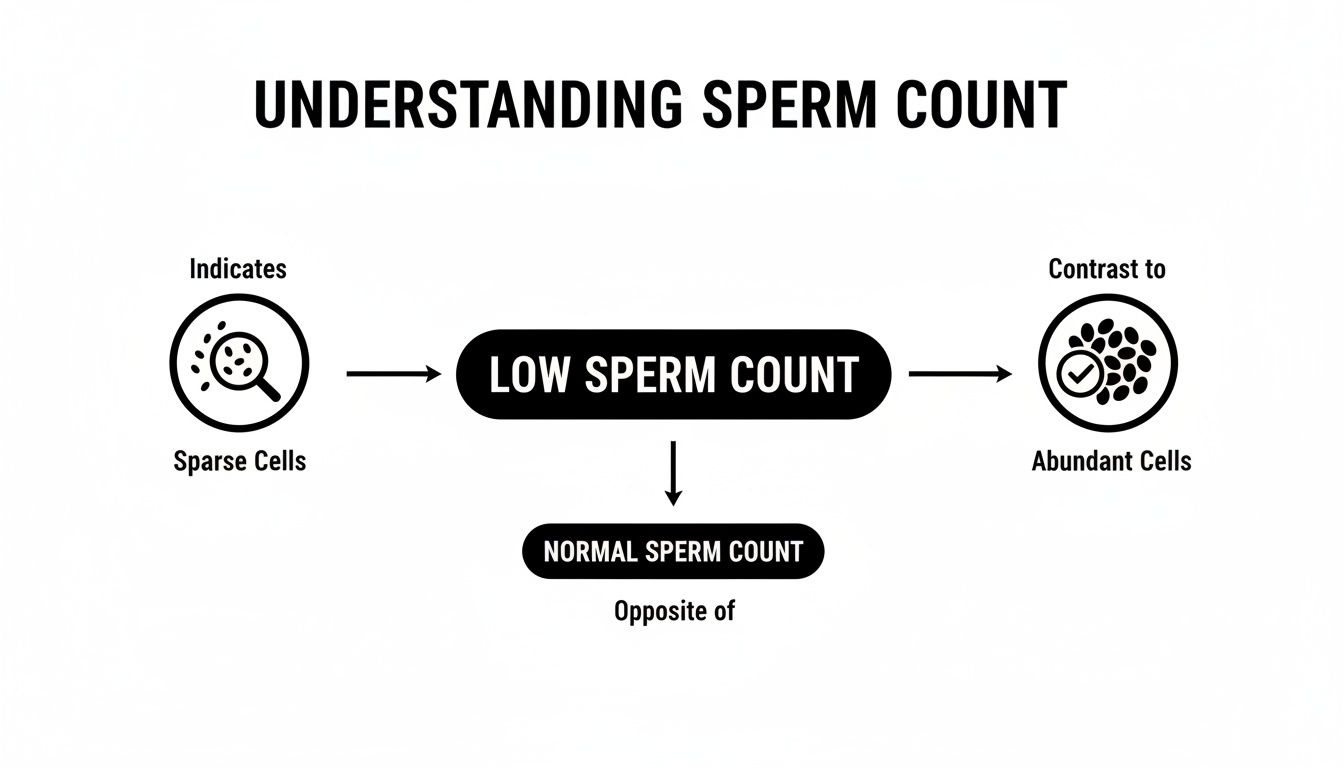
As you can see, the visual difference is pretty clear—a lower density just means fewer sperm are present in the sample.
Why All Three Metrics Matter Together
Here’s the thing: a low sperm count diagnosis doesn't automatically mean a man can't conceive. And on the flip side, a really high count isn't a golden ticket. It's the interplay between count, motility, and morphology that truly paints the picture of a man's fertility potential.
For example, a man with a slightly below-average count but excellent motility and morphology could easily have a better outlook than someone with a sky-high count of poorly swimming, abnormally shaped sperm. In many cases, quality can absolutely make up for a lower quantity.
A semen analysis provides a clear, objective snapshot of your reproductive health. It moves you from a place of uncertainty to a position of knowledge, where you can start making informed decisions based on real data.
This is exactly why a comprehensive test is the essential first step. It gives you the details needed to understand your specific challenges and strengths. Without knowing how all three pillars are doing, you’re just guessing. To get a better sense of the details, you can learn more about how to read semen analysis results in our detailed guide.
Getting the Full Picture
Ultimately, getting a semen analysis is the most direct and reliable way to assess your fertility. The results will show which of the three pillars—count, motility, or morphology—might need some support. It clarifies what low sperm count means for you specifically.
This detailed report allows a fertility specialist to pinpoint exact areas for improvement, whether that’s through lifestyle adjustments, targeted supplements, or medical guidance. It’s the definitive starting point for any man looking to take control of his reproductive health journey.
Uncovering the Common Causes of Low Sperm Count
Getting a low sperm count diagnosis usually sparks one big question: "Why?" Figuring out the potential causes is a huge first step toward taking back control of your fertility. It helps to think of the testicles as a highly sensitive factory—their output can be thrown off by anything from overheating and bad raw materials to outside toxins.
By digging into these factors, you can start to see which ones might apply to you and, more importantly, what you can do about them. The causes generally fall into three buckets: medical issues, lifestyle choices, and environmental exposures.

Medical Reasons Behind Low Sperm Count
Sometimes, an underlying medical problem is the main culprit behind a low sperm count. These conditions can disrupt the complex machinery of sperm production or the plumbing that delivers it. The good news is that most of these can be diagnosed and treated by a men's health specialist or urologist.
Here are some of the most common medical culprits:
- Varicocele: This is basically a varicose vein in the scrotum, caused by swollen veins that drain the testicle. It's the single most common reversible cause of male infertility, found in about 15% of all men and up to 40% of men struggling with fertility. The extra blood flow can overheat the testicles, harming sperm production.
- Hormonal Imbalances: Sperm production is a hormonally-driven process, directed by a constant conversation between the brain and the testicles. Problems with key hormones like testosterone, LH (luteinizing hormone), or FSH (follicle-stimulating hormone) can shut the whole system down. A simple blood test is often all it takes to spot these imbalances.
- Infections: Certain infections, including some STIs or inflammation in the testicles or the epididymis (the tube that stores sperm), can damage sperm health or create blockages that prevent sperm from getting out.
- Genetic Conditions: In some cases, genetic disorders like Klinefelter syndrome or Y-chromosome microdeletions can directly interfere with sperm production from the very start.
Pinpointing and treating these medical issues is often the fastest and most effective way to boost your sperm count.
The Impact of Your Lifestyle Choices
Your day-to-day habits have a massive impact on your overall health, and that absolutely includes your sperm. This is where you have the most direct control, which is incredibly empowering.
The journey to improving sperm health often begins with small, consistent changes. Every positive choice you make—from the food you eat to the habits you quit—contributes to a better environment for sperm production.
Researchers are seeing sperm parameters decline globally, and understanding why helps men zero in on the risks they can change. The rise in obesity, poor dietary habits, and toxin exposure are all potential contributors. Smoking is one of the biggest offenders; more than a third of men worldwide use tobacco, despite overwhelming proof that it tanks male fertility. To get a better sense of the big picture, you can explore the research on global trends in male fertility and what’s driving them.
Key lifestyle areas to focus on include:
- Diet and Nutrition: Your body uses what you eat to build sperm. A diet heavy in processed foods and low in antioxidants can lead to oxidative stress, which is like rust for your sperm cells. On the flip side, a diet packed with fruits, vegetables, lean protein, and healthy fats gives your body the high-quality materials it needs.
- Weight Management: Being significantly overweight or underweight can throw your hormones out of whack and hurt sperm production. Getting to a healthy weight with a good diet and regular exercise is a cornerstone of sperm health.
- Stress Levels: Chronic stress isn't just in your head—it can mess with the hormones required to make sperm. Finding healthy outlets like exercise, meditation, or hobbies is good for your mind and your fertility.
Environmental Exposures to Watch Out For
Finally, your immediate surroundings can expose you to things that are harmful to sperm production. The testicles work best at a temperature that’s slightly cooler than the rest of your body, which makes them uniquely vulnerable to heat.
Be mindful of these common environmental factors:
- Heat Exposure: Regularly using hot tubs, saunas, or even just resting a laptop on your lap for hours can raise scrotal temperature enough to temporarily knock down your sperm count.
- Occupational Hazards: Certain jobs come with higher risks. Men who sit for long periods (like truck drivers) or are exposed to industrial chemicals, heavy metals, or radiation may see an impact on their fertility.
- Tight Clothing: While the jury is still out on just how much it matters, some evidence suggests that constantly wearing tight underwear could raise testicular temperature enough to affect sperm production over the long haul.
By understanding what a low sperm count means in the context of these causes, you can have a much more productive conversation with your doctor. Together, you can map out a plan to tackle any medical issues and make smart lifestyle changes to support your reproductive health.
What a Low Sperm Count Diagnosis Means for You
Getting this diagnosis usually sparks one big question: "Can I still have children?" It’s a completely natural, gut-wrenching worry. For most men, the answer is a reassuring yes.
Think of a low sperm count diagnosis as a single data point, not a personal failure or a final judgment on your ability to be a father. It's simply the starting line for understanding your reproductive health and figuring out what to do next. Crucially, "low count" doesn't mean "zero count."
For many men, this means natural conception is absolutely still on the table. It might just take a bit more time and a more strategic approach than originally planned.
You Are Not Alone in This
If this news has left you feeling isolated, it’s important to know you are far from the only one going through this. Male fertility issues are a common medical condition affecting millions of men worldwide. It’s a health issue, just like any other, and it's one that can often be managed or improved.
Male infertility has become significantly more common in recent decades, which just goes to show how widespread this is. In 2019 alone, there were an estimated 56.5 million cases of male infertility across the globe—a staggering 76.9% increase since 1990. Male factors are a significant part of fertility challenges for couples. You can read more about these global trends in male infertility on PMC.
Knowing this helps shift your perspective from a place of worry to one of proactive management. The focus is no longer on the problem, but on what you can do about it.
Shifting Focus From Worry to Action
The single most powerful thing you can do right now is to see this diagnosis as information. And information is power. You now have a clear direction to start digging into the "why" and exploring real, actionable solutions.
Instead of a roadblock, look at it as a roadmap. Your results are pointing you toward the next logical steps:
- Dive Deeper with a Full Semen Analysis: If you haven't had one already, a comprehensive semen analysis is the most critical next step. As we've covered, count is only one piece of the puzzle. You need the full picture—motility (how sperm swim), morphology (their shape), and semen volume—to truly understand what's going on. This report is the gold standard for assessing male fertility.
- Talk to a Specialist: The numbers on a semen analysis report are best interpreted with a urologist or a male fertility specialist. They can translate what the numbers mean for you and recommend targeted strategies based on your specific situation. This is a crucial step to get a clear plan.
This diagnosis isn't the end of your journey; it's the beginning of an informed one. It transforms uncertainty into a clear path forward, allowing you to take control of your reproductive health with tangible actions and expert guidance.
This proactive mindset turns a moment of concern into a mission. It’s about gathering the right information, building your team of medical experts, and creating a clear plan to improve your sperm health and reach your family-building goals.
Your Action Plan for Improving Sperm Health
Getting a diagnosis of low sperm count can feel like a setback, but it's not a dead end. Think of it as the starting point—a clear, proactive path toward understanding and improving your reproductive health. This is where you turn information into a concrete roadmap for action.

This plan isn't about guesswork. It’s about making targeted, informed decisions based on real data about your body. From getting the right tests to making meaningful lifestyle adjustments, here’s how you can start building a stronger foundation for your fertility.
Step 1: Get A Comprehensive Semen Analysis
Before you can improve anything, you need an accurate baseline. The single most important first step is a complete semen analysis from a certified lab. This test is the gold standard for assessing male fertility because it looks at the whole picture, not just one number.
A low sperm count is just one piece of the puzzle. A thorough analysis will evaluate all the key players:
- Sperm Count: The total number of sperm present.
- Motility: The percentage of sperm that are actively swimming forward.
- Morphology: The percentage of sperm that have a normal, healthy shape.
- Volume: The total amount of semen in your sample.
Getting this full picture is crucial. It helps you and your doctor pinpoint specific strengths and weaknesses, ensuring any actions you take are targeted and effective. Without this data, you're navigating without a map.
Step 2: Understand Your Results Clearly
Once you have your semen analysis report, the next step is to figure out what it all means. The rows of numbers and medical terms can be confusing, so don't feel like you have to decipher them alone.
Schedule a follow-up with a urologist or a male fertility specialist. Their job is to translate these complex results into a clear explanation of your reproductive health. They’ll walk you through how your numbers for count, motility, and morphology work together and what that means for your goals.
A semen analysis report isn't a grade; it's a guide. It provides the essential information needed to create a personalized plan that addresses your unique situation, turning clinical data into actionable next steps.
This conversation is vital. It ensures you’re not just making random changes but are focusing your efforts where they’ll have the most impact.
Step 3: Implement Targeted Lifestyle Changes
The good news is that many factors influencing sperm health are directly within a man's control. Making positive changes to daily habits can have a significant impact on sperm production and quality. For a deeper dive, check out our detailed guide on how to increase sperm count.
Here’s a practical look at what you can do.
Actionable Steps to Improve Sperm Health
This table summarizes the key lifestyle changes and medical next steps you can discuss with a healthcare professional to support your sperm health.
| Area of Focus | Key Actions to Consider | Why It Matters |
|---|---|---|
| Diet & Nutrition | Eat a balanced diet rich in antioxidants (fruits, vegetables), healthy fats (nuts, fish), and lean proteins. Stay well-hydrated. | Provides the essential building blocks for healthy sperm production and protects them from oxidative stress. |
| Lifestyle Habits | Cut back or quit smoking and excessive alcohol. Maintain a healthy weight. Manage stress through exercise or mindfulness. | Reduces your exposure to toxins and helps balance hormones that are critical for sperm function and production. |
| Environmental Factors | Avoid hot tubs, saunas, and placing laptops directly on your lap. Be mindful of exposure to industrial chemicals or pesticides. | Protects the testicles from overheating and toxins, both of which can damage developing sperm and hurt your numbers. |
Making these adjustments is often the first and most effective line of defense in boosting your fertility.
Step 4: Know When to Consult A Specialist
While lifestyle changes are powerful, some causes of low sperm count are medical and require a doctor's intervention. A urologist who specializes in male fertility can investigate underlying issues that diet and exercise alone can't fix.
You should book an appointment with a specialist if:
- Your semen analysis shows severely low numbers in count, motility, or morphology.
- You have made positive lifestyle changes for several months with no improvement.
- You have a known medical condition, like a varicocele, or experience symptoms like pain or swelling.
A specialist can run further tests, like bloodwork to check hormone levels or an ultrasound, to get to the root cause of the problem.
Step 5: Explore Potential Medical Pathways
If your specialist identifies an underlying medical issue, they’ll discuss potential treatment options with you. These pathways are designed to address the specific cause of your low sperm count and can range from medication to minor surgical procedures. For men looking into hormonal factors, this podcast offers great insights into understanding natural testosterone production, a key piece of the male fertility puzzle.
Common medical options include:
- Hormone Treatments: If blood tests reveal an imbalance, medications can help restore normal levels of testosterone and other key hormones needed for sperm production.
- Varicocele Repair: This is a minor surgical procedure that corrects swollen veins in the scrotum, which can improve testicular temperature and restore healthy sperm production.
- Infection Treatment: If an infection is the culprit, a simple course of antibiotics can clear it up and resolve any related inflammation affecting your sperm.
Following these steps transforms uncertainty into a structured plan. You move from simply knowing what low sperm count means to actively doing something about it, putting you firmly in control of your journey.
Your Questions About Low Sperm Count, Answered
Getting a low sperm count diagnosis can feel overwhelming, and it's natural to have a million questions running through your head. Let's cut through the noise and get you some clear, straightforward answers to the most common concerns.
Can a Low Sperm Count Be Improved Naturally?
Absolutely. In many cases, a man can make a real difference with some targeted lifestyle changes. Think of your body as a high-performance engine for making sperm; what you put in and how you treat it directly impacts its output.
Simple, consistent changes can have a surprisingly powerful effect. Here’s what tends to move the needle:
- Upgrade Your Diet: Loading up on antioxidant-rich foods like colorful fruits and vegetables helps shield sperm from damage. Good fats from nuts and fish, plus lean proteins, provide the core building blocks your body needs.
- Get Moving: You don't need to become a marathon runner, but regular, moderate exercise is fantastic for maintaining a healthy weight and keeping stress in check—both of which are key for hormonal harmony.
- Ditch the Toxins: Cutting back on or quitting tobacco, heavy drinking, and other recreational drugs can remove major roadblocks that are holding your sperm production back.
- Stay Cool: Your testicles are designed to operate at a temperature slightly cooler than the rest of your body. That means less time in hot tubs or saunas and maybe not resting that laptop directly on your lap for hours on end.
One crucial thing to remember: sperm production isn't an overnight process. It takes about 74 days for a new batch of sperm to fully mature. This means you need to be patient, as you won't see the results of your hard work reflected in a semen analysis for at least two to three months. For medical issues like a varicocele, these natural steps might not be enough on their own, which is why a specialist's input is so important.
Is Low Sperm Count a Sign of Other Health Problems?
Sometimes, yes. A growing pile of research shows a clear link between a man’s fertility and his overall health. A low sperm count can occasionally be the first clue to an underlying condition that hasn’t shown other symptoms yet.
You can think of it as a "check engine" light for your body. A semen analysis might point toward:
- Hormonal Imbalances: Issues with testosterone or other critical hormones can impact more than just fertility, affecting a man's energy, mood, and even his metabolism.
- Cardiovascular Issues: Some studies have connected poor semen quality with a higher risk of heart-related problems down the road.
- Genetic Conditions: In some cases, a very low sperm count could be linked to specific genetic issues that have broader health implications.
This is exactly why a semen analysis is so much more than a fertility test—it’s a valuable snapshot of a man's general wellness. It’s always a good idea to discuss your results with a doctor to not only talk about fertility but also to make sure there are no other health concerns to address.
Your sperm health is often a direct reflection of your overall health. Addressing a low sperm count with positive lifestyle changes not only supports your fertility goals but also contributes to your long-term wellness.
How Do I Get Tested for Low Sperm Count?
The definitive way to diagnose low sperm count is with a semen analysis. It’s a simple, non-invasive lab test that gives a comprehensive picture of the key factors driving male fertility. Getting one is a straightforward next step.
Your best first move is to talk to your primary care doctor or book an appointment with a urologist. They can order the test for you at a certified lab. Make sure you're getting a complete analysis that looks at all the big players:
- Count: How many sperm are there?
- Motility: How well are they swimming?
- Morphology: Are they shaped correctly?
- Volume: How much semen is present?
Getting a semen analysis is the most important first step because it takes you from guessing to knowing. Once you have that report in hand, a specialist can help you understand what all those numbers actually mean for you and create a game plan. You don't have to decipher it alone; getting expert guidance is the key to moving forward with confidence.
At Hera Fertility, we make understanding your sperm health simple and accessible. Order a physician-approved lab requisition in minutes, get tested at one of over 250 certified labs, and receive an AI-powered analysis that translates complex results into clear insights and an actionable plan. Take the first step toward clarity by visiting Hera Fertility today.