Noticing a change in your semen’s consistency, especially if it seems thinner or more watery than usual, can understandably bring up some questions about your health. What does it actually mean?
In simple terms, watery semen often points to a lower concentration of sperm within the seminal fluid. This just means there are fewer sperm cells mixed into the liquid that makes up the ejaculate.
Decoding Watery Semen and Its Link to Male Fertility

Think of healthy semen like a thick, fruit-packed smoothie. The thickness comes from all the good stuff blended together. Watery semen, on the other hand, is like that same smoothie but diluted with too much water—the core ingredients are still there, but they’re less concentrated, making the whole thing thinner.
This simple analogy gets to the heart of the connection between semen consistency and sperm count. Semen is a complex fluid made up of sperm cells and secretions from different male glands. When the number of sperm is high, the semen naturally has a thicker, more viscous texture.
But when sperm concentration drops, the fluid portion of the semen becomes more dominant, leading to that watery appearance.
Why Consistency Matters for Men's Health
Semen consistency can definitely fluctuate, and an occasional change isn't always a cause for alarm. Sometimes, temporary things like frequent ejaculation can lead to a thinner consistency simply because your body hasn't had enough time to fully replenish its sperm supply.
But if you notice it’s persistently watery, it could be a sign of an underlying issue affecting male fertility. It often points to a condition known as oligospermia, or low sperm count. According to the World Health Organization (WHO), this is defined as having fewer than 15 million sperm per milliliter of semen.
Since male reproductive health issues contribute to 20% to 70% of infertility cases worldwide, understanding these signals is a crucial first step for any man. You can discover more insights about watery semen and its causes on Healthline.com.
To give you a clearer picture, here’s a quick comparison of what to look for.
Semen Consistency at a Glance
This table breaks down the key differences between typical semen and what you might see if it's watery.
| Characteristic | Typical Semen | Watery Semen |
|---|---|---|
| Appearance | Cloudy, white, or grayish | Clearer, more transparent |
| Texture | Thicker, more viscous, gelatinous | Thin, runny, liquid-like |
| Sperm Count | Typically >15 million/mL | Often <15 million/mL |
| Fertility Impact | Normal fertility potential | May indicate reduced fertility |
This is just a general guide, of course, as every man's "normal" can be a bit different.
A change in semen consistency is one of the most visible indicators men have regarding their reproductive health. While not definitive on its own, it serves as a prompt to pay closer attention to your body and consider next steps if the issue persists.
Recognizing what watery semen might mean empowers you to be proactive. It’s not a final diagnosis of infertility, but it is a signal that warrants a closer look. The key is to understand what's normal for you and to seek clarity when you notice a lasting change.
Common Causes Behind Watery Semen

Figuring out why your semen might look a bit thin or watery is the first real step toward finding answers. The reasons can be surprisingly varied, running from simple, temporary things to more significant medical issues that need a closer look.
By breaking down the possibilities, you can get a much clearer picture of what might be influencing your own reproductive health. Some of the most common culprits are actually tied to our daily lives and habits. Think of your body like a highly specialized factory—the quality of the final product really depends on the raw materials and operating conditions you give it.
Temporary and Lifestyle Factors
More often than not, watery semen is just a temporary thing, something you can trace back to recent activities or lifestyle choices. The great thing about these factors is that they can usually be adjusted, often leading to noticeable improvements over time.
One of the most frequent causes is simply frequent ejaculation. Your body is constantly working to produce both sperm and the different fluids that make up semen, and it needs time to do that. Ejaculating multiple times a day can drain these reserves faster than they can be restocked, which naturally results in a thinner, more watery consistency.
In fact, men who ejaculate two or three times a day might see their sperm counts drop so much that it mimics the appearance of oligospermia, which is the clinical term for low sperm count. This is exactly why it’s so important to abstain for at least two to five days before any fertility testing—it gives your system time to reset and provides a much more accurate baseline.
Other everyday habits can also play a big part:
- Dehydration: Seminal fluid is mostly water, so it makes sense that not drinking enough fluids can sometimes impact its volume and texture.
- Poor Diet: If your diet is missing key nutrients, especially zinc, it can throw a wrench in sperm production and affect overall semen quality.
- High Stress Levels: You’ve probably heard it before, but chronic stress really can mess with your hormones, including the ones responsible for producing healthy sperm.
The good news is that these lifestyle-related causes are almost entirely within your control. Making positive changes to your diet, staying hydrated, and finding ways to manage stress can directly support your body's reproductive functions.
Underlying Medical Conditions
While lifestyle is a major piece of the puzzle, persistently watery semen can also be a signal of an underlying medical condition that needs attention. These issues often get in the way of the body's ability to produce enough healthy sperm.
A common medical cause is a varicocele, which is essentially an enlargement of the veins inside the scrotum. This can increase the temperature around the testicles, creating a less-than-ideal environment for sperm production. We have a guide that goes deeper into how semen volume and consistency are connected.
Other potential medical factors include:
- Hormonal Imbalances: Low testosterone levels, for example, can directly interfere with the body's ability to create sperm.
- Infections: Certain infections in the male reproductive tract can disrupt sperm production and cause inflammation that affects semen quality.
- Ejaculatory Issues: Conditions like retrograde ejaculation—where semen goes into the bladder instead of out of the penis—can also be a factor.
Getting to the root cause is what really matters here. While the temporary factors often resolve on their own with a few simple adjustments, medical conditions might require a doctor's evaluation to make sure you get the right support for your reproductive health.
How a Semen Analysis Reveals Your True Fertility
Noticing that your semen seems a bit watery can be a good first clue, but it’s kind of like seeing the "check engine" light on your car's dashboard. It signals that something might need a closer look, but it doesn't give you the full story. To really understand what's going on with your reproductive health, you need to look under the hood. That’s exactly what a semen analysis does.
A semen analysis is the gold standard for figuring out male fertility. It’s a straightforward lab test that goes way beyond just looking at consistency, giving you concrete data about your sperm. Think of it as a comprehensive performance review for your sperm, grading them on the key factors that actually matter for fertility.
The Three Pillars of Sperm Health
Instead of guessing what watery semen might mean, a lab test measures three critical metrics that paint a complete picture of your fertility potential. Each one plays a distinct and vital role.
These are the core components the lab will look at:
- Sperm Count (Concentration): This is the total number of sperm you have in your sample. Generally speaking, a higher count boosts the odds of successful fertilization.
- Motility (Movement): This metric is all about how well your sperm can swim. Specifically, the lab looks for progressive motility—the ability of sperm to swim forward in a purposeful line. This is a crucial skill for male fertility.
- Morphology (Shape): This refers to the size and shape of your sperm. Sperm with the right form—an oval head and a long tail—are simply better equipped to achieve fertilization.
Each of these pillars is essential. You could have an incredibly high sperm count, but if their motility is low, they might not be able to complete their journey. In the same way, great swimmers won't be effective if they have abnormal shapes that prevent them from performing their function.
A semen analysis demystifies your fertility by replacing guesswork with objective data. It provides a clear, actionable baseline, empowering you to understand exactly where you stand and what steps to take next.
Getting Clear Answers Is Easier Than Ever
In the past, getting a semen analysis could feel like a complicated, and sometimes intimidating, process. Thankfully, modern services have made it much more accessible and private. You can now get clear, reliable information without all the hassle.
Getting a complete picture of your sperm health is a powerful, proactive step. For men who want to dive deeper into their results, you can explore our guide on how to perform and understand a semen analysis. By looking at count, motility, and morphology all at once, this single test provides the definitive answers you need to take control of your reproductive journey.
Understanding Your Semen Analysis Results
Getting a lab report back that's full of medical jargon and numbers can feel a bit like trying to read a foreign language. But a semen analysis is one of the most powerful tools you have for understanding your reproductive health. It takes the guesswork out and gives you a clear, objective look at what’s going on.
Think of it as a detailed report card for your sperm. Each part of the analysis measures a specific quality against established benchmarks set by the World Health Organization (WHO), giving you a solid idea of where you stand.
This visual gives you a quick snapshot of the big three: sperm count, motility, and morphology.
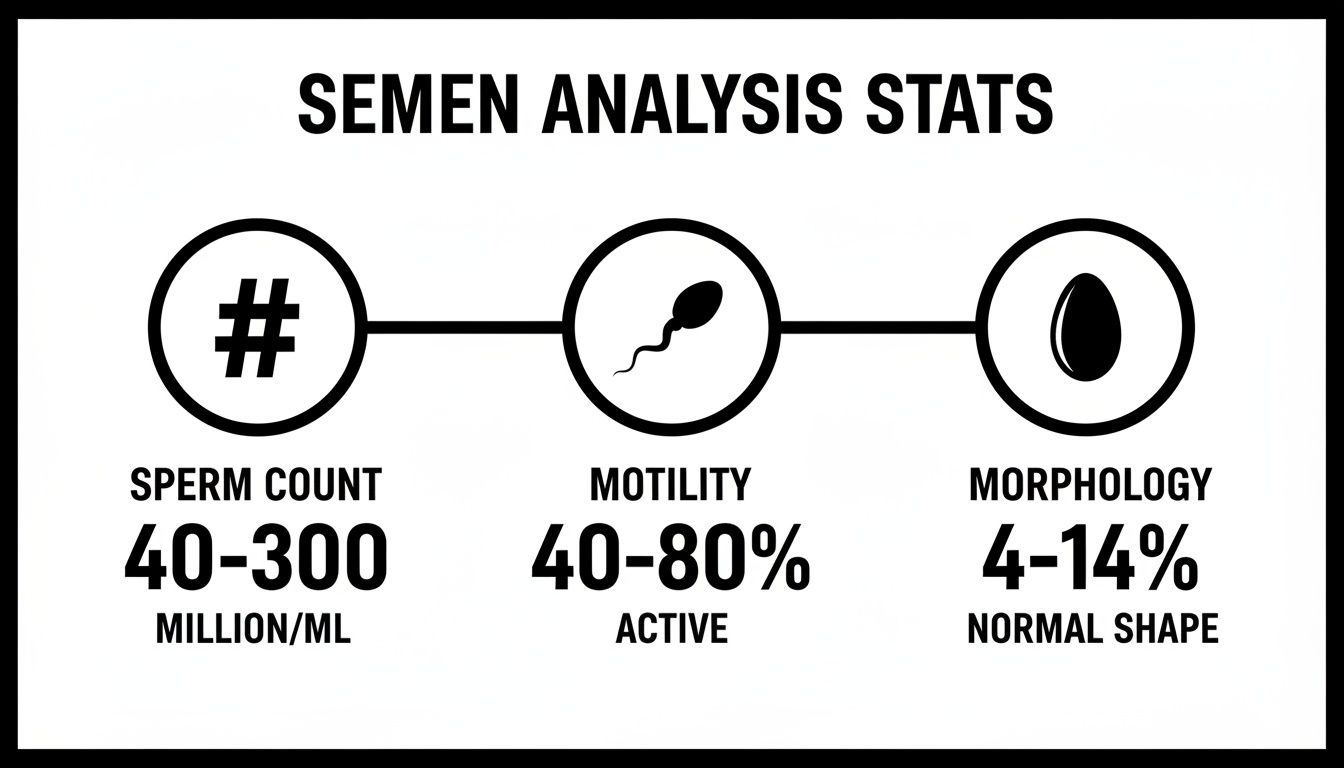
Breaking down these key metrics helps demystify the results and shows how everything works together to impact your fertility.
Interpreting Key Fertility Metrics
While a full semen analysis covers several different parameters, a few key players tell most of the story. Zeroing in on these will help you have a much more productive conversation with your doctor about what your results really mean.
Let’s break down the most important factors:
Sperm Count (Concentration): This is exactly what it sounds like—how many sperm are packed into each milliliter of semen. More sperm simply increases the odds of fertilization. The WHO considers a count of 16 million sperm per milliliter or higher to be in the normal range.
Sperm Motility: It's not just about numbers; it's about movement. Motility measures how well your sperm can swim. Labs specifically look for progressive motility, which means the sperm are moving forward, not just twitching in place. They need to be strong swimmers to be effective. A healthy sample should have at least 30% of sperm showing this purposeful, forward motion.
Sperm Morphology: This one’s all about shape. A "normal" sperm has a very specific structure: a smooth, oval-shaped head and a single, uncoiled tail. This precise anatomy is vital for the sperm's function. Even in the most fertile men, the vast majority of sperm are abnormally shaped. The threshold for normal is having at least 4% of sperm with the correct form.
A semen analysis provides a complete picture, showing you how all these factors work together. The table below outlines the latest reference values from the World Health Organization (WHO), which are the gold standard for fertility labs everywhere.
| Semen Parameter | Normal Value (WHO 6th Edition) | Why It Matters for Male Fertility |
|---|---|---|
| Semen Volume | ≥ 1.4 mL | The total amount of ejaculate. Sufficient volume helps transport sperm. |
| Sperm Concentration | ≥ 16 million/mL | The number of sperm per milliliter. Higher numbers increase the chance of fertilization. |
| Total Sperm Count | ≥ 39 million per ejaculate | The total number of sperm in the entire sample. Reflects overall sperm production. |
| Total Motility | ≥ 42% | The percentage of sperm that are moving. |
| Progressive Motility | ≥ 30% | The percentage of sperm moving forward. Crucial for fertility potential. |
| Morphology | ≥ 4% normal forms | The percentage of sperm with a normal shape. Shape affects sperm function. |
| Vitality | ≥ 54% live sperm | The percentage of sperm that are alive. Distinguishes live, non-moving sperm from dead ones. |
| pH | ≥ 7.2 | Measures the acidity of semen. Imbalances can harm sperm. |
Having these numbers gives you a clear, factual starting point. It moves the conversation beyond just noticing watery semen and provides a solid foundation for any next steps you and your doctor might take.
For a more in-depth guide on making sense of your full report, you can learn more about how to read semen analysis results right here.
Actionable Steps to Improve Sperm Health

Learning what might be behind watery semen is a great first step, but taking control is what really makes a difference. And the great news? You can play a huge role in supporting and improving your sperm health with some practical, evidence-backed lifestyle changes.
Think of sperm production as a long-term investment. The entire cycle, from a sperm cell's initial formation to its full maturity, takes about 74 days. This means the positive changes you make today can show up as real, measurable improvements in your sperm quality in roughly two to three months.
Fueling Your Body for Better Fertility
Your diet literally provides the raw materials needed for healthy sperm production. Certain nutrients are absolutely essential for creating strong, motile sperm and protecting them from damage along the way.
Zeroing in on a few key foods can have a significant impact. Start by making sure you're getting enough of these heavy hitters:
- Zinc: This mineral is a true cornerstone of male fertility. It’s vital for both sperm formation and testosterone production. You’ll find it in oysters, beef, pumpkin seeds, and lentils. A zinc deficiency is a known contributor to issues like watery sperm and low counts.
- Antioxidants: Think of vitamins C, E, and selenium as your sperm’s personal security detail. They protect them from the cellular-level damage caused by oxidative stress. Load up on berries, citrus fruits, nuts, spinach, and Brazil nuts to get your fill.
Beyond these specifics, supporting your overall health is just as important. For instance, a solid guide to natural probiotics for optimal health can give you a roadmap for keeping your body’s foundational systems in good working order.
The Impact of Daily Habits
It’s not just about what you add to your diet; your daily routines have a massive effect on your reproductive health. Sometimes, cutting out the bad stuff is just as powerful as adding in the good.
Two of the biggest culprits to tackle are smoking and heavy drinking. The science is clear: both are consistently linked to lower sperm counts, sluggish motility, and abnormally shaped sperm. Quitting smoking and reining in your alcohol intake are two of the most impactful moves you can make for your fertility.
Optimizing sperm health isn't about finding a single magic bullet. It’s about creating an internal environment where sperm can thrive—and that takes a smart combination of nutrition, activity, and healthy habits.
Managing Stress and Staying Active
Stress is another major piece of the fertility puzzle. When you're chronically stressed, it can throw off the delicate hormonal signals required for sperm production. Simple practices like mindfulness, meditation, or even just carving out time for a hobby can do wonders for keeping stress in check.
Regular, moderate exercise is another powerful tool in your arsenal. It helps you maintain a healthy weight, melts away stress, and can even give your testosterone levels a boost. Stick to activities you actually enjoy, like brisk walking, jogging, or swimming. Just be careful not to overdo it—super-intense workouts can sometimes put too much strain on the body.
Making these changes consistently gives your body its best shot at producing high-quality sperm and can help turn things around for issues like watery semen. It’s all about taking a proactive approach to your own fertility.
When Should a Man See a Doctor About Watery Semen?
Let's be clear: occasional changes in your semen consistency are usually no big deal. Our bodies aren't machines, and slight variations are normal. But if you've noticed your semen has been consistently watery for more than a few weeks, it's a good idea to get it checked out.
Think of it less as a cause for alarm and more as a proactive check-in for your reproductive health. Getting an expert opinion is simply the fastest way to get real answers and rule out any underlying issues that could be impacting your fertility.
Key Signs It’s Time for a Consultation
It can be tough to know if a change is just a blip on the radar or a sign of something more significant. Here are a few clear indicators that it’s time to schedule a visit with a doctor or a male fertility specialist:
- It’s Persistent: If watery semen isn’t just a one-off thing and has been your new normal for several weeks or months, it's worth investigating.
- You're in Pain: Any pain, swelling, or discomfort in your testicular area happening alongside watery semen is a clear signal to see a doctor right away.
- You're Trying to Conceive: If you have been trying to start a family for over a year without success, a full fertility evaluation for both you and your partner is the logical next step.
Seeing a doctor moves you from a place of uncertainty to a path of action. It's the most direct route to understanding what’s going on with your body and exploring your options.
A consultation is usually just a straightforward conversation about your health history and what you’ve been noticing. From there, your doctor will almost certainly recommend a semen analysis to get a complete picture of your sperm health.
If you're concerned about watery semen and want professional medical advice, you can learn more about connecting with healthcare providers who can guide you. Taking this step is all about taking charge of your reproductive health journey.
Got Questions About Semen Health? We’ve Got Answers.
Let's clear up some of the most common questions men have about their semen. Think of this as your quick-reference guide to what's normal, what's not, and what it all means for your fertility.
Can Dehydration Cause Watery Sperm?
It can definitely play a role. Since seminal fluid is mostly water, it makes sense that not drinking enough can reduce your semen volume and sometimes affect its consistency. It’s a simple but important part of the puzzle.
That said, while staying hydrated is crucial for your overall reproductive health, if your semen is persistently watery, it’s more often a sign of something else, like a low sperm count.
Does the Color of My Semen Matter?
Absolutely. The color of your semen can offer some pretty direct clues about what’s going on inside your body.
Healthy semen is usually a whitish-gray color. A consistently clear, watery appearance often goes hand-in-hand with a lower sperm concentration. If you start seeing yellow or green tints, it might point to an infection. Red or brown streaks, on the other hand, signal the presence of blood and always warrant a conversation with your doctor.
How Long Until Lifestyle Changes Affect Sperm?
Patience is key here. The full sperm production cycle, from the moment a sperm cell is created until it's fully mature and ready for ejaculation, takes roughly 74 days.
This means any positive changes you make—like cleaning up your diet, cutting back on booze, or hitting the gym—will likely start showing up in your sperm quality in about two to three months. Consistency is what really moves the needle.
Stop guessing and start understanding your reproductive health. With Hera Fertility, you can order a physician-backed semen analysis from the comfort of your home, get tested at a lab near you, and receive a clear, AI-powered report that makes sense of your results. Get your personalized action plan today at https://herafertility.co.
Related Resource Articles
-
Why Is My Sperm Clear? A Men's Guide to Semen Health
Concerned about clear sperm? Understand what causes it, what it means for male fertility, and when to see a doctor. Get answers to why is my sperm clear today.
22 min read
-
Severe Oligospermia: A Clear Guide to Your Next Steps
Facing a severe oligospermia diagnosis? Our supportive guide explains what it means, the causes, treatment options, and clear, practical next steps for men.
21 min read
-
What Does Clear Semen Mean for Your Fertility?
Wondering what does clear semen mean? Learn the common causes, from harmless factors to potential fertility signals, and discover your next steps.
15 min read