Without insurance, your total cost depends on the test, laboratory, and required services. For dated national price benchmarks, start with Hera's semen analysis cost guide. Then use this self-pay checklist to compare complete estimates, insurance rules, HSA/FSA eligibility, and likely follow-up costs.
The clinical term for a sperm analysis is semen analysis. Compare only like-for-like services: the same test purpose and parameters, with the order, collection, report, interpretation, and any repeat test accounted for.
Start by comparing the same kind of test
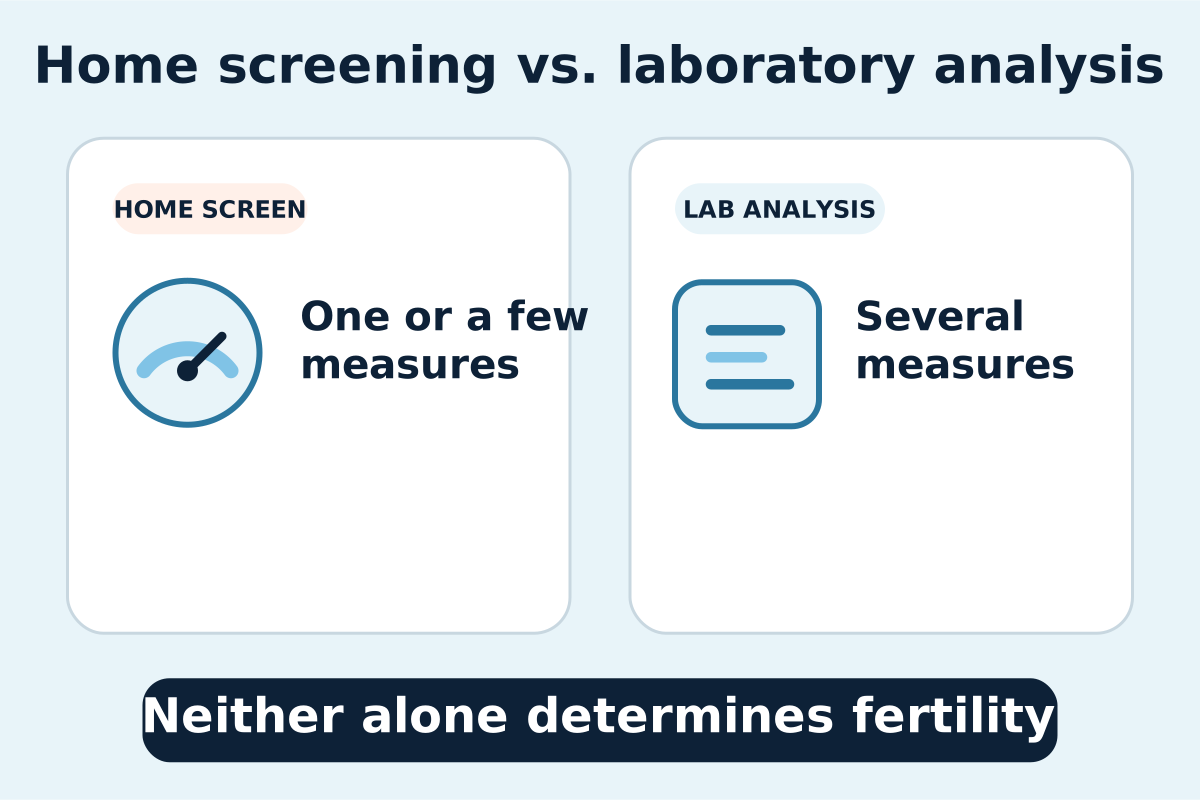
A product described as a "sperm test" may be a home screen, a mail-in service, or a clinical laboratory analysis. Those services are not interchangeable.
A basic home screen may answer a narrow question, such as whether sperm concentration is above or below a set threshold. Some products measure more, but the exact measures and intended use vary. The FDA recommends checking a direct-to-consumer test's labeling, intended use, and limitations before relying on its result.
A clinical semen analysis can report several measures, including:
- semen volume
- sperm concentration and total sperm count
- total and progressive motility
- morphology
- pH, liquefaction, viscosity, or other lab-specific measures
Ask the provider for the exact panel. The World Health Organization's sixth-edition laboratory manual sets standardized methods for examining semen, but not every service reports every measure.
One number also cannot prove that someone is fertile or infertile. The AUA/ASRM male infertility guideline says semen parameters must be interpreted together and in clinical context.
For a measure-by-measure explanation, see how to read semen analysis results; use it for education, not as a diagnosis.
What an all-in self-pay quote should include
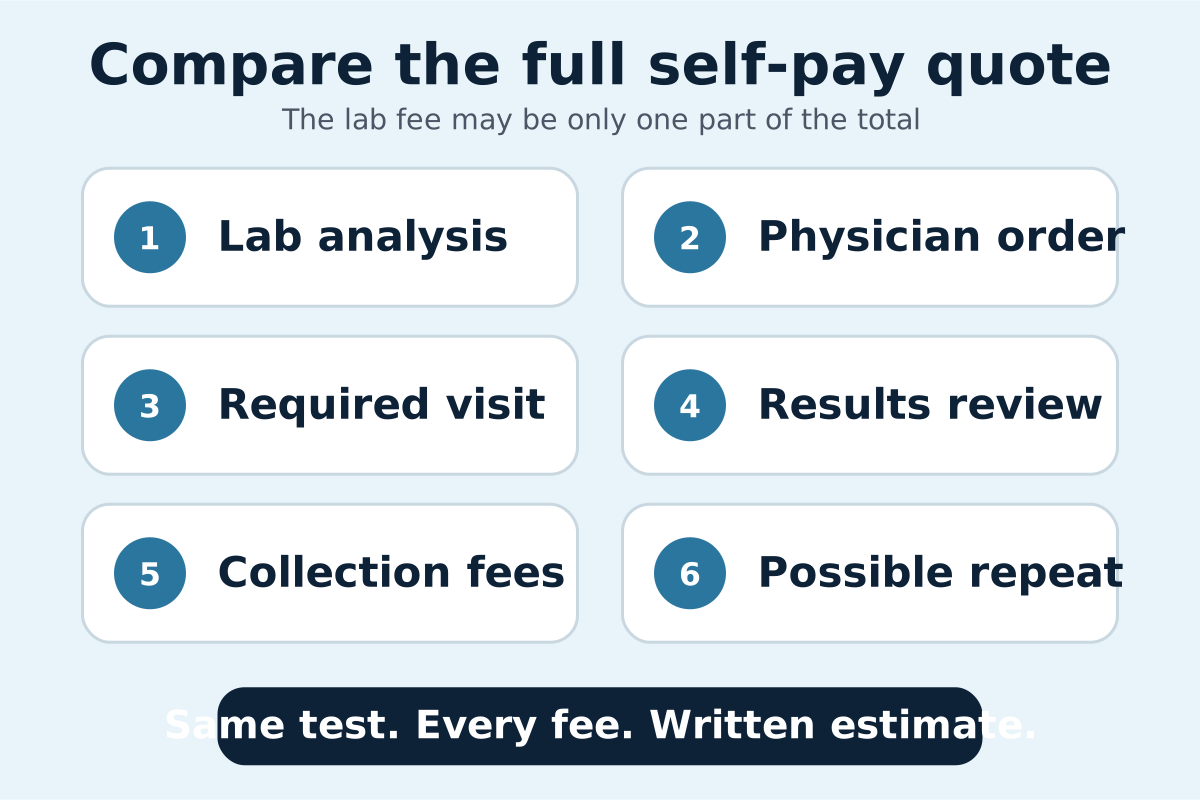
Use the same checklist for every provider. A lower lab fee is not necessarily a lower total if other required services are billed separately.
| Cost component | What to ask |
|---|---|
| Laboratory analysis | Which semen and sperm measures are included? Is this for fertility testing or post-vasectomy confirmation? |
| Physician order or referral | Do I need an order? If so, is it included or billed separately? |
| Office or telehealth visit | Is a consultation required before the lab accepts the sample? |
| Results review | Will I receive only the report, or is interpretation included? |
| Collection | Where is the sample collected? Are the approved container, shipping, or courier charges included? |
| Repeat testing | What would a second analysis cost if the first result needs confirmation? |
| Optional extras | Are DNA fragmentation, culture, hormone tests, or other add-ons separate? Do I need them for my current question? |
| Payment and documentation | Is this the current cash price? Can the provider give an itemized receipt and written estimate? |
The date matters too. Save a screenshot or written copy of the quote and confirm how long it remains valid.
Compare self-pay estimates in five steps
1. Define the reason for testing
Tell the provider whether the test is for a fertility evaluation or post-vasectomy confirmation. These are different clinical questions and may use different reports or thresholds.
If you want a fertility baseline, ask for the full list of parameters. If your doctor requested a specific analysis, use that order or test description when calling labs.
If testing after a vasectomy, continue contraception until vasectomy success is confirmed by a post-vasectomy semen analysis. Follow your surgeon's timing and specimen instructions; a general fertility screen is not a substitute. The CDC's current U.S. guidance explains why clearance depends on the post-vasectomy result.
2. Confirm the performing lab and collection rules
Ask whether the location routinely performs the exact test, where you will collect the sample, and how quickly a home-collected sample must arrive. Confirm the approved container and temperature instructions before collecting.
CLIA certification is one useful check for U.S. clinical laboratories. The CDC explains that CLIA sets federal quality standards for facilities that test human specimens, and CMS provides an active CLIA laboratory lookup.
3. Ask for every required charge
Do not stop at "How much is the test?" Ask whether the quoted amount includes the lab analysis, physician order, appointment, report, interpretation, and any collection or handling charge.
A simple call script is enough:
I am paying without insurance. What is the total current price for the exact semen analysis I need? Please list the lab fee and every required order, visit, collection, interpretation, or handling charge separately. What would a repeat test cost if one is recommended?
4. Request a written good faith estimate
If you do not have insurance or choose not to use it, you can usually request a written good faith estimate before scheduled, non-emergency care. CMS says providers and facilities generally must provide one when you request it or when you schedule care at least three business days in advance. Because current estimates can be specific to one provider or facility, ask each party involved for its own estimate. Review the current federal rules on CMS.gov.
As of August 2026, the federal patient-provider dispute process may apply when a bill from one provider or facility is at least $400 more than that provider's written good faith estimate. Save the estimate and compare it with the final bill. Eligibility, deadlines, and exclusions apply, so use the current CMS instructions rather than assuming every difference qualifies.
5. Compare like for like
Put the quotes side by side only after the service and inclusions match. Compare:
- the same test purpose
- the same reported parameters
- the same collection method
- the total required price
- access to interpretation
- the cost and process for a possible repeat
This prevents a limited screen from being compared with a multi-parameter laboratory analysis as if they were the same purchase.
Check insurance even if you expect to self-pay
Having a high deductible, a fertility exclusion, or no expected reimbursement does not tell you exactly how the plan handles diagnostic laboratory testing. Check before deciding whether to submit a claim or pay cash.
Start with your plan's Summary of Benefits and Coverage, then call the number on your insurance card. CMS says this document summarizes benefits, cost-sharing rules, limitations, and exclusions, but it is not a personal cost estimate. Specific covered services can vary by plan.
Ask the insurer:
- Is a diagnostic semen analysis covered for my reason for testing?
- Must the ordering clinician and performing lab be in network?
- Do I need a referral, prior authorization, or specific diagnosis?
- What are my remaining deductible, copay, and coinsurance?
- Is the office visit or results consultation billed separately?
- Which billing codes will the provider use, and are those codes covered?
- How are repeat analyses handled?
Ask the provider for both the expected insurance responsibility and the current self-pay estimate when both are available. Neither route is automatically less expensive. Compare the final amount and the services included.
HSA or FSA funds may help
Diagnostic semen-analysis charges may qualify as medical care under IRS rules. Health savings account (HSA) distributions used for qualified medical expenses are tax-free. Flexible spending account (FSA) reimbursement is limited to eligible expenses under the employer plan and its documentation rules.
The IRS definition of medical expenses includes costs for diagnosis and laboratory fees that are part of medical care, while Publication 969 explains current HSA and health FSA rules. These rules do not guarantee that every charge, screening product, or payment route qualifies.
Before paying:
- Ask the provider for an itemized estimate and receipt that identify the test and any separate physician-order fee.
- For an HSA, compare each charge with current IRS qualified-medical-expense rules; ask a tax professional if you are unsure about your situation.
- For an FSA, ask the employer plan administrator whether the test and order fee are reimbursable and what substantiation or letter of medical necessity the plan requires.
- Ask whether the provider accepts the account card directly or whether you must pay another way and request reimbursement.
A declined card does not by itself determine whether an expense qualifies. Keep the estimate, receipt, and any documentation required for your account and tax records.
Can you get a lower-cost or free semen analysis?
Sometimes, but availability is not guaranteed. Community health centers, university programs, and research studies may reduce costs for eligible people, yet many do not offer clinical semen analysis or usable results. Confirm the exact service, eligibility, charges, and follow-up before relying on one of these routes.
Community health centers
HRSA-funded health centers accept patients with or without insurance, and each center uses a sliding-fee scale. However, a center may provide general primary care without operating an andrology laboratory or offering semen analysis.
Use the HRSA Find a Health Center tool, then call the center. Ask whether it performs or refers for semen analysis, which lab handles the sample, what the sliding-scale process requires, and whether outside lab charges are separate.
University programs and research studies
A university fertility program may have a self-pay service, financial-assistance policy, or recruiting research study. Each option is location- and eligibility-dependent.
Research participation is designed to answer a study question, not to guarantee free clinical care. Before enrolling, ask:
- Do I meet the inclusion criteria?
- Is semen testing part of screening or the study itself?
- Will I receive a result that can be used for clinical care?
- Is there any charge, travel, or time commitment?
- Who handles an abnormal finding and any follow-up?
ClinicalTrials.gov lists current studies, eligibility criteria, locations, and contacts. NIH recommends discussing the study's tests, costs, possible benefits, and alternatives before participating.
Budget for follow-up, not just the first test
For an infertility evaluation, semen measures can vary between samples. The 2024 AUA/ASRM male infertility guideline notes that at least two analyses, ideally at least one month apart, are important, especially when the first is abnormal. Post-vasectomy testing follows different timing and interpretation, so follow your surgeon's instructions.
That does not mean everyone needs the same retesting schedule. A clinician may consider the result, collection quality, symptoms, medical history, and reason for testing before recommending the next step.
Before the first test, ask what happens if the report is outside the laboratory's reference range:
- Who will review the result with me?
- When might a repeat be recommended?
- Will I need a new physician order?
- Is the repeat billed at the same current price?
- At what point should I see a reproductive urologist or another male reproductive expert?
Men with one or more abnormal semen parameters or presumed male infertility should be evaluated by a male reproductive expert.
A sperm test cannot evaluate a physical symptom. Seek emergency care for sudden or severe testicle or scrotal pain. Arrange prompt medical evaluation for persistent pain, swelling, a lump, blood in semen, or another concerning change.
Use your checklist before you book
For a standard fertility semen analysis, Hera's active path is testing at a participating laboratory. Collection rules vary by location, and the finder does not sell mail-in kits. Use Find Labs to search by city, state, or ZIP code, then review the selected clinic's available lab charge, Hera fee, payment method, and collection instructions before booking.
Before paying, confirm the exact test, included parameters, collection instructions, every required fee, and what support you will receive with the result. Use the itemized terms shown for the selected clinic for your actual decision.
Related Resource Articles
-
Sperm Analysis Cost Near Me: A Man's 2026 Guide to Frisco, TX Options
Searching for sperm analysis cost near me in Frisco, TX? Our guide covers pricing, lab options, and actionable steps for men's reproductive health.
15 min read
-
Labcorp Sperm Analysis: Tests, Locations, Cost, and What to Expect
Learn which Labcorp semen analysis fits fertility or post-vasectomy testing, how to confirm a location, prepare your sample, and understand the results.
9 min read
-
Post Vasectomy Sperm Test Cost: A Clear Guide for Men
Understand the full post vasectomy sperm test cost with our clear guide. We break down lab fees, at-home kits, and insurance to help you plan.
16 min read