It's a question many men have probably thought about but might feel a little awkward asking: do hot baths kill sperm?
Let's clear the air. While a single, relaxing soak isn't going to make you infertile overnight, making a habit of it can absolutely throw a wrench in your sperm production. The damage isn't instantaneous, but consistent exposure to high heat creates an environment where healthy sperm just can't thrive.
How Heat Throws a Wrench in Male Fertility
For a lot of men, a hot bath is the perfect way to de-stress after a long day. But if you’re trying to start a family, it’s worth understanding how that heat interacts with your body's sperm-making machinery.
There’s a very specific reason your testicles are located outside the body. They have a built-in cooling system designed to keep them a few degrees cooler than your core body temperature. This slightly lower temperature isn't just a preference—it's absolutely essential for healthy sperm development, a process known as spermatogenesis.
Think of your testicles as a high-tech factory that needs to be kept at a precise temperature. If the thermostat gets cranked up too high, the assembly line slows down, quality control fails, and the final products (the sperm) can come out damaged or not at all.
This is exactly what happens when your testicles get too warm for too long.
The Problem with Making It a Habit
An occasional hot bath is probably fine. The real issue arises when it becomes a regular, frequent part of your routine. The science is pretty clear on this: consistent "wet heat" exposure from things like hot baths and jacuzzis is directly linked to a drop in key male fertility measures.
One large 2022 study that looked at male heat exposure found a pretty telling connection. Men who frequently took hot baths had a measurable impact on their fertility potential. This isn't just a quirky old wives' tale; it's a real-world effect on male reproductive health. You can discover more insights from this study about heat exposure and male fertility.
To give you a quick reference, here’s a simple breakdown of what to keep in mind.
Hot Baths and Sperm Health At a Glance
| Key Question | Short Answer | What This Means for You |
|---|---|---|
| Do hot baths kill sperm? | Not instantly, but they create a poor environment for sperm production over time. | A single hot bath won't make you infertile, but making it a habit is a real risk. |
| How hot is too hot? | Anything that raises scrotal temperature by a few degrees can be harmful. | If the bath feels very hot to the touch (above 102°F or 39°C), it's likely too warm. |
| Is the damage permanent? | Usually not. Sperm production can recover once the heat exposure stops. | If you stop taking hot baths, your sperm count and quality should improve over the next few months. |
| What about hot tubs/saunas? | Yes, they carry the same risk. Any activity that overheats the testicles is a concern. | Be mindful of all sources of "scrotal hyperthermia," not just baths. |
Grasping this one simple biological fact—that sperm need to stay cool—is the first and most important step. Once you understand the why, you can start making smart, easy changes to protect your fertility.
Why Your Testicles Need to Keep Their Cool
To really get why a hot bath can be a problem for male fertility, it helps to understand the unique way the male body is built. Think of your testicles as highly specialized factories working 24/7 on one critical job: making healthy sperm.
Like any high-performance factory, this one has a very specific operating requirement—it has to be kept cool. For sperm production to run smoothly, your testicles need to be about 2 to 4 degrees Fahrenheit cooler than your core body temperature of 98.6°F. This small temperature difference is absolutely essential.
The Scrotum: Your Personal Climate Control System
This is where the scrotum comes in. It’s much more than just a protective pouch; it’s an ingenious, self-regulating climate control system. Its whole purpose is to maintain that perfect, slightly cooler environment needed for sperm development.
You’ve probably seen this system work without even realizing it. When you’re cold, the scrotum pulls the testicles up closer to the body for warmth. When you’re hot, it relaxes and hangs lower, moving them further away from your body's core heat to cool off.
This constant back-and-forth is vital for spermatogenesis, the technical name for the entire sperm production process. This journey, from a tiny stem cell to a fully mature sperm ready for action, takes roughly 74 days. Any hiccup during that long cycle, especially from too much heat, can seriously impact the quality and quantity of the final product.
The Good News: Your Body Can Bounce Back
So, when you take a long soak in a hot bath, you’re basically overriding your body's natural cooling system. You're creating an environment that’s simply too warm for the sperm factory to function at its best. The good news, though, is that for most men, this damage isn't permanent. The male reproductive system is surprisingly resilient.
A landmark 2007 study offered incredible proof of this. Researchers found that when men who regularly used hot tubs or baths simply stopped for three to six months, a staggering 45% of them saw their total motile sperm counts skyrocket by an average of 491%.
This really drives home a powerful point: small lifestyle changes can make a massive difference in male fertility. Understanding that your testicles need to stay cool is the first and most important step. It explains exactly why external heat—whether from a hot bath or other daily habits—can pose a real risk. You can discover more about these UCSF findings on fertility recovery.
What the Science Reveals About Heat and Fertility
It’s one thing to understand the basic biology, but the real-world evidence makes the connection between heat and male fertility crystal clear. Study after study has shown that when testicular temperature climbs, sperm production takes a direct hit. This isn't just a theory—it's a measurable reality for men who regularly expose themselves to high heat.
The damage isn't always the same, though. A few key factors are at play, including the exact temperature, how long you're exposed, and how often you're soaking. Whether it's the 'wet heat' of a hot tub or the 'dry heat' of a sauna, the result is the same: your scrotum gets warmer than it should be, and the delicate process of making sperm gets thrown off track.
The Proof Is in the Numbers
One of the most eye-opening studies on this topic came from researchers at the University of California, San Francisco (UCSF). They followed a group of men who frequently used hot tubs or took hot baths and found a clear link to their fertility struggles. But the most powerful part of the study was what happened when these men simply stopped.
After cutting out hot baths and hot tubs for just a few months, nearly half of the men saw a stunning recovery. Their total motile sperm counts—the number of healthy, forward-moving sperm—shot up by an average of 491%.
This really drives home a critical point: for many men, the damage caused by heat isn't permanent. It proves that a simple lifestyle change can spark a massive rebound in sperm health, showcasing the body's incredible ability to bounce back once the heat stress is gone.
So why does it take a few months to see that kind of improvement? It all comes down to the sperm development cycle.
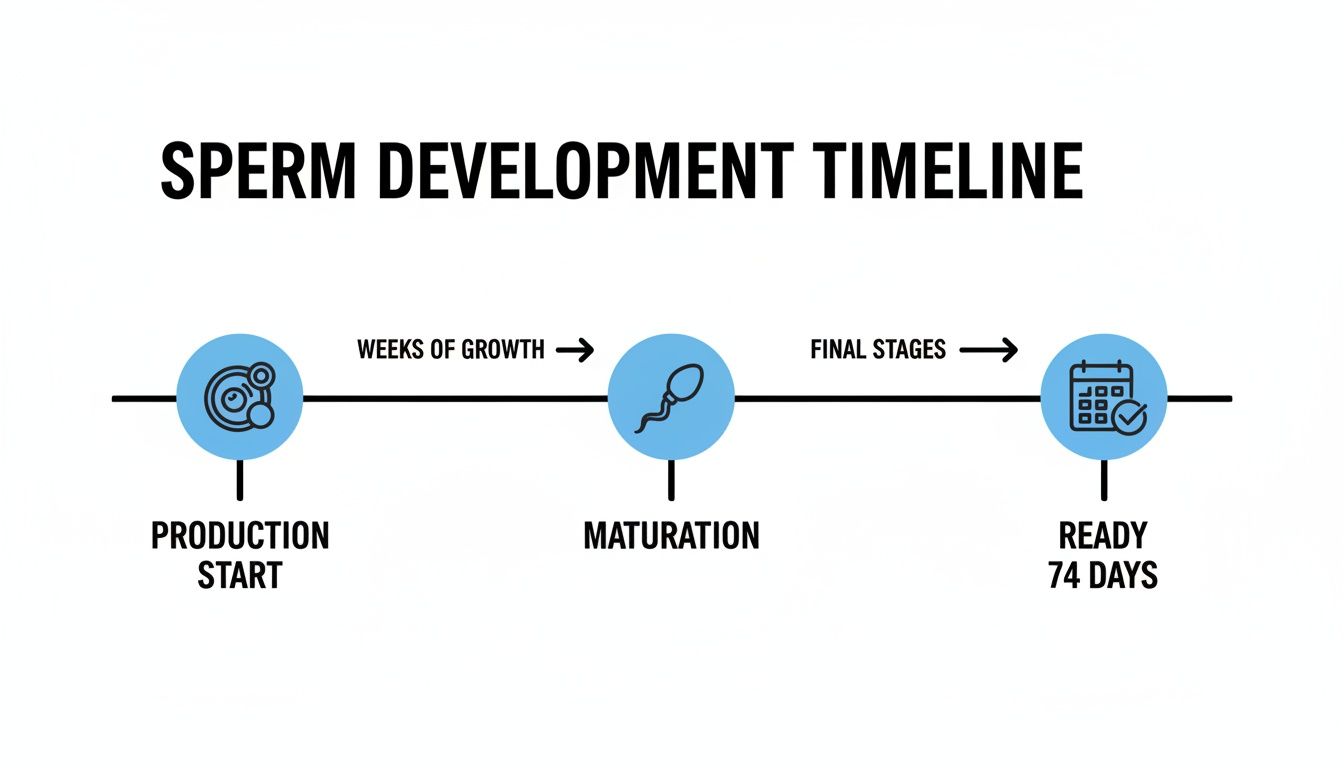
As you can see, the whole journey from initial production to full maturation takes around 74 days. This timeline is exactly why you won't see changes overnight; it takes time for a new, healthy batch of sperm to be produced and ready.
Temperature and Time Both Matter
So, what’s the magic number? When does it get too hot? Sperm production works best when the testicles are a few degrees cooler than your core body temperature. Most hot tubs are cranked up to 102-104°F (39-40°C), which is way over that ideal threshold.
Research suggests that even a single 30-minute soak at that temperature can temporarily mess with sperm. When it becomes a regular habit, the impact starts to show up in key sperm health metrics. If you want to get into the weeds of how sperm are measured, you can learn more about sperm motility and why it's so vital.
Ultimately, it comes down to two things: the intensity of the heat and the frequency of your exposure. Both are critical factors in determining the potential impact on your fertility.
Identifying Other Everyday Heat Risks to Your Sperm
Hot baths get most of the attention, but they’re far from the only heat source that can throw a wrench in sperm production. The truth is, many of our daily routines and modern comforts can quietly raise scrotal temperature, creating an environment that’s not exactly friendly to healthy sperm.
Learning to spot these hidden heat traps is the first step toward protecting your fertility. It really comes down to being more aware of any situation that keeps your testicles consistently warm for long periods.

Modern Comforts and Hidden Culprits
Some of the biggest offenders are things we use every single day without thinking twice. That laptop humming away on your lap for hours? It’s a direct source of heat, transferring warmth right to your groin and undermining your body's built-in cooling mechanisms.
Heated car seats are another perfect example. They feel fantastic on a cold morning, but using them for your entire commute day after day can subject your testicles to the kind of sustained heat you want to avoid when building a family. While we're focused on avoiding heat for fertility, it's interesting to explore the full spectrum of temperature exposure, like the various sauna and cold plunge benefits that impact the body in different ways.
Lifestyle Habits That Turn Up the Heat
It isn't just about technology; your personal habits and even your wardrobe can make a huge difference. Here are a few common lifestyle factors that can trap heat:
- Prolonged Sitting: Whether you’re stuck at a desk all day or are a serious cyclist, sitting for long stretches compresses the groin area, traps heat, and kills air circulation.
- Tight Underwear and Pants: Skinny jeans and tight briefs might be in style, but they press the testicles up against the body. This prevents the scrotum from hanging lower to cool off, which is its entire job.
- Intense Exercise: A tough workout naturally cranks up your core body temperature. Add in tight, non-breathable athletic clothing, and you've created a steamy microclimate right where you don't want one.
The main takeaway is simple: Anything that traps heat close to your scrotum for extended periods can become a problem. The goal is to avoid consistent and prolonged exposure.
So, what can you do? This table breaks down some of the most common culprits and offers simple, practical ways to lower the risk.
Common Heat Sources and Their Impact on Sperm Health
| Heat Source | How It Affects Temperature | Simple Tip to Reduce Risk |
|---|---|---|
| Laptops on Lap | Direct heat transfer from the device's ventilation system to the groin area. | Always use a lap desk or place your laptop on a table. |
| Heated Car Seats | Prolonged, direct contact with a heating element keeps the scrotum at an elevated temperature. | Use them to warm up the seat, then turn them off for the rest of your drive. |
| Tight Underwear | Holds testicles close to the body, preventing natural temperature regulation. | Switch to looser-fitting options like boxers to allow for better airflow. |
| Prolonged Sitting | Traps heat and reduces air circulation around the scrotum. | Take a short break to stand up and walk around at least once every hour. |
Making these small adjustments can have a surprisingly big impact. Choosing looser clothes, using a lap desk, and taking regular stretch breaks are all easy wins. These simple changes help your body's natural climate control work the way it was designed to, creating a much better environment for sperm production.
Actionable Steps to Protect and Boost Your Sperm Health
Okay, so understanding how heat affects sperm is a great first step. But knowledge is only powerful when you put it into action. The good news is that protecting your sperm health doesn't mean you have to completely overhaul your life. It's really about making a series of small, smart tweaks to your daily routine that, together, create a much better environment for sperm production.

Many of these adjustments are simple swaps specifically designed to lower scrotal temperature. Think of them as the easy wins on your fertility journey.
For instance, the most obvious move is to trade those long, steaming hot baths for cooler showers. That one change alone gets rid of a huge source of prolonged heat. Another simple fix is to choose looser underwear—think boxers over tight briefs. This gives things more room to breathe, allowing for better air circulation so your body can do its temperature-regulating job naturally.
Building a Foundation for Stronger Sperm
Beyond just managing heat, taking a more holistic view of your health is what really builds the best foundation for making healthy sperm. Your body is a deeply interconnected system, and what’s good for your overall well-being is almost always good for your fertility.
Here are a few key pillars to focus on:
- Mindful Movement: Getting regular, moderate exercise is fantastic. Things like jogging, swimming, or even brisk walking boost circulation and help manage stress—both big plusses for reproductive health. Just be sure to avoid overheating from super-intense workouts combined with tight, non-breathable clothing.
- Fueling Your Body Right: A balanced diet packed with antioxidants, vitamins, and minerals gives your body the raw materials it needs to build healthy sperm. Try to load up on leafy greens, colorful fruits, nuts, and lean proteins.
- Kicking Harmful Habits: It's no secret that smoking and heavy drinking are bad news for sperm. Studies have consistently linked them to lower sperm counts and poorer quality. Cutting back or quitting can make a surprisingly big difference.
Remember, the sperm you produce today actually began its development about 74 days ago. This means the positive lifestyle changes you implement now will start to show their full impact in roughly two to three months. It’s a helpful timeline to keep in mind.
Small Daily Habits That Add Up
Weaving these fertility-friendly habits into your daily life can become second nature once you get going. It’s often the small, consistent actions that have the biggest long-term impact.
Consider adding these simple but effective steps to your routine:
- Stand Up and Stretch: If you have a desk job, make a point to get up and walk around for a few minutes every hour. This breaks up long periods of sitting, which can trap heat and restrict blood flow.
- Use a Lap Desk: Laptops get surprisingly warm. Avoid placing one directly on your lap for long stretches. A lap desk or, even better, working at a proper table keeps that heat source away from your groin.
- Cool Down After Workouts: After you exercise, get out of those sweaty gym clothes as soon as you can. Letting your body cool down properly prevents trapping heat and moisture right where you don’t want it.
By focusing on these practical tips, you can actively shield your sperm from heat and create the ideal environment for your body's "sperm factory" to run at its best. For more in-depth strategies, you can also explore other ways for how to increase sperm count in our comprehensive guide.
When to Consider Getting a Semen Analysis
So, you've made some changes—maybe you've cut back on the hot tubs and switched to boxers—but you're still wondering where you stand. If you want to move past the guesswork and get real answers about your fertility, the single best step you can take is a semen analysis.
I know it can feel like a big, intimidating step. But think of it this way: it’s like getting a diagnostic report for your car instead of just guessing why it’s making a funny noise. It’s a smart move that gives you a clear, factual snapshot of your reproductive health, letting you move beyond general questions and get data specific to you.
What Does the Test Actually Look At?
A semen analysis is far more than just a simple sperm count. It’s a deep dive into the overall health and viability of your sperm, measuring several key factors that are absolutely critical for male fertility.
Here’s what the lab is really looking for:
- Sperm Count (Concentration): The total number of sperm you have. More is generally better, but it's only one piece of the puzzle.
- Motility: This is all about movement. The analysis looks at what percentage of your sperm are swimming well and moving forward with purpose. After all, they have a long journey ahead.
- Morphology: This one comes down to shape and size. Sperm with a normal, healthy structure are better equipped for their function.
This isn't just a list of numbers on a page; it's a personalized roadmap. Understanding these metrics helps you and your doctor pinpoint any potential roadblocks and gives you a solid baseline to track your progress as you make positive changes.
Getting tested is also easier than ever before. Modern services can help you get a lab order, find a certified clinic near you, and deliver results that are actually easy to understand. The days of confusing lab reports and anxious waiting are over.
If you want to get a head start on what to expect, our guide on how to read semen analysis results breaks it all down for you.
A Few Lingering Questions About Heat and Sperm
Even with all the science laid out, a few specific questions tend to pop up again and again. Let's tackle them head-on with some straight-to-the-point answers.
Is the Damage from Hot Baths Permanent?
Thankfully, for the vast majority of men, the answer is no. The damage from heat is almost always temporary.
Your body is a sperm-making machine, constantly working on a new supply. Once you remove the source of the heat—like cutting out those daily hot tub soaks—your body can get back to business. Studies show that sperm count and quality usually bounce back to normal levels within three to six months.
Are Saunas Just As Bad As Hot Tubs for Sperm?
Yes, they are. Whether it's the "wet heat" of a hot tub or the "dry heat" of a sauna, the end result for your testicles is the same: it gets too hot.
From a sperm production perspective, your body doesn't really distinguish between the two. Any activity that jacks up your scrotal temperature for an extended period is going to cause problems. If you're looking to optimize your fertility, it's wise to steer clear of both.
The Bottom Line: Don't get hung up on wet vs. dry heat. It's the temperature that matters, and both saunas and hot tubs push it well past the ideal range for healthy sperm development.
Ready to stop guessing and get real answers about your fertility? Hera Fertility provides a clear path forward. You can order a physician-approved semen analysis kit online, get tested discreetly at a certified lab in your area, and review your results with an easy-to-understand, AI-powered report. Take the first step and understand your fertility today.
Related Resource Articles
-
A Nervous Breakdown and Its Impact on Male Fertility
Feeling overwhelmed? Learn the signs of a nervous breakdown in men, how severe stress impacts male fertility, and the steps you can take to recover.
16 min read
-
Best Exercises to Improve Sperm Count and Motility
Boost sperm count & motility naturally! Discover best exercises, routines & tips to optimize male fertility. Improve your reproductive health. Learn more!
11 min read
-
Does Alcohol Kill Sperm? What Men Need to Know for Their Fertility
Does alcohol kill sperm? Understand does alcohol kill sperm and its impact on count, motility, and DNA, plus practical tips to protect fertility.
18 min read