Does alcohol kill sperm? It’s a common question for men, and the simple answer is a qualified yes. But the reality is a bit more complex.
Heavy, consistent drinking doesn't just zap individual sperm cells; it messes with the entire, highly sophisticated production line responsible for making them in the first place. Think of it less like a sniper taking out soldiers and more like poisoning the water supply for the whole barracks.
The Straight Answer on How Alcohol Affects Men's Sperm
When you're trying to build a family, it helps to zoom out from the "does it kill them?" question and look at the bigger picture of male fertility. Alcohol's impact is less of a single event and more like a slow, steady decline in quality control across your entire sperm factory.
When a man drinks heavily or chronically, he's introducing toxins that can damage developing sperm at every single stage of their ~74-day production cycle. This damage predictably shows up in the three most critical areas of sperm health.
Key Areas of Impact on Male Fertility
- Sperm Count (Concentration): This is your total workforce. Heavy alcohol use can tank a man's testosterone levels and throw other crucial sperm-producing hormones out of whack, leading to a much lower head count.
- Sperm Motility (Movement): This is how well sperm can actually swim. Alcohol can seriously impair their ability to move forward with purpose, making it incredibly difficult for them to complete their journey.
- Sperm Morphology (Shape): This is the physical structure of the sperm. Alcohol is known to increase the percentage of abnormally shaped sperm—things like two heads, bent necks, or crooked tails—which are essentially duds that cannot properly function.
The bottom line is this: excessive alcohol acts as a major stressor on a man's entire system. And for sperm, which are some of the most delicate cells the male body produces, this stress leads to fewer swimmers, weaker swimmers, and more defective swimmers. It's a triple threat to male fertility.
Ultimately, while one or two drinks here and there are unlikely to derail your plans, a consistent pattern of heavy drinking directly sabotages your body's ability to produce high-quality sperm. Understanding this relationship is the first step toward making smarter choices for your reproductive health.
Alcohol's Impact on Key Sperm Health Metrics
This table gives you a clear, at-a-glance look at how different drinking habits can affect a man's sperm parameters. Notice how the effects escalate from minimal to significant as consumption increases.
| Sperm Health Metric | Effect of Moderate Drinking | Effect of Heavy Drinking |
|---|---|---|
| Sperm Count | Minimal to no significant effect in most studies. | Significant decrease; can lower testosterone and disrupt sperm production hormones. |
| Sperm Motility | May cause a slight, often temporary, reduction in swimming ability. | Noticeably reduced; sperm struggle to swim progressively, lowering fertilization chances. |
| Sperm Morphology | Little evidence of a major impact on sperm shape. | Increased percentage of abnormally shaped sperm (e.g., head or tail defects). |
As you can see, while moderate drinking might not move the needle much, heavy or chronic consumption consistently undermines all three of the most important factors for healthy, fertile sperm.
How Alcohol Disrupts a Man's Sperm Production System
To get a real sense of how alcohol impacts sperm, picture a man's body as a high-tech factory. This factory’s sole purpose is to manufacture millions of healthy, powerful sperm every single day. When you drink, especially heavily, it’s like someone’s throwing a wrench into the most sensitive parts of the assembly line. The whole system gets thrown off, from the main control room in your brain all the way down to the individual sperm cells.
The first thing alcohol goes after is the hormonal command chain that runs the entire operation. It has a direct, toxic effect on the testes, which causes testosterone levels to drop. Testosterone is the master foreman of sperm production (a process called spermatogenesis). Without enough of it, the factory slows way down, making fewer sperm and cutting corners on the quality of those it does manage to produce.
The Problem of Oxidative Stress
Beyond messing with a man's hormones, alcohol cranks up something called oxidative stress throughout the body. The best way to think about this is as a kind of cellular “rusting.” When the body metabolizes alcohol, it creates a flood of unstable molecules called free radicals that ricochet around, damaging healthy cells on contact. Sperm cells are incredibly vulnerable to this kind of attack.
Their delicate membranes and the priceless genetic data they carry can be easily corrupted by this oxidative damage. This assault at the cellular level can cripple their energy centers, turning them into weak swimmers, or even warp their physical structure, leading to abnormal shapes.
This diagram shows a clear picture of how alcohol harms the three pillars of sperm health: count, motility (movement), and morphology (shape).
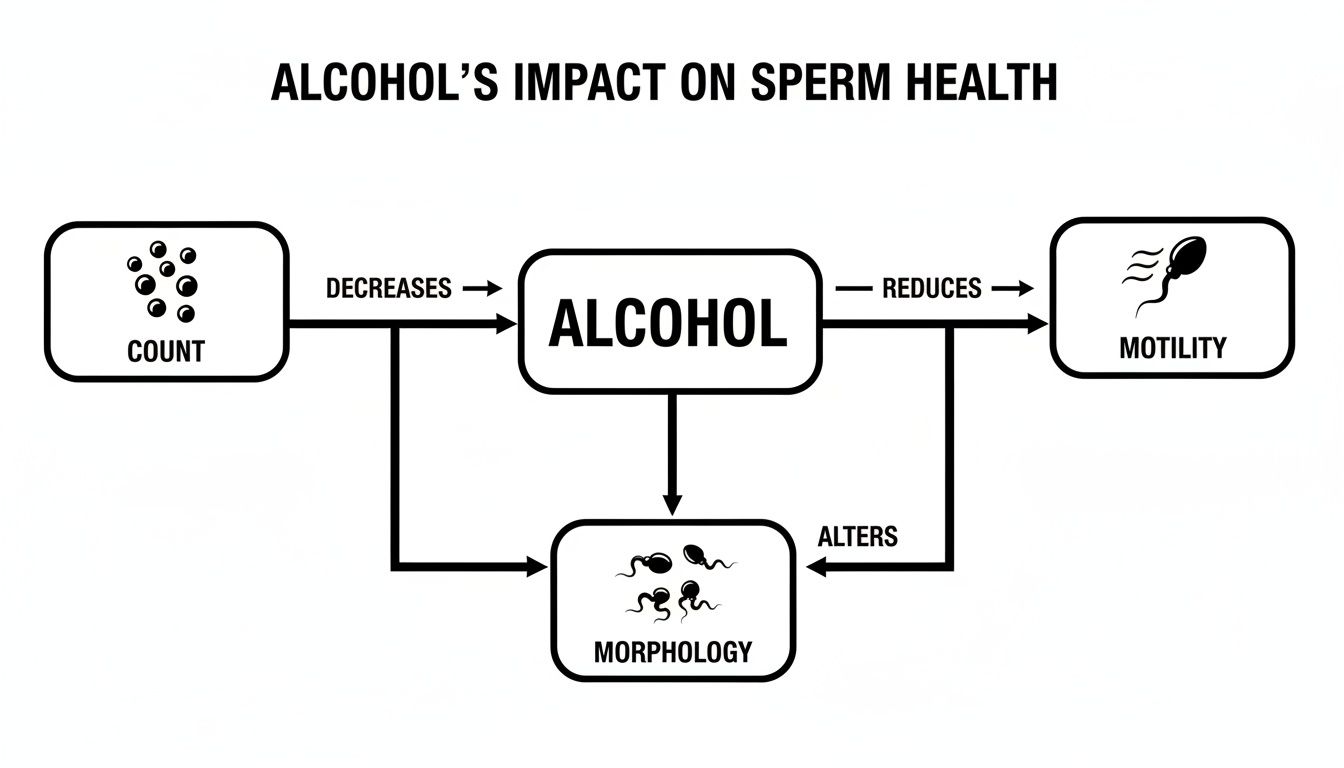
As you can see, alcohol sits right at the center of the problem, creating a domino effect that weakens every important measure of male fertility.
Damage to Sperm DNA
Maybe the most critical hit alcohol delivers is to sperm DNA integrity. Every sperm is carrying half of the genetic blueprint for a potential child, and alcohol can introduce serious “typos” or even breaks in that code. This damage is called DNA fragmentation.
Even if a sperm with fragmented DNA is successful, those genetic errors can get in the way of healthy embryo development. This is a huge, often hidden, concern for any man trying to build his family.
The link between heavy drinking and poor sperm quality isn't just theory; it's well-documented. Study after study shows that men who drink heavily have consistently worse results across all major sperm health metrics, highlighting a direct, negative biological impact.
In fact, research has shown that men with heavy alcohol consumption have up to 3.72 times higher odds of having an abnormal sperm concentration. That’s not a minor dip; it’s a significant impairment. The damage is so well-established that getting a baseline semen analysis is a crucial first step for any man wanting to understand his fertility, especially before making lifestyle changes. You can learn more about the comprehensive studies on alcohol and sperm health.
By disrupting hormones, causing cellular rust, and damaging the genetic payload, alcohol systematically dismantles a man's ability to produce healthy, functional sperm.
How Much Is Too Much? Defining a Man's Limits
Okay, so if alcohol can be bad for sperm, the big question is obvious: "How much is actually too much?"
There isn’t a single, magic number that applies to every man. Instead, it’s about understanding the difference between moderate and heavy drinking and knowing that the risk to your sperm health goes up the more you drink.
This is what scientists call a dose-response relationship. Think of it like sun exposure. A few minutes in the sun is fine, but the longer you stay out without protection, the higher your risk of getting a nasty sunburn. Alcohol has a similar effect on a man's sperm factory—the more you pour in, the bigger the potential hit. Grasping this concept helps you make smarter choices that match your fertility goals.
Moderate vs. Heavy Drinking: What the Science Says
To make this practical, we need to define what researchers actually mean by "moderate" and "heavy" drinking when they study male fertility. While the exact ounces can differ slightly from one study to another, the general guidelines give us a solid place to start.
One of the most telling studies looked at over 1,200 young Danish men. The researchers found that drinking as little as five standard drinks per week was linked to lower sperm concentration and total sperm count. Unsurprisingly, the effects got worse for the men who drank more heavily.
The evidence consistently points to a tipping point. While having a rare drink is unlikely to have a measurable effect, sperm quality starts to drop as weekly consumption climbs. The most significant damage is almost always seen in men who are heavy or binge drinkers.
This tells us that even amounts many men would consider "moderate" might be working against them if they are trying to start a family. The goal isn't necessarily to swear off alcohol forever, but to understand exactly where the risks start to add up.
How Different Drinking Levels Impact Your Sperm
To put this all into perspective, let's connect different drinking patterns to the key sperm health metrics we've been talking about—count, motility, and morphology.
The following table breaks down what scientific studies have observed, giving you a clear picture of that dose-response effect on male fertility.
Alcohol Consumption Levels and Potential Male Fertility Risks
| Consumption Level | Definition (Example) | Observed Impact on Sperm Health |
|---|---|---|
| Light/Occasional | 1-4 drinks per week | Generally considered to have minimal or no significant negative impact on sperm parameters. |
| Moderate | 5-14 drinks per week | Associated with potential reductions in sperm count and concentration. Some studies show early negative effects at this level. |
| Heavy/Chronic | 15+ drinks per week | Strongly linked to significant decreases in sperm count, motility, and morphology. Also associated with hormonal disruption. |
At the end of the day, where you draw the line is a personal call based on your health, your goals, and your timeline. But for any man actively trying to build a family, pulling back to that light or occasional drinking category is, without a doubt, the safest bet for protecting and optimizing his sperm quality.
Can Men Reverse the Damage to Their Sperm?

If you're a man worried that past drinking habits might have hurt your fertility, here's the most important thing to know: the damage is almost never permanent. The male body is a constant sperm-making machine, which gives you a powerful opportunity to improve your sperm health, starting right now.
This hopeful outlook comes down to the natural timeline of sperm production, a process called spermatogenesis. Think of it like a factory assembly line. From the moment a new part enters the line to the final product rolling off, it takes a set amount of time. For sperm, that entire manufacturing process takes about three months.
The 90-Day Sperm Production Cycle
From the instant a new sperm cell begins to form until it’s fully mature and ready for action, roughly 74 to 90 days will pass. This timeline is incredibly empowering for any man looking to boost his fertility.
So, what does this actually mean for you? It means the lifestyle choices you make today—like cutting back on alcohol—will directly shape the quality of the sperm you produce three months from now. The sperm you have at this moment reflect your habits from the last few months, but a brand new, healthier batch is already in production.
This built-in reset button is a core concept in male fertility. Every 90 days, you get a fresh chance to create a stronger, healthier generation of sperm just by improving your body’s internal environment.
This cycle gives you a clear and motivating timeframe for making a real difference. It’s not an overnight fix, but it's a predictable and achievable one.
Taking Control of Your Male Fertility
Understanding this 90-day window shifts a man's mindset from passive worry to active improvement. You suddenly have direct control over the quality of your future sperm.
This is exactly why getting a baseline measurement of your sperm health is such a game-changing first step. By taking a semen analysis now, you get a clear snapshot of where you stand today.
Once you have your initial results, you can start making positive changes. Then, by re-testing in about three months, you can see the tangible results of your efforts. It’s a straightforward way to track your progress and confirm that your hard work is actually paying off. To get started, check out our practical guide on how to improve sperm health.
Your Action Plan for Testing Sperm Health

Knowing how alcohol might affect your sperm is one thing, but seeing your own data is where real change happens. A semen analysis is the single most powerful tool a man has to get a clear, objective snapshot of his fertility. It’s your starting line.
This test isn’t a simple pass/fail. Think of it as a detailed report card for your sperm. It measures the critical factors that matter most for a man's fertility, turning vague concerns into concrete numbers you can actually work with.
What a Semen Analysis Measures
A comprehensive semen analysis is the gold standard because it looks at the three pillars of male fertility. It’s like a performance review for your swimmers, checking if you have enough of them, if they can move correctly, and if they’re built for the job.
The key metrics are:
- Sperm Count (Concentration): This is just how many sperm are there. More sperm generally means better odds.
- Sperm Motility: This measures how well your sperm can swim. Specifically, it looks at progressive motility—the guys moving forward with purpose, not just wiggling in place.
- Sperm Morphology: This checks the shape and structure of your sperm. Oddly shaped sperm can have a tough time with their mission.
Each one of these numbers is a piece of the puzzle. Together, they give you the full picture of your sperm health and show you exactly where there might be room for improvement.
A Modern Approach to Male Fertility Testing
In the past, getting a semen analysis could be an awkward, clinical, and inconvenient process for men. But that's changed. Modern solutions now offer a private and straightforward way to get the answers you need, starting right from home.
Hera Fertility was built to make this whole thing easier for men. Instead of confusing appointments, you can order a physician-approved lab requisition online in minutes. You then visit a certified lab at a time that works for you from a network of over 250+ locations, ensuring your sample is analyzed by professionals.
The goal is to remove the barriers and give men clear, useful information. Testing shouldn't feel like a hurdle; it should be an empowering first step toward taking control of your reproductive health.
This method gives you the best of both worlds: the privacy of starting the process at home combined with the clinical accuracy of a professional lab.
Turning Complex Data into a Clear Action Plan
Getting a lab report full of medical jargon and numbers can be more confusing than helpful. That’s why Hera Fertility translates those complex results into something simple and powerful: the Hera SmartScore.
Our AI-powered analysis crunches your raw numbers—count, motility, and morphology—and distills them into a single, easy-to-understand score. But it doesn't stop there. It also gives you a personalized improvement plan with clear, actionable steps you can take to boost your numbers. You finally get a roadmap built just for you.
By understanding your baseline, you can track how lifestyle changes, like cutting back on alcohol, are actually impacting your sperm health over time. If you want to get a head start, you can learn more about how to read semen analysis results and what all the numbers really mean.
Beyond Alcohol: Other Factors Affecting Male Fertility
While zeroing in on how alcohol affects sperm is a great start, it's really just one piece of a much larger puzzle. The reality is, a man's daily habits create the entire environment where sperm are made. Think of it less like a single switch to flip and more like a whole system to support.
When you start to see how everything connects, you realize that making a positive change in one area—like cutting back on drinking—often boosts other areas too. This creates a powerful ripple effect for a man's overall reproductive health.
A Holistic View of Sperm Health
Imagine a man's body is an ecosystem. Just like a garden needs the right balance of sun, water, and good soil to flourish, the male reproductive system requires the right internal conditions to produce healthy sperm. Things like diet, stress, sleep, and exercise are all critical inputs.
Here are the other major players that have a real impact on sperm quality:
- Smoking: This one’s a big deal for men. The thousands of toxins in cigarette smoke are known to directly damage sperm DNA and cripple their ability to swim. Quitting is probably the single most effective change a man can make for his fertility.
- Diet: A diet packed with antioxidants—think colorful fruits and vegetables—is a man's best defense against oxidative stress, which is a major enemy of healthy sperm. Beyond just limiting booze, adding in inflammation reducing foods can be a smart move, since chronic inflammation is another known troublemaker for sperm production.
- Stress: When a man is constantly stressed out, his body pumps out cortisol, a hormone that can seriously mess with the hormonal signals needed to make sperm. Finding healthy ways to unplug, whether it's through exercise, meditation, or just taking a walk, helps keep your hormones in balance.
- Sleep: This is when the male body does its most important hormonal work, including producing testosterone. Consistently clocking 7-9 hours of quality sleep a night isn't a luxury; it's essential for keeping the sperm factory running on all cylinders.
Every one of these elements works in tandem. Improving your diet while also managing stress and sleeping better creates a far healthier internal environment for producing strong, capable sperm. It’s all connected.
By looking beyond just alcohol, you can build a comprehensive game plan for improving your fertility. For a deeper dive into more strategies, check out our guide on how to increase sperm count.
Your Questions About Alcohol and Sperm, Answered
Navigating male fertility often brings up specific, practical questions. Let's cut through the noise and give you straightforward answers to the most common concerns about alcohol and sperm health.
Will One Night of Heavy Drinking Permanently Ruin a Man's Sperm?
The short answer is no, a single night of heavy drinking is highly unlikely to cause any permanent damage to a man's sperm production system. Think of it as a temporary disruption rather than a permanent shutdown.
That night out might affect the quality of sperm that are in their final stages of maturation, but the real damage comes from consistent, heavy drinking over months. Since it takes roughly three months to produce a completely new batch of sperm, a man's long-term habits have a far greater impact than one isolated event.
Is Beer or Wine Safer for Sperm Than Hard Liquor?
When it comes to your sperm, alcohol is alcohol. A man's body doesn't really care if the ethanol comes from a craft beer, a glass of wine, or a shot of whiskey. The type of drink is far less important than the two things that actually matter: the total amount of pure alcohol you're consuming and how often you're consuming it.
Scientific studies that link alcohol to poor sperm count and motility consistently point to the quantity of drinks, not the specific beverage they came from.
The key takeaway here is simple: a man's body processes ethanol the same way regardless of its source. Focusing on reducing the total number of drinks you have each week is the most effective strategy for protecting your sperm.
How Quickly Can My Sperm Health Improve After I Quit Drinking?
This is where the good news comes in. A man can see measurable improvements in his sperm health relatively quickly. The entire sperm production cycle—from a stem cell to a fully mature swimmer—takes about 74 days.
This means the positive changes a man makes today, like cutting back on alcohol, will be fully reflected in a brand-new batch of sperm in about three months.
This timeline is why testing is so powerful. Getting a baseline semen analysis, making lifestyle adjustments, and then re-testing three months later is a fantastic way to see concrete proof of your progress and confirm your efforts are paying off.
Ready to get a clear picture of where your sperm health stands? With Hera Fertility, you can order a physician-approved semen analysis online and test at a convenient local lab. You'll receive a simple, AI-powered SmartScore with personalized steps for improvement. Take the first step and get your baseline score today.
Related Resource Articles
-
How to improve sperm morphology fast: 2026 Guide for Men's Health
Discover how to improve sperm morphology fast with proven diet, supplements, and lifestyle tips for 2026.
23 min read
-
Stress and Sperm: Boost Your Fertility
Worried about stress and sperm health? Discover its impact on male fertility and find actionable steps to improve your sperm parameters.
16 min read
-
A Proactive Guide to Preconception Health for Men
Discover a proactive guide to preconception health for men. Learn actionable steps to optimize sperm health, nutrition, and lifestyle for healthy conception.
22 min read