When we talk about getting ready to start a family, the conversation has historically focused on one half of the equation. But that's only part of the story. A man's health in the months leading up to conception plays a fundamental, game-changing role in the journey to fatherhood.
This isn’t about adding pressure; it's about empowerment. Preconception health for men is simply about optimizing your physical and lifestyle wellness before trying for a child. The goal is to improve not just your fertility, but the health of your future child. Think of it as a proactive tune-up for one of the most important events of your life.
Why Preconception Health for Men Is a Game Changer
Your sperm health isn't set in stone—it's incredibly responsive to the choices you make today. The food you eat, your exercise routine, and the check-ups you get all contribute directly to the quality of the sperm you produce. A healthy conception journey starts long before you ever try.
Your Health, Your Legacy
A growing number of men are already taking this to heart. Research shows that nearly half of men planning for fatherhood make positive health changes, like quitting smoking or cutting back on alcohol, before starting to try for a family.
But the same study highlighted a major gap: half of these proactive men were overweight or obese, a known risk factor for diminished sperm quality. This just goes to show how crucial a complete, well-rounded approach is. You can learn more about these findings on men's pre-conception health behaviors in the study published in PLOS ONE.
This guide is your roadmap to understanding and improving your reproductive wellness. We'll walk through the core pillars of male preconception health, helping you feel confident and fully prepared for the road ahead.
Taking proactive steps to improve your health is one of the most powerful contributions you can make to your future family. Every positive change, big or small, sets the stage for success.
To give you a clearer picture, we've broken down the key areas of focus into a simple framework. Think of these as the foundational pillars for building your fertility.
Key Pillars of Male Preconception Health
This table summarizes the core areas every man should focus on before trying to have a child. Each pillar represents a crucial piece of the fertility puzzle.
| Pillar | Why It Matters | Key Action |
|---|---|---|
| Sperm Biology | Understanding the sperm production timeline helps you see how today's actions impact your fertility in about three months. | Learn the basics of spermatogenesis. |
| Lifestyle Changes | Diet, exercise, and habits like smoking or drinking directly influence sperm count, movement, and shape. | Adopt a sperm-friendly diet and fitness routine. |
| Medical Check-ups | Underlying medical conditions or certain medications can silently affect your reproductive health. | Schedule a check-up with your doctor. |
| Proactive Testing | A semen analysis provides a clear, objective snapshot of your current fertility status. | Get a baseline semen analysis to know your numbers. |
By addressing each of these pillars, you create a comprehensive strategy that covers all the bases, putting you in the best possible position for a healthy conception.
Understanding Your Sperm Production Cycle
To really get a handle on your preconception health, it helps to know what’s going on behind the scenes. Your body is constantly working to produce sperm in a highly organized process called spermatogenesis. Knowing this timeline is a game-changer because it directly connects the positive changes you make today to real results down the road.
Think of it like a factory. This factory doesn’t just churn out a finished product overnight; it runs on a consistent, predictable schedule. From the moment a new sperm cell is created until it’s fully mature and ready for action, the entire process takes about 74 days—or just under three months.
This three-month timeline is probably the single most important concept in male preconception health. It means the sperm you have today are a direct reflection of your health and lifestyle from three months ago. And more importantly, the healthy choices you start making now—like cleaning up your diet or hitting the gym—will directly shape the quality of the sperm you produce three months from now.
This timeline breaks down the key pillars that influence your health over that period, from the biological foundation to your lifestyle and medical factors.
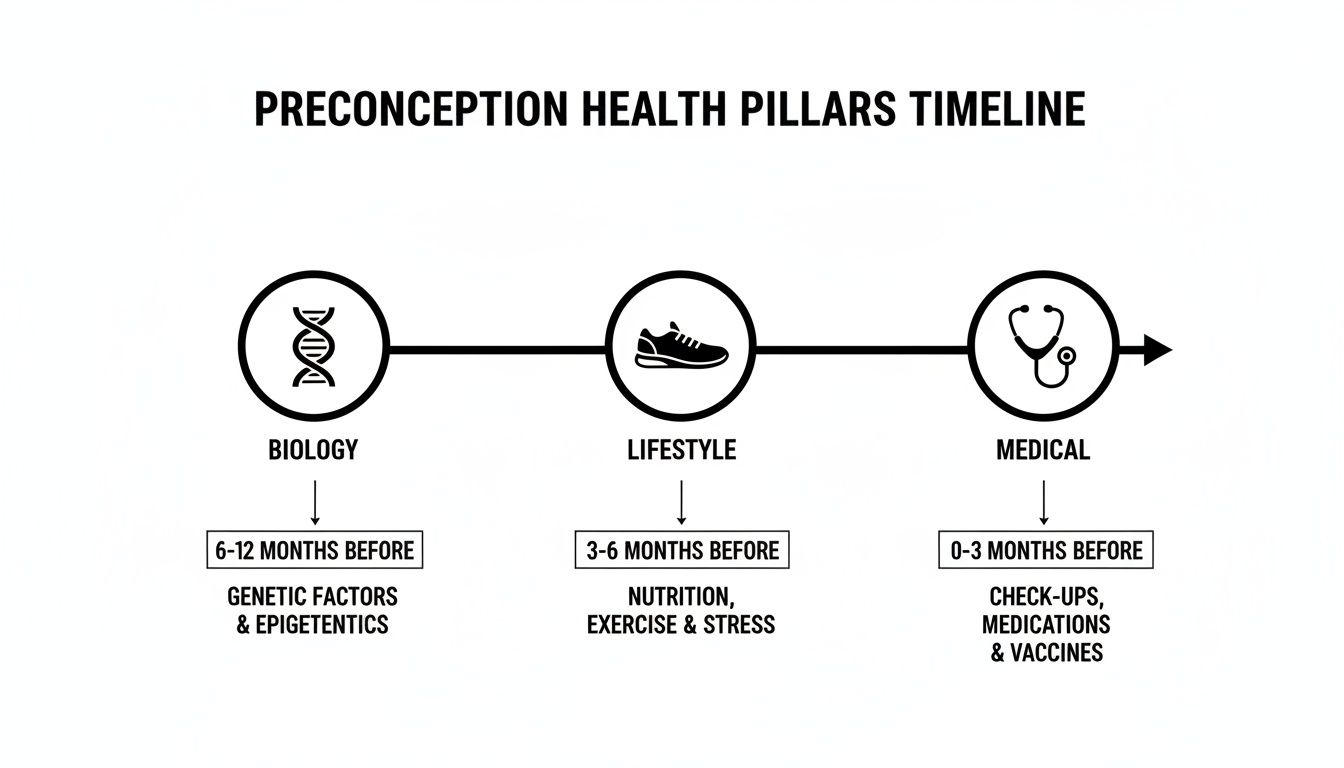
As you can see, your biology, daily habits, and overall medical wellness are all pieces of the same puzzle. They work together to create the complete picture of your fertility.
So, What Does "Sperm Health" Actually Mean?
When fertility specialists talk about "sperm health," they aren't just guessing. They're looking at very specific traits that determine a sperm's ability to contribute to a successful conception. A semen analysis is the test that measures these factors, giving you a clear snapshot of where you stand.
There are three main metrics that tell most of the story.
Understanding these three core metrics—count, motility, and morphology—demystifies the whole concept of fertility. It turns an abstract idea into measurable data you can actively work to improve.
Think of these as the key performance indicators (KPIs) of your personal "sperm factory." They give you and your doctor valuable, actionable information about your current fertility.
The Three Pillars of Sperm Quality
Each metric tells a unique and important part of the story. For the best odds of conception, you want healthy numbers across all three categories.
Sperm Count (Quantity) This is exactly what it sounds like: the total number of sperm in your sample. A higher sperm count simply increases the statistical probability of conception. It's a numbers game—the more swimmers in the race, the better the odds.
Sperm Motility (Movement) Motility is all about how well your sperm can swim. It’s not enough for them to just be there; they need to be strong, active swimmers capable of moving forward. This forward progression is absolutely critical for a successful journey.
Sperm Morphology (Shape) Morphology refers to the size and shape of the sperm. A "normal" sperm has a smooth, oval head and a long tail, a structure that's perfectly designed for its task. Abnormally shaped sperm might struggle to move correctly or fulfill their function.
Together, these three metrics form the bedrock of male preconception health. By understanding this production cycle and what defines healthy sperm, you gain a powerful advantage. You can see exactly how every healthy meal, workout, and positive decision contributes directly to building a better, healthier future for your family—starting with the next generation of sperm your body is producing right now.
Actionable Lifestyle Changes to Boost Your Fertility
Knowing the biology behind sperm production is the first step, but putting that knowledge into practice is where you can really move the needle. The great news is that many of the most important factors for male fertility are directly within your control. This isn't about perfection; it's about making consistent, positive choices that give your body the support it needs.
Think of this as your roadmap to building a healthier foundation for fertility. We'll focus on four key areas: nutrition, exercise, habits, and environment. Every small adjustment you make today contributes to a better reproductive outlook in the months ahead.

Fueling Your Fertility
Think of food as the raw material for your body’s sperm production factory. Better ingredients mean a better final product. Certain nutrients are especially crucial because they play a direct role in how sperm develop, function, and survive.
One of the biggest threats to sperm health is something called oxidative stress. This is a condition where unstable molecules, known as free radicals, go around damaging cells—including sperm. Antioxidants are your body's defense team, neutralizing these free radicals before they can cause harm.
A diet rich in antioxidants acts like a shield for your sperm, protecting them from cellular damage that can impair their count, movement, and shape. This is one of the most effective ways to proactively support your reproductive health.
Here are some of the all-star nutrients and where you can find them:
- Zinc: An absolute must for sperm formation and healthy testosterone metabolism. You'll find it in oysters, beef, pumpkin seeds, and lentils.
- Selenium: A powerful antioxidant that helps protect sperm from damage and is vital for proper morphology (shape). Brazil nuts are a fantastic source, along with tuna and sardines.
- Vitamin C: Another potent antioxidant that protects sperm DNA and improves overall sperm quality. Load up on citrus fruits, bell peppers, strawberries, and broccoli.
- Folate: Essential for healthy sperm DNA synthesis. Leafy greens like spinach, plus asparagus and Brussels sprouts, are packed with it.
Loading your plate with these whole foods gives your body the fundamental building blocks it needs. If you're looking for even more practical ways to improve your numbers, our guide offers more details on how to increase sperm count.
Movement and Moderation
Regular physical activity is a game-changer for your overall health, and your fertility is no exception. It helps you maintain a healthy weight, slashes stress, and can boost testosterone levels—all big wins for sperm production. The key, however, is finding the right balance.
Aim for moderate-intensity exercise, like brisk walking, jogging, swimming, or cycling, for about 150 minutes per week. This level of activity has been shown time and again to improve both sperm count and motility.
But more isn't always better. Pushing your body to the limit without enough rest can actually backfire, increasing oxidative stress and creating hormonal imbalances that hurt sperm production. It's crucial to balance activity with rest, and learning how to prevent overtraining with smart recovery and training tips can be a huge asset.
Quitting Harmful Habits
Sometimes, the biggest gains come from what you decide to stop doing. Certain habits are incredibly toxic to developing sperm and can easily undo all the hard work you’re putting in with diet and exercise.
Let's be direct about the main culprits:
- Tobacco: Smoking is one of the absolute worst things you can do for male fertility. It’s directly linked to lower sperm counts, sluggish motility, and abnormally shaped sperm. Quitting is a massive step in the right direction.
- Excessive Alcohol: While a drink here and there is unlikely to cause issues, heavy drinking can torpedo your testosterone levels, mess with sperm shape, and slash your sperm count. Moderation is key.
- Recreational Drugs: Substances like marijuana, cocaine, and anabolic steroids can seriously disrupt the hormonal symphony required for sperm production. This often leads to a steep decline across all key sperm parameters.
Cutting these habits is a non-negotiable part of any serious preconception health plan.
Staying Cool
There's a reason the testicles are located outside the body: they need to stay slightly cooler than your core body temperature to produce sperm effectively. When they get too hot, even temporarily, sperm production can slow down or stop altogether.
This is a simple but surprisingly common issue. Luckily, the fixes are just as simple.
Actionable Next Steps:
- Limit Hot Tubs and Saunas: Frequent soaks can raise scrotal temperature enough to negatively impact your sperm.
- Keep Laptops off Your Lap: The heat from a laptop can have the same effect. Stick to a desk or a lap pad.
- Choose Boxer Shorts: Some evidence suggests tight-fitting underwear traps more heat compared to looser options.
- Take Breaks from Sitting: If you work a desk job, make a point to get up and walk around every so often to improve air circulation.
By focusing on these four areas—diet, exercise, habits, and heat exposure—you can create a powerful, positive effect on your fertility and set yourself up for success.
Medical Check-ups and Key Health Considerations
While lifestyle choices are a huge part of improving your preconception health, they’re most powerful when you pair them with a proactive medical strategy. Your overall health is directly wired to your reproductive wellness, and one of the best first steps you can take is a simple check-up with your doctor.
This visit is the perfect opportunity to make sure your health plan is fully aligned with your goal of becoming a father.
Think of your body as a complex, interconnected system. Conditions like high blood pressure or diabetes don't just affect your heart or blood sugar—they can create a ripple effect that throws off hormonal balance and disrupts sperm production. Getting these conditions under control is a non-negotiable part of preparing for fatherhood.
Having an open conversation with your doctor about your family-planning goals allows them to review your health through a fertility-focused lens, making sure nothing important gets missed.
The Impact of Medications on Male Fertility
When you talk with your doctor, one of the most important topics to cover is your current medication list. This includes everything—prescriptions, over-the-counter drugs, and any supplements you take. Many men are surprised to learn that common medications can interfere with the body’s ability to produce healthy sperm.
It's a crucial but often overlooked piece of the puzzle.
Certain medications can disrupt the delicate hormonal signals that drive sperm production. For example, some treatments might lower testosterone levels or directly impact sperm development, affecting their count, movement, or shape.
A few examples of medications that can potentially affect male fertility include:
- Certain Antidepressants: Some types, particularly SSRIs, have been linked to changes in sperm quality.
- Testosterone Supplements: This one seems counterintuitive, but taking external testosterone can signal your body to shut down its own natural production, causing sperm count to plummet.
- Blood Pressure Medications: Specific classes of these drugs may have an impact on sperm function.
- Opioids and Anabolic Steroids: These are well-known for significantly disrupting the hormones required for healthy sperm production.
This doesn't mean you should stop taking necessary medication. Not at all. It just means you need to have an informed discussion with your physician. They can often suggest fertility-friendly alternatives or adjust dosages if a particular drug is flagged as a potential issue. Never make changes to your prescriptions without talking to your doctor first.
Your Weight and Hormonal Balance
Maintaining a healthy weight is about so much more than general wellness; it’s fundamental to your hormonal health. Your Body Mass Index (BMI) is a pretty good indicator of this balance. Being significantly overweight or underweight can throw your hormones out of whack, which has a direct impact on sperm production.
Here's how: excess body fat can convert testosterone into estrogen. This leads to lower testosterone levels and can seriously impair sperm development. This hormonal imbalance is a common roadblock for many men. Research consistently shows a clear link between a high BMI and reduced sperm quality, highlighting why weight management is a core part of getting ready for conception.
Data from national surveys reveals a significant need for better preconception care among men. A startling 60% of men aged 15-44 in the U.S. require this care, largely due to factors like high BMI, binge drinking, and risks for STIs. These factors directly shape sperm quality and the health of future children. You can explore more about these key findings and their impact on paternal health in studies analyzing the National Survey of Family Growth.
Working toward a healthy weight through a balanced diet and regular exercise can help get your hormones back in equilibrium, creating a much better environment for producing high-quality sperm. It's a tangible step with benefits that extend far beyond fertility. If you're looking for more guidance, check out our article on the common signs of male infertility.
By scheduling that check-up and openly discussing your health, medications, and weight with your doctor, you can build a solid, personalized plan for your journey to fatherhood.
Getting a Baseline with a Semen Analysis
So, you’ve started cleaning up your diet and hitting the gym more regularly. You’ve even had that check-up you’ve been putting off. What's next? It's time to get a clear, objective picture of your fertility status with a semen analysis.
This isn't some intimidating final exam. Think of it as a proactive health check-in—a "fertility snapshot" that gives you hard data on your sperm health.

Here's an analogy: you wouldn’t start a new fitness program without knowing your starting weight, or train for a marathon without clocking your current pace. A semen analysis provides that crucial starting point for your preconception journey. It answers the simple but vital question: "Where am I at right now?"
This information is powerful. It takes the guesswork out of the equation, shows you the real impact of your lifestyle changes, and helps you and your doctor build a plan that’s actually tailored to you.
When Should You Consider Getting Tested?
Timing is key, and there are a few ideal moments to get a semen analysis. Honestly, it’s a smart move for any man who's even starting to think about fatherhood, whether that's next month or a few years down the road.
Consider getting tested in these situations:
- Before You Start Trying: Getting a baseline before you officially start trying for a child gives you invaluable insight and, more importantly, time to make adjustments if needed.
- After Making Lifestyle Changes: If you've spent the last three to six months overhauling your diet, fitness, and habits, a follow-up test can show you the tangible results of your hard work.
- If You Have Health Concerns: For guys with existing medical conditions or a history of reproductive health issues, a semen analysis provides a clear, current status update.
Taking this proactive step is critical, especially when you realize how many common lifestyle factors can affect fertility. For instance, national survey data shows that 61.9% of men are overweight or obese, and many have habits that can undermine sperm health. These numbers underscore the need for a focused approach, and you can see more preconception risks for men at Frontiers in Reproductive Health.
A Modern Approach to Male Fertility Testing
In the past, getting a semen analysis could feel clinical, awkward, and inconvenient. But modern solutions like Hera Fertility have completely changed the game, making the process simple, private, and easy to understand. The whole point is to give you control over your health information without the usual stress.
The process is designed for total convenience:
- Order Online: You can get a physician-signed lab requisition right from the Hera Fertility platform in just a few minutes. No awkward conversations required.
- Choose a Lab: With a network of over 250 CLIA-certified labs, you can pick a location that’s actually close to you. It's easy to find a nearby lab and book an appointment that fits your schedule.
- Get Tested Confidentially: You visit the lab on your own time. The entire process is discreet and professional.
This modern approach puts you squarely in the driver's seat of your preconception health journey, making it easier than ever to get the answers you need.
Understanding your fertility shouldn't be complicated or stressful. The right tools can transform complex medical data into clear, actionable steps, giving you the confidence to move forward.
Once your results are in, you'll see the real value. Instead of getting a confusing lab report full of medical jargon, Hera Fertility uses AI to interpret your data. Your results are translated into a simple Hera SmartScore that clearly breaks down your sperm count, motility, and morphology.
Most importantly, you get a personalized action plan with clear next steps based on your specific results. This cuts through the anxiety of trying to figure out what the numbers mean and gives you a direct path forward, ensuring you know exactly what to do next to optimize your preconception health.
Common Questions About Preconception Health for Men
Even when you have a solid game plan, it's completely normal for questions to pop up as you start dialing in your preconception health. The journey to becoming a dad is a big one, and getting clear, direct answers can help you move forward with confidence.
Let's tackle some of the most common questions men have. Think of this as your practical guide to the finer details, with actionable answers to help you feel in control.
How Long Before Trying for a Child Should I Start Focusing on My Health?
This is probably the most important question to ask. The ideal time to start making positive changes is at least three to four months before you plan to start trying. Why so specific? It all comes down to the biology of sperm production.
The entire process of creating a brand new, mature sperm cell—a process called spermatogenesis—takes about 74 days. This means the healthy food you eat today, the workout you crush this week, and the bad habits you kick to the curb will directly impact the quality of the sperm your body produces roughly three months from now.
Think of it as a "90-day tune-up" for your fertility. This window gives your body enough time to clear out older, potentially damaged sperm and build a completely new, healthier team that fully reflects your improved lifestyle.
Of course, starting even earlier is always a win for your overall health, but that three-month mark is the most critical window for directly influencing the sperm that will be there on game day.
Are There Specific Vitamins or Supplements That Can Improve My Sperm Health?
Yes, absolutely. Certain nutrients are the essential building blocks for your body's "sperm factory." While a healthy, balanced diet is always the best foundation, supplements can play a huge role in filling nutritional gaps and giving your reproductive system targeted support.
One of the best strategies is to load up on antioxidants. These powerful compounds act like bodyguards for developing sperm, protecting them from damage caused by oxidative stress—a major culprit that can harm sperm DNA, structure, and their ability to swim.
Here are a few of the heavy hitters known to be especially good for male fertility:
- Zinc: A true cornerstone of male reproductive health. This mineral is fundamental for sperm formation, development, and testosterone metabolism.
- Folate: Just as critical for men, folate plays a key role in protecting the integrity of sperm DNA.
- Selenium: A potent antioxidant that helps shield sperm from damage and is essential for maintaining their proper shape (morphology).
- Coenzyme Q10 (CoQ10): This antioxidant is a powerhouse for cellular energy. It’s particularly important for improving sperm motility, or their ability to swim straight and fast.
While eating foods rich in these nutrients is great, a high-quality men's preconception multivitamin can ensure you’re consistently getting the right amounts. That said, it's always a good idea to chat with your doctor before starting any new supplements to make sure they're right for you.
Can Stress Really Affect My Fertility?
Without a doubt. The mind-body connection is incredibly powerful, and high levels of chronic stress can throw a major wrench in the delicate hormonal system needed to produce healthy sperm.
When you're constantly stressed, your body pumps out cortisol, the primary stress hormone. High cortisol levels can directly interfere with testosterone production and disrupt the signals from your brain that tell your testicles to get to work making sperm. Over time, this can lead to a lower sperm count and poorer quality.
Stress also hits your fertility indirectly. It often pushes us toward unhealthy coping habits, like:
- Reaching for junk food
- Drinking more alcohol
- Skipping workouts
- Getting poor sleep
All of these behaviors can further damage sperm health. Finding healthy ways to manage stress is a non-negotiable part of any preconception plan. Things like regular exercise, mindfulness, meditation, or even just making time for hobbies can make a huge difference. Taking care of your mental health is a direct investment in your future family.
When Should I Consider Seeing a Fertility Specialist?
Being proactive is the best approach you can take. Knowing when to call in an expert isn't a sign of failure—it's a sign of strength. A fertility specialist, like a urologist who focuses on male reproductive health, can offer a much deeper evaluation and a personalized treatment plan.
It's a good idea to book a consultation if any of these apply to you:
- You Have a Known Medical Condition: If you have a history of issues that could affect fertility, such as a varicocele, an undescended testicle, or past surgeries in the groin area.
- Your Semen Analysis Raises Concerns: A proactive semen analysis gives you a clear baseline. If the results show issues with sperm count, motility, or morphology, a specialist can help figure out the root cause.
- You've Been Trying for a While Without Success: If you have been trying to conceive for a year without success (or for six months if your partner is over 35), it's a good time for both of you to get checked out.
Getting a baseline semen analysis is your single most informative first step. It removes all the guesswork and gives you hard data to work with. If the results are normal, it provides incredible peace of mind. If they show room for improvement, you now have a clear starting point for a productive conversation with a specialist.
Take the first step toward understanding your reproductive health with clarity and confidence. Hera Fertility makes it simple to get a baseline semen analysis with our AI-powered platform. Order your physician-signed lab requisition online, get tested at a convenient location, and receive a clear Hera SmartScore with a personalized action plan. Get the answers you need at https://herafertility.co.
Related Resource Articles
-
Stress and Sperm: Boost Your Fertility
Worried about stress and sperm health? Discover its impact on male fertility and find actionable steps to improve your sperm parameters.
16 min read
-
Clomid Side Effects in Men: Mood, Sleep, Sperm & Safety
Learn how clomiphene can affect men, including mood, sleep, energy, vision, and semen results—plus dosing-time guidance and monitoring questions to ask.
11 min read
-
Does Alcohol Kill Sperm? What Men Need to Know for Their Fertility
Does alcohol kill sperm? Understand does alcohol kill sperm and its impact on count, motility, and DNA, plus practical tips to protect fertility.
18 min read