How long sperm last is one of the most common questions we hear, and for good reason. The answer isn't a single number—it changes dramatically depending on where the sperm are. Their lifespan can range from just a few minutes in the open air to several days under perfect conditions after ejaculation.
Think of sperm as highly specialized swimmers on a critical mission. To succeed, they need a very specific environment—one that’s warm and moist. Any deviation from these ideal conditions drastically shortens their journey.
Your Essential Guide to Sperm Survival
Understanding the lifespan of sperm is a crucial first step for any man thinking about his reproductive health. It's not about one magic number, but a range influenced by factors like temperature, moisture, and exposure to air.
This guide will walk you through how long sperm can survive in different scenarios, from the most favorable to the absolute worst. Knowing the difference between them will give you a much clearer picture of both sperm's resilience and their surprising fragility.
Sperm Survival Time at a Glance
For a quick overview, here's a look at how long sperm typically survive in various environments. As you'll see, the difference between an ideal, protected setting and being exposed to the outside world is stark.
| Environment | Typical Survival Time |
|---|---|
| Inside the Body (Post-Ejaculation) | Up to 5 days |
| Semen Outside the Body (on skin or surfaces) | A few minutes until it dries |
| In a Hot Tub or Bath Water | Seconds to a few minutes |
| Frozen (Cryopreservation) | Decades (indefinitely) |
This table makes it clear: sperm are designed for one job in one specific place. Outside of that, their survival clock runs out incredibly fast.
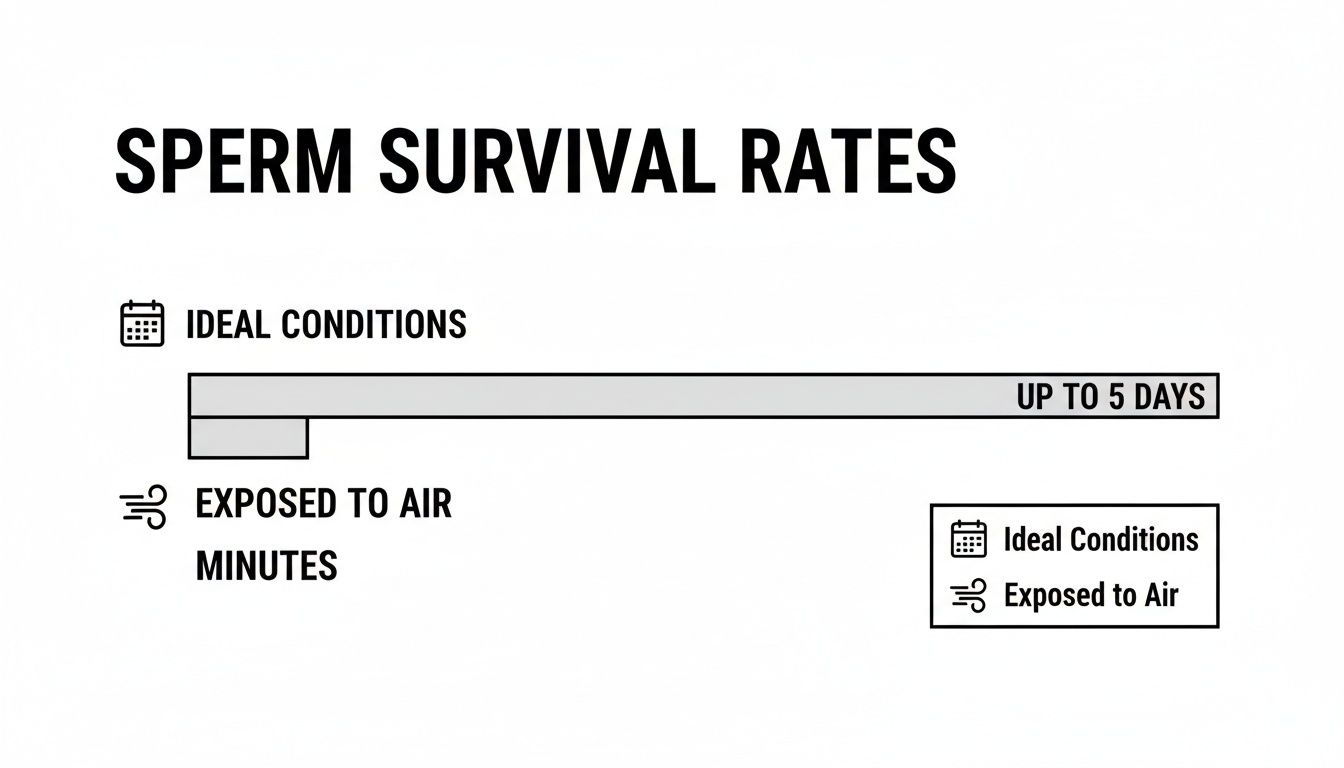
The key takeaway here is simple: sperm are built for an internal, protected environment. They lose their ability to function almost immediately once exposed to the outside world.
Sperm are incredibly sensitive. Their sole purpose is to travel in a protected, nutrient-rich fluid. The moment they leave those conditions, their viability plummets.
While you can't control how sperm fare after they leave the body, you absolutely can influence their health and quality at the source. For men looking to be proactive, focusing on the factors you can control is key. A great place to start is by checking out our guide on practical tips for how to increase sperm count.
The Five-Day Window: Sperm Survival Under Ideal Conditions
Sperm are surprisingly tough, but only when they’re in the right place at the right time. Under perfect conditions post-ejaculation, they can survive for up to five days—a remarkable feat that showcases male fertility when all the stars align.

Think of a healthy sperm cell as a marathon runner. Just like a runner needs a clear course, hydration, and good weather to finish the race, sperm need a supportive environment to complete their journey. When they get that support, their endurance is pushed to the max.
An internal, warm, and moist environment provides this exact five-star service. It offers the warmth and pH-balanced conditions sperm need to not only stay alive but remain active and ready for their mission.
What Makes This Five-Day Survival Possible?
Semen is more than just a delivery vehicle for sperm; it’s a complex, nutrient-rich fluid designed to protect and energize them. This fluid, called seminal plasma, is critical for neutralizing acidic environments and providing the fuel needed for the long swim ahead. Think of it as the initial support crew for our marathon runners.
The five-day survival window is a powerful indicator of male reproductive potential. It shows that when sperm are healthy and the conditions are right, they have an impressive capacity to endure and succeed.
Understanding this extended lifespan can be empowering for a man, as it reinforces the value of knowing and maintaining your own sperm health for the long haul.
Why This Window Matters for Men
For men, realizing how long sperm can last under optimal circumstances shifts the focus from just quantity to overall health and quality. Strong, well-shaped sperm with excellent motility are far better equipped to leverage this five-day window. This is where proactive health management directly impacts a man's fertility.
The survival time of sperm is a critical piece of the reproductive puzzle. It's well-established that they can remain alive and functional for 3 to 5 days inside the body after ejaculation. You can discover more about sperm's journey from the Mayo Clinic.
When Sperm Are Exposed to Air
Once sperm leave the protective, carefully regulated environment of the male body, the clock starts ticking—fast. When semen hits the open air, a sperm’s lifespan plummets from days down to just a few minutes. This isn't an exaggeration; it's a biological reality rooted in their extreme fragility.
Think of sperm as deep-sea fish suddenly brought to the surface. They are perfectly built for one very specific environment, but they're completely out of their element and can't survive anywhere else. For sperm, that perfect environment is warm and moist. The second semen starts to dry out on any surface, the sperm inside lose their ability to move and are no longer viable.
This is exactly why many concerns about sperm on surfaces like toilet seats, towels, or skin are generally unfounded. If the semen is dry—a process that takes only a few minutes—the sperm are no longer functional.
The Key Factors Limiting Survival
As soon as they're outside the body, sperm face a hostile new world. Two main factors work against them, spelling a very quick end.
Here’s what they’re up against:
- Temperature Shock: Sperm are designed to function at a stable body temperature of around 98.6°F (37°C). The sudden drop to room temperature is a massive shock to their system, rapidly immobilizing them.
- Moisture Loss: Semen is the liquid medium that allows sperm to swim. As this fluid evaporates into the air, the sperm are essentially left stranded and quickly perish.
It's this one-two punch of cooling and drying that makes it impossible for sperm to last more than a handful of minutes in the open.
The real answer to "how long does sperm last on a surface?" is simple: only as long as the semen stays wet. Once it's dry, the mission is over. This single fact helps clear up a lot of common myths and anxieties.
What This Means for Male Fertility
This rapid breakdown is crucial information for any man providing a sample for fertility testing. When you collect a semen sample for analysis, time is absolutely of the essence. The sample needs to be kept from getting too cold and must get to the lab very quickly, typically within 30 to 60 minutes.
Any significant delay or exposure to the cold can damage the sperm before they even get under the microscope. This can lead to misleadingly poor results, especially for motility—the all-important measure of how well sperm can swim. Following the lab's collection and transport instructions to the letter is non-negotiable if you want an accurate picture of your reproductive health.
Putting Sperm on Ice: How Science Extends Fertility
While sperm are incredibly fragile out in the open, modern science has found remarkable ways to press the pause button on their lifespan. These techniques are not just for lab testing; they give men powerful, proactive options for managing their reproductive health.
The whole concept boils down to creating a perfectly stable, controlled environment where sperm can be maintained, analyzed, or even frozen in time.
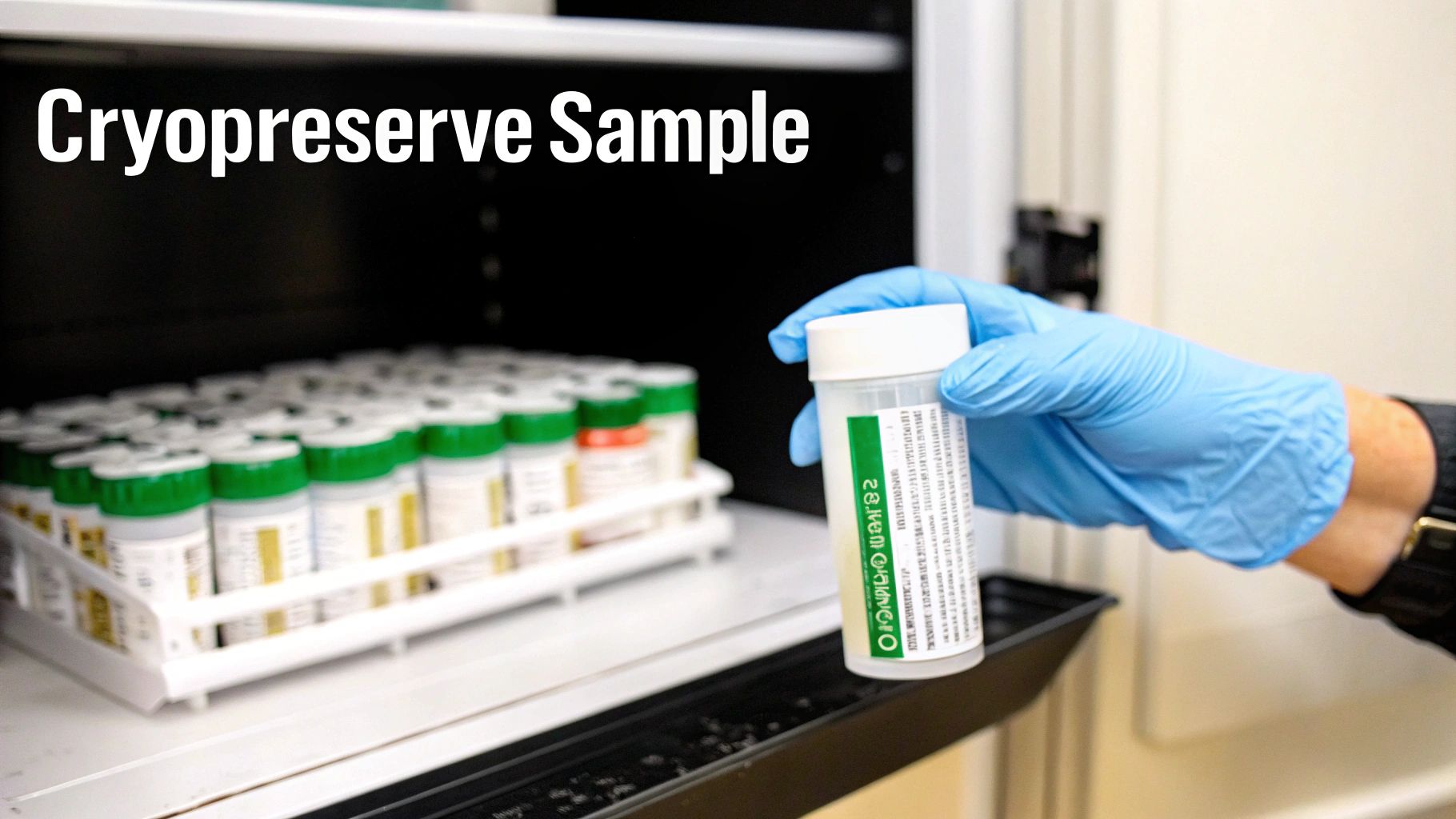
Short-Term Preservation for Testing
If you're getting a semen analysis, understanding short-term preservation is critical. From the moment you provide a sample, the clock is ticking. Sperm motility (their ability to swim) starts to drop off pretty quickly at room temperature, so the lab’s goal is to analyze the sample while the sperm are still at their best.
This is why getting your sample to the lab within 30 to 60 minutes is so important. Labs also use controlled conditions to keep the sample stable. Research shows that while sperm quality inevitably declines over time, storing a sample at 4-6°C preserves it better than leaving it at room temperature. This isn't a long-term fix, as significant declines are seen after just two days, but the good news is that the DNA inside the sperm remains stable under both conditions.
Long-Term Preservation Through Cryopreservation
For truly long-term storage, science takes a giant leap with cryopreservation—what most of us just call sperm freezing. This process is like putting sperm into a state of suspended animation, effectively stopping their biological clock indefinitely.
Here’s a quick rundown of how it works:
- Sample Collection: A fresh semen sample is collected and its quality is analyzed.
- Cryoprotectant Added: A special substance is mixed in to act like an "antifreeze" for the cells, protecting them from damage during the freezing process.
- Controlled Freezing: The sample is carefully frozen in liquid nitrogen at an incredibly cold -196°C (-321°F).
At this extreme temperature, all biological activity just stops. The sperm don’t age, they don’t burn energy, and they don’t die. They simply wait, perfectly preserved, until they're needed—whether that’s a few years or even decades down the road.
This technology is a complete game-changer for men facing medical treatments like chemotherapy, those in high-risk jobs, or any man who wants to lock in his family-building options for the future. Freezing sperm ensures that healthy swimmers are ready and waiting whenever you are. If you're considering this path, sperm banks can provide more details.
Taking the Next Step in Your Fertility Journey
Knowing the science behind sperm survival is one thing, but putting that knowledge to work is what really counts. For any man who wants to get a clear, honest look at his reproductive health, the most direct path forward is a semen analysis.
Whether you're curious about your baseline fertility, trying to get to the bottom of a specific concern, or confirming that a vasectomy was successful, testing is what turns guesswork into concrete answers. It's the move from wondering to knowing.
And the good news? Getting this vital information is more straightforward than ever before. Modern fertility solutions are built to be simple, private, and accessible.
How to Get Your Fertility Tested
Hera Fertility gives you a direct line to understanding your sperm health. We've designed the entire process to be supportive and transparent, putting you in the driver’s seat from day one.
Here’s the simple breakdown:
- Order Your Requisition: Get a physician-signed lab requisition online in just a few minutes. No awkward appointments needed.
- Visit a Local Lab: We partner with over 250 certified labs across the USA and Canada. Just find a location near you and go in on your own schedule.
- Receive Your Hera SmartScore: We translate the complex lab data into a simple, easy-to-understand Hera SmartScore. It’s your fertility report card, made clear.
This approach cuts through the confusion and gives you a solid foundation for whatever your next steps might be.
Preparing for an Accurate Semen Analysis
To make sure your test results are as accurate as possible, a little prep work goes a long way. The single most important factor is the abstinence period before you provide your sample. This has a direct impact on key metrics like sperm count and motility.
For the most reliable results, the sweet spot for abstinence is between 2-7 days. Why? Research from thousands of men shows that a short window (less than two days) can result in lower semen volume and sperm concentration. But waiting too long (more than seven days) can actually hurt sperm motility—their ability to swim effectively.
The 2-7 day abstinence window is non-negotiable for an accurate test. It ensures the lab is analyzing a sample that truly reflects your sperm health, giving you data you can trust.
Ultimately, taking charge of your fertility journey starts with one decisive action: getting a professional semen analysis. It’s the step that equips you with the real, scientific data you need to make informed decisions and plan for your future with confidence.
Making Sense of Your Semen Analysis Results
Getting a semen analysis is a huge first step. But the real power comes from understanding what those numbers actually mean for your fertility. Let's be honest, traditional lab reports can feel like they're written in a different language, full of medical jargon that's dense and nearly impossible to interpret on your own.
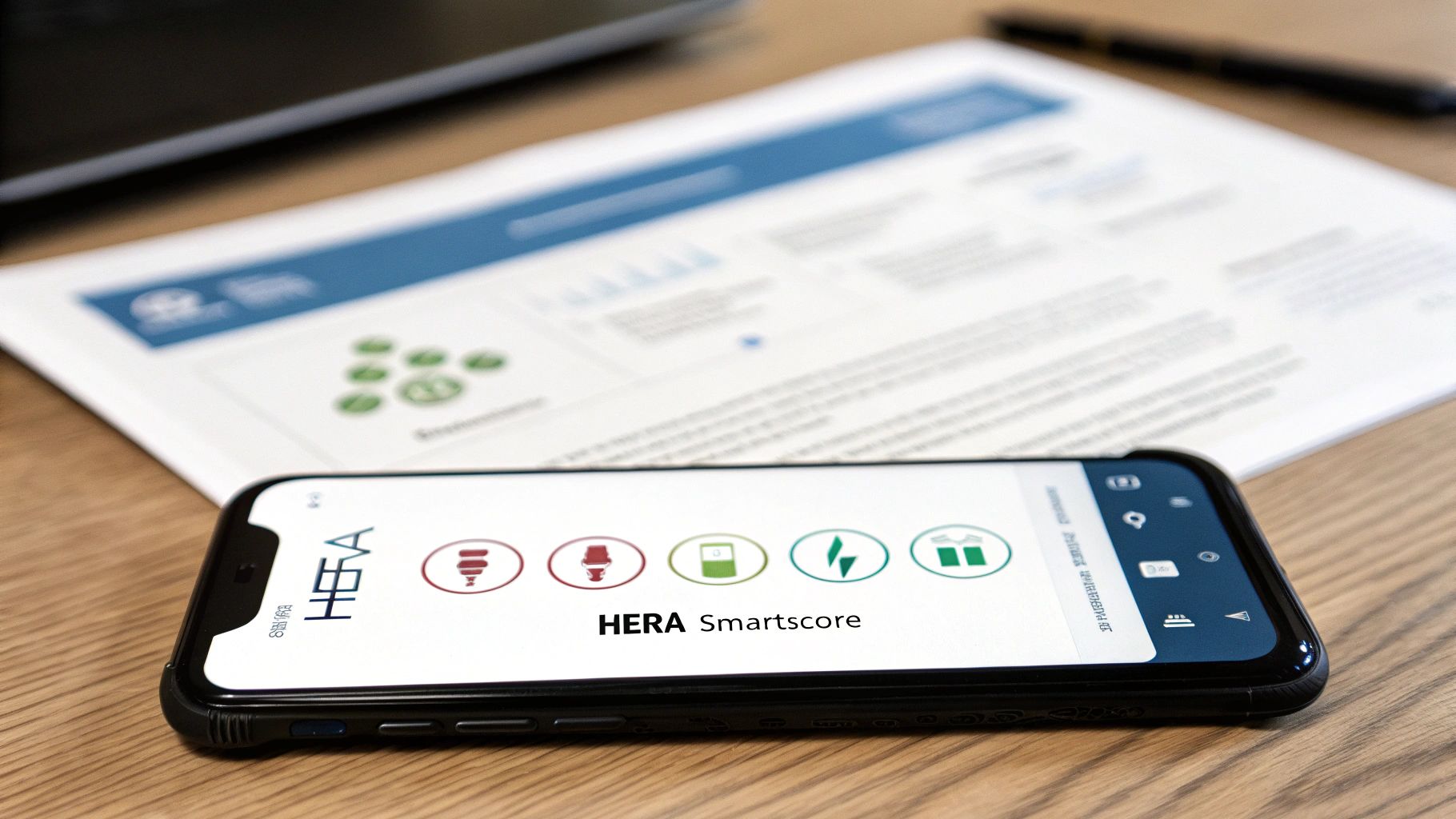
This is where modern tools can completely change the game. Instead of leaving you to google every term, platforms like Hera Fertility are designed to bring clarity and give you a real sense of direction. We're here to simplify the journey.
From Complex Data to a Clear Score
We created the Hera SmartScore to cut right through the confusion. Our platform takes all that detailed lab data—your sperm count, motility, morphology, and more—and translates it into a single, straightforward score.
This isn't just another number. It’s a clear snapshot of your current fertility status, helping you instantly grasp where you stand without needing a medical degree to figure it out.
Your Hera SmartScore is more than just data—it's the starting point for a personalized plan. It transforms complex results into clear insights and actionable next steps tailored to your specific profile.
This approach puts you back in the driver's seat of your own fertility. When you understand exactly what your results signify, you can make informed, confident decisions about your health and your future. If you want to take a deeper dive, our detailed guide explains exactly how to read semen analysis results.
With the right tools, you can go from feeling overwhelmed by data to feeling optimistic about the path forward. Your fertility journey deserves clarity, and that starts with results you can finally understand.
Got Questions About Sperm Survival? We've Got Answers.
When you're trying to understand your fertility, a lot of specific "what if" scenarios pop into your head. It's completely normal to wonder what happens to sperm in different situations. Let's clear up some of the most common questions men ask.
Can Sperm Survive in a Hot Tub or Pool?
Absolutely not. Sperm are incredibly sensitive, and the environment of a hot tub or swimming pool is immediately fatal to them. Between the high temperatures, chemicals like chlorine, and the massive dilution in water, they don't stand a chance for more than a few seconds.
The harsh conditions in a pool or hot tub mean that sperm cannot survive in that environment. This is a common myth that causes a lot of unnecessary worry.
Knowing this helps you separate fact from fiction and focus on the things that actually matter for your reproductive health.
Does Pre-Ejaculate Contain Live Sperm?
Yes, it's entirely possible for pre-ejaculate (pre-cum) to contain live, swimming sperm. While the numbers are typically much lower than in a full ejaculation, their presence is a well-known biological reality.
This happens because sperm from a previous ejaculation can linger in the urethra. The pre-ejaculatory fluid then picks them up on its way out. It’s a crucial detail for any man to understand about his reproductive function.
How Quickly Do I Need to Get My Semen Sample to the Lab?
This one is time-sensitive. For an accurate semen analysis, you need to get your sample to the lab within 30 to 60 minutes of collection. Time is of the essence here.
Once outside the protective environment of the male body, key health metrics—especially motility (the sperm's ability to swim)—start to decline fast. It's also critical to keep the sample close to body temperature during transport. Any delay or temperature fluctuation can skew your results and give a misleadingly poor report of your sperm quality.
Ready to stop guessing and start knowing? Hera Fertility cuts through the confusion to give you a clear picture of your reproductive health. Order your lab requisition online, test at a clinic near you, and get your simple-to-understand Hera SmartScore. Take the first step toward real answers by visiting Hera Fertility today.
Related Resource Articles
-
What Is Sperm Concentration and How Does It Affect Male Fertility
Confused about your semen analysis? Learn what is sperm concentration, the normal ranges, and practical, actionable steps men can take to improve it.
19 min read
-
How to increase sperm volume overnight: Practical tips for male reproductive health
Discover how to increase sperm volume overnight with practical tips on hydration, nutrition, and timing to boost male fertility.
13 min read
-
A Man's Guide to the Sperm Count Test Kit
Explore your options with a sperm count test kit. This guide compares at-home vs. lab tests and explains what your results really mean for male fertility.
21 min read