So, you’re looking to boost your sperm count. The good news is that this is something you can absolutely influence. Your numbers aren't set in stone; they respond directly to the consistent, healthy choices you make every day. But first, let's get a handle on what you're actually trying to improve.
Understanding Sperm Count and Your Fertility

Before jumping into specific strategies, it’s crucial to know what "sperm count" really means for a man's reproductive health. Getting a semen analysis report can feel a bit like trying to read a foreign language—it's full of technical terms and numbers that can be overwhelming.
But making sense of these key metrics is the first real step in taking control of your fertility. The two headliners on any report are sperm concentration (how many sperm are packed into a single milliliter of semen) and total sperm count (the total number of sperm in your entire sample). Both are vital clues to your reproductive potential.
A Quick Look at Your Semen Analysis Report
A semen analysis provides a wealth of information beyond just sperm count. Understanding the main parameters can help you and your doctor pinpoint exactly what to focus on.
Decoding Your Semen Analysis Report
| Metric | What It Measures | Why It Matters for Male Fertility |
|---|---|---|
| Semen Volume | The total amount of fluid in your ejaculate (in milliliters). | Provides the liquid medium for sperm to travel. Low volume can sometimes indicate a blockage. |
| Sperm Concentration | The number of sperm per milliliter of semen. | A higher density often correlates with a better chance of successful conception. |
| Total Sperm Count | The total number of sperm in the entire sample. | This is the overall "firepower." More sperm generally means more opportunities for fertilization. |
| Motility | The percentage of sperm that are moving. | Sperm need to be strong swimmers to navigate the male reproductive tract and beyond. |
| Morphology | The percentage of sperm with a normal shape. | The shape of a sperm (head, midpiece, and tail) affects its ability to function correctly. |
This table is a great starting point, but remember that these numbers are just one piece of the puzzle. They provide a snapshot of your health at a specific moment in time.
Why This Matters More Than Ever
For a long time, sperm count was a niche lab metric. Now, it's seen as a key indicator of overall male health, and global trends show why proactive strategies are so important.
A major 2022 review revealed a startling trend: average sperm concentration dropped by 51.6% between 1973 and 2018. Even more concerning, when researchers looked only at data from after the year 2000, they found the rate of decline had nearly doubled. This suggests the problem is getting worse, not better.
This isn't meant to scare you—it's meant to empower you. It highlights the massive role that environmental and lifestyle factors play, many of which are well within your control. For a deeper dive into how aging intersects with these factors, there's more information on sexual health and aging.
Turning Complex Data Into Clear Action
Getting a lab report is one thing; knowing what to do with it is another. The best part about this process is that your sperm health isn't permanent. The cycle of sperm production, called spermatogenesis, takes about 74 days. This means the positive changes you start making today can lead to real, measurable improvements in about three months.
The most empowering part of this journey is realizing that your actions have a direct impact. Small, consistent efforts in diet, exercise, and lifestyle can translate into significant improvements in your sperm health metrics over time.
Instead of trying to decipher a complex lab report on your own, it helps to focus on a clear, understandable baseline. You can learn more about what constitutes a normal sperm count in our detailed guide. Having a clear starting point helps you track progress and see tangible results from your efforts. It turns the vague goal of "increasing sperm count" into a structured, manageable plan with clear checkpoints along the way.
Foundational Lifestyle Habits to Boost Sperm Count

Before we even get into specific diets or supplements, we need to talk about the fundamentals. Think of your body as the factory where sperm are made. To produce a quality product, you need the factory to be running smoothly. That means your daily choices—how you eat, move, sleep, and handle stress—create the right environment for healthy sperm production.
One of the biggest levers you can pull is getting to a healthy body weight. The science is crystal clear on this: excess body fat disrupts the delicate hormonal symphony required for making sperm.
In fact, studies show that men in higher obesity categories can have sperm concentrations over 20% lower than men at a healthy weight. That’s a significant difference, making weight management a powerful, direct-action item on your list.
Find Your Balance with Exercise
Regular physical activity is a non-negotiable for male health. It boosts circulation, helps manage weight, and supports healthy hormone levels—all great things for sperm production. The key, however, is finding the sweet spot. You don't need to be training for a marathon.
Consistency trumps intensity here. Aim for moderate, sustainable movement.
- Brisk walking for 30-45 minutes, 3-5 times a week.
- Jogging or cycling at a pace where you can still hold a conversation.
- Weight training, especially with compound movements like squats and deadlifts, which are fantastic for supporting healthy testosterone levels.
A word of caution: avoid overtraining. Pushing your body to its absolute limit day after day creates a state of physical stress, jacking up cortisol levels and potentially working against your goal. Listen to your body and make rest a priority.
Prioritize High-Quality Sleep
Sleep is when your body's hormonal command center does its most important work. This includes producing testosterone, which is the primary driver of sperm production. When you consistently skimp on sleep, you're throwing a wrench in the whole system.
Most men need 7-9 hours of solid, uninterrupted sleep per night for optimal hormonal function. If you're struggling to hit that number, it's time to focus on your sleep hygiene.
Creating a consistent wind-down routine is one of the most effective ways to signal to your body that it's time for rest. This could be as simple as turning off screens an hour before bed, reading a book, or practicing a few minutes of quiet meditation.
Actively Manage Your Stress Levels
Chronic stress is a known saboteur of male fertility. When you're constantly on edge, your body floods itself with the stress hormone cortisol. High cortisol levels can suppress testosterone production and directly interfere with the sperm-making process.
Finding practical ways to manage daily stress isn't an indulgence—it’s a critical part of your fertility plan. You just have to find what works for you and make it a non-negotiable part of your routine.
Actionable Next Steps for Stress Management:
- Mindful Breathing: Take 5 minutes during your lunch break to just focus on slow, deep breaths. This simple act can lower your heart rate and cortisol levels almost immediately.
- Get Outside: Spending just 15-20 minutes in nature—a park, a quiet street—has been shown to significantly reduce stress.
- Schedule Downtime: Physically block off time in your calendar for hobbies or activities you genuinely enjoy, with no strings attached.
These foundational habits are powerful because they're all interconnected. Since the full cycle of sperm production (spermatogenesis) takes about 74 days, the positive lifestyle changes you make today can translate into a measurably higher sperm count in about three months. To learn more about this timeline, you can read the full research on modifiable factors in male fertility.
Once you've nailed these core habits, you can explore ways to improve sperm health with targeted strategies. For some men, adding specific dietary supplements for male fertility can also provide extra support. Building this solid foundation is the most reliable path toward improving your numbers and taking control of your fertility.
The Male Fertility Diet: Foods That Fuel Sperm Production

While foundational habits like exercise and sleep set the stage, the food you eat provides the actual raw materials your body uses to build sperm. Moving beyond generic "eat healthy" advice, a targeted male fertility diet focuses on specific nutrients that directly support sperm health. It’s about being intentional with what’s on your plate.
Think of sperm as highly specialized cells that are particularly vulnerable to damage from oxidative stress—a type of cellular wear and tear. A diet rich in antioxidants acts as a protective shield, neutralizing these damaging free radicals and creating a safer environment for sperm to develop and mature.
Key Nutrients for a Higher Sperm Count
Certain vitamins and minerals are absolute all-stars for male reproductive health. Focusing your diet around foods packed with these nutrients is one of the most practical things you can do to improve your sperm parameters.
Zinc: Often called the cornerstone mineral for male fertility, zinc is essential for sperm formation, motility, and maintaining healthy testosterone levels. Oysters are famously loaded with it, but you can also find plenty in beef, pumpkin seeds, and lentils.
Selenium: This powerful antioxidant helps protect developing sperm from damage. Just a few Brazil nuts can provide your full daily requirement. Tuna, sardines, and eggs are also excellent sources.
Folate (Vitamin B9): Crucial for healthy DNA synthesis, folate helps ensure sperm are genetically sound. You can load up on it with leafy greens like spinach and kale, as well as asparagus, Brussels sprouts, and avocados.
Omega-3 Fatty Acids: These healthy fats are a key structural component of the sperm cell membrane, influencing its flexibility and function. Fatty fish like salmon and mackerel are top sources. For a plant-based option, walnuts and chia seeds are fantastic.
A simple grocery store rule of thumb is to "eat the rainbow." Brightly colored fruits and vegetables—like berries, bell peppers, and sweet potatoes—are typically loaded with the antioxidants that protect sperm cells from damage.
Building Your Fertility-Boosting Grocery List
Knowing which nutrients matter is one thing; turning that into an actual meal plan is the next step. The goal here is sustainability, not a punishingly restrictive diet. Here’s a quick look at what to add to your cart and what you might want to start phasing out.
Foods to Prioritize:
| Food Group | Specific Examples | Why It Helps |
|---|---|---|
| Fatty Fish | Salmon, Mackerel, Sardines | High in omega-3s to improve sperm structure and blood flow. |
| Nuts and Seeds | Walnuts, Pumpkin Seeds, Brazil Nuts | Packed with zinc, selenium, and healthy fats. |
| Leafy Greens | Spinach, Kale, Romaine Lettuce | Excellent source of folate for healthy sperm DNA. |
| Colorful Fruits | Berries, Pomegranates, Oranges | Loaded with antioxidants like Vitamin C to protect sperm. |
| Lean Protein | Eggs, Chicken, Lentils | Provide essential amino acids for sperm production. |
Foods and Drinks That May Harm Sperm Health
Just as important as what you add to your diet is what you limit. Certain foods can create inflammation, disrupt hormonal balance, and drag down your sperm quality. Being mindful of these can make a huge difference.
Consider reducing your intake of:
- Processed Meats: Bacon, sausage, and deli meats are often high in saturated fats and preservatives that have been linked to poorer sperm health.
- Trans Fats: Commonly found in fried foods, baked goods, and some margarines, trans fats are known to increase inflammation and have been shown to lower sperm counts.
- Excessive Sugar: Sugary drinks and snacks can lead to insulin resistance, which can throw male hormones out of balance and negatively affect fertility.
- High Soy Intake: While moderate amounts are fine, very high consumption of soy products containing phytoestrogens may have a mild impact on hormonal balance in some men.
Making these dietary shifts doesn't have to be an overnight overhaul. Start small. Try swapping your afternoon chips for a handful of walnuts or adding a side of spinach to your dinner. These small, consistent changes build on each other, creating a nutritional environment where your sperm can truly thrive.
Common Hazards That Can Wreck Your Sperm Health
Beyond the big three—diet, exercise, and sleep—your everyday environment is filled with things that can actively work against your sperm production goals. Most men have no idea that common habits and products are creating a hostile environment for their developing sperm. Spotting these hazards and getting them out of your life is a huge, often overlooked, step.
We all know smoking is bad news for our health, and sperm are no exception. The toxins in cigarette smoke are notorious for damaging sperm DNA, tanking sperm count, and slowing swimmers down. It's one of the worst things you can do for your fertility.
Likewise, while a beer here and there is fine, heavy drinking is a known fertility killer. It can mess with your testosterone levels, lead to abnormally shaped sperm, and lower your overall count. And it should go without saying that illicit drugs, especially marijuana and opioids, can seriously disrupt the hormonal orchestra needed to produce healthy sperm.
The Problem with Getting Too Hot
Here’s one of the biggest and most surprising culprits: heat. There's a biological reason your testicles hang outside your body—they need to stay a few degrees cooler than your core temperature to do their job right. When they overheat, sperm production grinds to a halt.
And a lot of modern habits are secretly cooking them.
- Laptops on your lap: That machine gets surprisingly hot, and all that heat transfers directly to your scrotum. It's a direct hit on your sperm factory.
- Hot tubs & saunas: Soaking in a hot tub or spending too much time in a sauna might feel great, but it can raise testicular temperature enough to shut down production. The effect is usually temporary, but if it's a regular habit, you're creating a chronic problem.
- Tight underwear: Those tight briefs might look good, but they hold your testes too close to your body, preventing them from self-regulating their temperature.
Actionable Next Step: The fix is refreshingly simple. Use a lap desk for your laptop, save the hot tub for special occasions, and consider switching to looser boxers or boxer briefs. Give them some room to breathe.
Think of your testicles as a sensitive production facility that requires a cool, controlled climate. Anything that consistently jacks up their temperature—from a daily hot bath to restrictive clothing—is like flipping the "off" switch.
Navigating Environmental Toxins
We're constantly surrounded by synthetic chemicals, and some of them are known endocrine disruptors. In plain English, these chemicals can mimic or block your body's natural hormones, throwing your entire reproductive system out of sync.
The two biggest offenders you'll encounter daily are Bisphenol A (BPA) and phthalates.
- BPA: This is found in some hard plastics (think old water bottles and food containers) and the lining of many canned goods. Research has linked it to lower sperm count, motility, and overall quality.
- Phthalates: These chemicals make plastics flexible and are everywhere—from vinyl flooring to your shampoo, soap, and deodorant. Exposure has been tied to sluggish sperm and DNA damage.
Completely avoiding these is probably impossible, but you can dramatically cut down your exposure with a few smart swaps.
Simple Swaps to Reduce Your Toxin Load:
- Ditch the Plastic: Switch to glass or stainless steel for your food containers and water bottles. It's a one-time change with lasting benefits.
- Choose Cans Wisely: Look for canned goods that are clearly labeled "BPA-free." More and more brands are offering this.
- Read Your Labels: Opt for personal care products that say "phthalate-free." Many natural and organic brands make this a key feature.
- Never Microwave Plastic: This is a big one. Heating plastic can cause chemicals like BPA to leach directly into your food. Always transfer food to a glass or ceramic dish first.
Making these small, conscious choices isn't about being perfect; it's about reducing the overall chemical burden on your body. This helps protect your hormonal balance and fosters a much healthier environment for sperm production, giving you yet another layer of control over your fertility.
How To Get Tested And Track Your Progress
Making positive changes to your lifestyle and diet is a fantastic start. But there's a crucial next step you can't skip: getting a baseline measurement.
After all, you can't know if your efforts are truly working to increase sperm count unless you know your starting point. This is where a semen analysis comes in.
Getting tested is the only definitive way to understand your sperm health. The process might feel a little intimidating, but it's a standard, straightforward medical test that gives you invaluable information. It provides a clear snapshot of your key metrics, including sperm count, motility (how well they swim), and morphology (their shape).
Taking The First Step: The Semen Analysis
Arranging for a semen analysis is simpler than most men think. It typically starts with a conversation with a clinician who can provide a lab requisition. You'll then provide a sample, either at a lab in a private room or sometimes at home using a special collection kit.
For the most accurate results, timing is important. You'll usually be asked to abstain from ejaculation for 2 to 5 days before the test. This little detail is key because it ensures the sample is representative of your typical sperm production.
Once you get your results, you'll have a clear baseline. This isn't just a pass/fail grade; think of it as a detailed report card on your reproductive health that empowers you to move forward with a data-driven plan instead of just guessing. To get a better handle on the specifics, check out our guide on how to read your semen analysis results.
From Numbers To A Clear Score
Let's be honest, a traditional semen analysis report can be dense with numbers and medical terms. While important, it can be hard to see the big picture. This is where modern tools can make a huge difference, translating all those complex data points into a single, easy-to-understand score.
This approach simplifies everything, giving you one clear metric to track over time. It cuts through the confusion and tells you exactly where you stand, making the entire process feel more manageable and less clinical.
The infographic below illustrates some of the common hazards we've already discussed, which can directly impact the numbers you see on your report.
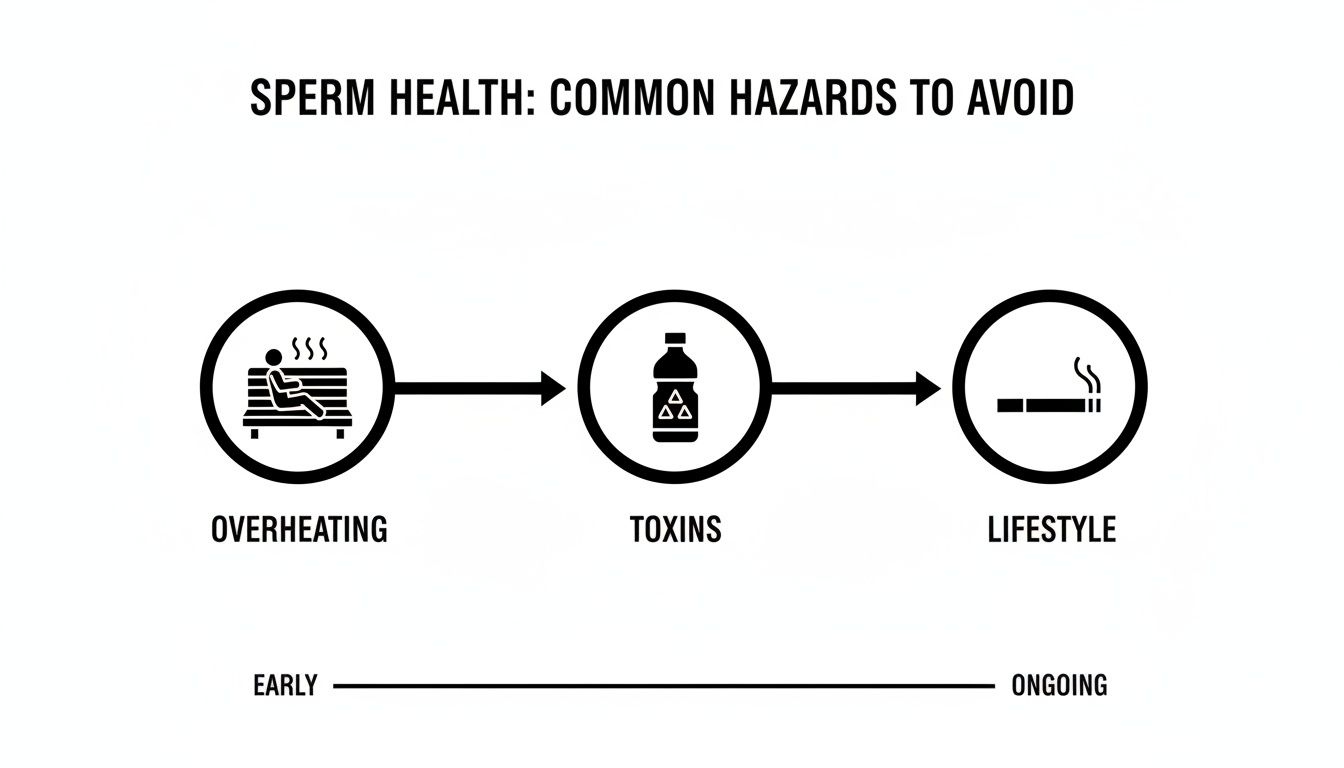
This visual highlights how seemingly minor daily choices related to heat, toxins, and lifestyle habits can collectively harm sperm production and lower your numbers.
The Power Of Retesting After Three Months
This is arguably the most important part of the entire process. The life cycle of sperm, from creation to maturity, takes about 74 days. This biological timeline is why retesting roughly three months after your initial analysis is so critical.
A single test is just a snapshot in time. Retesting after three months is how you turn that snapshot into a story of progress, showing you exactly how your hard work and healthy changes are paying off.
This follow-up test is your proof. It will show you whether the dietary improvements, exercise routine, and other positive habits you've adopted are actually moving the needle. It transforms your efforts from hopeful actions into a measurable health journey.
This personal, data-driven approach is becoming more critical. Global research shows that while average sperm counts are falling, many men still have numbers well above the standard reference limits. A large analysis reported that despite a significant decline between 1973 and 2011, the average sperm concentration was still 66.4 million/mL.
The key question isn't just "Is my count low?" but "Is my count optimal and trending in the right direction for my goals?" Modern platforms help answer this by tracking your personal progress rather than just comparing you to broad population data.
By getting a baseline and committing to a follow-up test, you take full control. You’ll see tangible evidence of your progress, which is incredibly motivating and provides the confidence to keep moving forward on your path to better male fertility.
Your 90 Day Sperm Health Action Plan
To help you put all this information into practice, we've created a sample 90-day plan. Think of it as a roadmap to guide your efforts and keep you on track. It breaks down the journey into manageable chunks with clear goals and checkpoints.
| Timeframe | Primary Focus | Actionable Goals and Checkpoints |
|---|---|---|
| Days 1-30 (Month 1) | Foundation & Baselining | • Schedule and complete your initial semen analysis. • Clean up your diet: cut processed foods, add antioxidant-rich fruits and vegetables. • Start moderate exercise 3-4 times per week. • Begin a targeted supplement regimen (e.g., CoQ10, Vitamin C, Zinc). |
| Days 31-60 (Month 2) | Consistency & Habit Building | • Stick with your diet and exercise plan. Notice any changes in energy or well-being. • Focus on stress management: try meditation, yoga, or deep breathing exercises for 10 minutes daily. • Optimize sleep: aim for 7-8 hours per night. • Mid-point check: Review your habits. Are they sticking? Adjust as needed. |
| Days 61-90 (Month 3) | Optimization & Re-evaluation | • Continue all healthy habits consistently. • Schedule your follow-up semen analysis for the end of the month. • Avoid heat exposure: limit hot tubs, saunas, and prolonged laptop use on your lap. • Compare your second analysis to your baseline to measure progress. |
Remember, this is a template. The most important thing is to start, stay consistent, and use data from your semen analysis to guide your next steps. Small, steady changes over 90 days can make a significant difference.
Your Top Questions, Answered
If you're starting down the path of improving your fertility, you probably have a lot of questions. Let's tackle the most common ones men ask when they're figuring out how to boost their sperm count.
How Quickly Can My Sperm Count Actually Improve?
This is always the first question, and for good reason—you want to know when your efforts will start to pay off. The full production cycle for sperm, from brand new cell to fully mature swimmer, takes about 74 days.
This means any positive changes you make today—cleaning up your diet, hitting the gym, or ditching cigarettes—will start showing up as measurable improvements in your sperm quality in roughly two to three months. That's why re-testing after 90 days is such a powerful and motivating checkpoint.
Do Male Fertility Supplements Really Work?
Walk down any vitamin aisle, and you'll see dozens of supplements claiming to boost male fertility. The truth is, their effectiveness varies a lot, but the ones with the best scientific backing are those that target key nutrients involved in sperm production.
- Antioxidants: Think of Vitamin C, E, Coenzyme Q10 (CoQ10), and Selenium as bodyguards for your sperm, protecting them from cellular damage.
- Essential Minerals: Zinc is non-negotiable. It’s a cornerstone for building sperm and maintaining healthy testosterone levels.
- Amino Acids: L-carnitine is like a power pack for sperm, helping fuel their energy and improve their forward movement.
But remember, supplements are not a magic fix. They work best when they're supporting an already solid foundation of a healthy diet and lifestyle. It’s always a good idea to chat with your doctor before adding anything new to your routine.
Think of supplements as reinforcements for your army, not the entire army itself. A healthy diet and lifestyle build the strong foundation, and targeted supplements can then provide extra support where it's needed most.
Will Quitting Smoking or Vaping Genuinely Make a Difference?
Yes. A huge one. The toxins found in cigarette smoke and vaping liquids are incredibly damaging to sperm health. They can directly scramble sperm DNA, lower your overall count, and make it harder for the sperm you do have to swim properly.
Quitting is one of the single most impactful things you can do for your fertility. And because your body is always making new sperm, you can see significant improvements within just a few months of stopping.
The Age-Old Debate: Are Boxers Really Better Than Briefs?
The whole "boxers vs. briefs" thing is actually rooted in real science. Your testicles function best when they are slightly cooler than the rest of your body—it’s the optimal environment for sperm production. Briefs, or any tight-fitting underwear, can trap heat by holding the testicles too close to the body.
That extra warmth can slow down or even temporarily stop sperm production. Switching to looser-fitting boxers or boxer briefs is a simple, passive way to help keep things cool down there. It’s an easy win that supports all your other hard work.
Ready to stop guessing and start measuring? Hera Fertility provides a clear path to understanding and improving your sperm health. Get a physician-approved lab requisition, test at a certified lab near you, and receive an easy-to-understand Hera SmartScore that turns complex data into actionable steps. Take control of your fertility journey by visiting https://herafertility.co today.
Related Resource Articles
-
How to naturally increase sperm count: A practical guide for men
How to naturally increase sperm count: Science-backed tips on diet, lifestyle, and habits to boost male fertility.
21 min read
-
Average Sperm Morphology: What It Means for Male Fertility
Explore average sperm morphology and how it affects fertility. Learn common causes of low morphology and practical steps to improve results.
19 min read
-
10 Proven Ways for How to Sperm Count Increase in 2026
Searching for how to sperm count increase? This guide covers 10 evidence-based lifestyle changes, supplements, and medical options to boost male fertility.
27 min read