Yes, you can improve sperm quality naturally. It starts with the basics: a solid diet packed with antioxidants, regular (but not excessive) exercise, and getting enough quality sleep. These are the cornerstones of not just male fertility, but overall male health.
Why Sperm Health Is a Barometer for Your Overall Wellbeing
Most men only start thinking about their sperm when they're trying to build a family. But looking at it just through the lens of fertility is missing the bigger picture. The quality of your sperm is actually one of the clearest indicators of your overall health and what's going on inside your body.
Think of it this way: your body has to prioritize. Making sperm is a complex, energy-intensive job. When your body is stressed out, undernourished, or just out of whack, sperm quality is often one of the first things to take a hit.
A Deeper Look at Male Fertility Metrics
Those key numbers from a semen analysis—sperm count, motility (how they swim), and morphology (their shape)—are more than just data points for starting a family. They’re vital signs for a man's health.
- Sperm Count: This reflects your body's raw ability to produce enough sperm cells.
- Motility: This is all about the energy and vitality of your swimmers. Can they make the journey?
- Morphology: This shows the structural integrity of the sperm, which is critical for successful conception.
When these numbers are strong, it's usually a good sign that your hormonal, nutritional, and circulatory systems are firing on all cylinders. On the flip side, poor numbers can be an early warning for underlying health issues that go far beyond fertility. It's about a man's longevity and well-being.
In fact, a huge study that followed nearly 80,000 men for up to 50 years found a powerful link between semen quality and lifespan. Men with higher sperm counts and better motility lived significantly longer. It positions semen analysis not just as a fertility test, but as a key health checkpoint for men.
From Anxiety to Actionable Health
Understanding this connection completely changes the conversation. It shifts the focus from the pressure of conception to proactive health management. The habits you need to improve sperm quality naturally are the same ones that build a healthier, more resilient man.
Since sperm health mirrors your overall well-being, getting the fundamentals right is key. For instance, learning how to strengthen your nervous system and manage stress has benefits that ripple out into every area of your health, including your reproductive health.
When you reframe sperm health as a barometer for your total wellbeing, you can turn anxiety into empowerment. Every positive choice you make for your health is a direct investment in your fertility.
Understanding the Modern Challenges to Male Fertility
You’ve probably seen the headlines: sperm counts are dropping worldwide. It’s a trend that can sound pretty alarming, but let's cut through the noise. My goal here isn't to scare you, but to give you the real story so you can actually do something about it.
This isn't just a vague worry; the data is specific and compelling. One major analysis showed that global sperm concentration has plummeted from 104 million/ml to 49 million/ml since 1973. Even more concerning, the rate of this decline is picking up speed.
So, what's going on? It’s a mix of factors unique to our modern lives. The world today is different—from the chemicals in our environment to our always-on stress levels, our bodies are dealing with challenges our grandfathers never did.
Your Window of Opportunity: The 75-Day Cycle
Now for the good news. Male biology gives you a fantastic opportunity to make a real difference, and you don’t have to wait years to see it.
Your body is constantly making new sperm. This process, called spermatogenesis, takes about 75 days from start to finish. Think about that for a second. Every two and a half months, you get a completely fresh start. The sperm you have today are a direct result of your health and habits over the last 75 days.
This recurring cycle is your window of opportunity. It means you can make positive changes right now and see measurable results in a surprisingly short amount of time.
This 75-day cycle is the key. It shifts the challenge from a long, indefinite marathon to a series of achievable sprints. Each cycle is a new chance to build stronger, healthier sperm.
This biological timeline is exactly why consistent, healthy choices are so powerful. The effort you put in today has a direct biological payoff in the very near future. That’s incredibly motivating for any man wondering how to make sperm stronger for pregnancy.
Establishing Your Starting Point
You can't fix what you don't measure. Before you dive into making changes, you need to know where you stand. A semen analysis is the essential first step—it gives you the hard data you need to create a smart, targeted plan.
The problem? Traditional lab reports are often a mess of confusing medical jargon that leaves you with more questions than answers. You might be left wondering about the specific signs of male infertility and what your numbers actually mean for your chances of starting a family.
This is where a service like Hera Fertility changes the game. It simplifies the entire process, starting with an easy way to get a lab requisition signed by a physician. Once you get tested at a certified lab, Hera’s platform takes your complex report and translates it into a clear, understandable Hera SmartScore.
Knowing your score gives you a clear starting line. No more guesswork. It provides a solid foundation from which you can begin to improve sperm quality naturally. With this knowledge in hand, you can track your progress and see the real impact of your positive lifestyle changes over each 75-day cycle.
Building Your Fertility Plate: What to Eat for Stronger Sperm
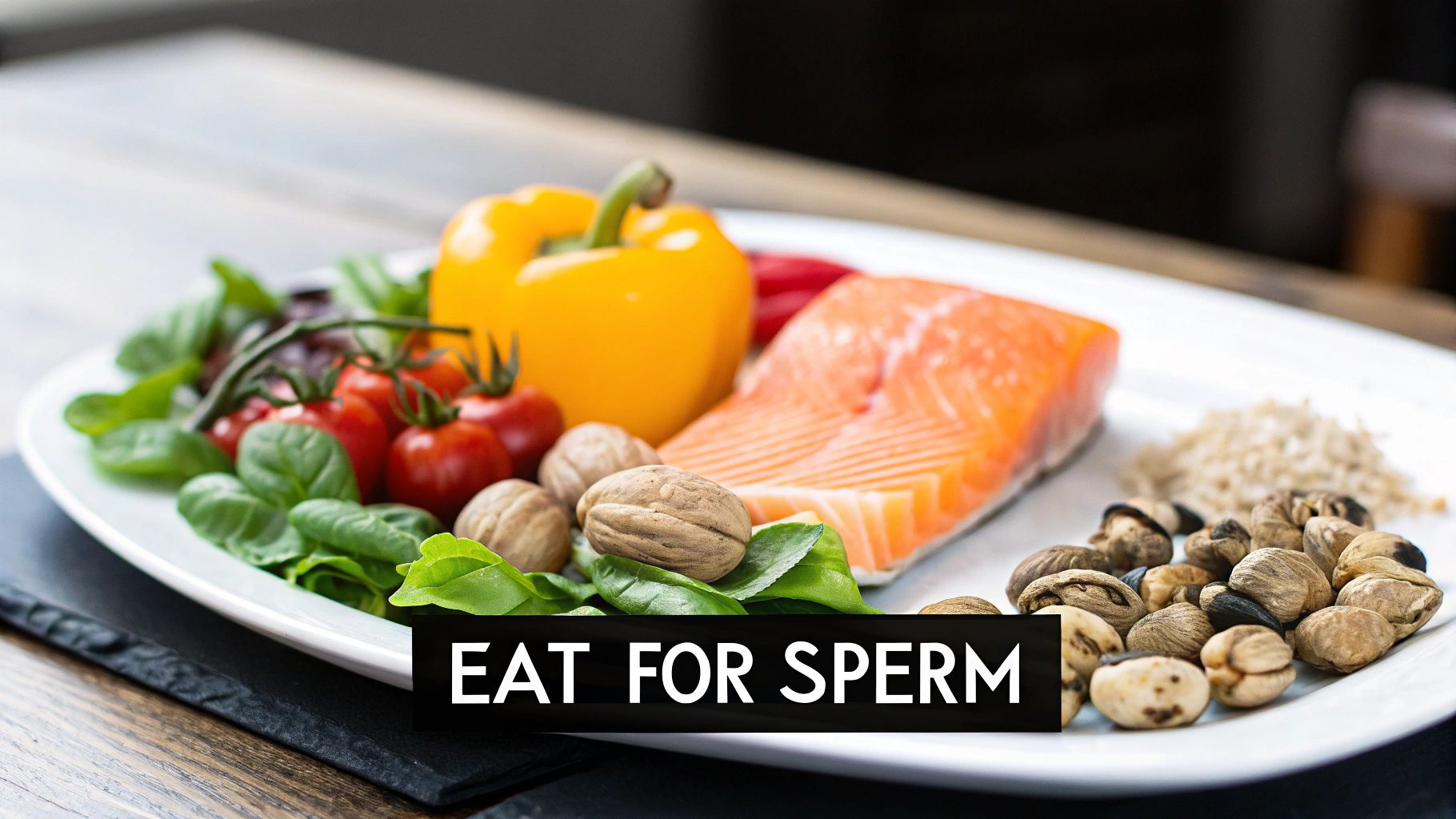
The phrase "fertility diet" can sound complicated, but improving sperm quality through food is less about restriction and more about strategic additions. Think of the food you eat as the raw material your body uses to build healthy, powerful sperm.
You can't construct a solid house with cheap, flimsy materials, and the same principle applies to a man's body. Your system requires high-quality nutrients—specific vitamins, minerals, and antioxidants—to produce high-quality sperm. Let's break down exactly what that looks like on your grocery list.
Antioxidants Are Your Sperm's Personal Bodyguard
Every single day, your body battles oxidative stress. It's a natural process, but an excess of unstable molecules called free radicals can wreak havoc on your cells, including sperm. Antioxidants are the defense team that neutralizes these attackers, protecting sperm from DNA damage and structural defects.
This protection is absolutely critical for every aspect of sperm health, from their shape (morphology) to their ability to swim straight (motility). Packing your diet with antioxidant-rich foods is one of the most effective ways to improve sperm quality naturally.
A few key players you'll want on your team:
- Vitamin C: Found in citrus, bell peppers, strawberries, and broccoli, this vitamin is a powerhouse antioxidant that shields sperm DNA.
- Vitamin E: This nutrient, found in nuts, seeds, and spinach, works with other antioxidants to guard the delicate membranes of sperm cells.
- Lycopene: The compound that gives tomatoes and watermelon their color has been shown to improve sperm motility and morphology.
This isn't about overhauling your entire life. It’s as simple as adding a handful of spinach to your omelet or grabbing an orange instead of a bag of chips.
The Building Blocks: Essential Fats and Minerals
Beyond just protection, some nutrients are the literal foundation of sperm cells. They're non-negotiable building blocks for proper male reproductive function.
Omega-3 fatty acids, for example, are a crucial part of the sperm cell membrane. A flexible, healthy membrane is essential for a sperm's ability to swim and ultimately succeed in conception. Fatty fish like salmon and sardines are loaded with them, as are walnuts and flaxseeds.
Zinc is another undisputed superstar for male fertility. It’s heavily involved in sperm formation and regulating testosterone. A zinc deficiency can lead to a lower sperm count and poor quality. Oysters are the most famous source, but you can also get plenty from lean beef, pumpkin seeds, and lentils.
Small, consistent changes beat a drastic, short-term diet every time. Focus on adding one or two sperm-friendly foods to your meals each day. That's how you build habits that last.
Part of this process also means being mindful of the fats you're consuming. It's smart to learn how to avoid seed oils which are common in processed foods and can contribute to inflammation, ensuring the fats you eat are working for your fertility goals, not against them.
Your Nutrient Cheat Sheet for Stronger Sperm
To make this even more practical, here’s a quick-reference guide. It connects the most important nutrients directly to their sperm-boosting benefits and the best foods to find them in. This is your go-to list for figuring out how to make sperm stronger for pregnancy.
Key Nutrients to Improve Sperm Quality Naturally
This table provides a detailed guide to the essential vitamins, minerals, and antioxidants that have been scientifically shown to support sperm count, motility, and morphology.
| Nutrient | Primary Benefit for Sperm Health | Top Food Sources |
|---|---|---|
| Zinc | Essential for sperm formation, motility, and maintaining healthy testosterone levels. | Oysters, lean beef, pumpkin seeds, lentils, chickpeas. |
| Folic Acid (Folate) | Crucial for sperm DNA synthesis; helps reduce the number of sperm with chromosomal abnormalities. | Spinach, kale, brussels sprouts, asparagus, fortified cereals. |
| Vitamin C | A powerful antioxidant that protects sperm from DNA damage and improves count and motility. | Oranges, bell peppers, strawberries, broccoli, kiwi. |
| Omega-3 Fatty Acids | Improves sperm count, motility, and morphology by forming a key part of the sperm cell membrane. | Salmon, mackerel, sardines, walnuts, chia seeds, flaxseeds. |
| Coenzyme Q10 (CoQ10) | Acts as an antioxidant and helps power sperm movement by boosting energy production in the mitochondria. | Organ meats (liver, heart), beef, sardines, spinach, broccoli. |
| L-carnitine | An amino acid that is vital for sperm maturation and motility, providing energy for swimming. | Beef, chicken, milk, and cheese. |
This isn't a strict prescription—it's a menu of powerful options. Pick a few foods from each category that you genuinely enjoy and start working them into your weekly meals. The goal is to consistently build a plate that actively supports your body’s ability to produce the best sperm possible.
Mastering Your Lifestyle for Optimal Sperm Production
Beyond what you eat, your daily habits play an equally powerful role in your male fertility. Small, consistent adjustments to how you move, sleep, and handle stress can create the right biological environment for healthy sperm to thrive. This is where you gain a ton of control over the process.
Thinking about how to make sperm stronger for pregnancy means looking at your entire day. The choices you make from the moment you wake up add up, influencing your hormones and the delicate process of making sperm, known as spermatogenesis. Let's break down the key lifestyle pillars you can start working on today.
Finding Your Fitness Sweet Spot
Regular, moderate exercise is fantastic for male fertility. It can boost testosterone, improve blood flow, and help you manage your weight—all critical for top-tier sperm production. Things like jogging, swimming, or lifting weights a few times a week can make a real difference.
But there's a fine line between beneficial exercise and overdoing it. Pushing your body to the absolute limit day after day can backfire. Intense, prolonged endurance sports can spike cortisol (the stress hormone) and create too much heat, both of which are bad news for sperm count and quality.
The key is balance. Aim for consistency, not exhaustion, and always listen to your body. Build in those rest days.
The Non-Negotiable Power of Sleep
Sleep is when your body does its most important repair work, especially for your hormones. Consistently getting 7-9 hours of quality sleep every night is non-negotiable for any man trying to improve his sperm quality naturally.
During deep sleep, your body regulates key reproductive hormones like testosterone. When you're chronically sleep-deprived, you throw this delicate system out of whack, which can lead to lower sperm counts and sluggish motility.
Think of quality sleep as a foundational pillar for your fertility. It's not a luxury; it's a critical biological process that directly supports healthy sperm development. Prioritizing it is a powerful and free way to boost your reproductive health.
If you struggle with sleep, start by building a solid routine. Dim the lights an hour before bed, put the screens away, and make sure your bedroom is cool, dark, and quiet.
Taming Stress for Better Sperm Health
Chronic stress is a known fertility killer for men. When you're constantly on edge, your body pumps out cortisol, which messes with testosterone production and can directly harm developing sperm. Managing stress isn't just good for your head; it's essential for your swimmers.
Finding what works for you is a personal journey, but here are a few proven methods to get you started:
- Mindfulness and Meditation: Even just 10 minutes a day can help bring down cortisol levels.
- Deep Breathing Exercises: This is a simple trick to calm your nervous system anytime, anywhere.
- Spending Time in Nature: Getting outside has been shown to slash stress and boost your mood.
- Engaging in Hobbies: Making time for things you genuinely enjoy is a powerful antidote to stress.
You can't always control what life throws at you, but you can control your response. Small, daily practices add up to a profound impact over time. For more tips on building a strong foundation, check out our guide on how to increase sperm count.
Keeping Things Cool
Sperm production is extremely sensitive to heat. There's a reason the testicles are outside the body—they need to stay slightly cooler than your core temperature for spermatogenesis to work properly.
A lot of everyday situations can unintentionally raise this temperature, creating a hostile environment for sperm. Be mindful of these common heat sources:
- Laptops: Never place a laptop directly on your lap for long periods. The heat it generates is significant.
- Hot Tubs and Saunas: Frequent, prolonged soaks can raise scrotal temperature enough to temporarily tank sperm production.
- Tight Underwear: Restrictive clothing traps heat. Opt for looser-fitting options like boxers to give things some breathing room.
Making simple swaps, like using a desk for your laptop or cutting back on hot tub time, are easy wins on your journey to improve sperm quality.
It's amazing how interconnected all these lifestyle factors are. Recent research looked at the American Heart Association’s Life's Essential 8 score, which covers diet, exercise, smoking, and sleep. For every 10-point increase in a man's overall health score, he saw better sperm count, concentration, and motility. In fact, men with the highest scores were 68% less likely to have an abnormal semen analysis. This just goes to show that what's good for your heart is good for your fertility.
How to Track Your Progress and See Real Results
So, you've started making positive changes to your diet and lifestyle. That's a huge step. But how do you know if all that effort is actually paying off? When you’re trying to improve sperm quality naturally, you need a clear way to measure your progress—this isn't about guesswork, it's about seeing the real impact of your hard work.
The good news is that male biology gives us a pretty predictable timeline. As we’ve covered, it takes about 75 days for new sperm to fully develop. Think of this cycle as your built-in feedback loop. The healthy habits you start today will begin showing up in your results in about three months.
The Right Time to Retest Your Sperm Health
Because of this 75-day production cycle, retesting too early can be discouraging and, frankly, misleading. Your body needs adequate time to build brand new, healthier sperm based on the positive changes you've made. Rushing it just won't give you an accurate picture.
The sweet spot for re-testing is every 3-4 months. This gives your body enough time to run through a full spermatogenesis cycle, providing a reliable snapshot of how your new habits have influenced your sperm health.
This regular check-in is crucial. It’s how you find out what’s working, make smart adjustments, and stay motivated. It turns your efforts from a shot in the dark into a data-driven strategy.
To get a better sense of how your daily habits contribute to this cycle, here’s a look at the key pillars.
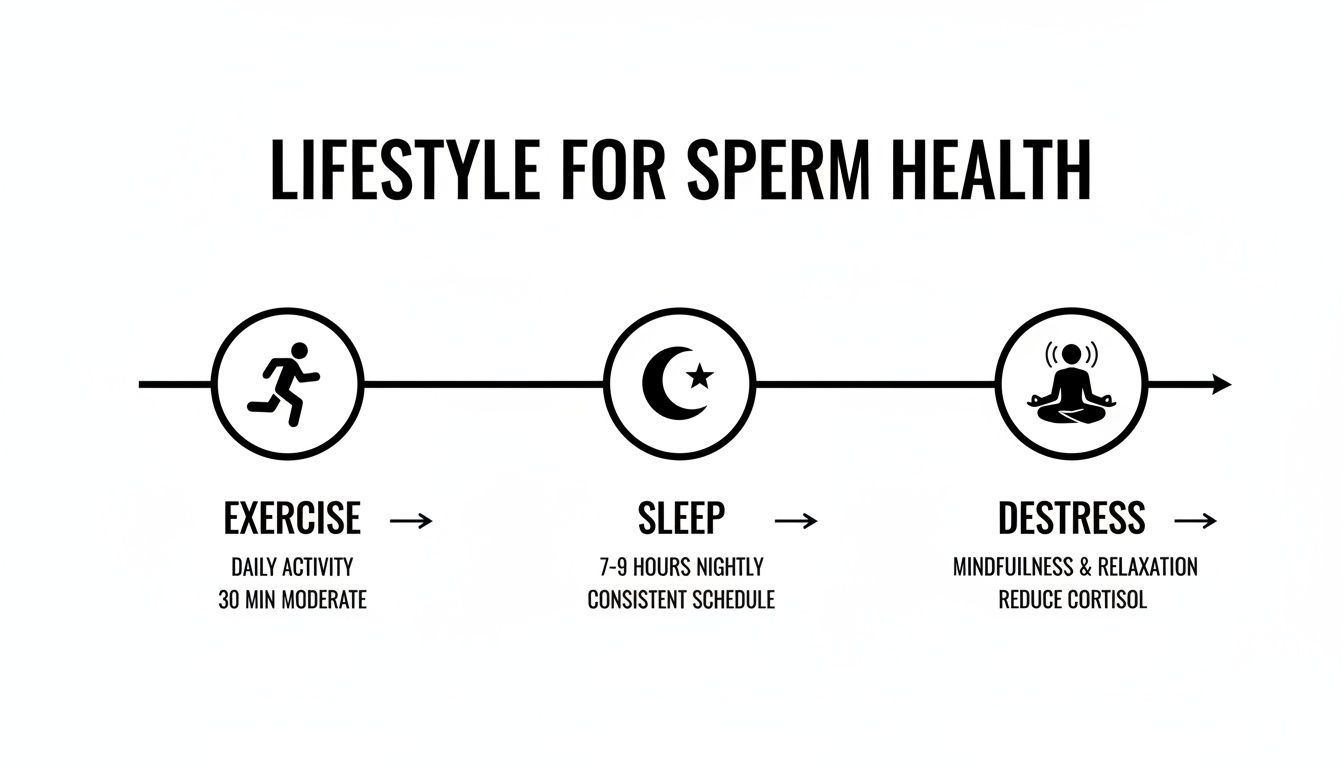
This just reinforces that consistent, daily actions—like exercise, solid sleep, and stress management—are the real building blocks of better sperm health over each 75-day cycle.
Simplifying the Testing Process
Getting a semen analysis can feel a little intimidating, but it doesn't have to be. Services like Hera Fertility are designed to make this whole process straightforward, private, and painless. You can get a physician-signed lab requisition online in minutes, find a certified lab near you from a huge network, and get tested on your own schedule.
But let's be honest, the real challenge often comes after the test—trying to make sense of a complex lab report filled with medical jargon. For any man asking how to make sperm stronger for pregnancy, understanding your results is just as important as the test itself.
This is exactly where Hera Fertility steps in, translating your complicated lab results into a single, easy-to-understand Hera SmartScore.
- What is the Hera SmartScore? It’s a single number that gives you an immediate, clear picture of your overall sperm health. It crunches all the key metrics—like count, motility, and morphology—into one simple score.
- Why is this so helpful? Instead of getting bogged down in the minutiae of each parameter, you get an at-a-glance understanding of where you stand. A higher score means better sperm quality. Simple as that.
- How does it guide you? Your score comes with personalized action plans. These plans give you specific, targeted advice based on your unique results, showing you exactly what steps to take next.
This approach cuts through the confusion and puts the power back in your hands. You can learn more about interpreting these complex reports in our detailed guide on how to read semen analysis results. By tracking your Hera SmartScore over time, you can see the direct link between your lifestyle changes and improvements in your fertility, giving you the confidence and feedback you need to keep moving forward.
Common Questions About Improving Male Fertility
When you start digging into how to improve your sperm quality, a lot of questions pop up. It’s natural to wonder about timelines, what to avoid, and when it’s time to call in a professional. We'll tackle some of the most common questions men have, giving you clear, straightforward answers to help you move forward.
Think of this as your practical guide to the finer points of boosting your male fertility. Let's cut through the noise and get you the information you actually need.
How Long Does It Really Take to See Improvements?
This is probably the number one question men ask, and for a good reason—you want to know your hard work is paying off. The answer lies in understanding the sperm production cycle, which takes about 75 days from start to finish.
Because of this biological timeline, you can realistically expect to see measurable changes in your sperm quality roughly three months after you start making consistent diet and lifestyle changes. This isn't a quick fix; it's a process. It’s also exactly why re-testing every 3-4 months is such an effective way to track your progress. Remember, consistency over a full 75-day cycle is what truly drives results.
Are There Specific Foods I Should Absolutely Avoid?
While the best strategy is focusing on adding nutrient-dense foods, it’s also smart to be mindful of what you’re limiting. This isn't about perfection or completely banning certain foods, but about making better choices most of the time.
A few things to consider cutting back on:
- Heavily Processed Meats: Some studies have linked foods like bacon, sausage, and hot dogs to lower sperm quality.
- Foods High in Trans Fats: Often found in fried foods, baked goods, and some margarines, these unhealthy fats can have a negative impact on sperm health.
- Excessive Soy Intake: While moderate amounts are generally fine, some research suggests very high levels of soy isoflavones might be associated with lower sperm concentration in men.
The main idea is to swap these out more often for whole, unprocessed foods that actively support your fertility.
Can I Just Use Supplements to Improve My Sperm Quality?
Supplements can be incredibly helpful, but they aren't a magic bullet. It's better to think of them as accelerators, not as a substitute for a healthy foundation.
Nutrients like CoQ10, Zinc, and L-carnitine can give you a significant boost, especially if you have a specific nutritional gap. However, their real power is unlocked when they're part of a broader healthy lifestyle. You simply can't supplement your way out of a poor diet, chronic stress, or lack of sleep.
A supplement can amplify the benefits of good habits, but it can't replace them. Always talk to a doctor before adding new supplements to your routine to make sure they’re right for you.
When Should I Talk to a Doctor About My Fertility?
Knowing when to bring in a specialist is a critical part of the process. While many men can successfully improve sperm quality naturally, some situations absolutely require medical advice.
It's a good idea to see a urologist or a male fertility specialist if:
- You've been trying to start a family for over a year without success.
- You experience testicular pain, swelling, or find a lump.
- You have issues with sexual function, like erectile dysfunction.
- You have a known history of testicular, prostate, or sexual health problems.
Getting a comprehensive semen analysis is an excellent first step. It gives you and your doctor the hard data needed to make informed decisions about your health and the best path forward for your family-building goals.
Ready to get a clear picture of your sperm health? Hera Fertility makes it simple to get a physician-signed lab requisition and translates your complex lab report into an easy-to-understand Hera SmartScore. Take the first step and get your personalized analysis today.
Related Resource Articles
-
Male Fertility Supplements: A Guide to Supporting Sperm Health
Discover top male fertility supplements to support sperm health. Our guide covers key nutrients like CoQ10, Zinc, and Omega-3s for men's reproductive health.
11 min read
-
Your Complete Guide to the 8 Signs of Healthy Sperm in 2026
Unlocking male fertility starts with understanding the 8 signs of healthy sperm. Learn what sperm count, motility, and morphology really mean for men.
24 min read
-
New Study Links Sperm Quality to Longevity – What It Means for Men’s Health
A new study published in Human Reproduction reveals that men with higher sperm motility may live longer and have better overall health. Researchers found a strong link between sperm quality and metabolic function, cardiovascular health,...
4 min read