A male fertility test is a straightforward health screening that looks at a semen sample to check key signs of your reproductive health. This core test, called a semen analysis, is the clearest and most direct way for any man to get a real look at his fertility potential.
Why a Male Fertility Test Is Your First Step

Thinking about a male fertility test can feel like a big deal, but it’s honestly one of the most empowering steps a man can take. It’s not just for men actively trying to start a family—it’s a vital health check for any man who wants to understand his body and his future.
This test cuts through the noise and replaces guesswork with actual data. Think of it less like a test you take when something is wrong and more like a routine part of managing your health, just like checking your blood pressure or cholesterol.
A Proactive Approach to Men's Health
For decades, the conversation around fertility has often overlooked men's health. That perspective is not only outdated but incomplete. Male factors are a crucial part of the fertility equation, and it’s time we started treating them that way.
This isn’t a niche issue. A huge 2019 study showed that the global number of male infertility cases hit 56.5 million—a shocking 76.9% jump since 1990. This makes it crystal clear that male reproductive health is a major global concern affecting millions.
Taking a male fertility test puts you in control. It gives you a clear, data-driven snapshot of your reproductive health, helping you make informed decisions whether you're planning for a family now or just thinking about the future.
Common Reasons Men Get Tested
Men decide to get a fertility test for all sorts of personal reasons, but it always comes down to gaining clarity and control. The most common motivations usually fall into one of these buckets:
- Planning for a Family: For men thinking about having kids, a test provides a crucial baseline. It helps spot any potential roadblocks early on, saving time and stress.
- Investigating Conception Delays: If you've been trying to conceive for a while without success, a semen analysis is the most logical first step to see if male factors are playing a role.
- Gaining Personal Health Insights: A lot of men get tested simply out of curiosity. They want to understand their bodies better and get a baseline for their health moving forward.
What a Male Fertility Test Actually Measures
When you get a male fertility test, what you're really getting is a detailed health report for your sperm. This report, called a semen analysis, zeroes in on several key factors that are absolutely crucial for conception. Instead of getting bogged down in medical jargon, it's easier to think of it as a report card with a few very important subjects.
The three metrics that matter most are sperm count, motility, and morphology. Each one tells a vital part of your fertility story. Getting a handle on these will empower you to understand your results, turning confusing numbers into meaningful information.
Sperm Count: The Foundation of Male Fertility
First up is sperm count, sometimes called sperm concentration. This is simply the total number of sperm you have in a given amount of semen. Think of it like a lottery—the more tickets you have, the better your chances.
While it technically only takes one sperm to fertilize an egg, millions start the journey. A higher count dramatically increases the statistical odds that at least one healthy, strong swimmer will make it all the way. It’s a numbers game, and having a robust team is the first step.
The World Health Organization (WHO) sets the baseline for a normal sperm count at 15 million sperm per milliliter (mL) of semen, or a total of 39 million sperm or more in a single sample.
Sperm Motility: The Measure of Movement
Next is sperm motility, which is all about how well your sperm can swim. It’s not enough to just have a lot of sperm; they need to be able to move with purpose. Motility looks at what percentage of your sperm are moving and, just as importantly, how they're moving.
Movement is broken down into two key types:
- Progressive Motility: These are the star players. They swim forward in a mostly straight line or in large, sweeping circles.
- Non-Progressive Motility: These sperm are moving, but they aren't making any real headway. They might be swimming in tight little circles or just twitching in place.
Strong, forward movement is absolutely critical for successful conception. This is why progressive motility is arguably one of the most important factors in a man's fertility profile. A healthy benchmark is having at least 40% of all sperm moving, with at least 32% showing good, progressive movement.
Sperm Morphology: The Importance of Shape and Structure
Finally, we have sperm morphology—the analysis of sperm size and shape. A healthy sperm has a very specific design: a smooth, oval-shaped head, a well-defined midpiece, and a long, single tail. This structure isn't for looks; it's all about function.
Think of it like aerodynamics. The streamlined shape helps the sperm swim efficiently. The head carries the precious genetic cargo and has a special cap with enzymes needed for fertilization.
An abnormal shape—like a double head, a bent neck, or a coiled tail—can stop a sperm in its tracks. Even tiny structural defects can be a major roadblock to fertilization.
Labs use very strict criteria to grade morphology, and it often surprises men to learn that a "normal" sample can have a ton of abnormally shaped sperm. According to WHO guidelines, having just 4% or more of sperm with a normal shape is considered healthy. This just goes to show how precise the requirements are for a perfectly formed sperm.
To make sense of these core metrics at a glance, here’s a quick breakdown of what each one tells you about your reproductive health.
Key Semen Analysis Parameters Explained
| Parameter | What It Measures | Why It's Important For Fertility |
|---|---|---|
| Sperm Count | The total number of sperm in your sample, measured per milliliter (mL). | A higher number of sperm increases the statistical probability of conception. |
| Sperm Motility | The percentage of sperm that are moving and the quality of their movement (i.e., swimming forward). | Sperm need strong, progressive movement to successfully navigate their journey. Poor motility is a major barrier. |
| Sperm Morphology | The percentage of sperm that have a normal size and shape (oval head, intact midpiece, single tail). | The sperm's shape is crucial for its ability to swim efficiently and achieve fertilization. |
Together, these three pillars—count, motility, and morphology—form the core of every male fertility test, giving you a clear and actionable picture of where you stand.
How the Male Fertility Testing Process Works
Let's be honest, the idea of fertility testing can feel a little intimidating. But the reality is that the whole process is far more straightforward than most men think. Knowing the simple, practical steps—from how to prepare to how you’ll provide the sample—can take the guesswork out of it and put you in the driver's seat.
The entire experience is designed to be professional, private, and efficient. It all starts with a few basic guidelines to make sure your sample gives the clearest possible picture of your health. Let’s walk through exactly what to expect.
Preparing for Your Test
Good news: preparing for a male fertility test is easy and really just comes down to timing. To get the most accurate snapshot of your sperm health, you just need a brief period of abstinence before the test.
We're not talking about a long-term commitment here. The standard recommendation is to abstain from ejaculation for 2 to 5 days before your test. Any less than two days might lead to a lower sperm count, while waiting more than five can actually hurt sperm motility (movement), since older sperm tend to be less active.
Think of this brief window as hitting a reset button. It ensures the lab is analyzing a fresh, representative sample, which is key for getting reliable results on things like sperm count and motility.
It's also a good idea to skip excessive alcohol and avoid lubricants when you provide the sample, as both can potentially impact sperm quality. Following these simple steps sets you up for a successful and accurate test.
The lab will focus its analysis on the three core pillars of sperm health.
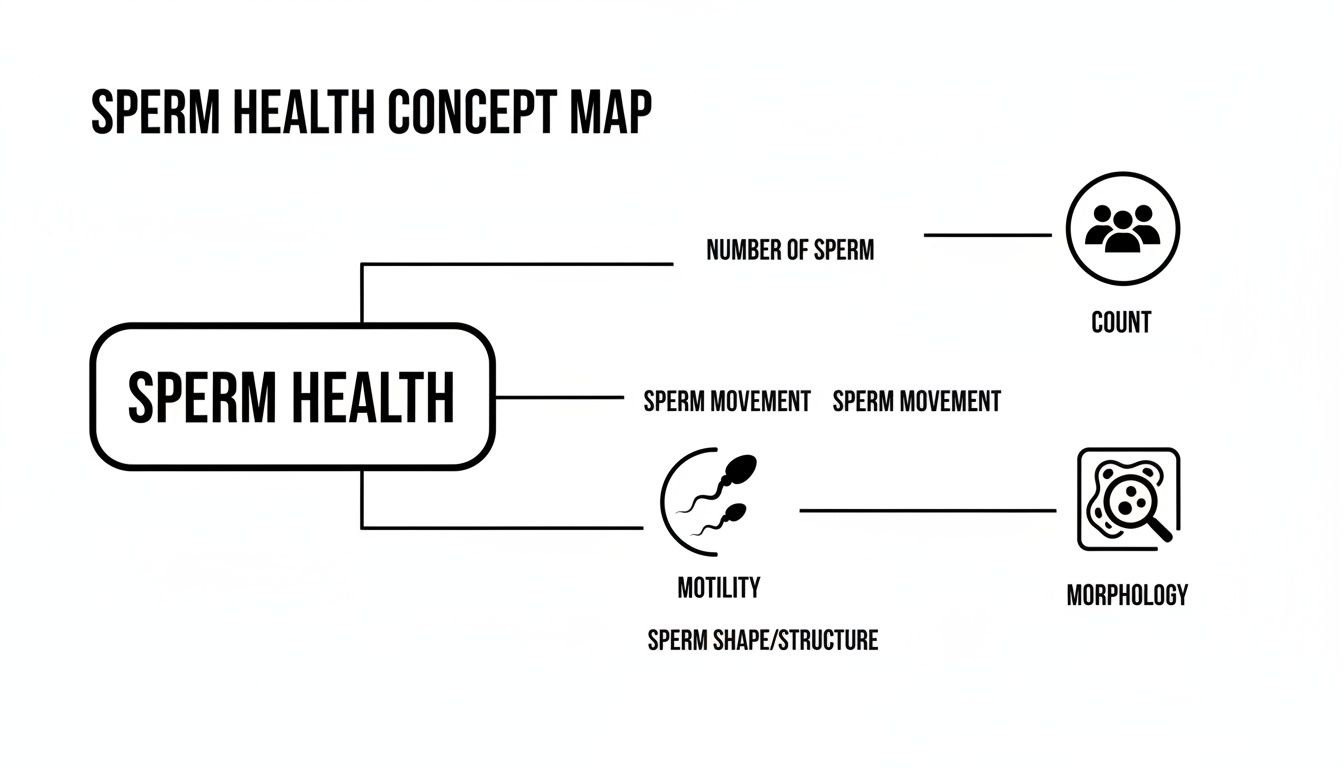
As this shows, your results will hinge on sperm count (how many), motility (how well they swim), and morphology (their shape).
The Sample Collection Process
When it's time to provide the sample, modern fertility services have made this step incredibly convenient and private. Gone are the days of awkward and limited options.
Here’s how it usually works:
- Order Your Test: You can get a physician-approved lab order online in just a few minutes. This cuts out the need for a separate doctor's visit just to get a referral.
- Pick a Convenient Lab: Once you have your order, you can choose a clinic from a huge network of professional labs. With hundreds of locations, finding one near your home or work is simple.
- Visit the Lab: You’ll head to your chosen lab, where they’ll provide a private, designated room. The environment is clinical and professional, ensuring your comfort and complete confidentiality while you collect the sample in a sterile container.
This structured process ensures your sample is handled correctly from the very start, which is critical for an accurate analysis. Once you’ve provided the sample, your part is done. The lab takes it from there, and you can expect your detailed results soon after.
Decoding Your Test Results Beyond the Numbers
Getting your fertility test results back can feel like someone just handed you a cryptic puzzle. You’re staring at a page of unfamiliar terms like “motility” and “morphology,” each with its own set of numbers and percentages. It's completely normal to feel a little lost at first, but this is exactly where the real work begins—turning that raw data into a clear picture of your reproductive health.
The trick is to see your results as a single, interconnected story, not just a bunch of separate grades. Each number influences the others, and a holistic view tells you so much more than obsessing over one metric. Think of an "abnormal" result as less of a verdict and more of a signpost, pointing you toward the next step.
From Complex Data to a Clear Score
Thankfully, modern analysis tools can translate all those complex lab metrics into something much easier to digest. Instead of you having to juggle multiple data points, these systems can generate a single, straightforward score that sums up your overall sperm health.
Think of it like a credit score for your fertility. A credit report has a ton of different components—payment history, credit usage, length of history—but it all boils down to one number that gives you a quick snapshot of your financial health.
In the same way, a fertility score combines the findings from your sperm count, motility, and morphology to give you a clear, immediate sense of where you stand.
This approach goes way beyond just spitting numbers back at you. It adds context, helping you understand what your results actually mean for your personal goals and what you can do about it. For a deeper dive into each specific parameter, check out our guide on how to read semen analysis results.
What an Abnormal Result Really Means
It’s crucial to get this one thing straight: a male fertility test result that falls outside the "normal" range is not a diagnosis of infertility. Not even close. Your sperm health is dynamic and can be influenced by a whole host of factors, including recent stress, an illness, or even just a bad night's sleep before the test.
An abnormal test result is just a snapshot in time. It's a starting point for a conversation with your doctor and a guide for making positive lifestyle changes, not a permanent label.
This is exactly why if your first test shows room for improvement, a doctor will often recommend a second test a few weeks or months down the line. It helps confirm the findings and rule out any temporary hiccups, giving everyone a more accurate long-term picture.
The Bigger Picture of Male Fertility
The growing awareness around men's reproductive health is a huge step forward. Infertility impacts a significant number of people around the world, and male factors play a role in up to 50% of those cases. This has rightfully made male fertility testing a critical part of the conversation.
The market reflects this shift, too—it was valued at USD 4.0 billion in 2022 and is projected to climb to USD 5.9 billion by 2030. For men who want to get ahead of their health, modern services help by decoding those complex results into actionable, easy-to-follow plans.
When you do review your results with a professional, make sure you tell them about any and all supplements you're taking. Some, like biotin, can mess with lab results pretty significantly. You can read more about biotin's potential for lab test interference to understand why this is so important.
Ultimately, your test results are a powerful tool. They replace guesswork with real information, giving you the clarity you need to take proactive, meaningful steps toward your health and family-planning goals.
Your Actionable Next Steps After Getting Results

So, your fertility test results are in. This is the pivotal moment where raw data turns into a clear path forward. Whether the numbers are exactly what you hoped for or show some room for improvement, you now have a roadmap.
If everything is in the normal range, that's fantastic news. It’s a great confidence booster and a solid baseline for your reproductive health, especially if you're planning for the future. Your next step is to keep up the healthy habits that got you here.
But what if the results aren't perfect? It’s crucial not to get discouraged. Think of a male fertility test not as a final verdict, but as a diagnostic tool. It’s a guide. Many aspects of sperm health are incredibly dynamic and can be improved with the right lifestyle changes.
Building Your Proactive Health Plan
Here’s an encouraging fact: the full sperm regeneration cycle takes about 74 days. This means the positive changes you start making today can lead to measurable improvements in just over two months. It’s like a training program for your sperm.
Here are a few evidence-backed steps you can take to support and improve your sperm health:
- Dial-In Your Nutrition: Fuel your body with whole foods packed with antioxidants—think colorful fruits, vegetables, and nuts. Key nutrients like zinc, selenium, and vitamin C are the building blocks for healthy sperm.
- Embrace Regular Exercise: Moderate, consistent physical activity boosts circulation and overall health, which directly benefits sperm quality. Aim for a balanced routine, but be careful not to overdo it.
- Manage Your Stress: Chronic stress can interfere with the hormones that regulate sperm production. Finding a way to unwind, whether it's through meditation, hobbies, or just taking a walk, can make a real difference.
- Cut Out Harmful Toxins: This is a big one. Quitting smoking and limiting your alcohol intake are two of the most powerful changes you can make for your fertility.
Knowing When to See a Specialist
While lifestyle adjustments are powerful, some situations call for an expert eye. If your results show significant irregularities, the next logical step is to book a consultation with a urologist or a male fertility specialist.
These doctors can help pinpoint the root cause of any issues. They might suggest further tests to check for underlying conditions like a hormonal imbalance or a varicocele (enlarged veins in the scrotum)—a surprisingly common and treatable cause of male fertility issues.
A specialist offers a personalized strategy, connecting the dots between your test results, medical history, and overall health. They can create a targeted treatment plan that goes far beyond general advice.
Taking this proactive step is becoming more and more common. The market for sperm count tests is projected to jump from USD 362.39 million in 2025 to USD 559.89 million by 2033, showing that men are actively taking charge of their reproductive health.
Ultimately, your results are a tool for empowerment. Use them to maintain your health with confidence or as the catalyst for building a stronger, healthier foundation for your future.
Frequently Asked Questions About Male Fertility Tests
Diving into the world of men's health can bring up a lot of questions, and fertility testing is certainly no exception. Let's tackle some of the most common questions we hear from men to give you clarity and confidence as you move forward.
How Accurate Is a Male Fertility Test?
A lab-based semen analysis, performed at a certified facility, is the undisputed gold standard for accurately assessing male fertility. It gives you precise, diagnostic measurements of sperm count, motility, and morphology—the core pillars of your reproductive health.
While you might see some at-home kits that can tell you if sperm is present, they simply can't replace the comprehensive and detailed analysis you get from a clinical test. For reliable health information that you can actually act on, a professional lab test is the only way to go.
It's crucial to remember what a lab test represents: a snapshot in time. A single test provides a ton of valuable information, but your sperm health is dynamic, not static.
This reality leads directly to another common concern men have when they first see their results.
Is One Abnormal Test a Final Diagnosis?
Absolutely not. It’s easy to see an "abnormal" result and feel discouraged, but that number is not a final diagnosis of infertility. As mentioned, a single fertility test is just a snapshot, and your sperm parameters can fluctuate significantly due to all sorts of factors.
A recent illness, a period of high stress, or even just a few nights of poor sleep can temporarily impact your numbers. That's why a doctor will almost always recommend a second test a few weeks or months later to confirm the findings before making any kind of diagnosis. Think of it as a starting point, not a final verdict.
This is possible because your body is constantly producing new sperm—which opens the door for positive changes.
Can I Improve My Sperm Health After a Poor Result?
Yes, in many cases, sperm health is highly responsive to positive lifestyle changes. The entire sperm regeneration cycle takes about 74 days. This means that meaningful improvements you make today in your diet, exercise, stress management, and sleep can lead to measurable improvements in your next test.
On top of that, cutting out harmful substances is one of the most powerful steps you can take.
- Avoid Tobacco: Smoking has been consistently and directly linked to lower sperm count and motility.
- Limit Excessive Alcohol: Heavy drinking can put a serious damper on both sperm production and overall quality.
Your initial results can serve as a powerful roadmap, guiding you to make targeted, effective changes to your daily habits. It’s an opportunity to take an active role in your own reproductive health.
Ready to get clear, actionable insights into your reproductive health? With Hera Fertility, you can order a physician-approved male fertility test online, get tested at a convenient lab near you, and receive an easy-to-understand analysis of your results. Take control of your health journey today by visiting https://herafertility.co.
Related Resource Articles
-
Does Masturbation Cause Infertility? What the Evidence Shows
Masturbation does not cause male infertility. Here is what ejaculation can change temporarily, how to prepare for a semen analysis, and when to get checked.
7 min read
-
Why Every Man Over 35 Should Get A Male Fertility Test
Most men don't know their fertility is declining until it's too late. Learn how age affects sperm health and why a male fertility test matters after 35.
4 min read
-
Understanding Sperm Health: Decoding Semen Analysis Results | Hera Fertility
Learn how to decode semen analysis results and understand sperm health parameters. Expert guide to interpreting fertility tests and sperm quality assessments.
6 min read