When we talk about sperm morphology, we're really just asking a simple question: What do the sperm look like? It’s all about their size, shape, and overall structure.
What Is Sperm Morphology and Why It Matters
Think of a healthy sperm as a tiny, perfectly engineered biological torpedo. Its shape isn't random; it's a masterpiece of function-driven design, built for a single, high-stakes mission. Every curve and component is there for a reason, and when the structure is just right, the sperm has the best possible chance of succeeding.
Understanding morphology gives you and your doctor a critical piece of the male fertility puzzle. It’s one of the "big three" metrics in a semen analysis, alongside sperm count (the total number of swimmers) and motility (how well they swim). Together, they paint a comprehensive picture of a man's reproductive health.
The Anatomy of a Healthy Sperm
To really get what "normal morphology" means, it helps to break down the sperm into its three essential parts. Each one has a specific job, and if any part is out of whack, it can seriously impact the sperm's performance.
Here’s a look at the anatomy of a healthy sperm and why each part is so crucial for achieving a pregnancy.
The Anatomy of a Healthy Sperm
| Sperm Part | Ideal Characteristics | Primary Function in Male Fertility |
|---|---|---|
| The Head | Smooth, oval shape, about 5-6 micrometers long | Protects the precious genetic cargo (DNA) and contains enzymes needed to begin the process of fertilization. |
| The Midpiece | Slender and straight, packed with mitochondria | This is the "engine room." It generates the energy (ATP) required to power the tail for its long journey. |
| The Tail | A single, long, uncoiled flagellum | The propeller. It drives the sperm forward with a powerful, coordinated whipping motion. |
When all three parts are formed correctly, you have a sperm cell that's both durable and fast—exactly what's needed for the demanding journey ahead. Any significant deviation from this blueprint can classify a sperm as "abnormal."
What Is a Normal Morphology Range?
Here’s a fact that surprises most men: a perfectly healthy, fertile man’s semen is full of abnormally shaped sperm. It's completely normal. In fact, the vast majority of sperm in any given sample won't have that ideal torpedo shape.
So, what are we looking for? It’s all about the percentage of sperm that are shaped correctly.
According to the World Health Organization's (WHO) strict 2021 criteria, a semen sample is considered to have a normal morphology if at least 4% of the sperm are perfectly formed. This threshold isn't arbitrary; it was determined by studying samples from fertile men who achieved a pregnancy within 12 months.
When a sample has less than 4% normally shaped sperm, the condition is called teratozoospermia. This is a common finding during a male fertility evaluation and simply means there's a higher-than-usual percentage of sperm with defects like oversized heads, bent midpieces, or coiled tails.
It's crucial to remember that sperm morphology is just one piece of the male fertility puzzle. A score below 4% isn't a final verdict on your ability to father a child; it's a valuable data point that helps guide your next steps.
How Labs Measure Sperm Shape with Kruger Strict Criteria
When you send in a semen sample, it doesn’t just get a quick once-over. It enters a highly controlled lab environment where trained specialists perform a detailed, methodical evaluation of your sperm. This isn’t guesswork; it’s a meticulous process guided by rigorous international standards to give an objective measure of sperm health.
The gold standard for this evaluation is known as the Kruger Strict Criteria. Think of it as a tough inspection checklist for every single sperm. A lab technician takes a small part of your sample, places it on a slide, and uses a special stain to make the sperm visible under a high-powered microscope. Then, the painstaking work begins: evaluating hundreds of individual sperm, one by one.
This process is anything but subjective. The Kruger criteria lay out precise measurements and shapes for what qualifies as a “normal” or perfectly formed sperm. If a sperm deviates from these strict guidelines—even slightly—it’s classified as abnormal.
What Technicians Look For Under the Microscope
Under the microscope, each sperm is judged on its three key parts: the head, the midpiece, and the tail. The technician is like a quality control inspector, making sure every component meets the exact specifications needed for the sperm to do its job.
This diagram breaks down the essential parts of a sperm that are examined during a lab analysis.
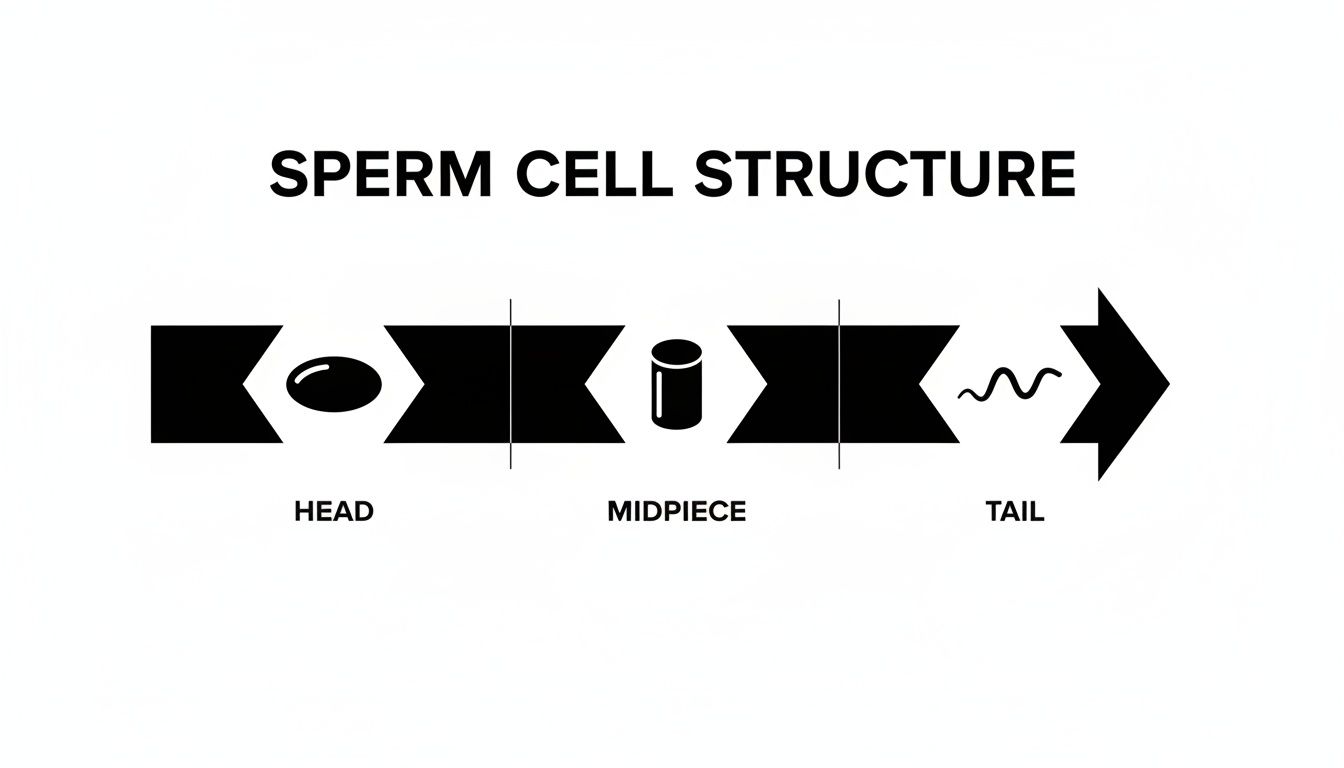
As the image shows, each part is critical. The head carries the DNA, the midpiece provides the energy, and the tail powers the movement. For a sperm to be counted as normal, all three must be perfectly formed.
The inspection includes:
- Head: It must have a smooth, oval shape with a well-defined cap (the acrosome) covering 40% to 70% of the head area. Defects include heads that are too big, too small, tapered, or otherwise misshapen.
- Midpiece: This part should be slender, straight, and attached right in the center of the head. Any flaws, like a bent neck, a thick midpiece, or an off-center attachment, are considered defects.
- Tail: The tail has to be a single, long, uncoiled structure. Any problems here—like a coiled, bent, or even a double tail—will disqualify the sperm from being counted as normal.
Why the Bar for “Normal” is Set at Just 4 Percent
Seeing a result of only 4% normal forms can be pretty jarring, but this number has a strong scientific backstory. Over the decades, the standards for sperm morphology have gotten much tighter as our understanding of male fertility has grown. Back in the 1980s, WHO guidelines considered ranges as high as 40-50% to be normal—a huge difference from today's benchmark.
This change doesn't mean sperm quality has plummeted worldwide. It just means we’ve gotten much more precise about what really matters for male fertility. The current 4% threshold was set after extensive studies involving thousands of men, which confirmed it was the minimum score for men who fathered children naturally within a year.
The Kruger Strict Criteria are designed to identify only the elite sperm—the ones with the absolute best structure and the highest chance of success. This is why even very fertile men often have a normal morphology score below 15%.
Ultimately, this tough grading system provides an incredibly valuable piece of your fertility puzzle. It tells your doctor not just how many sperm you have, but how many of them are structurally sound and ready for the journey. If you want to get more comfortable with your own numbers, our guide on how to read semen analysis results can help you make sense of it all.
Making Sense of Your Semen Analysis and Teratozoospermia Report
Getting a lab report full of medical terms and percentages can feel pretty overwhelming. But your semen analysis is one of the most powerful tools you have for understanding your reproductive health. Let's break down the morphology section so you know exactly what those numbers mean for you.

You might come across the term teratozoospermia on your report. It sounds complicated, but it simply means the percentage of normally shaped sperm in your sample is below the 4% threshold. It's a common finding, and it is definitely not the final word on your fertility.
So, What Do the Percentages Actually Mean?
If your report shows a morphology score of 3%, it means that for every 100 sperm the lab technician looked at, only three had that perfect, ideal shape. It's completely natural to see a number like that and feel a bit of a gut punch. But when it comes to male fertility, context is everything.
Here’s the single most important thing to remember: even the most fertile men have a huge majority of abnormally shaped sperm. Your body is designed to produce millions upon millions of sperm, and most of them won't be perfect. That's just biology. The analysis is really just checking to see if there's a good enough percentage of well-formed sperm ready to get the job done.
A morphology score isn't a pass/fail grade on your fertility. Think of it as one important piece of data that helps paint the complete picture of your sperm health.
In fact, it's incredibly common to have a high percentage of abnormal sperm—we're talking 90-96% in an average sample. A diagnosis of teratozoospermia comes up for about 40% of men seeking fertility support, and even the best-of-the-best samples rarely top 10% normal forms.
Morphology Is Just One Player on the Team
Sperm morphology doesn't exist in a vacuum. A successful pregnancy depends on a whole team of male fertility factors working in sync. The best way to think about your semen analysis is like a scouting report for a sports team.
- Sperm Count (The Roster): This is your total number of players. The more you have, the better your odds.
- Sperm Motility (The Athletes): This measures how well those players can move. You need swimmers that can move forward with purpose.
- Sperm Morphology (The Key Players): This looks at the players who are in perfect shape and have the right equipment to score.
A low score in one area doesn't mean you've lost the game. For instance, having a really high sperm count can often make up for a lower morphology score. Why? Because the sheer volume of sperm increases the chances that enough perfectly shaped ones will be in the mix.
What Your Results Mean for Next Steps
Seeing a low morphology score isn't a dead end. It’s a signpost telling you where to look next. This result opens up a conversation with your doctor about your complete reproductive health and helps pinpoint areas where you can be proactive.
Actionable Next Step: Schedule a follow-up appointment with a men's health specialist or a urologist to discuss your full report. They can interpret the results in the context of your overall health and guide you on what to do next.
When you understand every part of your analysis, you’re in a much better position to have an informed talk with your doctor and plan your next steps with confidence.
Common Causes of Poor Sperm Morphology
Getting a semen analysis report that flags poor sperm morphology can feel discouraging, but it's actually an opportunity. Understanding what’s behind the numbers is the single most powerful step you can take to improve your reproductive health.
Many of the things that influence sperm shape are well within your control. Your body is constantly making new sperm on a cycle that takes about three months. That means the choices you make today have a direct impact on the health of the sperm you'll have three months from now.
Medical Conditions Affecting Sperm Shape
Sometimes, the root cause of abnormal sperm morphology is a specific medical issue that needs a doctor's attention. Pinpointing and treating these conditions can often lead to dramatic improvements in sperm health.
One of the most common culprits is a varicocele, which is basically an enlargement of the veins inside the scrotum. This can raise the temperature around the testicles, creating an environment that’s simply too warm for proper sperm production and often leads to misshapen sperm.
Other medical factors include:
- Hormonal Imbalances: Think of hormones like testosterone as the managers of the sperm production factory. If they're out of balance, the entire assembly line can get disrupted.
- Infections: Infections anywhere in the male reproductive tract can trigger inflammation and cause damage, directly affecting how sperm develop.
- Genetic Factors: For some men, their genetic makeup can predispose them to producing sperm with particular structural defects.
Actionable Next Step: If your semen analysis shows poor morphology, it's crucial to consult a doctor to rule out or treat these underlying medical issues. A physical exam and possibly some bloodwork can provide important answers.
Understanding the 'why' behind your results is key. Whether it's a medical condition or a lifestyle factor, identifying the cause empowers you to take targeted, effective action.
The Impact of Lifestyle on Sperm Morphology
Your daily habits play an enormous role in your overall health, and sperm production is no exception. Many parts of modern life can ramp up oxidative stress—a state where damaging molecules called free radicals attack your cells, including the ones developing into sperm.
Imagine antioxidants as the personal bodyguards for your cells. When your lifestyle choices increase oxidative stress, you use up your supply of these bodyguards, leaving sperm vulnerable right when they need protection the most.
Here are a few key lifestyle factors that can tank your morphology score:
- Diet and Nutrition: A diet low in antioxidants like zinc, selenium, and vitamins C and E leaves sperm defenseless. Processed foods, tons of sugar, and unhealthy fats only add fuel to the fire by causing inflammation and more oxidative stress.
- Smoking and Substance Use: Tobacco, heavy drinking, and recreational drugs are well-known sources of toxins that directly poison sperm cells and mess with your hormone levels.
- Chronic Stress: Being constantly stressed can throw your hormones completely out of whack, directly interfering with the signals your body needs to produce healthy sperm.
The great news? These are all areas where you have the power to make positive changes. Cleaning up your lifestyle is one of the most proactive things you can do to support your fertility.
Environmental Exposures and Their Effects
The world around you can also have a surprising impact on sperm shape. There’s a reason the testicles are located outside the body—they need to stay slightly cooler than your core temperature. Heat is a major enemy of sperm production.
When the testicles get too warm for too long, the delicate process of making sperm (spermatogenesis) gets disrupted, resulting in a higher percentage of abnormally shaped sperm. This isn't just about extreme heat; everyday situations can be a problem.
Common environmental risks include:
- Overheating: Regular trips to the hot tub or sauna, or even just resting a laptop on your lap for hours, can raise scrotal temperature enough to cause damage.
- Occupational Hazards: Certain jobs involve exposure to industrial chemicals, heavy metals, or radiation, all of which can be toxic to developing sperm.
- Tight Clothing: Consistently wearing restrictive underwear or pants can trap heat and create an environment that’s too warm for healthy sperm production.
By simply being more mindful of these external factors, you can create a much better environment for your body to produce the healthiest sperm it can.
Actionable Steps to Improve Sperm Morphology
So, you've learned what can cause poor sperm morphology. The next logical question is, "Okay, what can I do about it?" The great news is that many of the factors influencing sperm shape are well within your control.
Your body is constantly producing new sperm, a process called spermatogenesis, which takes roughly 74 days from start to finish. This is your window of opportunity. It means the positive, proactive changes you make today can result in a healthier batch of sperm in about three months.

Taking charge of your reproductive health is empowering. This section is a roadmap with real, tangible steps you can take to help your body produce well-formed, healthy sperm.
Fuel Your Body with Fertility-Friendly Nutrition
The building blocks for healthy sperm come directly from what you eat. A diet loaded with antioxidants is especially critical. Think of antioxidants as bodyguards for your developing sperm, protecting them from damage caused by something called oxidative stress. If you imagine oxidative stress as cellular rust, antioxidants are what keep things clean and working correctly.
Actionable Next Step: Focus on getting these key nutrients into your daily meals:
- Zinc: A powerhouse mineral for both sperm formation and testosterone production. You’ll find it in lean meats, shellfish (oysters are packed with it), seeds, and nuts.
- Selenium: This potent antioxidant shields sperm from damage and is vital for their development. Brazil nuts are an incredible source, but you can also get it from fish, poultry, and eggs.
- Vitamin C: A well-known antioxidant that boosts overall sperm health. Load up on citrus fruits, bell peppers, broccoli, and strawberries.
- Vitamin E: Works in tandem with selenium to protect sperm cell membranes. Good sources include almonds, sunflower seeds, and leafy greens like spinach.
By choosing whole foods over processed junk, sugar, and unhealthy fats, you create an internal environment where healthy sperm can truly thrive. For a deeper dive, check out our guide on how to improve sperm health.
Make Smart Lifestyle Adjustments
Your daily habits have a direct and significant impact on sperm morphology. Making conscious choices to cut out harmful exposures and build healthier routines can lead to noticeable improvements in your semen analysis results.
One of the single most impactful changes a man can make is to quit smoking. The thousands of toxins in tobacco are incredibly damaging to sperm DNA and their delicate structure. In the same vein, cutting back on alcohol and avoiding recreational drugs can dramatically lower oxidative stress and support healthier hormone levels.
Think of the three-month sperm production cycle as your window of opportunity. Every healthy meal, workout, and good night's sleep is an investment in the quality of the sperm you will produce three months from now.
Managing stress is another crucial piece of the puzzle. Chronic stress throws the hormonal signals needed for proper sperm production out of whack. Bringing in stress-reduction techniques like regular exercise, mindfulness, or even just carving out time for hobbies can help restore balance.
To make this simple, here’s a quick overview of lifestyle changes that can have a real impact.
Lifestyle Changes and Their Impact on Sperm Health
| Actionable Step | How It Helps Improve Sperm Morphology | Recommended Goal |
|---|---|---|
| Quit Smoking | Reduces exposure to toxins that damage sperm DNA and membranes. | Eliminate all tobacco and nicotine products immediately. |
| Limit Alcohol | Lowers oxidative stress and helps maintain healthy testosterone levels. | No more than 3-4 drinks per week, with alcohol-free days. |
| Eat an Antioxidant-Rich Diet | Provides essential vitamins (C, E) and minerals (Zinc, Selenium) to protect developing sperm. | 5-7 servings of colorful fruits and vegetables daily. |
| Exercise Moderately | Improves circulation, reduces stress, and helps maintain a healthy weight, all of which support sperm production. | 30 minutes of moderate activity (brisk walking, cycling) 3-5 times per week. |
| Manage Stress | Lowers cortisol levels, which can interfere with the hormones needed for healthy sperm development. | Incorporate 10-15 minutes of mindfulness, meditation, or deep breathing daily. |
These changes aren't about perfection; they're about creating a healthier overall environment for your body to do its job.
Protect Sperm from Environmental Risks
The testicles are outside the body for a simple reason: they need to be kept slightly cooler than your core body temperature. Heat is a major enemy of healthy sperm production. Consistent exposure to high temperatures can lead to a higher percentage of misshapen sperm.
Actionable Next Step: Be mindful of these common sources of excess heat:
- Avoid Hot Tubs and Saunas: Regular soaks can significantly raise scrotal temperature, disrupting the delicate process of making sperm.
- Keep Laptops Off Your Lap: The heat from a running laptop is enough to negatively affect sperm production. Always use a desk or table.
- Choose Breathable Underwear: Opt for looser-fitting underwear like boxers, made from natural fabrics like cotton. This promotes better air circulation and keeps things cool.
By combining a nutrient-rich diet with positive lifestyle adjustments and a conscious effort to avoid environmental risks, you create a powerful strategy for improving your sperm morphology. These actions put you back in the driver's seat of your fertility journey.
Frequently Asked Questions About Sperm Morphology
Getting into the weeds of male fertility can bring up a ton of questions. Let’s tackle some of the most common concerns we hear about sperm morphology, so you can feel more confident about your results and what comes next.
Can a Man with 0 Percent Normal Morphology Still Father a Child Naturally?
Seeing a 0% normal morphology result on a report is, understandably, a shock. But it's crucial to know what this really means. Lab technicians count a few hundred sperm and compare them against a checklist of "perfect" traits. A 0% score means none of the sperm in that specific sample hit every single mark on that strict checklist.
It doesn’t mean every sperm you produce is abnormal.
While achieving a pregnancy naturally is a long shot with this result, it's not strictly impossible. More importantly, that number is a clear sign to see a male fertility specialist. They'll dig into the underlying causes and can talk you through options like IVF, which are often very successful even when morphology is a major issue.
How Long Does It Take to See Improvements in Sperm Morphology?
The entire journey from a brand new sperm cell to a fully mature swimmer takes about 74 days. Think of this as your window of opportunity—what you do today affects the sperm you'll have in about two and a half months.
Because of this cycle, doctors will almost always recommend sticking with positive changes—like cleaning up your diet, kicking a smoking habit, or getting stress under control—for at least three months before you re-test. This gives your body enough time to produce a completely new batch of sperm that reflects all your hard work.
Is Poor Sperm Morphology a Sign of Other Health Problems?
Sometimes, it absolutely is. It helps to think of your sperm health as a "check engine light" for your overall wellness. Issues like poor morphology can be the first clue to an underlying medical condition you didn't even know you had.
Your semen analysis is more than just a fertility report; it's a valuable snapshot of your general health. Fixing a sperm issue can sometimes lead to discovering and treating a bigger health concern.
Things like hormonal imbalances, varicoceles (enlarged veins in the scrotum), untreated diabetes, or even high levels of body-wide inflammation can all show up first as a problem with your sperm. This is exactly why it’s so important to go over your results with a doctor who can connect the dots and see if more investigation is needed.
For anyone wanting to go a level deeper and look at the clinical studies themselves, knowing how to read scientific papers effectively is a great skill to have.
Should I Focus on Morphology If My Sperm Count Is High?
That's a great question. You can think of it like a sports team. A high sperm count is like having a ton of players on the field—it definitely gives you an advantage. But if none of those players are in good shape or know how to run toward the goal (morphology and motility), you're still not going to score.
A huge count can sometimes make up for a lower morphology score just by sheer numbers; there are simply more "normal" sperm available, even if the percentage is low. But ultimately, all the key players—count, motility, and morphology—need to work together. Getting all three in the best shape possible gives you the strongest chance of success.
Understanding where you stand is the first real step in taking control of your fertility. At Hera Fertility, we make that part easy. You can order a physician-approved semen analysis, test at a top lab near you, and get your results back as a clear, AI-powered SmartScore with personalized action steps. Stop guessing and start getting answers. Visit https://herafertility.co to learn more.
Related Resource Articles
-
Understanding Teratozoospermia and Improving Sperm Health
Struggling with teratozoospermia? Learn what abnormal sperm shape means for male fertility and discover actionable steps to improve your sperm health.
22 min read
-
Sperm Morphology Normal: A Guide for Men (sperm morphology normal)
Discover what sperm morphology normal means for your fertility, how tests are done, and practical steps to improve sperm health.
21 min read
-
Morphology Sperm: A Clear Guide to Male Fertility and Health
Explore morphology sperm and its impact on fertility. Learn normal ranges, common abnormalities, and practical steps to boost your sperm health.
19 min read