When you get your semen analysis report back, the term "sperm morphology" probably stands out as one of the more technical and confusing parts. But in simple terms, sperm morphology just refers to the size and shape of your sperm. It's a key piece of the male fertility puzzle, but understanding what’s “normal” is often way less scary than men first think.
What Normal Sperm Morphology Really Means for Men
The easiest way to think about sperm is to imagine them as tiny swimmers, each designed for a specific purpose. For a swimmer to succeed, its shape is everything. It needs a properly shaped head to carry the genetic data, and the right midpiece and tail to power the journey. Sperm morphology is simply the expert analysis of these shapes.
Morphology is one of the big three pillars of male fertility, right alongside sperm count (how many swimmers you have) and motility (how well those swimmers can move).
A huge point of anxiety for guys is seeing a low percentage of "normal" sperm on a report. This is where context is absolutely critical. It’s completely normal for the vast majority of your sperm to be abnormally shaped. In fact, a healthy, fertile man produces millions of these imperfect sperm every single day. The goal isn't perfection.
The Anatomy of a Normal Sperm
For an embryologist to classify a sperm as having normal morphology, it needs to have a specific structure that gives it the best shot at success. They're looking for three distinct parts, each with a vital job:
- The Head: This should be a smooth, oval shape. The head is the most important part because it carries the father's genetic material.
- The Midpiece: This part connects the head to the tail and acts as the powerhouse. It's packed with mitochondria that generate the energy for the long swim ahead.
- The Tail: A single, long, and uncoiled tail is a must-have for propelling the sperm forward with purpose.
Any deviation from this blueprint—like a head that’s too big or small, a bent midpiece, or a coiled tail—gets the sperm classified as having abnormal morphology. These little imperfections can stop the sperm from swimming correctly or prevent it from succeeding on its journey.
Here’s the surprising truth about sperm health: quality often matters more than quantity. Even if you have a massive sperm count, having a good percentage of well-formed sperm is what really moves the needle for a man's fertility. It’s all about having enough correctly shaped swimmers to get the job done.
Why a "Low" Number Can Be Totally Normal
This brings us to the single most important takeaway for any man looking at his results. The standards for testing sperm are incredibly strict. Seeing that only 4% to 10% of your sperm have a "normal" shape is often considered a completely healthy result.
Let that sink in: having 90% or more of your sperm labeled "abnormal" is the standard for most fertile men.
Understanding this context helps take the mystery and stress out of the numbers. A normal sperm morphology result doesn't mean every sperm is a perfect specimen; it means you’ve got a strong enough team of well-formed swimmers ready for the mission ahead. As an actionable next step, talk to your doctor about how your specific percentage fits into your overall health profile.
How Sperm Morphology Is Tested and Evaluated
So, we know sperm shape is a big deal. But how do experts actually figure out if sperm are well-formed? It’s not as simple as a quick glance—it's a meticulous process that requires a powerful microscope and a highly trained specialist to get a true picture of a man's fertility.
The Gold Standard: Kruger Strict Criteria
At the center of modern sperm testing is a method known as the Kruger strict criteria. You can think of this as the Olympics of sperm evaluation. Embryologists use these rigorous guidelines to judge each sperm, giving a "normal" score only to those with a near-perfect structure. Anything with even a minor flaw gets disqualified.
This strict approach ensures the final percentage of "normal" sperm truly represents the best-equipped candidates for their journey. It's a crucial part of any complete semen analysis, which looks at the three core pillars of male fertility: count, motility, and morphology.
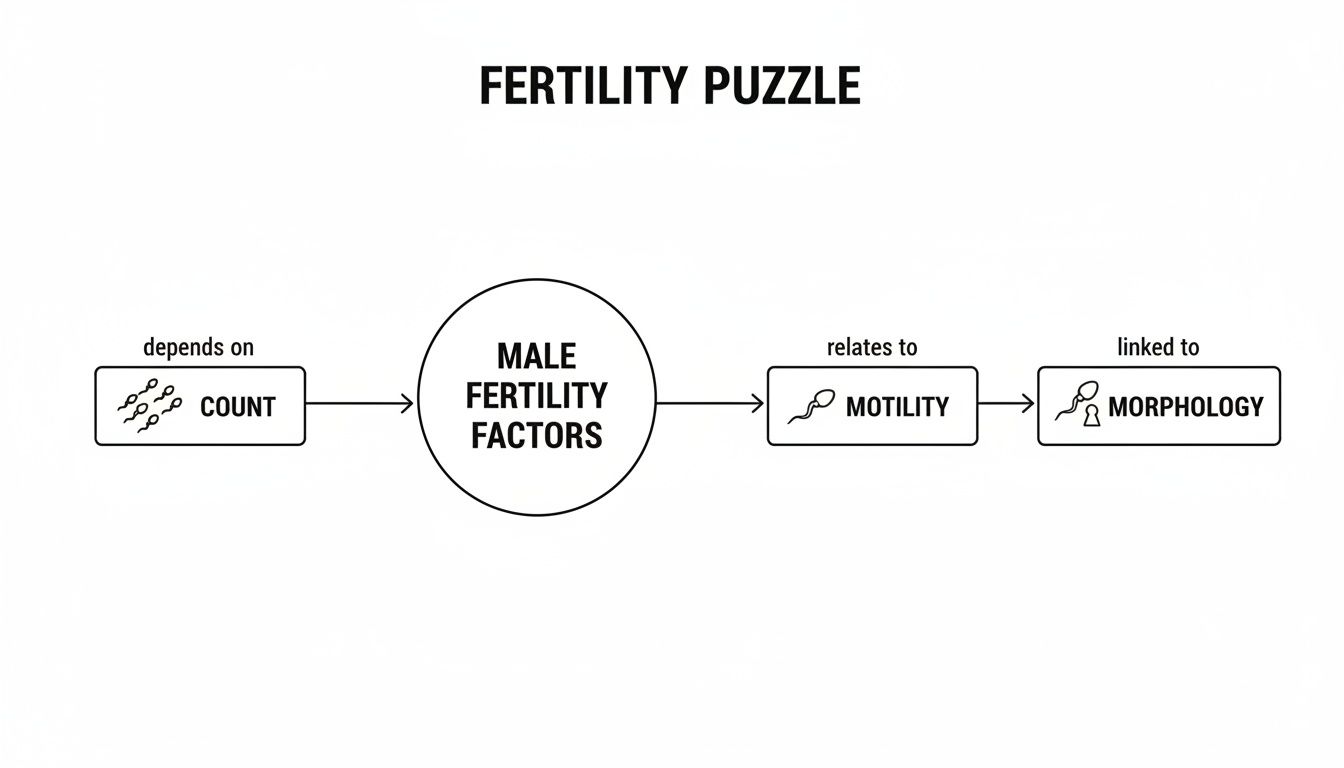
As you can see, morphology is just one piece of the puzzle. It works together with sperm count and motility to paint the full picture of your reproductive health.
What Does a Perfectly Shaped Sperm Look Like?
When a specialist peers through that microscope, they're not just counting. They are painstakingly checking each individual sperm against a very specific blueprint for perfection.
A "normal" sperm absolutely must have these three flawless parts:
- A Smooth, Oval Head: The head needs to be well-defined and symmetrical. Its main job is to carry and protect the all-important genetic cargo.
- A Well-Defined Midpiece: This is the engine room, connecting the head to the tail and packed with mitochondria for energy. It has to be slender and correctly attached.
- A Long, Straight Tail: The single tail, or flagellum, acts as the propeller. To drive the sperm forward, it must be uncoiled and free of any kinks or bends.
If a sperm deviates from this ideal structure in any way, it's flagged as having abnormal morphology.
Common Defects and What They Mean
It’s completely normal for the vast majority of sperm in any sample to have some imperfections. But certain defects are more common and can directly sabotage a sperm's mission.
Some of the usual suspects include:
- Head Defects: This could mean the head is too large, too small, tapered like a football, or even duplicated (a double-headed sperm). These issues can cripple the sperm's ability to function correctly.
- Midpiece Defects: A bent, thick, or wonky midpiece often points to a problem with the sperm's energy supply, making that long journey simply impossible.
- Tail Defects: Coiled, bent, or multiple tails are a major problem. They can cause the sperm to swim in circles—or not at all—ensuring it never reaches its destination.
Putting the Numbers in Context: WHO Reference Values
To keep results consistent across labs worldwide, experts rely on guidelines from the World Health Organization (WHO). These benchmarks help standardize what's considered "normal."
You might be surprised by what’s considered a healthy number. The bar for "normal" morphology is much lower than most men think.
Under the latest WHO guidelines, a man is considered to be in the fertile range if just 4% of his sperm have a normal shape. That’s right—only 4%.
This table helps put the WHO reference values for a complete semen analysis into perspective.
| Semen Parameter | WHO Lower Reference Limit (Normal) | What It Measures |
|---|---|---|
| Sperm Morphology | ≥4% Normal Forms | The percentage of sperm with a perfect size and shape. |
| Semen Volume | ≥1.4 mL | The total amount of fluid in a single ejaculation. |
| Sperm Concentration | ≥16 million/mL | The number of sperm per milliliter of semen. |
| Total Motility | ≥42% | The percentage of sperm that are moving. |
| Progressive Motility | ≥30% | The percentage of sperm moving forward effectively. |
These numbers have shifted quite a bit over the years. Older standards required much higher percentages, but as microscopes got better, we realized just how common imperfections are. Today, we know that most fertile men have a normal morphology score somewhere between 4% and 10%.
Understanding your results is the first step toward taking control of your fertility. For a deeper look at your report, check out our guide on how to read semen analysis results.
Decoding Your Sperm Morphology Results
Getting your semen analysis report can feel like a mix of hope and confusion. When you scan down to the morphology section, the numbers might look pretty alarming at first glance. But understanding the context is everything when it comes to decoding what they really mean for your fertility.
The most important number to know is the modern benchmark for normal sperm morphology. According to the World Health Organization (WHO), a healthy and fertile result is 4% or higher.
This is often the most surprising part for men. Seeing that 96% of your sperm might be abnormally shaped can feel like a punch to the gut, but in the world of male fertility, this is completely standard.
Why 5% Normal Morphology Is Great News
Let's tackle the biggest source of anxiety head-on. If your report shows 5% normal morphology, your first thought is probably, "Does that mean 95% of my sperm are useless?" The answer is a resounding no.
Think of sperm production like a massive factory running around the clock. It churns out millions of units every single day, and it's totally expected that not every one will roll off the assembly line perfectly. The "Kruger strict criteria" used for evaluation is incredibly rigorous, flagging even the tiniest imperfections.
A score of 5% doesn't mean the other 95% are duds; it means you have a very strong percentage of perfectly formed, "elite" swimmers leading the charge. For most men, a score between 4% and 10% is a solid sign of healthy morphology, giving you more than enough well-shaped sperm to get the job done.
The key takeaway is this: A normal sperm morphology score confirms you have a sufficient team of correctly shaped sperm ready for the mission. It’s about having enough of the right swimmers, not making every single one perfect.
What Is Teratozoospermia?
When your morphology score dips below that 4% threshold, it gets a medical name: teratozoospermia. While the word sounds intimidating, it’s important to understand what it actually means for your fertility journey.
Teratozoospermia simply means that a lower-than-average percentage of your sperm have the ideal shape. It doesn't mean you have zero normal sperm, nor does it mean you cannot become a father. It’s a signal that the shape of your sperm could be a contributing factor, potentially making the path to fatherhood a bit more challenging.
It's also crucial to know that this condition is surprisingly common. In fact, a 2014 study of over 300 men seeking fertility help found that teratozoospermia was one of the most frequent isolated issues, affecting 20% of men who had a problem with just one semen parameter. You can see how common these issues are by reviewing the full study on semen analysis findings.
The Bigger Picture: Your Fertility Puzzle
Sperm morphology is just one piece of a much larger puzzle. To get a real understanding of your reproductive health, this number has to be looked at alongside the other two critical pillars of male fertility:
- Sperm Count (Concentration): How many sperm do you have? A high sperm count can often make up for a lower morphology score, since the sheer volume means you still have a large absolute number of normal sperm.
- Sperm Motility: How well do your sperm swim? Even perfectly shaped sperm won't succeed if they can't make the journey.
A comprehensive semen analysis tells the full story. A low morphology score might be less of a concern if your count and motility are exceptionally high. On the flip side, a normal morphology score is even more powerful when it’s backed by strong numbers in the other two categories. This complete picture is what helps you and your doctor build a clear and effective plan forward.
What Causes Abnormal Sperm Morphology
When a semen analysis report comes back with a lower percentage of normal sperm, the first question is always, "Why?" The answer is rarely a single, simple thing. Think of it more like a puzzle, where abnormal sperm morphology often pieces together from a mix of medical, environmental, and lifestyle factors that disrupt the delicate process of sperm production.

Understanding these causes is the critical first step toward taking back control of your reproductive health. The great news is that many of these factors are well within your power to change, and addressing them can lead to significant improvements in sperm quality. As an actionable step, reviewing this list can help you identify areas you can discuss with your healthcare provider.
Underlying Medical and Genetic Factors
Sometimes, the root cause of poor sperm shape is an underlying medical issue that’s throwing your body's systems out of whack. These factors almost always require a doctor's evaluation to properly diagnose and treat.
- Varicoceles: These are essentially varicose veins in the scrotum. They're a very common culprit, known for increasing testicular temperature and oxidative stress, which directly damages developing sperm.
- Hormonal Imbalances: Proper sperm production runs on a tight hormonal schedule, with testosterone playing a lead role. Any issues with the pituitary gland or other hormonal systems can throw this balance off and impact sperm shape.
- Infections: An infection lurking in the male reproductive tract can trigger inflammation and damage sperm as they are being made or stored.
- Genetic Conditions: In some cases, specific genetic traits can directly interfere with a man's ability to produce correctly shaped sperm. Conditions like microdeletions on the Y-chromosome can be a hidden factor.
The Impact of Lifestyle and Environment
Beyond medical conditions, your daily habits and environment play a massive role in shaping your sperm. This is where you have the most direct control to make positive, powerful changes.
Excessive heat is one of the biggest enemies of healthy sperm. There's a biological reason the testicles are located outside the body—they need to stay cooler than your core temperature. Anything that consistently raises this temperature can put a serious dent in sperm production.
Your body is constantly manufacturing new sperm in a cycle that takes about 74 days. This means the lifestyle choices you make today—from your diet to how you manage stress—have a direct impact on the quality of sperm you'll produce two to three months from now.
This regular cycle is a huge advantage. It gives you a powerful and recurring opportunity to improve your sperm health by making consistent, positive changes.
Key Habits That Affect Sperm Shape
Several common lifestyle choices are well-known for their negative impact on sperm morphology. Recognizing them is the first step toward building healthier habits for better fertility.
- Smoking: Tobacco use is strongly linked to decreased sperm quality, including poor morphology. The toxins in smoke create oxidative stress, which can damage sperm DNA and their delicate structure.
- Excessive Alcohol: Heavy drinking can lower testosterone levels, mess with hormone production, and directly harm developing sperm.
- Poor Diet: A diet lacking in antioxidants and key vitamins (like Zinc and Vitamin C) essentially starves developing sperm of the essential nutrients they need to form correctly.
- High Stress Levels: Chronic stress floods your body with hormones like cortisol, which can interfere with testosterone production and hurt overall sperm health.
- Being Overweight: Excess body fat can lead to hormonal imbalances and increased testicular heat—a double-whammy for producing sperm morphology normal forms.
These factors rarely act in isolation. Poor lifestyle choices that wreck sperm shape often reduce their ability to swim effectively, too. You can learn more about how these elements connect in our guide to understanding sperm motility and why it's so important. By addressing these root causes, you're not just improving one number on a report; you're supporting your entire reproductive potential.
Actionable Steps to Improve Sperm Morphology
Learning what impacts sperm shape is one thing, but the next logical question is always, "Okay, so what can I do about it?" This is where you get to be proactive. Improving sperm morphology is usually a marathon, not a sprint, but the good news is that consistent, positive changes can make a real difference.
The entire sperm production cycle takes about 74 days. This means the healthy habits you start today could start showing up in your semen analysis results in just two to three months. Let's walk through the most effective, evidence-based steps you can take to give your body the best shot at producing well-formed sperm.
Start with Smart Lifestyle Changes
Your daily habits have a direct and powerful impact on your reproductive health. Many of the factors that harm sperm shape can be managed or even eliminated with mindful choices, creating a much better environment for sperm production to thrive.
Here are the key areas to focus on first:
- Adopt an Antioxidant-Rich Diet: Oxidative stress is a major enemy of healthy sperm. The best way to fight back is by loading your plate with antioxidants found in fruits, vegetables, nuts, and whole grains. Think of antioxidants as tiny bodyguards protecting developing sperm cells from damage.
- Get a Handle on Stress: Chronic stress floods your body with hormones like cortisol, which can interfere with testosterone and throw sperm production out of whack. Finding healthy outlets—like exercise, mindfulness, or hobbies you enjoy—is crucial for keeping your hormonal system balanced.
- Quit Smoking and Cut Back on Alcohol: Tobacco is loaded with toxins that directly damage sperm DNA and structure—it's one of the worst offenders. Excessive alcohol isn't much better, as it can lower testosterone levels. Cutting these out is one of the single best things you can do for your fertility.
- Maintain a Healthy Weight: Being overweight can create hormonal imbalances and, just as importantly, increase scrotal temperature. A solid combination of a balanced diet and regular exercise helps regulate hormones and supports the ideal conditions for sperm production.
The goal isn't perfection overnight. It's about consistent progress. Small, sustainable changes in your diet, exercise, and stress management can add up to significant improvements in sperm quality over time.
Keep Things Cool
One of the most critical—and often overlooked—factors is heat. Your testicles are designed to function at a temperature slightly cooler than the rest of your body. When they get too hot, sperm production suffers across the board, affecting not just shape but count and motility, too.
A few practical ways to avoid excess heat:
- Avoid Hot Tubs and Saunas: Soaking in hot water can significantly raise testicular temperature for way too long.
- Keep Laptops Off Your Lap: They generate a surprising amount of heat. It's much safer to use them on a desk or table.
- Wear Loose-Fitting Underwear: Ditch the briefs for boxers to allow for better air circulation and a cooler environment.
The table below breaks down how these simple changes can directly benefit your sperm health.
Lifestyle Changes and Their Impact on Sperm Health
| Lifestyle Change | Potential Impact on Sperm Health | Why It Helps |
|---|---|---|
| Antioxidant-Rich Diet | Improves morphology, motility, and DNA integrity | Fights oxidative stress, which damages sperm cells during their development. |
| Quit Smoking | Improves all sperm parameters, especially DNA quality | Eliminates toxins that directly harm sperm structure and genetic material. |
| Reduce Alcohol | Increases testosterone levels and sperm count | Heavy drinking can disrupt the hormones responsible for sperm production. |
| Maintain Healthy Weight | Balances hormones and reduces scrotal temperature | Excess body fat can convert testosterone to estrogen and trap heat. |
| Manage Stress | Regulates hormones essential for spermatogenesis | Lowers cortisol levels, which can interfere with testosterone production. |
| Avoid Heat | Improves count, motility, and morphology | Keeps testicular temperature in the optimal range for healthy sperm development. |
Making these adjustments creates a fundamentally better environment for your body to produce high-quality sperm.
The Role of a Medical Evaluation
While lifestyle changes are powerful, they aren't always enough. Sometimes, an underlying medical issue is the true root cause of poor sperm morphology. This is why a thorough evaluation with a urologist who specializes in male fertility is a critical next step.
A specialist can pinpoint and treat conditions that directly harm sperm health. The most common of these is a varicocele, which is an enlargement of the veins inside the scrotum. Varicoceles are a leading cause of male infertility because they increase both testicular temperature and oxidative stress. The good news? They are often treatable with a minor surgical procedure, which can lead to dramatic improvements in sperm parameters.
Consider Key Supplements Wisely
Certain vitamins and nutrients play a vital role in sperm formation. While a healthy diet should always be your foundation, targeted supplementation can offer additional support for improving sperm morphology.
Some of the most studied supplements for male fertility include:
- Coenzyme Q10 (CoQ10): A powerful antioxidant that helps protect sperm from damage and is essential for generating the energy sperm need to swim.
- Zinc: A crucial mineral for sperm formation, testosterone production, and motility. Deficiencies are directly linked to poor sperm quality.
- Selenium: Works hand-in-hand with other antioxidants to shield developing sperm from free radical damage.
Crucially, always consult with your doctor before starting any new supplement regimen. They can help you figure out the right dosage and make sure it won’t interfere with any other health conditions or medications you might have. This is a vital actionable step to ensure your approach is both safe and effective.
To dive deeper into diet and other proactive measures, check out our complete guide on how to improve sperm health. By combining smart lifestyle adjustments with expert medical guidance, you can build a robust plan to support your journey toward normal sperm morphology.
Common Questions About Sperm Morphology
Even with a good grasp of the basics, it's natural to have questions about what your specific sperm morphology results mean for you. Let's tackle some of the most common concerns we hear from men.
Can I Still Become a Father Naturally with Low Sperm Morphology?
Yes, absolutely. A low morphology score (teratozoospermia) means a smaller percentage of your sperm has the "perfect" shape, but it doesn't close the door on conceiving naturally. It might make the journey a bit more challenging, but it's far from impossible.
Remember, your overall chances depend on the complete picture, including your total sperm count and motility. If you have a really high sperm count, for example, the total number of normally shaped sperm might still be more than enough to get the job done. An actionable next step is to discuss your complete semen analysis results with a fertility specialist to understand your specific situation.
How Long Does It Take to Improve Sperm Morphology?
The entire sperm production cycle, from start to finish, takes about 74 days.
This is actually great news. It means the positive changes you make today—like cleaning up your diet, quitting smoking, or getting stress under control—can start showing up in your semen analysis results in roughly two to three months. Consistency is key here.
The sperm you have today are a direct reflection of your health and habits from the past couple of months. Think of every healthy choice as a direct investment in your future.
Is a Sperm Morphology Test the Same as a Sperm Count?
No, they measure two different—but equally critical—parts of your fertility puzzle.
Think of it like this:
- Sperm Count: This is about quantity. It answers the question, "How many sperm are there?"
- Sperm Morphology: This is about quality. It answers the question, "How many of them are shaped correctly for the job?"
Along with motility (how well the sperm swim), these three pillars give you the full story of your reproductive health. You need all three for an accurate picture.
Does My Age Affect Sperm Morphology?
It can. While age tends to have a more dramatic effect on other factors like motility, research shows that as men get older, particularly after 40, there can be a slight drop in the percentage of normally shaped sperm.
This is one of many reasons why getting a baseline understanding of your fertility is an empowering step for any man, at any stage of life.
Understanding your sperm health shouldn't require a medical degree. At Hera Fertility, we translate complex lab reports into a simple Hera SmartScore, giving you personalized insights and clear, actionable steps. Take control of your journey by uploading your existing report for a free analysis or ordering a new test today. Get your clear fertility insights now.
Related Resource Articles
-
A Man's Guide to Sperm Morphology: Understanding Your Results
Understand your sperm morphology results with a clear, actionable guide to what the numbers mean and steps you can take to support fertility.
22 min read
-
Understanding Teratozoospermia and Improving Sperm Health
Struggling with teratozoospermia? Learn what abnormal sperm shape means for male fertility and discover actionable steps to improve your sperm health.
22 min read
-
Morphology Sperm: A Clear Guide to Male Fertility and Health
Explore morphology sperm and its impact on fertility. Learn normal ranges, common abnormalities, and practical steps to boost your sperm health.
19 min read