When you’re trying to start a family, a lot of the focus lands on sperm count. But that’s only half the picture. The other crucial piece of the puzzle is how well those sperm can actually swim.
Think of it this way: sperm have a long, tough journey ahead of them. Having enough of them is important, but if they can’t move properly, they’ll never reach their destination. This ability to move, known as sperm motility, is a fundamental measure of male reproductive health.
Why Sperm Motility Is So Important for Fertility
Poor sperm motility, a condition called asthenozoospermia, can be a major hurdle for men. It means that even with a perfectly normal sperm count, a high percentage of them aren't strong enough swimmers to achieve fertilization. Understanding this one factor is often the first real step toward taking control of a man's fertility.
The Biological Bottom Line
The importance of sperm motility comes down to basic biology. For natural fertilization to happen, sperm have to pull off several critical tasks, and every single one depends on their ability to move:
- Navigate the Male Reproductive System: They must first be able to travel successfully through the male reproductive tract.
- Travel with Purpose: This isn’t just about moving; it’s about moving forward. Sustained, progressive motion is what gets them to the finish line.
- Achieve Fertilization: The final step requires a powerful push, and that power comes directly from good motility.
Unfortunately, we're seeing some concerning trends. Recent clinical data shows that sperm quality, including motility, has been on a downward slide for years among men seeking fertility care. One study pointed to a significant drop in motility percentages over time, highlighting a broader decline in overall sperm health. You can learn more about the research on declining sperm parameters here.
This guide is here to give men clear, straightforward information. By understanding what sperm motility is, how it's measured, and what affects it, you can feel more informed and ready to take the next steps on your journey.
How Sperm Motility Is Measured and What the Numbers Mean
To figure out your sperm motility, a lab needs to perform a detailed semen analysis. This test is the cornerstone of male fertility evaluation, giving you a clear picture of how well your sperm are swimming and whether they have what it takes to achieve their goal.
The process usually happens one of two ways. The classic method is a manual evaluation, where a highly trained andrologist watches your sperm sample under a powerful microscope. They're visually assessing movement patterns and literally counting the percentage of sperm that are moving versus those that aren't.
These days, though, many labs have shifted to Computer-Assisted Sperm Analysis (CASA). This approach uses sophisticated software to track individual sperm from a video feed, delivering incredibly precise and objective measurements of their speed and swimming patterns. For researchers in the field looking for granular data, tools like ImageJ for image segmentation can be useful for quantifying sperm characteristics from microscopic videos.
Progressive vs Total Motility
When you get your semen analysis report back, you’ll see at least two key numbers for motility. It’s critical for a man to know what each one means for his fertility.
- Total Motility: This is the big-picture number. It represents the total percentage of sperm that show any kind of movement at all—whether they're swimming forward, just wiggling their tails, or moving in tight little circles.
- Progressive Motility: This is the number that really matters for conception. It measures the percentage of sperm that are actively moving forward in a straight line or in large, purposeful circles. These are the "all-star" swimmers capable of making the long journey to the finish line.
A good way to think about it is like a team of runners in a race. Total motility tells you how many runners are moving at all (even those just jogging in place), while progressive motility tells you how many are actually sprinting toward the finish line.
The diagram below breaks down the basics of sperm motility, its importance, and how it’s measured.
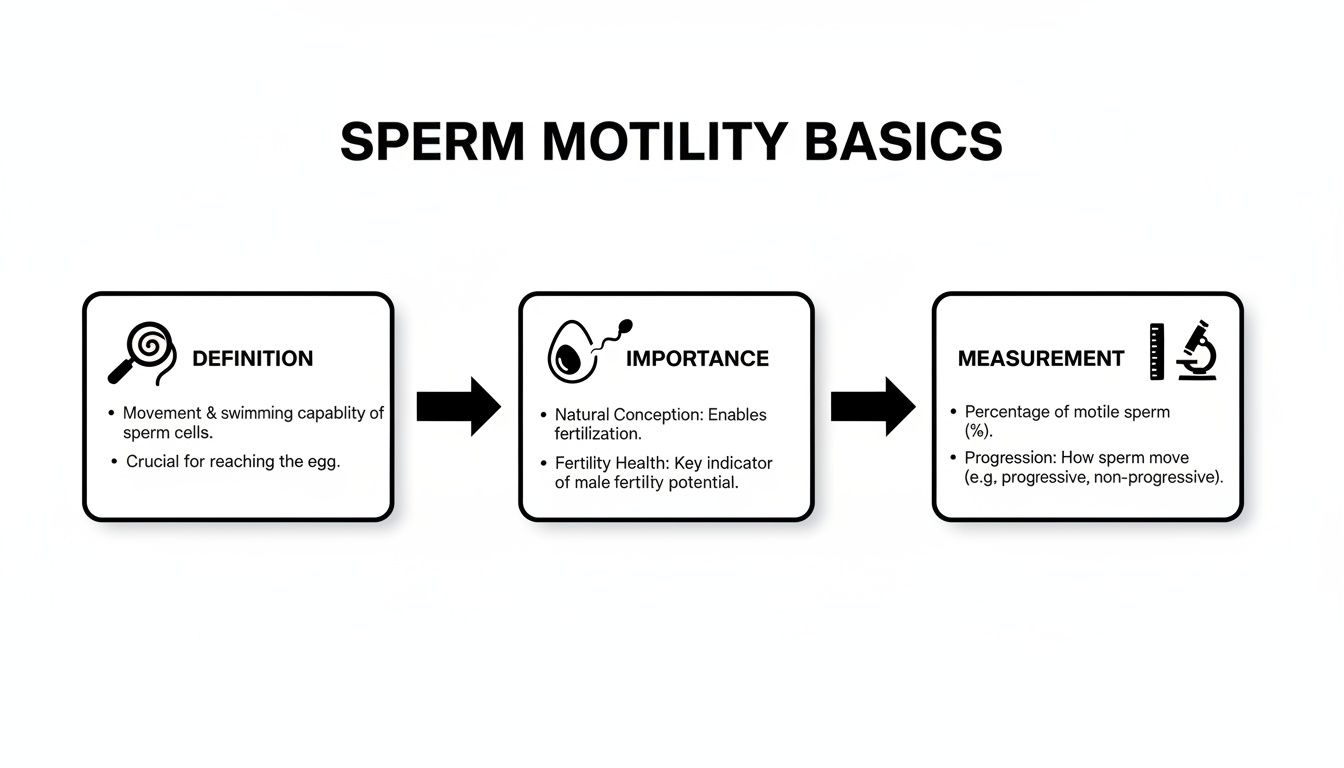
This visual helps connect the dots between effective sperm movement and a man's chances of conception, reinforcing why getting an accurate measurement is so important.
Understanding Your Results
So, what are considered "good" numbers? The World Health Organization (WHO) sets the standard clinical guidelines that labs around the world use to interpret semen analysis results.
To help you understand your report, the table below outlines the most current reference values from the WHO.
Sperm Motility Reference Values (WHO 6th Edition)
Use this table to understand the standard clinical reference ranges for assessing sperm motility in a semen analysis.
| Parameter | Lower Reference Limit (Considered Normal) |
|---|---|
| Total Motility | 42% or higher |
| Progressive Motility | 30% or higher |
These numbers represent the minimum threshold for what's considered normal. If your numbers are at or above these values, your motility is in a healthy range.
For example, a result showing "Progressive Motility 45%" means that 45% of the sperm in your sample are strong, forward-moving swimmers, which is an excellent result. For a complete guide to all the different parameters on your report, check out our article on how to read semen analysis results.
If your numbers fall below these thresholds, it indicates low sperm motility, a condition known as asthenozoospermia. But don't panic—this doesn't mean you can't have a child. It simply means your sperm might need some support. Knowing exactly where you stand is the first, most important step toward taking action to improve your fertility.
What Causes Low Sperm Motility?
When sperm struggle to swim well, the condition is called asthenozoospermia. Figuring out why this is happening is the first real step toward fixing it. The reasons behind poor motility usually fall into one of three buckets: underlying medical conditions, your daily lifestyle choices, and environmental exposures.
Getting to the root of the problem is essential for creating a smart plan to improve your sperm health.

It’s worth noting that a drop in sperm motility isn't just an individual issue; it’s part of a much bigger, well-documented trend. Research tracking a U.S. sperm bank from 2003 to 2013 found a pretty significant decline in total motility of -1.23% per year. Even though the men in that study actually improved their lifestyle habits during that decade, motility still went down.
This suggests a complex mix of factors is at play. You can discover more about these sperm motility trends to see why regular testing has become so important.
Medical and Health-Related Causes
Sometimes, an underlying health issue is the culprit, directly affecting the energy or structure of sperm and slowing them down. These medical factors almost always require a doctor’s diagnosis and a targeted treatment plan.
A few common conditions include:
- Varicocele: Think of this as a varicose vein in the scrotum. These swollen veins increase blood flow and heat up the testicles, creating a hostile environment that can seriously impair sperm production and motility.
- Hormonal Imbalances: Hormones, especially testosterone, are the master regulators of sperm creation. If testosterone is low or other key hormones are out of whack, the entire sperm development assembly line can break down, resulting in sluggish swimmers.
- Infections: Both past and present infections in the male reproductive tract, like STIs or even prostate inflammation (prostatitis), can cause inflammation and direct damage to sperm, hurting their ability to move.
Lifestyle Choices That Impact Motility
This is where you have the most control. Your daily habits have a massive, direct effect on your sperm health. The great news is that these factors are often reversible, which we’ll dive into in the next section on proven solutions.
Actionable Next Step: Many lifestyle factors are completely within your control. Making positive changes to your diet, stress levels, and habits can lead to measurable improvements in sperm motility in just a few months.
Here are some of the biggest lifestyle contributors:
- Diet and Nutrition: If a man's diet is low in key nutrients—especially antioxidants like vitamins C and E, zinc, and selenium—his sperm are left vulnerable. They lack the fuel needed for their long journey and protection from cellular damage.
- Smoking and Alcohol: It’s no secret that tobacco and excessive alcohol are bad news. They flood your body with toxins that can directly damage sperm DNA and wreck their structure, leading to weak motility.
- Overheating: Sperm production is incredibly sensitive to temperature. Regularly using hot tubs, saunas, or even just resting a hot laptop on your lap for hours can raise scrotal temperature enough to harm sperm.
- Stress: Chronic stress is a hormone killer. It floods the body with cortisol, which can interfere with testosterone production and throw the entire sperm-making process off balance, affecting overall quality and motility.
Environmental Factors and Exposures
The world around us can also play a big role. Day-to-day exposure to certain chemicals and toxins, either at work or just in your environment, can take a toll on sperm function.
Common environmental culprits include:
- Industrial Chemicals: Men with jobs that expose them to heavy metals (like lead and mercury), pesticides, or industrial solvents often see a decline in their sperm health, including motility.
- Endocrine Disruptors: These are chemicals that mimic hormones and mess with the body's natural balance. Things like BPA (in some plastics) and phthalates (in many personal care products) can disrupt the delicate hormonal signals needed for healthy sperm production.
Actionable Steps to Improve Sperm Motility
Getting a diagnosis of low sperm motility can feel like a gut punch, but it's far from a dead end. Think of it as a starting point—an opportunity to take action. Many of the factors that influence sperm health are well within your control, and making the right changes can lead to real, measurable improvements.
We've broken down the steps into practical categories, giving you a clear roadmap to take charge of your fertility.

Lifestyle and Diet Modifications
A man's daily habits are the absolute foundation of sperm production. The simple truth is that the quality of what you put into your body directly impacts the final product. The good news? Positive changes often start showing results within just a few months.
Nutrition is one of the most powerful levers you can pull. Sperm are incredibly vulnerable to damage from oxidative stress, and a diet packed with antioxidants is their first line of defense. It also provides the raw energy they need to swim effectively.
Here are a few key nutritional adjustments to focus on:
- Boost Antioxidants: Load up on foods rich in Vitamin C (citrus, bell peppers), Vitamin E (nuts, seeds), selenium (Brazil nuts), and zinc (oysters, beef). Think of these nutrients as personal bodyguards for your sperm.
- Consider Coenzyme Q10 (CoQ10): This antioxidant is a powerhouse, concentrated right in the sperm's mitochondria—the "engine room" that powers their tails. Studies have shown that CoQ10 supplementation can directly improve motility.
- Cut Back on Processed Foods: Diets heavy in processed meats, trans fats, and sugar are consistently linked to poorer sperm quality. Swap them out for whole foods like fruits, vegetables, lean proteins, and healthy fats.
Beyond diet, how you manage your physical health is crucial. Regular, moderate exercise can boost testosterone and improve overall wellness, but be careful not to overdo it—intense, prolonged exertion can actually have the opposite effect. Finally, quitting smoking and cutting back on alcohol are non-negotiable. Their toxins are known to directly harm sperm.
Medical Interventions and Professional Guidance
While lifestyle changes are powerful, sometimes there's an underlying medical issue that needs to be addressed first. If your results show low motility, your next step should be a consultation with a urologist or a male fertility specialist. They can diagnose and treat conditions that directly sabotage sperm health.
A common culprit is a varicocele, which is basically a varicose vein in the scrotum. This condition raises the temperature inside the testicles, creating a hostile environment for developing sperm. A minor surgical fix, called a varicocelectomy, can often correct the problem and lead to significant improvements across all sperm parameters, including motility.
Your doctor will also likely investigate your hormone levels. Imbalances in testosterone or other key reproductive hormones can throw a wrench in the entire sperm production process. Depending on what they find, hormone therapy might be recommended to restore balance and get things back on track.
Actionable Next Step: Don't wait to seek professional advice. A specialist can create a treatment plan tailored to your specific diagnosis, combining the right medical interventions with personalized lifestyle advice.
For a deeper dive into creating a holistic plan, explore our comprehensive guide to improve sperm health. Remember, every single step you take, whether it's changing your diet or booking that doctor's appointment, is a positive move toward your family-building goals.
When to Consider Advanced Fertility Options
Making lifestyle and dietary changes is a fantastic first step, but sometimes, it's just not enough to overcome significant male fertility challenges. If low sperm motility remains a major hurdle after trying other methods, it might be time to discuss advanced fertility treatments with a specialist.
These medical procedures are built to bypass the natural barriers that poor sperm movement creates, giving sperm a much-needed boost. This can feel like a big step, but understanding your options is the best way to regain a sense of control over your path forward.
Intrauterine Insemination (IUI)
Intrauterine Insemination, or IUI, is often one of the first advanced treatments recommended for cases with mild to moderate motility issues. The process itself is relatively straightforward and much less intensive than other fertility treatments.
During an IUI procedure, a semen sample is "washed" and concentrated in a lab. This preparation is key—it separates the most active, healthy sperm from the slower ones and the surrounding seminal fluid. A doctor then uses a very thin, flexible catheter to place this concentrated sample of top swimmers directly where they need to be.
By doing this, IUI gives the sperm a massive head start. It dramatically shortens the distance they need to travel, significantly increasing the odds that a healthy, motile sperm will reach its destination.
In Vitro Fertilization (IVF) with ICSI
When sperm motility is severely low, even the boost from IUI might not be enough. In these cases, In Vitro Fertilization (IVF) combined with a technique called Intracytoplasmic Sperm Injection (ICSI) can be a game-changer.
ICSI is a highly effective procedure that completely removes the need for sperm to swim on their own. It directly addresses the core problem of poor sperm motility.
Here’s a breakdown of how it works:
- Sperm Selection: An embryologist examines the semen sample under a high-powered microscope and carefully selects a single, healthy-looking sperm.
- Direct Injection: Using a microscopic needle, that single sperm is injected directly into a mature egg.
- Fertilization and Transfer: This process is repeated for multiple eggs. Once fertilization happens and embryos begin to develop, the healthiest one is selected for transfer.
This method is incredibly precise and is now the go-to solution for severe male factor infertility. Because it bypasses natural fertilization entirely, the sperm’s ability to move is no longer a factor in a successful outcome. The decision to use assisted reproduction can involve many factors, and for some, exploring options like donor sperm is part of the conversation. You can learn more about the role of sperm banks in family building as you research all your options.
If you're worried about your sperm motility, you're not alone. Far from it. What you're feeling is a reflection of a much larger, scientifically documented trend in male reproductive health. Understanding this bigger picture can help normalize your experience and show you just how smart it is to be proactive.
For decades now, researchers have been tracking a steady decline in key male fertility metrics across many parts of the world. This isn't a small, localized issue—it's a global pattern affecting men from all walks of life, which strongly suggests that widespread environmental and lifestyle factors are at play.
This shift is precisely why taking a personal inventory of your own reproductive health is more critical than ever.
A Look at the Global Data
Major scientific reviews have put hard numbers on these concerns. A landmark meta-analysis, which looked at data all the way from 1973 to 2011, found a staggering 59.3% drop in total sperm counts among men in North America, Europe, Australia, and New Zealand.
And it's not slowing down. More recent data from 2022 suggests this decline in sperm concentration might even be speeding up worldwide since the year 2000. Large-scale studies like these show that declining sperm motility is just one piece of a much larger puzzle. You can dive deeper into the research behind the global decline in male fertility to get more of the details.
This data isn't meant to scare you—it's meant to empower you. Knowing these trends exist reinforces just how important it is for men to monitor their own fertility and take steps to protect it. At the end of the day, your individual health is what matters most.
What This Means for You
While these global statistics paint a concerning picture, they are not your personal diagnosis. They simply provide the backdrop for why proactive male fertility testing has become so essential. An individual man's fertility is completely unique, and plenty of men with less-than-perfect numbers go on to become fathers.
Think of it this way: knowing that heart disease is on the rise globally encourages you to keep an eye on your own blood pressure and cholesterol. It's the same idea here. Understanding the trends in male fertility should motivate you to get a clear, accurate picture of your own status with a semen analysis.
By testing your sperm motility and other key metrics, you shift from worrying about a vague global trend to taking concrete, actionable steps for your own health. This knowledge puts the power back in your hands, allowing you to make informed decisions—whether that means a few lifestyle tweaks or a consultation with a specialist—and puts you firmly in control of your reproductive journey.
Frequently Asked Questions About Sperm Motility
When men are trying to understand their fertility, a lot of questions come up. Here are some clear, straightforward answers to the most common queries we hear about sperm motility.
Can Sperm Motility Improve Quickly?
Yes and no. Sperm production isn't an overnight process; the full cycle from start to finish takes about 74 days. This is actually great news. It means positive lifestyle choices a man makes today—like cleaning up his diet, cutting back on alcohol, or getting stress under control—can lead to a healthier, more motile batch of sperm in roughly three months.
Think of it as a fresh opportunity with every new cycle. Consistency is what really counts.
Do Vitamins and Supplements Actually Work?
For motility, the evidence for certain supplements is quite strong. Antioxidants are the real stars here, protecting sperm from damage and helping to fuel their journey.
Some of the key players backed by research include:
- Coenzyme Q10 (CoQ10): This is direct fuel for the sperm's "engine" (the mitochondria), powering better movement.
- Zinc and Selenium: These are fundamental minerals for healthy sperm development and function.
- Vitamins C and E: A powerful antioxidant duo that shields sperm from cellular stress.
It's always a good idea to chat with your doctor before starting any new supplement routine, just to make sure it’s the right move for your specific health situation.
How Much Does Heat Affect Motility?
Heat is a major enemy of sperm motility. There's a biological reason the testicles are outside the body—they need to stay a few degrees cooler than your core temperature to produce healthy sperm.
Actionable Next Step: Avoid exposing your scrotum to high temperatures. This isn't just about avoiding hot tubs and saunas; it includes things like resting a hot laptop directly on your lap for long stretches. Simple habits, like switching to looser underwear and getting up from your desk more often, can genuinely make a difference.
Feeling lost trying to decipher your semen analysis report? The Hera Fertility platform takes those complicated lab results and translates them into a simple, easy-to-understand Hera SmartScore. You'll get personalized insights and a clear, actionable plan to take control of your reproductive health. Upload your report for a free analysis today.
Related Resource Articles
-
Motility of Sperm: A Key Factor in Male Fertility
Explore how the motility of sperm affects fertility, what influences it, and practical steps to improve it for better reproductive health.
17 min read
-
Your Guide To The Test For Sperm Motility
Considering a test for sperm motility? This guide explains what men need to know about the process, how to read results, and the next steps for male fertility.
16 min read
-
Understanding Non Motility Sperm and Your Next Steps
A clear guide to non motility sperm (asthenozoospermia). Understand the causes, how it's tested, and the actionable steps you can take for your fertility.
21 min read