Getting a report that flags abnormal sperm morphology can be a real gut punch. It sounds technical and intimidating, but let's break down what it actually means. In simple terms, it means some of your sperm have an unusual shape or size.
This is a really common finding, so you're not alone.
What Abnormal Sperm Morphology Really Means for You
Sperm morphology is just the scientific term for the size and shape of your sperm. Think of a perfectly formed sperm like a key cut for a specific lock—its structure is critical for its journey.
But here’s the most important thing to understand right away: a diagnosis of "abnormal sperm morphology" is almost never the final word on your ability to have children.
The truth is, every single man produces a huge number of abnormally shaped sperm. Your body cranks out millions of them daily, and it’s completely normal for a huge percentage of them not to be "perfect." A fertility report isn't grading you on a 100% scale; it’s just checking if you have enough well-formed sperm to get the job done.
The Numbers Game: What Is "Normal"?
You might be shocked to learn just how low the bar for "normal" actually is. Lab standards have gotten much more precise over the years, and our understanding has changed.
The World Health Organization (WHO) currently says the lower limit for normal is just 4%. That means you can have up to 96% abnormally shaped sperm and still fall within the standard range. It’s not about perfection; it’s about having a sufficient team of healthy swimmers.
In fact, many fertility clinics find that between 10% and 30% of men seeking help have morphology scores below that 4% cutoff. You can dive deeper into the clinical standards for sperm morphology if you want to see exactly how urologists apply these guidelines.
Putting this into perspective is crucial. Seeing a low number on your report doesn't automatically mean you can't have children. It's just one piece of a much larger puzzle.
Now, let's make sense of what you might see on your report. The terms can be confusing, but this table breaks it down into plain English.
Decoding Your Sperm Morphology Results
| Term on Report | What It Means for You | Normal Range (WHO 5th Edition) |
|---|---|---|
| Normal Forms | This is the percentage of sperm with the ideal shape (oval head, intact midpiece, and a single, straight tail). | ≥ 4% |
| Abnormal Forms | The percentage of sperm with defects in the head, midpiece, or tail. | < 96% |
| Head Defects | Irregularly shaped heads (too large, too small, tapered, etc.). This can impact the sperm's ability to achieve fertilization. | N/A (part of abnormal forms) |
| Midpiece Defects | Issues with the "engine room" of the sperm, like a bent neck or thick midpiece, which can affect energy and movement. | N/A (part of abnormal forms) |
| Tail Defects | Coiled, bent, or multiple tails. These defects directly impact the sperm's ability to swim forward (motility). | N/A (part of abnormal forms) |
This table can help translate the jargon, but remember, these numbers don't exist in a vacuum. A specialist looks at them alongside your sperm count and motility for the complete picture.
A Starting Point, Not a Final Verdict
Think of an abnormal morphology result as a signal—a prompt to take a closer look at your health and lifestyle. It's an opportunity, not a dead end.
Here’s what to keep in mind:
- It’s Extremely Common: You are far from alone in this. Countless men get similar results and go on to start their families.
- It's Just One Metric: Male fertility is a team sport. Your sperm count (how many) and motility (how well they swim) are just as, if not more, important.
- It Can Often Be Improved: Many of the root causes are tied to lifestyle factors you can control. Making positive changes can lead to better sperm quality over time.
A diagnosis of abnormal sperm morphology is not a roadblock; it's a roadmap. It gives you valuable information to begin a proactive journey toward improving your reproductive health and achieving your family goals.
How Doctors Analyze Sperm Shape and Size
When you get a semen analysis report back, it’s natural to wonder how a lab technician can possibly judge the shape of millions of tiny sperm. It’s not a quick glance; it’s a highly detailed process that relies on a strict set of rules and a powerful microscope to get an accurate, consistent snapshot of what percentage of your sperm are built for success.
The gold standard used by most labs today is called the Kruger strict criteria. Think of it as a detailed inspection checklist for every single sperm. A trained andrologist—a specialist in male reproductive health—meticulously examines a sample of your sperm under high magnification, grading each one against very specific measurements for its head, midpiece, and tail.
This concept map gives a simple overview of the key aspects of sperm morphology.
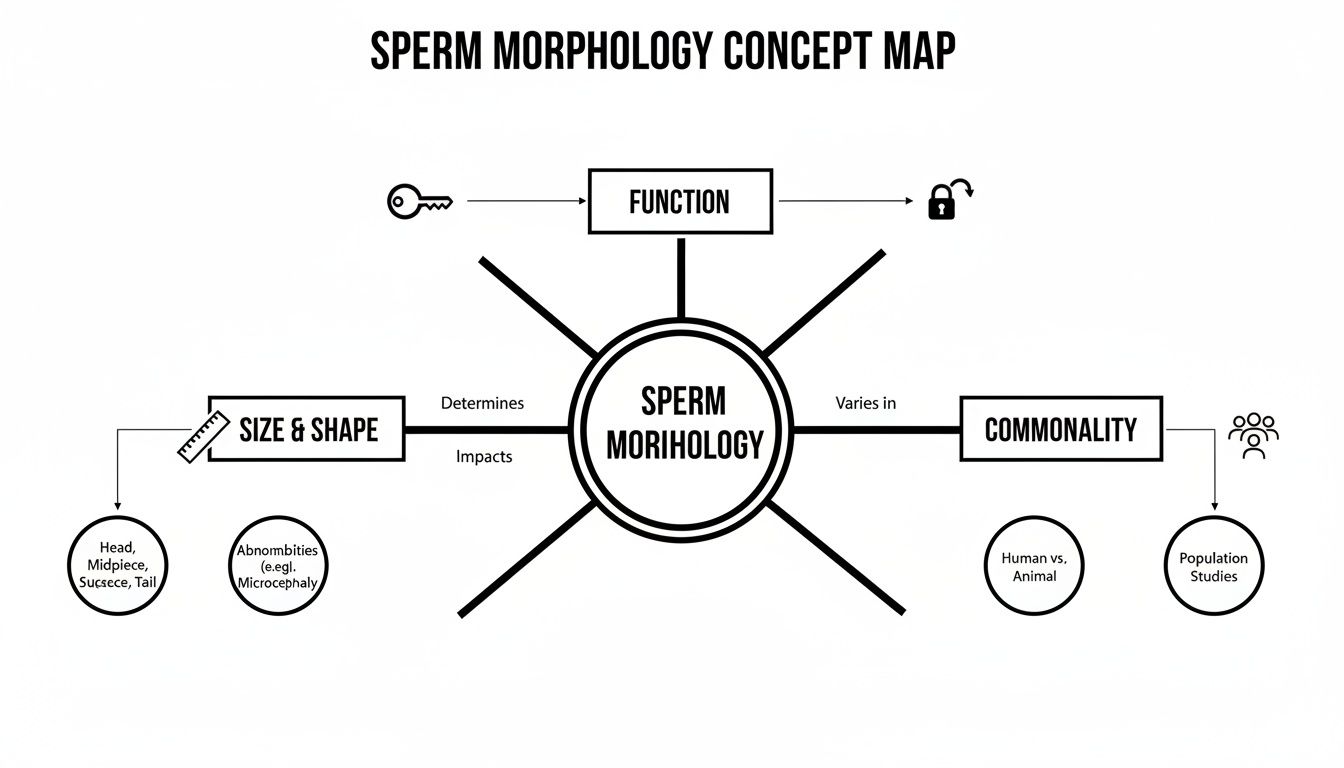
As you can see, morphology isn't just about looks. It’s about the sperm's physical structure, its ability to function, and understanding how common certain abnormalities really are.
What Does a "Perfect" Sperm Look Like?
According to the Kruger criteria, an ideal sperm has a very particular structure designed for one thing: fertilization. It’s not about aesthetics; every part has a critical job to do. The inspection is so thorough that only a small fraction of sperm actually make the cut, which helps explain why the "normal" percentage on a report can seem surprisingly low.
A normally shaped sperm must have:
- A Smooth, Oval Head: This is where the crucial genetic material is stored. To be successful, the head must have a specific size and a smooth, symmetrical oval shape.
- A Well-Defined Midpiece: Think of this as the "engine room." It contains the mitochondria that produce the energy needed for the sperm’s journey. It has to be slender and attached straight to the head.
- A Single, Uncoiled Tail: The tail is the propeller. It needs to be long, straight, and uncoiled to generate the powerful forward motion (motility) required for swimming.
This process is incredibly methodical. Even a tiny defect, like a slightly tapered head or a bent midpiece, will get a sperm classified as abnormal. This strictness ensures that the final percentage of "normal forms" on your report is a reliable indicator of overall sperm quality.
Common Types of Abnormal Sperm Morphology
Because the inspection is so rigorous, many different types of defects can be identified. Seeing terms like "macrocephaly" or "coiled tail" on your report can be confusing, but they simply describe where the imperfection was found. Understanding what they mean can help you visualize what the lab technician saw under the microscope.
Key Takeaway: The purpose of this detailed analysis isn't to find every single flaw. It’s to determine if there is a large enough team of structurally sound sperm to give you a strong chance at conception.
Here are some of the most common abnormalities a lab might report:
- Head Defects: These are the most frequent issues and can include heads that are too large (macrocephaly), too small (microcephaly), tapered, or pear-shaped.
- Midpiece Defects: This might mean the midpiece is bent, too thick, or not attached correctly to the head, which can sap the sperm of its energy.
- Tail Defects: Common tail issues include coiled tails, bent tails, or even multiple tails. These defects directly impair the sperm's ability to swim effectively.
Reading and interpreting these findings can feel overwhelming. To get a better handle on the complete picture, check out our detailed guide on how to read semen analysis results, which breaks down every component of your report.
Understanding the Causes of Poor Sperm Morphology
Getting a diagnosis of abnormal sperm morphology naturally brings up one big question: "Why?" Figuring out the potential causes is the first real step toward taking back control of your fertility.
Think of the factors that influence sperm shape in two buckets: things that are mostly out of your hands, and things you can absolutely change with your daily habits.
Sperm production, a complex process called spermatogenesis, is incredibly sensitive. Even small disruptions can mess with the final shape and quality of the sperm. By pinpointing the root issues, you can start building a targeted plan to help your body produce the healthiest sperm it can.
Medical and Genetic Factors
Some of the reasons for poor sperm morphology are tied to your underlying health or genetic code. You can't change your genes, of course, but knowing about these factors helps you and your doctor make much smarter decisions about your path forward.
These conditions can directly interfere with the delicate environment sperm need to develop correctly.
- Varicocele: This is one of the most common—and correctable—causes of male infertility. A varicocele is just an enlargement of the veins in the scrotum, much like a varicose vein you'd see in a leg. This can raise the temperature in the testicles and cause oxidative stress, both of which are notorious for damaging sperm DNA and messing up normal sperm formation.
- Hormonal Imbalances: Think of hormones like testosterone and follicle-stimulating hormone (FSH) as the managers of the sperm factory. If their levels are off because of issues with the pituitary gland or other endocrine problems, the entire production line gets thrown into chaos, often resulting in poorly formed sperm.
- Genetic Conditions: In some men, specific genetic traits are the direct culprit. Conditions like globozoospermia, where sperm have round heads and are missing the critical "cap" needed for fertilization, are directly linked to specific genetic mutations.
Lifestyle and Environmental Influences
This is where you have the most power. Many of your everyday habits and environmental exposures have a massive impact on sperm quality. The best part? These factors are often reversible if you're willing to make some conscious changes.
Sperm are especially vulnerable to two things: heat and oxidative stress, which is a type of cellular damage caused by an imbalance between free radicals and antioxidants in your body.
Key Insight: It takes your body roughly 74 days to produce a new batch of mature sperm. This means the positive lifestyle changes you start today can lead to a healthier sperm analysis in about three months.
Here are the biggest lifestyle factors that can tank your morphology score:
- Heat Exposure: There's a reason the testicles are outside the body—they need to stay a few degrees cooler than your core temperature to do their job right. Frequent trips to the hot tub, sauna, or even just resting a hot laptop on your lap for hours can raise scrotal temperature enough to impair sperm development.
- Smoking and Vaping: The cocktail of toxins in cigarettes and vapes, from nicotine to heavy metals, unleashes a firestorm of oxidative stress in your body. This directly damages sperm DNA and can lead to defects in the sperm's head, midpiece, and tail.
- Heavy Alcohol Consumption: Throwing back too many drinks can lower testosterone, mess with hormone regulation, and is directly toxic to the cells that produce sperm.
- Poor Diet: If your diet is missing key antioxidants like zinc, selenium, and vitamins C and E, your developing sperm are left defenseless against cellular damage. A diet high in processed foods and sugar also fuels inflammation and oxidative stress.
- Chronic Stress: Being under constant, high-level stress can seriously disrupt the hormonal signals that drive sperm production. The fallout is often lower testosterone and poorer semen quality across the board, including morphology.
By understanding these potential causes, you can start to connect the dots and see which areas of your life might be affecting your sperm health. The next step is using that knowledge to build a proactive plan for improvement.
Your Action Plan for Improving Sperm Morphology
Getting a diagnosis of abnormal sperm morphology can feel like a gut punch. But it’s important to see this for what it is: a starting point, not a final verdict. This is your call to action. You have more control than you think over the factors that influence sperm health, and the steps you take now can make a real difference.

Here's the key thing to remember: sperm production is a cycle. It takes your body roughly three months to create a new batch of mature sperm. That means the positive changes you start making today are a direct investment in your fertility just a few months down the road.
Lifestyle Adjustments for Better Sperm Health
Your daily habits play a massive role in the delicate process of sperm formation. By focusing on a few key areas, you can create a much better environment for your body to produce higher-quality sperm. It’s the small, consistent changes that often lead to the biggest wins.
Here are some of the most impactful adjustments you can make:
- Fuel Your Body with Antioxidants: Think of oxidative stress as the enemy of healthy sperm—it causes damage to their structure and DNA. Loading up your diet with antioxidant-rich foods like fruits, vegetables, nuts, and whole grains provides a powerful defense.
- Keep Things Cool: Sperm production works best at a temperature just slightly cooler than the rest of your body. That means you should try to avoid prolonged heat from hot tubs, saunas, and even resting a laptop directly on your lap.
- Embrace Moderate Exercise: Getting regular physical activity is fantastic for circulation, hormone balance, and cutting down on stress. Aim for consistency, not extreme intensity. Overtraining can sometimes backfire and have a negative effect.
- Manage Your Stress: Chronic stress messes with the hormonal signals that govern sperm production. Find what helps you unwind, whether it’s meditation, a hobby, or just getting outside.
It's also important to zoom out beyond just sperm shape. For a bigger picture, you can find some great tips for improving overall fertility and planning a healthy pregnancy that cover broader wellness.
Key Nutrients for Sperm Morphology
While a solid diet is the foundation, certain vitamins and minerals are absolute all-stars for building and protecting healthy sperm. They act as both the essential building blocks and the bodyguards for developing cells.
A targeted nutritional strategy can be one of the most effective ways to combat the cellular damage that leads to poor sperm morphology. Think of it as providing your body with the specific tools it needs for a high-quality production line.
Consider zeroing in on these critical nutrients:
- Zinc: An absolute must-have for sperm formation and testosterone production. You can find it in lean meats, shellfish, and seeds.
- Selenium: This is a powerful antioxidant that helps shield developing sperm from damage. Brazil nuts are an excellent source.
- Vitamin C and E: These two work as a team to fight oxidative stress all over the body, including in the reproductive system. They're easy to find in citrus fruits, berries, nuts, and leafy greens.
- Coenzyme Q10 (CoQ10): This compound is vital for the energy production inside the sperm's midpiece—the "engine room" that powers its journey.
For a deeper dive into practical steps, our guide offers specific advice on how to improve sperm health with targeted diet and lifestyle strategies.
When Medical Intervention Is Needed
Sometimes, lifestyle changes aren't quite enough, especially if there's an underlying medical condition driving the abnormal morphology. If your doctor pinpoints a specific problem, they can recommend a treatment to address the root cause directly.
These treatments are designed to fix physical or hormonal issues that are actively getting in the way of healthy sperm development.
Here are a few common medical approaches:
- Varicocele Repair: If you're diagnosed with a varicocele (enlarged veins in the scrotum), a minor surgical procedure can correct it. This often improves the temperature regulation and overall environment in the testicles, leading to better sperm production.
- Hormone Therapy: When blood tests reveal a hormonal imbalance, your doctor might prescribe medication to get levels of hormones like testosterone or FSH back to normal. This can help regulate and optimize the whole sperm production process.
- Assisted Reproductive Technology (ART): For men with persistently poor morphology, treatments like Intracytoplasmic Sperm Injection (ICSI) can be a game-changer. With ICSI, a fertility specialist selects a single, healthy-looking sperm and injects it directly into an egg, effectively bypassing many natural barriers to fertilization.
Taking these steps—from changing your diet to seeing a specialist—puts you back in the driver's seat. You have plenty of options and a clear path forward for improving your reproductive health.
Why Morphology Is Only One Piece of the Fertility Puzzle
Getting a semen analysis report back can feel like your entire future boils down to a single, high-stakes number for abnormal sperm morphology. It’s so easy to fixate on that one percentage, letting it color your whole outlook on your fertility. But here’s something crucial to understand: male fertility is never judged on one metric alone.
A comprehensive semen analysis is more like a team performance review than a single player's stats. It doesn't just look at one player; it assesses the entire squad's strength and depth. Morphology—the shape of your sperm—is just one of the three key players on the field.

The Three Pillars of Male Fertility
To get a true picture of your reproductive health, your doctor is looking at three core parameters working in concert. Think of it as a three-legged stool—if one leg is a bit short, the other two can often provide more than enough stability to keep things balanced.
These three pillars are:
- Sperm Count (Concentration): This is the sheer number of sperm in your sample. A higher count simply means more "players" on the field, which can dramatically increase your chances.
- Sperm Motility: This measures how well your sperm can actually swim. It’s not enough to just have a lot of sperm; they need that forward drive to complete their journey.
- Sperm Morphology: This, as we’ve been discussing, is the percentage of sperm that have a "normal" shape. A well-shaped sperm is better equipped to achieve fertilization.
A man could have a lower-than-ideal morphology score, but if his sperm count is sky-high and his motility is excellent, his overall fertility potential might still be very good. The sheer volume of healthy, motivated swimmers can often make up for a smaller percentage of perfectly shaped ones. This is exactly why a specialist will never assess a man's fertility based on morphology in isolation. For a deeper dive, check out our guide on what good sperm motility looks like.
The Power of Compensation
Let's break it down with an analogy. Imagine you're running a delivery company. Morphology is like having perfectly designed, aerodynamic delivery vans. It’s great, but it’s not everything.
If you only have a few of these perfect vans (low morphology), but you have millions of them on the road (high count) and they all drive efficiently to their destination (good motility), you’re still going to make a ton of successful deliveries.
The key takeaway is this: A strong sperm count and excellent motility are powerful compensators for a low morphology score. Male fertility is a numbers game, and having a massive, motivated team often outweighs having a small team of perfectly uniform players.
Understanding this bigger picture is essential for easing the anxiety that comes with seeing a scary-looking number. It shifts the focus from a single, often discouraging, data point to a more complete and realistic assessment of your reproductive health.
When Shape Becomes a Primary Concern
Now, while most cases of abnormal sperm morphology fit into that larger picture, certain rare genetic syndromes can present a more direct challenge. For instance, some conditions cause 100% of the sperm to have a very specific defect, like being giant-headed (known as macrocephalic spermatozoa syndrome).
This rare condition, affecting less than 1% of men, is clinically significant because these particular shape defects are linked to higher rates of chromosomal abnormalities in the sperm. Recognizing these specific syndromes is vital for making informed decisions about which fertility treatments are most appropriate.
Ultimately, your morphology score is a valuable piece of data, but it's not the entire story. It’s a single chapter in the book of your overall reproductive health. By looking at count and motility right alongside it, you and your doctor can get a much clearer, more accurate, and often more optimistic view of your path forward.
When Should You Talk to a Male Fertility Specialist?
Getting a semen analysis report back with a low morphology score can leave you with one big, nagging question: "So, what now?" It's easy to get tunnel vision and fixate on that single number, but knowing when to take the next step and consult a specialist is what really matters.
Seeing a professional isn't an admission of defeat—it’s about being proactive. A male fertility specialist, typically a urologist with advanced training in reproductive medicine, can dig much deeper than the lab report. They’re the ones who can connect the dots between your results, your overall health, and your goals for starting a family.
Triggers for Making an Appointment
Deciding to see a doctor is always a personal choice, but a few clear signs suggest it’s time to get an expert opinion. If any of these sound familiar, don't hesitate to book a consultation.
- Consistently Low Results: One "off" test can happen. But if you've had more than one semen analysis showing abnormal sperm morphology—usually below 4% normal forms on the strict criteria—it's a strong signal to investigate further.
- Multiple Issues on Your Report: A low morphology score is one thing. But when it's paired with other issues, like a low sperm count (oligospermia) or poor motility (asthenozoospermia), it's definitely time for a specialist's review.
- Trying for Over a Year: If you have been actively trying to conceive for 12 months without success, a comprehensive male fertility evaluation is a standard and crucial step.
Let's be honest: navigating fertility challenges is tough. It's an emotional rollercoaster. It's just as important to look after your mental well-being as it is your physical health. Learning some effective anxiety coping strategies can be a huge help in building resilience for the journey ahead.
What to Expect During Your First Visit
Your first appointment is really about information gathering. The specialist’s goal is to build a complete picture of your health to figure out if any underlying factors are impacting your sperm production.
The process is pretty straightforward. It usually starts with a thorough review of your medical and family history, followed by a physical exam. From there, the doctor might discuss further diagnostic tests. This could mean bloodwork to check your hormone levels or a scrotal ultrasound to look for physical issues like a varicocele.
Think of this visit as your chance to get clarity. You can ask all your questions, understand the potential causes, and walk away with a clear, actionable plan.
Sperm Morphology FAQs
Let's tackle some of the most common questions that come up after a man learns about abnormal sperm morphology. Getting straight, clear answers can make all the difference in understanding where you stand and planning your next move.
Can I Improve My Sperm Morphology in 30 Days?
While you can definitely start making positive changes today, it’s important to have realistic expectations for when you'll see the results. The entire production cycle for new sperm, a process called spermatogenesis, takes roughly 74 days.
Because it's a long game, the benefits from quitting smoking, eating better, or avoiding heat exposure won't really show up in a semen analysis for about three months. Think of it as a long-term investment in your fertility, not a quick fix.
Does a 0 Percent Normal Sperm Morphology Score Mean I’m Infertile?
Getting a 0% normal forms result is a big deal, and it does make natural conception very difficult. But it absolutely does not mean it's impossible for you to have a biological child.
This specific diagnosis, sometimes called globozoospermia if all the sperm have round heads, usually just means you'll need some medical help to get there.
Advanced treatments like Intracytoplasmic Sperm Injection (ICSI) can be incredibly effective. This is a procedure where a single, healthy-looking sperm is selected and injected directly into an egg. It's crucial to talk with a male fertility specialist to explore all the pathways available for your specific situation.
Do Supplements Actually Improve Sperm Shape?
Yes, there's good evidence that certain antioxidant supplements can help protect developing sperm from damage, which can lead to better morphology.
The main culprits behind sperm defects are oxidative stress and cellular damage. Key nutrients that fight this include:
- Coenzyme Q10 (CoQ10): Helps power the sperm's "engine room."
- Zinc: An essential building block for sperm formation.
- Selenium: Acts like a shield, protecting sperm from cellular damage.
- Vitamins C and E: A powerful antioxidant duo that works together.
But remember, supplements aren't a magic bullet. They work best as part of a bigger picture that includes a balanced diet, regular exercise, and a healthy lifestyle. Always run it by your doctor before starting any new supplement routine to make sure it’s the right call for you.
Ready to move past confusing lab reports and get clear, actionable insights? With Hera Fertility, you get physician-approved testing and an AI-powered analysis that decodes complex results into a simple SmartScore and a personalized plan. Take control of your fertility journey by visiting Hera Fertility to learn more or upload an existing report for a free, instant analysis.
Related Resource Articles
-
Fertility Pills for Men: What Works and Who They Help
No pill works for every cause of male infertility. Compare supplements, Clomid, hormone injections, evidence, monitoring, and when treatment may help.
12 min read
-
What Is an Andrologist: Your Guide to Male Fertility
What is an andrologist? Discover what male fertility specialists do, the conditions they treat, and when to consult one.
14 min read
-
Fertility After Cancer Treatment: A Man's Guide to Recovery
A clear, supportive guide to understanding male fertility after cancer treatment. Learn about recovery timelines, testing, and your options for fatherhood.
16 min read