When you hear the term average sperm morphology, you might picture an A+ report card for sperm. But in reality, it’s a bit more nuanced. The term simply refers to the percentage of sperm in a sample that have a "normal" shape and structure.
Under the latest medical guidelines, a result showing 4% or more normally shaped sperm is considered perfectly average and healthy for a man. That might sound shockingly low, but it means that even in a completely fertile man, the vast majority of sperm—we're talking 96% of them—can have some kind of imperfection.
What Sperm Morphology Really Means for You
Think of a sperm's shape like a key built for a very specific purpose. For that key to work, it needs the right structure: a well-formed head to carry the precious genetic cargo and a strong tail to power it on its journey.
Sperm morphology is simply the study of that structure. It’s a critical part of a male fertility assessment because a sperm’s shape directly impacts its ability to get the job done.
An ideally shaped sperm has three parts working in perfect harmony:
- The Head: This is the oval-shaped front end carrying the all-important genetic material. Its precise shape is what allows it to be successful.
- The Midpiece: This is the engine room, connecting the head to the tail. It's packed with mitochondria that generate the energy needed for the long swim ahead.
- The Tail: A single, long tail is the propeller, whipping back and forth to drive the sperm forward.
When a lab analyzes a semen sample, embryologists are painstakingly looking at these features under a microscope, counting how many sperm tick all the "normal" boxes.
Understanding the Numbers on Your Report
Getting a report that says 96% of your sperm are "abnormally shaped" can feel pretty alarming. The first time you see that, it’s easy to panic. But it's essential to put this number into context.
The standards used by fertility labs today are incredibly strict. A tiny deviation can land a sperm in the "abnormal" category. This infographic breaks down the key figures you’ll see on a modern semen analysis.
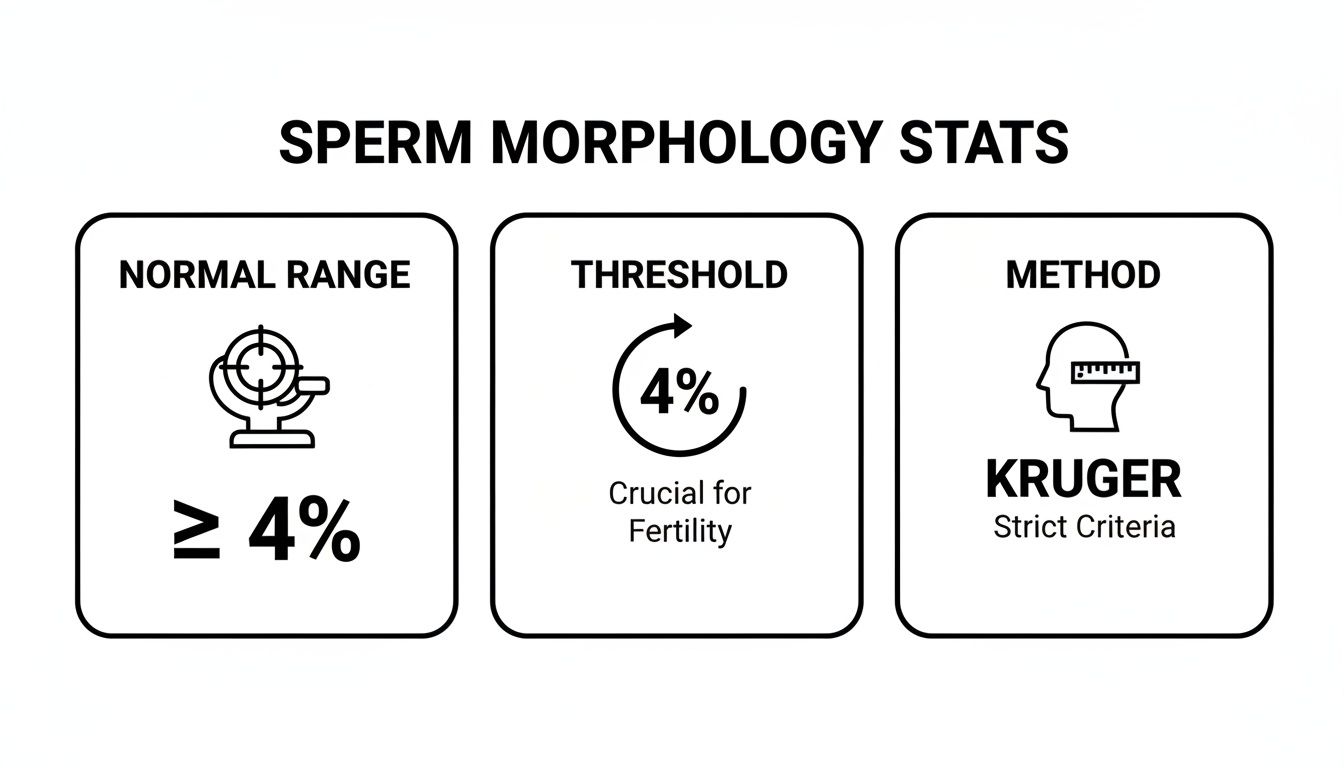
As you can see, hitting that 4% threshold is the main goal. This standard comes from the rigorous Kruger evaluation method, which is the gold standard used by most labs today.
Over the years, the goalposts for "normal" have shifted. The World Health Organization (WHO) has updated its guidelines, and both the 5th edition (from 2010) and the 6th edition (2021) settled on that same lower reference limit of 4% when using these strict criteria.
To make sense of your results, it's helpful to see how these criteria compare. This table breaks down the different evaluation methods you might see on a report.
Sperm Morphology Normal Ranges at a Glance
This table compares the different criteria used to evaluate sperm morphology and their corresponding 'normal' thresholds, making it easy to understand your semen analysis results.
| Evaluation Criteria | Normal Range (Percentage of Normal Forms) |
|---|---|
| Kruger Strict Criteria | ≥4% |
| WHO 5th/6th Edition | ≥4% |
| WHO 4th Edition (Older) | ≥14% |
As you can see, the newer Kruger and WHO standards are much stricter than older methods. This is why it’s so important to know which criteria your lab used. A score of 5% would have been considered low under old guidelines but is perfectly normal today.
Key Takeaway: A "normal" morphology score doesn't mean 100% of your sperm are perfect. A score of 4% or higher is considered average and, in most cases, more than enough for a man's fertility. It tells you there are still millions of properly shaped sperm ready for action.
It’s also crucial to remember that morphology is just one piece of the male fertility puzzle. A urologist will look at your results alongside sperm count and motility to get the full picture. To understand how all these components fit together, you can learn more about what a comprehensive semen analysis involves.
How to Make Sense of Your Morphology Results
Getting your semen analysis report back can feel like you've been handed a document in a foreign language. When your eyes land on a low percentage next to "sperm morphology," it's easy to jump to conclusions. But rest assured, that one number doesn't tell the whole story.
It’s just a single data point, not a final verdict on your fertility.

A lower-than-average score is a condition known as teratozoospermia. All this really means is that a higher percentage of your sperm have some kind of structural imperfection. It absolutely does not mean you can't father a child naturally. It just signals that the journey might have a few more hurdles.
Think about it this way: even if only a small percentage of your sperm are perfectly shaped, a high overall sperm count means you still have millions of perfectly good swimmers in the race.
What Makes a "Good" Sperm?
To really get what your results mean, it helps to know what the lab technicians are looking for when they're peering through that microscope. They're grading each sperm on three key parts, and a defect in any one of them can cause an issue.
- The Head: This is the VIP section, carrying all the precious genetic cargo. A head that's too big, too small, or oddly shaped might not function correctly.
- The Midpiece: This is the sperm's engine room, packed with the mitochondria that generate energy for the long swim. A bent or weak midpiece means the sperm could run out of gas.
- The Tail: The tail is the propeller, driving the sperm forward. If it's coiled, broken, or even doubled, the sperm simply can't swim straight or effectively.
An abnormally shaped sperm is really just an inefficient one. A misshapen head can't function properly, and a faulty tail means it might never get where it needs to go.
Your morphology score is a measure of quality control. It tells you how many of your sperm are built correctly for the mission ahead.
Morphology Is Just One Piece of the Puzzle
It’s so important to remember that morphology doesn't exist in a vacuum. A complete male fertility picture requires looking at several key metrics together. Your doctor will analyze your morphology score alongside your sperm count (the total number of sperm you have) and motility (how well they're swimming).
Often, a massive sperm count can make up for a less-than-ideal morphology percentage. It's a numbers game, after all. Understanding how all these factors work together is crucial. For a complete walkthrough, check out our guide on how to read semen analysis results. Think of your report not as a final grade, but as a roadmap for understanding your health and planning your next steps.
Why 'Normal' Sperm Morphology Has Changed
If you were to dig up a semen analysis report from a few decades ago and compare it to one from today, you’d probably notice something jarring: the percentage of sperm considered "normal" has plummeted. It’s a change that makes a lot of men wonder if male fertility is in a steep decline.
But the real story is more about evolving science than it is about declining sperm quality. The goalposts have moved. Today's labs are evaluating sperm through a much stricter, more powerful lens, giving us a clearer, more predictive picture of a man's fertility.

A Shift to Stricter Standards
The main reason for this dramatic shift is the widespread adoption of the Kruger strict criteria. Before this method became the industry gold standard, labs used much more forgiving guidelines. A sperm with a few minor imperfections could easily get a passing grade.
Think of it like upgrading your TV from standard definition to 4K Ultra HD. Suddenly, you can see every tiny detail and flaw you never knew was there. Kruger's criteria do the same for sperm, allowing embryologists to spot even minuscule defects in the head, midpiece, or tail that could affect its function.
This means a lower percentage on your report today isn't an apples-to-apples comparison with a result from 20 years ago. A 4% normal morphology score under today's strict rules might be functionally equivalent to a much higher number under the old, less precise system.
The new standards aren't meant to be discouraging; they're designed to be more predictive. By zeroing in on only the most perfectly formed sperm, these stricter criteria provide a much more realistic assessment of a man's actual fertility potential.
Are Environmental Factors Playing a Role?
While stricter lab criteria are the biggest piece of the puzzle, they might not be the only one. Some large-scale studies analyzing semen parameters over many years have suggested a real, though gradual, decrease in average sperm morphology across entire populations of men.
This has prompted scientists to look closely at whether our modern environment and lifestyles are contributing to a genuine decline in sperm quality for some men. One major analysis, for example, reported a drop in the estimated average morphology from 25.75% down to just 5.68% over the course of the study. You can learn more about these temporal trends in male fertility to see the broader context.
So, what does this mean for you? It confirms that if your numbers are lower than you expected, you are far from alone. It also underscores the importance of focusing on the lifestyle factors you have the power to change.
Putting Your Results in Context
Understanding this history is key to interpreting your own report without unnecessary panic. A low number can feel defeating, but knowing the "why" behind that number puts you back in the driver's seat.
Here are the most important things to remember:
- Stricter Rules: Today’s tests use incredibly detailed criteria. A lower percentage is the new norm.
- Precision Matters: A modern report gives a more accurate and useful snapshot of the sperm that are truly ready for the job ahead.
- See the Whole Picture: Morphology is just one piece of your male fertility puzzle. A healthy sperm count and strong motility are just as critical for your overall male fertility assessment.
At the end of the day, a modern semen analysis isn't about giving you a "pass" or "fail." It’s about arming you with the clearest, most actionable information to guide you on your path to fatherhood.
What Causes Low Sperm Morphology?
Figuring out what’s behind a low sperm morphology score is your first real step toward getting a handle on your reproductive health. The process of making sperm is incredibly delicate; even small disruptions can throw a wrench in the works and affect their final shape.
When you start to investigate the potential culprits, you can pinpoint things in your life or health that might be dragging your numbers down. This is empowering because it shows you exactly where you can make positive changes.
Most of the time, the factors that influence sperm production fall into two big buckets: your lifestyle and environment, or underlying medical conditions.
Lifestyle Factors and Environmental Exposures
The environment you create inside your body has a direct line to your sperm development. It’s rarely just one single thing that causes a problem. More often, it's a combination of different stressors that build up over time.
- Too Much Heat: Sperm production works best when it’s a little cooler than the rest of your body—that's why the testicles are on the outside! Frequent trips to the hot tub or sauna, or even just keeping a laptop on your lap for hours, can raise the temperature down there and mess with normal sperm formation.
- Smoking and Alcohol: This is a big one. Both tobacco and heavy drinking have been clearly linked to lower sperm quality. Toxins from smoking cause something called oxidative stress, which is like rust for your cells, and it's especially damaging to developing sperm. Too much alcohol can also disrupt the key hormones needed for sperm production.
- Diet and Weight: Think of your diet as the fuel for your sperm factory. If you’re not getting enough essential antioxidants, vitamins, and minerals, your developing sperm are left vulnerable. In the same way, being significantly overweight can throw your hormones out of balance, contributing to poorer semen parameters across the board, including morphology.
Key Insight: The good news is that many causes of low sperm morphology are temporary and totally reversible. By dialing in on these lifestyle factors, you can create a much healthier environment for new sperm to develop. Just remember, it's a process that takes about three months to see results.
Medical and Genetic Conditions
Sometimes, the reason for poor morphology is a specific medical issue that needs a doctor's attention. These conditions can directly interfere with the sperm production line, leading to a much higher percentage of abnormally shaped sperm.
A few of the most common medical causes include:
- Varicoceles: This is basically a varicose vein in the scrotum. Varicoceles are a leading cause of male infertility because they cause the testicles to overheat, which is terrible for sperm development.
- Infections: Certain infections can cause inflammation in the male reproductive tract. This can have a temporary—or sometimes lasting—impact on sperm quality and shape.
- Hormonal Imbalances: Hormones like testosterone are the managers of the whole sperm creation process (spermatogenesis). If any of these hormones are out of whack, the entire system can be disrupted.
- Genetic Factors: In some cases, there might be an underlying genetic reason for consistently poor sperm morphology that lifestyle changes won't fix.
Getting to the root cause is the most proactive thing you can do. If you’ve made positive lifestyle adjustments and your numbers still aren't improving, a medical evaluation can uncover if there's something deeper going on. This knowledge is what lets you build a targeted, effective plan to improve your male fertility.
Actionable Steps for Improving Sperm Morphology
Getting a low sperm morphology result can feel like a gut punch, but it’s crucial to see it as a starting point, not a final verdict. You have more influence over your reproductive health than you might think. And because it takes roughly three months to produce a completely new batch of sperm, the positive changes you start today can lead to real, measurable improvements down the road.
The goal is simple: create the best possible environment for your body to develop healthy sperm. This boils down to focusing on a few core areas that directly impact sperm quality, shape, and function. Think of it as a marathon, not a sprint—consistency is your most powerful ally here.
Fueling Your Body for Better Sperm Production
Your diet literally provides the raw materials your body needs to build healthy sperm. If you give your body’s "sperm factory" high-quality components, you'll get a better-quality product. Certain nutrients are particularly critical for protecting developing sperm from damage.
Here are the key players to focus on:
- Antioxidants: Vitamins C and E are your body's defense team. They help shield sperm from oxidative stress, a major cause of cellular damage. You can load up on these in citrus fruits, berries, nuts, and seeds.
- Essential Minerals: Zinc and selenium are non-negotiable for proper sperm formation and testosterone production. Oysters, beef, Brazil nuts, and lentils are fantastic sources.
By weaving more of these nutrient-rich foods into your meals, you’re giving your body the specific tools it needs to build stronger, better-shaped sperm. For a deeper dive into diet and other strategies, learn more about how to improve your overall sperm health.
Making Strategic Lifestyle Adjustments
Beyond what you eat, your daily habits play a massive role. Some of the most impactful changes you can make involve reducing your body's exposure to known stressors and toxins. Even small, consistent adjustments can add up to significant benefits for sperm morphology.
Consider making these changes a priority:
- Quit Smoking: There’s no way to sugarcoat this—tobacco is one of the worst offenders for sperm health. The toxins in cigarettes directly damage sperm DNA and structure.
- Reduce Alcohol Intake: Heavy drinking can tank testosterone levels and mess with sperm production. Moderation is absolutely key.
- Maintain a Healthy Weight: Being significantly underweight or overweight can throw off the delicate hormonal balance required for optimal sperm development.
- Manage Stress: Chronic stress isn't just in your head; it can negatively affect the hormones that regulate sperm production. Finding healthy outlets like exercise, meditation, or just unplugging can make a real difference.
The Big Picture: These lifestyle shifts aren't just about making better sperm. They contribute to your overall well-being, creating a healthier system that’s better equipped for every biological process—including this one.
Avoiding Environmental Stressors
Finally, it’s important to be mindful of outside factors that can harm sperm production. The number one concern here is heat. Sperm are incredibly sensitive to temperature increases.
Protecting your sperm from environmental harm involves a few practical steps:
- Keep Things Cool: Avoid spending too much time in hot tubs, saunas, and even on heated car seats.
- Limit Laptop Placement: Try to use your laptop on a desk or table instead of directly on your lap for long stretches. That localized heat buildup is not doing you any favors.
Taking these proactive steps puts you back in the driver's seat of your fertility journey. By focusing on nutrition, lifestyle, and avoiding harmful exposures, you create a solid foundation for improving not just your sperm morphology, but your overall reproductive health.
When You Should See a Fertility Specialist
Getting a semen analysis report back isn't like receiving a final grade—it's the starting point for a really productive conversation about your health. If your results show low sperm morphology, that’s your cue to book a consultation with a urologist or a male fertility specialist. Taking that step is the single most proactive thing you can do to build a plan that actually gets you closer to your goals.
So, what can you expect? Your doctor will likely start with a physical exam and a deep dive into your medical and lifestyle history. They might recommend an ultrasound to get a better look at what's going on and check for things like varicoceles. Hormone testing could also be on the table to see if any imbalances are affecting sperm production.
It's all about gathering the right information so you can move forward with confidence, not confusion.
Key Takeaway: A specialist's job is to see beyond the numbers on a page. They connect the dots, identify any underlying issues, and lay out all of your options clearly. It's the fastest way to get an actionable plan for your fertility journey.
Beyond seeing a doctor, some men find it incredibly helpful to work with a certified fertility coach who can help navigate the emotional side of the journey and provide support for implementing lifestyle changes. Ultimately, the goal is to arm yourself with the knowledge you need to take control of your reproductive health.
Frequently Asked Questions About Sperm Morphology
Getting into the weeds of male fertility testing can feel overwhelming, and it's natural to have a lot of questions. Here are some straightforward answers to the most common concerns we hear about sperm morphology.
Can a Man With 1% Normal Morphology Conceive?
Yes, absolutely. While it might be more challenging, natural conception is definitely still possible for a man with 1% normal forms.
Remember, morphology is just one piece of a much larger puzzle. The final outcome often hinges on the total number of healthy, motile sperm you have. A high overall sperm count can often make up for a lower percentage of perfectly shaped ones. A fertility specialist can look at your complete semen analysis to give you a clearer picture of your fertility potential and map out the best ways forward.
How Long Does It Take to See Improvements?
The entire process of sperm production, known as spermatogenesis, takes about 74 days from start to finish.
This means any positive lifestyle changes you make today—like cleaning up your diet or quitting smoking—will take roughly three months to show up in a new semen analysis.
Patience and consistency are your best friends here. The effort you put in now is for the new, healthier sperm your body will be producing over the next several months.
What Foods Are Best For Improving Sperm Shape?
There's no single magic food, but a diet packed with antioxidants is one of the most powerful ways to protect developing sperm from damage. The goal is to consistently eat foods rich in specific protective nutrients.
Here are a few key players to add to your grocery list:
- Vitamin C: Think citrus fruits, bell peppers, and broccoli.
- Vitamin E: Abundant in nuts, seeds, and spinach.
- Zinc: Oysters, beef, and pumpkin seeds are fantastic sources.
- Selenium: Just a couple of Brazil nuts a day can give you a significant boost.
- Lycopene: Heavily concentrated in cooked tomatoes and watermelon.
For a wider view of how daily choices affect your well-being, you might want to check out the xlr8well blog for related health insights.
Ready to get a crystal-clear understanding of your sperm health? With Hera Fertility, you can order a semen analysis, have our AI-powered platform interpret your results, and get a clear, actionable plan. Take the first step toward clarity and control on your fertility journey. Learn more and get started today.
Related Resource Articles
-
How to increase sperm count: Practical, science-backed tips for men
Discover how to increase sperm count with science-backed lifestyle changes, nutrition, and practical steps to boost male fertility.
22 min read
-
CoQ10 for Sperm: A Guide to Boosting Male Fertility
Curious about CoQ10 for sperm health? Our guide explains the science, research-backed benefits on count & motility, and how to use it for male fertility.
18 min read
-
Sperm Morphology Normal: A Guide for Men (sperm morphology normal)
Discover what sperm morphology normal means for your fertility, how tests are done, and practical steps to improve sperm health.
21 min read