Seeing clear or watery semen for the first time might catch you off guard, but it’s rarely an immediate cause for alarm. The truth is, the appearance of a man's semen can change for a lot of simple reasons. Often, a clearer look is just linked to things like how hydrated you are or how often you’ve been ejaculating.
What It Means When Your Sperm Is Clear

It’s completely natural for a man to wonder about his fertility when he notices a change in his semen’s color or texture. But here’s the thing: the factors that truly matter for male reproductive health are completely invisible to the naked eye.
While many men expect to see a cloudy, whitish fluid, that’s not the only version of healthy. There's a common myth that semen must be thick and white to be fertile, but that's simply not true.
In reality, healthy semen is usually described as opalescent or grey-white. Depending on its exact composition at any given moment, this can easily look a bit clearer or slightly watery. The World Health Organization's guidelines, which set the global standard, confirm that there's a wide range of what's considered normal for men.
The most important thing to remember is that you can't judge your fertility just by looking. The real proof is in the microscopic details that can only be measured with a proper lab test. These are the factors that actually count:
- Sperm Count: The total number of sperm in your sample.
- Motility: How well your sperm can swim forward.
- Morphology: The percentage of sperm with a normal size and shape.
Think of it this way: the liquid part of semen (the seminal fluid) is just the delivery truck. A clearer fluid might mean the truck is running on premium, well-hydrated fuel, but it doesn't tell you anything about how many passengers (the sperm) are on board or if they’re equipped for the journey.
So, if your sperm looks clear, it could just be a temporary thing. If you have genuine concerns about your fertility, the only way to get a real answer is through a comprehensive semen analysis. This will give you a detailed picture of what’s truly going on with your reproductive health. For a deeper dive, check out our guide on what makes a normal sperm count.
What Causes Clear or Watery Semen?
If you've noticed your semen seems clearer or more watery than usual, your first thought might be concern. But in most cases, this is a temporary change caused by completely normal, everyday factors. Let's break down the common reasons for men, from the harmless to the things you might want to keep an eye on.
Think of it this way: the cloudy, white appearance of semen comes mostly from the sperm cells themselves. When there are fewer of them in the mix, the fluid naturally looks more transparent.
Lifestyle and Hydration Factors
More often than not, the culprit is something simple and reversible.
One of the most common reasons is frequent ejaculation. If a man is having sex or masturbating multiple times a day or even daily, his body simply doesn't have enough time to produce a full batch of sperm for each round. This is a perfectly normal biological response. Your system needs a bit of downtime to restock, and until it does, the ejaculate will have a lower sperm concentration, making it look clearer.
Your hydration level also plays a big part. Semen is over 80% water. If you're drinking plenty of fluids (which is great!), the liquid portion of your semen increases. This can dilute the concentration of sperm and other solids, giving it a more watery appearance. In this case, it's actually a good sign that you're well-hydrated.
Potential Medical Reasons to Keep in Mind
While lifestyle is the usual suspect, a persistent change in semen appearance can sometimes point to an underlying medical issue in men. It's good to be aware of these possibilities without jumping to conclusions.
A primary medical cause is a consistently low sperm count, a condition called oligospermia. The clinical definition is having fewer than 15 million sperm per milliliter of semen. Since sperm are what make semen opaque, a lower-than-normal concentration will logically make the fluid look clearer. The only way to know for sure if this is the case is with a formal semen analysis.
It's important to remember that a single instance of clear semen doesn't mean you have a low sperm count. We're looking for a consistent, long-term pattern here.
Other, less common medical factors could include:
- Retrograde Ejaculation: This is a condition where semen travels backward into the bladder during orgasm instead of out through the penis. It often results in a very small amount of ejaculate—or none at all—which might look clear because it has little to no sperm.
- Hormonal Imbalances: Hormones, especially testosterone, are the command-and-control system for male sperm production. If these signals get disrupted, it can directly impact your sperm count and, by extension, your semen's appearance.
- Zinc Deficiency: Zinc is a crucial mineral for male reproductive health and building healthy sperm. While it's less common, a significant deficiency could contribute to a lower sperm count over time.
Understanding these potential causes is the first step. If you consistently notice that your sperm is clear and you have concerns about your fertility, the next logical move is to get some real data on what’s going on.
What a Semen Analysis Actually Measures
When you notice your semen is clear, it's easy to jump to conclusions about your fertility. But the truth is, color alone doesn't tell you much. The only real way to get a clear picture of your reproductive health is with a semen analysis—the gold standard for evaluating male fertility.
Think of it like this: your sperm are on a critical mission. For that mission to succeed, a man needs three things to go right:
- Enough sperm to make the journey.
- Sperm that are strong swimmers, moving in the right direction.
- Sperm that are properly shaped to do their job.
A semen analysis moves past the guesswork and gives you hard data on exactly these factors.
Key Metrics in a Semen Analysis
A lab analysis doesn't just look at one thing; it examines several key parameters that, together, create a complete picture of a man's fertility potential. Each one is a different piece of the puzzle.
Here are the main components a lab will check:
- Sperm Count (Concentration): This is the total number of sperm in a single milliliter of semen. Think of this as the size of your team. A lower count can make conception harder simply because there are fewer players on the field.
- Motility: This measures the percentage of sperm that are actively swimming forward. It's all about how well your team can move. High motility is critical because sperm have a long and challenging journey ahead.
- Morphology: This refers to the size and shape of your sperm. It assesses how many of your sperm are built correctly for the mission. A properly formed head and tail are essential for swimming effectively.
This detailed diagram gives a great overview of the various lifestyle and medical factors that can influence both semen appearance and quality.
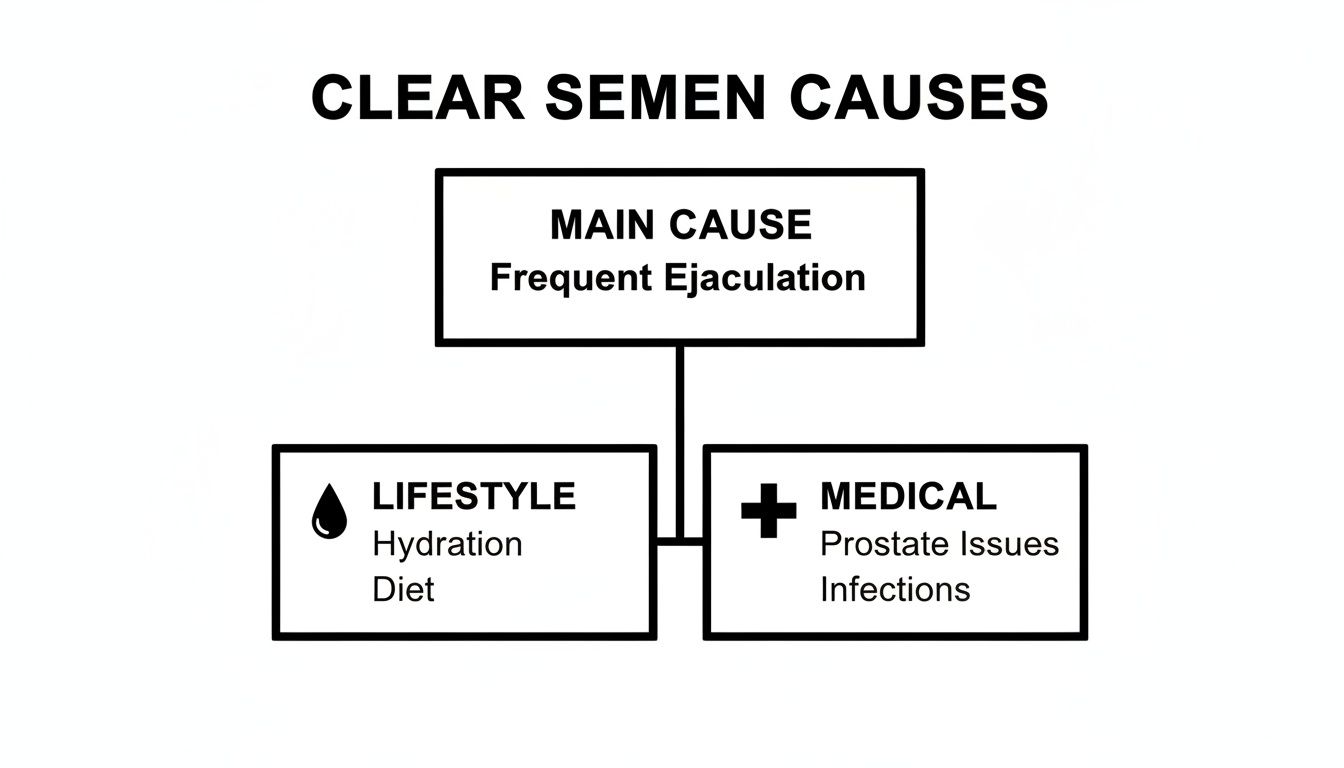
As the visual shows, while everyday habits might cause temporary changes, a semen analysis is what helps uncover any underlying medical reasons that might need attention.
Understanding the Fluid and Other Factors
Beyond just the sperm, the analysis also evaluates the seminal fluid they travel in. This isn't just transport fluid; it's packed with vital nutrients like fructose, which is the primary fuel source for sperm. Knowing the difference between glucose and fructose can help you appreciate why this specific sugar is so important for sperm energy.
The table below breaks down the key parameters measured in a semen analysis, giving you a clearer sense of what your results mean.
Understanding Your Semen Analysis Results
| Parameter | What It Measures | Healthy Range (WHO) |
|---|---|---|
| Volume | The total amount of ejaculate. | ≥ 1.4 mL |
| Concentration | The number of sperm per milliliter. | ≥ 16 million/mL |
| Total Count | The total number of sperm in the entire sample. | ≥ 39 million |
| Motility (Total) | The percentage of moving sperm. | ≥ 42% |
| Motility (Progressive) | The percentage of sperm swimming forward. | ≥ 30% |
| Morphology | The percentage of normally shaped sperm. | ≥ 4% |
| pH | The acidity or alkalinity of the semen. | ≥ 7.2 |
| Leukocytes | The number of white blood cells (infection markers). | < 1 million/mL |
These standards, first established by the World Health Organization (WHO) back in 1980, give clinicians a reliable baseline for interpreting your results accurately and consistently.
While clear semen can be completely normal, the real story is in the data. The WHO has updated its guidelines over the years, with the latest 2021 criteria setting the modern thresholds for what's considered normal.
Ultimately, a semen analysis provides a complete report card on your reproductive health. If you're ready to get real answers, our guide on how to read semen analysis results is the perfect next step.
Simple Steps for Improving Sperm Health

While a semen analysis gives you a snapshot of your current fertility, it’s not the final word. The good news is that many of the factors influencing sperm health are directly tied to your lifestyle, which means you have the power to make real, positive changes.
Think of it like training for a marathon. Your body needs the right fuel, proper rest, and a healthy environment to perform at its peak. Making simple, consistent adjustments to your daily routine can significantly boost your overall wellness and, in turn, your reproductive potential.
Interestingly, improving your sperm quality might do more than just help with fertility. Emerging research suggests that semen quality can be a decent predictor of a man's overall longevity. One study even found that men with top-tier sperm parameters lived an average of 2.7 years longer. You can check out the fascinating connection between semen quality and life expectancy for yourself.
Fuel Your Body with the Right Nutrients
Your diet is one of the most powerful tools you have for improving sperm health. Sperm cells are incredibly vulnerable to damage from something called oxidative stress, and a diet packed with antioxidants is your best defense.
Try to build your meals around these key foods:
- Fruits and Vegetables: Berries, leafy greens like spinach, and citrus fruits are loaded with vitamins C and E, which are powerful antioxidants that protect sperm.
- Healthy Fats: Foods like avocados, walnuts, and seeds provide the omega-3 fatty acids essential for building strong, healthy sperm cell membranes.
- Lean Proteins: Fish, chicken, and beans supply the crucial amino acids your body needs for sperm production.
A balanced diet doesn’t just benefit your sperm; it supports your entire body. Remember, small, sustainable changes are far more effective than drastic, short-term diets you can't stick with.
Create a Healthy Environment for Sperm Production
Sperm production is a delicate process, and it's particularly sensitive to temperature. There's a reason the testicles are located outside the body—they need to stay slightly cooler than your core body temperature to function properly.
Be mindful of activities that can cause overheating, such as:
- Spending a lot of time in hot tubs or saunas.
- Placing a hot laptop directly on your lap for long sessions.
- Wearing tight, restrictive underwear that traps heat.
Beyond diet and exercise, certain lifestyle tweaks can help naturally boost your testosterone, a critical hormone for male reproductive health. Things like managing stress, quitting smoking, and cutting back on heavy drinking can also have a profound impact.
Making these changes can feel incredibly empowering. For a deeper dive, our guide on how to increase sperm count offers even more practical tips. Every positive choice you make is a step in the right direction.
When You Should Talk to a Doctor
While temporary changes in the look of your semen are usually nothing to worry about, persistent issues or other symptoms are your body's way of raising a flag. It’s time to get a professional opinion.
Deciding to see a doctor isn't an admission of defeat; it’s actually a smart, proactive step toward getting solid answers about your reproductive health. Knowing when to make that call can be tricky, but there are a few clear signs that definitely mean it's time for a consultation.
The goal is to tell the difference between a normal, temporary change and a pattern that points to an underlying issue that needs a closer look.
Key Signs It’s Time for a Consultation
If your semen has been consistently clear or watery for several weeks and it’s on your mind, that alone is a perfectly good reason to check in with a doctor. But you should absolutely book an appointment if you notice clear semen along with any other symptoms.
Pay close attention to these specific warning signs:
- Pain or Discomfort: Any pain, swelling, or tenderness in your testicles is a non-negotiable reason to see a doctor.
- Issues with Ejaculation or Urination: If you experience difficulty, pain, or any changes in how you urinate or ejaculate, it's time to get it checked out.
- Changes in Sex Drive: A noticeable and lasting drop in your libido could be tied to hormonal factors that also affect male fertility.
- Lumps or Masses: If you find any unusual lumps in your scrotum or testicles, seek medical advice right away.
Think of a doctor's visit as gathering intelligence. You're bringing in an expert to help you understand what's going on and map out the best path forward for your health.
Who to See and What to Expect
When it comes to male reproductive health, a urologist or a fertility specialist is your go-to expert. These doctors have the specialized training to diagnose and treat conditions that can affect both your fertility and your overall well-being.
During your visit, the doctor will likely start by discussing your medical history. From there, they’ll probably recommend a semen analysis to get the full picture. This test is the foundational first step in figuring out what might be causing the changes you've noticed.
A specialist can accurately diagnose issues that you simply can't see on your own, such as:
- Varicoceles: These are enlarged veins in the scrotum that can overheat the testicles and impact sperm production.
- Hormonal Imbalances: Problems with testosterone or other key hormones that play a central role in your fertility.
- Infections: Underlying infections that could be quietly affecting your reproductive system.
Taking this step gives you access to a clear diagnosis and a plan tailored to you, putting you back in the driver's seat of your health journey.
Frequently Asked Questions About Semen Health
Getting into the specifics of male reproductive health can bring up a lot of questions. Let's tackle some of the most common concerns men have about their semen and clear up what really matters.
Does Drinking More Water Make Sperm Clearer?
Yes, absolutely. Your hydration level has a direct and immediate impact on semen consistency. Since your ejaculate is mostly water, staying well-hydrated increases the liquid portion, which can dilute the concentration of sperm and other cells.
The result? Semen that looks clearer or more watery. This is usually just a sign that you're drinking enough fluids, not a red flag for your fertility. On the flip side, dehydration can sometimes make semen appear thicker and more concentrated.
Can Diet Change the Color of My Sperm?
This is a common misconception. While your diet is a powerhouse for improving sperm health—things like sperm count, motility, and morphology—it almost never changes the actual color. A balanced, nutrient-rich diet provides the essential building blocks for healthy sperm, but it won't alter its typical whitish-gray appearance.
If you start noticing a persistent yellow, green, or even reddish tinge, it's far more likely to be a sign of an infection, prostate issue, or another medical condition. Don't just assume it was something you ate; an unusual color is a good reason to check in with a doctor.
Key Takeaway: Think of diet as fuel for sperm quality, not a tool for changing its color. Persistent discoloration, especially if your semen is also watery, warrants a professional opinion to rule out any underlying health issues.
How Long Until Lifestyle Changes Improve My Sperm?
Patience is key here, and it all comes down to the sperm production cycle. The entire process of creating and maturing new sperm, a journey called spermatogenesis, takes roughly 74 days.
Because of this biological timeline, any positive adjustments you make today—like cleaning up your diet, hitting the gym, cutting back on alcohol, or quitting smoking—will start to show up in a semen analysis in about two to three months. That's a realistic timeframe to see the tangible rewards of your hard work.
Ready to stop guessing and get a crystal-clear picture of your fertility? Hera Fertility offers physician-backed, at-home semen analysis with AI-powered interpretations that give you actionable insights. Order your kit and take control of your reproductive health journey.
Related Resource Articles
-
2 Liters of Water and Male Fertility: What You Need To Know
Does drinking 2 liters of water impact male fertility? Discover the science of hydration, sperm quality, and expert tips for reproductive health.
12 min read
-
Improve Sperm Health: A Comprehensive Guide
Concerned about sperm health? Learn how lifestyle changes, diet, and supplements can boost sperm count, motility, and morphology. Improve your fertility!
5 min read
-
How Long Does It Take to Get Pregnant? A Clear Timeline
Learn what is typical over months of trying, what happens after sex, when to test, and when both partners should consider a fertility evaluation.
11 min read