The lifespan of sperm isn't a single number—it can range from just a few minutes outside the body to several decades under clinical conditions. This guide will walk you through exactly what that means and break down the most common questions men have about how long sperm can live.
Understanding Sperm Survival in Different Scenarios
For many men, sperm health can feel like a black box. A huge piece of that puzzle is understanding how long sperm actually survive once they leave the body. The answer changes dramatically depending on where they end up.
Think of semen as a life-support system for sperm. It’s engineered to provide nutrients and maintain a stable pH balance. Once exposed to the outside world, this protective bubble pops. Factors like temperature shock and air exposure quickly damage the delicate sperm cells, rendering them useless within minutes to an hour at most. That’s why worrying about sperm surviving on everyday surfaces is generally not a real-world concern.
Key Factors Affecting Sperm Lifespan
A few environmental elements are make-or-break for sperm survival. Getting a handle on these gives you a solid foundation for understanding male reproductive health.
- Moisture: Semen has to stay moist. As soon as it dries, the sperm die. It's that simple.
- Temperature: Sperm are picky. They do best at or slightly below body temperature. Extreme heat or cold is fatal, fast.
- pH Levels: The fluid in semen creates a neutral pH environment. Any surface or liquid that’s too acidic or alkaline will destroy sperm on contact.
This explains why the lifespan varies so much. The specific conditions needed for a successful semen analysis are a world away from what sperm encounter in a hot tub. Knowing how these factors interact is crucial for any man trying to understand his fertility. For a closer look at another critical aspect of sperm health, you can learn more about how sperm motility works and why it matters.
The core takeaway is simple: sperm are built for a very specific environment. Outside of that protective setting, their ability to survive plummets. This is a fundamental concept in male reproductive biology.
The table below offers a quick summary of sperm survival times in common situations.
Sperm Lifespan At a Glance
This table provides a quick summary of how long sperm can survive in various conditions, from outside the body to clinical cryopreservation.
| Environment | Typical Survival Time |
|---|---|
| On a Dry Surface (Clothing, Skin) | A few minutes (until semen dries) |
| In a Hot Tub or Bath Water | Seconds to a few minutes |
| Inside the Male Body (Testes) | Several weeks |
| Frozen (Cryopreservation) | Decades |
Understanding these timelines helps put many common myths to rest while highlighting what's truly important for male reproductive health.
The Complete Sperm Journey: From Production to Ejaculation
To really get a handle on how long sperm live, we have to go back to the beginning—their origin story inside the male body. This whole process is called spermatogenesis, and it’s a lot more like a sophisticated manufacturing line than a simple on-off switch.
Think of the male reproductive system as a specialized factory that’s always running. It’s a marathon, not a sprint. Knowing the timeline of this factory is one of the most powerful pieces of information a man can have for his reproductive health, because it’s not an overnight process.
The Sperm Production Timeline
Here's the most critical fact to remember: the sperm a man ejaculates today didn't just show up this morning. Their development started weeks, and often months, ago.
This timeline is a game-changer because it creates a direct link between your current lifestyle and your future fertility. What you’re doing right now—the food you eat, your stress levels, how much you exercise—is a direct investment in the quality of the sperm that will be ready in a couple of months.
A huge misconception is that making a healthy change will immediately boost your sperm. The reality is, the sperm in today's ejaculate reflect your health and habits from roughly two to three months ago. This lag time is your window of opportunity to make a real difference.
From Stem Cell to Super Swimmer
The journey from a basic stem cell to a fully mature, ready-to-go sperm cell unfolds over a surprisingly long time. Older textbooks often quoted a 60 to 70-day window, but we now have a much more precise range thanks to modern research.
Groundbreaking studies have shown that in healthy men, a full cycle of spermatogenesis typically lasts between 42 to 76 days. That means the sperm you ejaculate today started developing anywhere from six to ten weeks ago.
This explains why it takes about two to three months for the benefits of quitting smoking, cutting back on heavy drinking, or even just recovering from a high fever to show up in a semen analysis. You can dig into the findings of this research on male reproductive cycles to learn more about the specifics.
Once sperm leave this carefully controlled production environment, their survival time changes dramatically depending on where they end up.
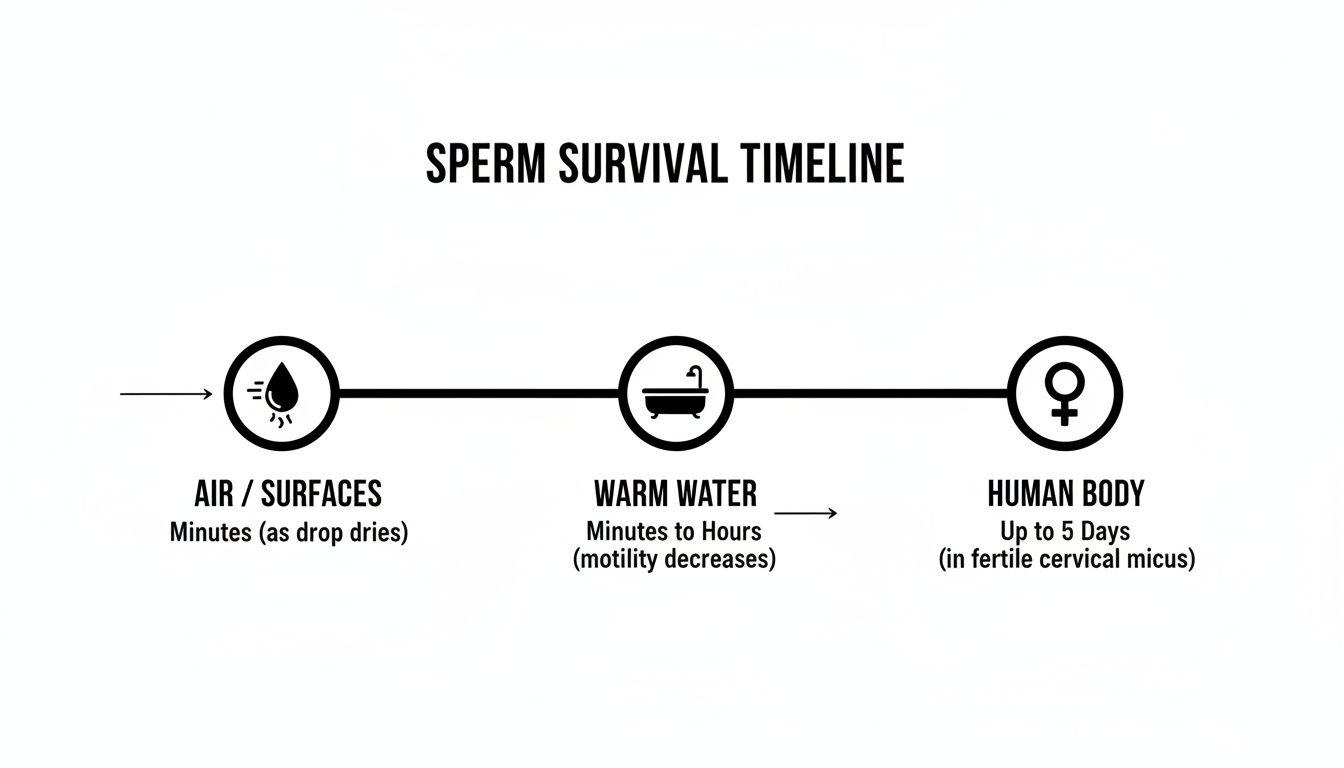
As you can see, there’s a massive difference between their lifespan on a dry surface versus their potential to survive for weeks inside the male body.
What This Means for You
This knowledge shifts the focus from looking for a quick fix to playing the long game with your reproductive health. Here are the key takeaways:
- Patience is a Virtue: Don't get discouraged if you make healthy changes and your next semen analysis doesn't show immediate improvement. It takes time for those benefits to work their way through the entire production cycle.
- Consistency is King: Since that "sperm factory" is always running, consistent healthy habits are far more effective than short, sporadic efforts. What you do every day builds the foundation for better sperm quality down the road.
- You're in the Driver's Seat: That 2-3 month production window is an empowering timeframe. It gives you a clear and actionable period to make lifestyle adjustments that can directly influence the health of your future sperm.
Common Myths About Sperm Survival Outside the Body
A lot of anxiety around male fertility comes from worrying about what happens to sperm once it leaves the body. It's a topic packed with myths, but the science is actually pretty simple. The moment sperm hits the outside world, the clock starts ticking—and it ticks fast.
Think of sperm as elite swimmers who can only perform in a perfectly maintained, Olympic-sized pool. Semen is that pool; it provides the ideal temperature, moisture, and pH they need to survive. Once they're out of that protective fluid, it's like yanking a fish out of water. Their environment becomes hostile almost instantly.
The two biggest threats to their survival are drying out and temperature shock. When semen lands on a dry surface like fabric, skin, or a countertop, the moisture evaporates in a flash. As the liquid disappears, the sperm cells die. This isn't a slow process—it happens within minutes.
The Truth About Sperm on Surfaces
Let's walk through the scenarios that cause the most concern and apply what we know about what sperm need to live. The core principle is always the same: no moisture, no survival.
Even if a sperm cell is technically "alive" for a few minutes on a surface, its ability to actually do its job is gone almost immediately. Exposure to air and different temperatures damages the cell's structure and burns through its energy stores, making it useless long before it completely dries out.
On skin or a dry surface, most sperm die within minutes. They rarely survive beyond 30–60 minutes as the semen dries out and the temperature change takes its toll. Medical sources confirm that sperm might last up to an hour in a warm, moist, sealed container, but once exposed to open air, their chances drop to zero. You can find more details on sperm's environmental limits from the Cleveland Clinic.
The takeaway is clear: sperm are incredibly fragile outside of their natural home. The conditions they need are so specific and easily disrupted that accidental exposure on surfaces is not a realistic concern for men's reproductive health.
This fragility is a core part of male reproductive biology. It also explains why labs that handle sperm for testing or fertility treatments are so incredibly meticulous.
What About Sperm Survival in Water?
Another common question is about sperm living in water, like in a bathtub or hot tub. While water definitely provides moisture, it introduces a whole new set of deadly challenges that make survival practically impossible.
Dilution: Semen is instantly diluted in a large volume of water. This scatters the sperm, separating them from the seminal fluid that protects them and gives them energy.
Temperature: Hot tubs and even warm baths are heated far above body temperature. This heat shock is instantly fatal to sperm, which are designed to thrive in a much cooler environment.
Chemicals: Pools and hot tubs contain chlorine and other chemicals that create a toxic environment, destroying sperm on contact. Even plain tap water can be lethal, causing sperm to absorb too much water and burst due to osmotic shock.
Because of this harsh combination of factors, sperm survival in a bath or hot tub is measured in seconds, not minutes. The environment is simply too hostile.
The Difference Between the Real World and a Clinical Setting
Understanding how quickly sperm die in everyday situations really puts into perspective why the conditions for a semen analysis or sperm preservation are so strict. In a clinical lab, technicians work hard to create the perfect five-star resort for sperm.
They use sterile containers, control the temperature down to the degree, and process the sample immediately to protect the sperm from air and contaminants. That controlled setting is the polar opposite of a countertop or a bathtub.
This contrast highlights a vital point for men's health. The focus shouldn't be on these nearly impossible scenarios of sperm surviving outside the body. Instead, the real factors that impact your fertility are all about the health and quality of the sperm being produced inside your body—something directly influenced by your lifestyle, diet, and overall wellness.
How Sperm Freezing Pauses the Clock Indefinitely
So far, we’ve seen that sperm have a pretty short shelf life depending on where they end up. But what if you could hit a pause button and stop the clock on sperm health altogether?
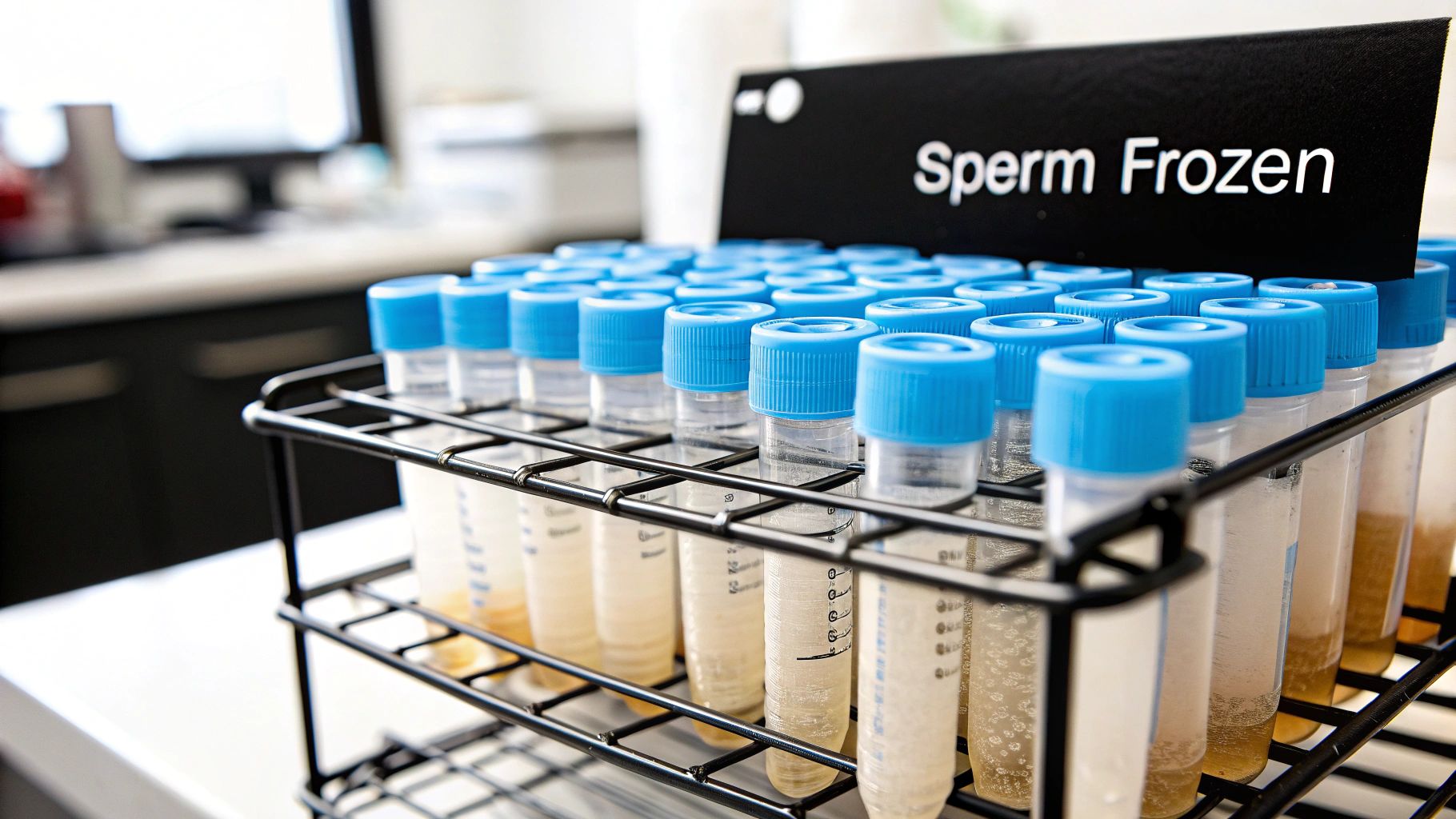
That’s exactly what cryopreservation, or sperm freezing, does. It completely changes the answer to the question "how long does sperm live?"
This process is a cornerstone of modern male fertility preservation. It gives men the power to safeguard their reproductive options in the future, whether they're planning for fatherhood later in life, about to undergo medical treatments that could harm fertility, or even considering sperm donation.
Think of it as a biological insurance policy.
The Science of Stopping Time
Inside a specialized lab, a semen sample is mixed with a cryoprotectant solution. This special fluid acts like an antifreeze for the cells, shielding them from damage as they’re carefully cooled down.
Once prepped, the sample is plunged into liquid nitrogen.
The temperature inside these storage tanks is an unbelievably cold -196°C (-321°F). At this extreme temperature, all biological activity inside the sperm cells grinds to a complete halt. They enter a state of suspended animation, literally frozen in time.
In this cryopreserved state, sperm can remain viable for years, and even decades, without any significant degradation. Their biological clock is completely paused until they are needed.
This incredible technology offers men a powerful sense of control over their reproductive timeline. It separates the question of sperm health from the immediate pressures of age or life circumstances, giving you a secure option for the future.
Why a Baseline Analysis Is a Critical First Step
Before you commit to long-term storage, the single most important thing you can do is get a comprehensive semen analysis. Freezing sperm is an investment, and you want to be sure you're preserving a high-quality, healthy sample.
A baseline analysis gives you a complete picture of your current sperm health. It measures the key factors that determine if a sample is a good candidate for freezing.
- Sperm Count: Ensures there are enough sperm to make freezing worthwhile.
- Motility (Movement): Confirms that the sperm are active and healthy swimmers before they're frozen.
- Morphology (Shape): Checks that the sperm have the correct structure, which is vital for their function.
Knowing these numbers upfront is empowering. It helps you and your doctor make an informed decision, ensuring the sample you choose to preserve has the best possible potential down the road.
Actionable Next Steps for Men Considering Freezing
If you're thinking about sperm freezing, the process is pretty straightforward. It all starts with understanding your own fertility baseline.
This isn't just a formality; it's the foundation for making smart, proactive decisions about your future.
Getting a clear and accurate semen analysis is the logical first move. This initial screening provides the crucial data needed to move forward with confidence, whether you're preserving sperm due to medical reasons, career plans, or simply want to keep your options open for the future.
Understanding Sperm Survival After a Vasectomy
Deciding to get a vasectomy is a big step for men who are certain about their family planning. It's one of the most reliable forms of permanent contraception out there, but there’s a critical detail every man needs to get right: it doesn't work overnight. Success hinges on knowing how long sperm can stick around in your system after the procedure.
Think of your reproductive system like a set of pipes. A vasectomy cuts and seals the main pipes—the vas deferens—so new sperm can't get out of the testes. But it doesn't instantly clear out the sperm that are already "downstream" from the blockage. There's always a reserve of mature, active sperm waiting in the upper parts of the vas deferens.
These leftover swimmers don't just disappear. They can hang out in your system for weeks, sometimes even months, after your surgery. The only way to get them out is through ejaculation.

The Clearing-Out Phase
Your urologist will give you the exact game plan, but it typically takes anywhere from 15 to 25 ejaculations over two to three months to completely flush the pipes. During this "clearing-out" period, you absolutely must continue using another form of reliable birth control.
A vasectomy is only considered a success after a follow-up test confirms you have a zero sperm count. Until your doctor gives you the all-clear, you have to assume your reproductive system is still active.
This isn't a step you can rush or skip. The entire effectiveness of the procedure depends on making sure every last sperm has been cleared out. It's a temporary but non-negotiable part of the process to get that total peace of mind.
Why Post-Vasectomy Verification is a Must
So, how do you know for sure when you’re in the clear? The only way to confirm a vasectomy worked is with a post-vasectomy semen analysis. This simple lab test puts a semen sample under a microscope to see if any sperm are present.
Your doctor will schedule this for you, usually around 12 weeks after the procedure. It's the critical follow-up that gives you definitive proof that the plumbing is officially closed for business. A result showing zero sperm is the confirmation you need. If you want to get familiar with the process, you can learn more about what a professional semen analysis and what it measures.
What the Test Results Mean for You
Getting that confirmation of a zero sperm count is the final green light. It’s the moment you can finally feel 100% confident that the procedure was a success. In the rare case that sperm are still found, your doctor will tell you what to do next, which usually just means waiting a bit longer and re-testing.
- Patience is Key: Give your body the time it needs to clear the system naturally.
- Follow Medical Advice: Stick to your urologist’s instructions on using backup contraception and getting your follow-up test.
- Verification is Mandatory: Never assume the procedure worked without getting the lab test to prove it.
This final check-up isn't just a formality; it's the most crucial part of the whole vasectomy journey. It delivers the concrete evidence you need to know that your long-term family planning goals are officially and permanently met.
Why Sperm Health Is a Window Into Your Overall Health
We’ve talked a lot about how long sperm survive in different environments, but the conversation can’t end there. Sperm health is so much more than a number on a lab report; it’s one of the most powerful indicators of a man's overall wellness.
If you only think of sperm quality as a reproductive metric, you're missing the bigger picture. A growing body of research shows a solid link between semen parameters—like sperm count and motility—and a man’s long-term health, including his cardiovascular health and even his lifespan.
When you step back and think about it, this connection makes perfect sense. The same lifestyle choices that tank your sperm health are the very ones that cause damage throughout the rest of your body.
The Connection Between Sperm and Systemic Health
Think of sperm production as a highly sensitive manufacturing process. It’s easily thrown off by negative inputs from your daily life, which actually makes it an excellent barometer for what’s going on under the hood.
The biological stresses that damage sperm cells are the same ones putting a strain on your heart, your metabolism, and your immune system. It’s all interconnected.
For instance, oxidative stress—a key villain in poor sperm quality—is also a major player in chronic diseases like heart disease and diabetes. A diet heavy in processed foods, smoking, chronic stress, or just not moving enough all ramp up oxidative stress body-wide. Your sperm are often one of the first systems to show the damage.
A semen analysis can be seen as more than just a fertility test; it's a proactive health screening. It gives you a tangible snapshot of what's happening inside, providing a clear incentive to make positive changes that benefit your entire body.
Making this mental shift is incredibly powerful. It reframes the goal from just "improving my numbers" to building a foundation of total-body wellness. Better sperm health becomes a natural, positive side effect of taking better care of yourself.
Lifestyle Choices Impact More Than You Think
The best part? You have a massive amount of control here. The daily choices you make can either support or sabotage both your reproductive health and your long-term vitality.
The lifestyle factors with the biggest impact are often the most straightforward ones, but consistency is the name of the game.
Diet: Foods rich in antioxidants—think colorful fruits, vegetables, and nuts—are your best defense against oxidative stress. On the flip side, processed foods loaded with sugar and unhealthy fats create inflammation that can derail sperm production.
Exercise: Regular, moderate physical activity is fantastic. It improves blood flow, cuts down on stress, and helps you maintain a healthy weight, all of which are crucial for making healthy sperm. Just don't overdo it—excessive, high-intensity training can sometimes backfire.
Stress Management: When you're constantly stressed, your body pumps out cortisol, a hormone that can interfere with the signals needed for sperm production. Finding healthy outlets, whether it’s hitting the gym, meditation, or a hobby, is non-negotiable.
Avoiding Toxins: Cutting back on tobacco, excessive alcohol, and environmental chemicals significantly lowers the toxic burden on your body. This allows your reproductive system to function the way it’s supposed to.
How Lifestyle Choices Impact Your Sperm Health
Because it takes about 2-3 months to produce a new batch of sperm, the choices you make today directly influence the quality of the sperm you'll have three months from now. Here’s a quick breakdown of how common habits can help or harm your sperm during that production cycle.
| Lifestyle Factor | Potential Negative Impact on Sperm | Recommended Positive Action |
|---|---|---|
| Diet | High intake of processed foods, trans fats, and sugar increases inflammation and oxidative stress, damaging sperm DNA. | Eat a diet rich in antioxidants like fruits, vegetables, nuts, and fish high in omega-3s to protect sperm from damage. |
| Exercise | A sedentary lifestyle can lead to obesity and poor circulation. Overtraining can increase oxidative stress and testicular temperature. | Engage in 30-45 minutes of moderate exercise (like brisk walking, jogging, or weightlifting) 3-5 times per week. |
| Stress | Chronic stress elevates cortisol, which can disrupt testosterone production and impair sperm development. | Incorporate stress-reduction techniques like meditation, deep breathing, yoga, or spending time in nature for 15-20 minutes daily. |
| Alcohol | Heavy drinking (>14 drinks/week) can lower testosterone, reduce sperm count, and alter sperm shape. | Limit alcohol consumption to no more than 1-2 drinks per day, with several alcohol-free days each week. |
| Smoking | Chemicals in cigarette smoke are toxic to sperm, reducing count, motility, and morphology. | Quit smoking completely. Improvements in sperm quality can often be seen within 3 months of quitting. |
| Sleep | Chronic sleep deprivation (<6 hours/night) can disrupt hormonal balance and negatively impact sperm production. | Aim for a consistent 7-9 hours of quality sleep per night to support healthy hormone regulation. |
Ultimately, this holistic approach encourages you to stop seeing your reproductive health as a separate issue. It's an integral part of your complete well-being. By taking steps to improve your overall health, you are directly investing in both your reproductive future and your overall vitality.
Common Questions Answered
We've covered a lot of ground, but you probably still have a few questions. That's completely normal. This section tackles some of the most common things men wonder about when it comes to sperm lifespan and health.
Let's clear things up with some direct, simple answers.
| Question | Answer |
|---|---|
| How Long Does Sperm Live After Ejaculation? | Outside the body, sperm are incredibly fragile. Exposed to air on skin or fabric, they dry out and die within minutes. In a lab, they might last up to an hour under perfect conditions, but in the real world, their survival is extremely short once they leave the body. |
| Do Lifestyle Choices Really Affect Sperm Quality? | Yes, absolutely. The sperm you ejaculate today started developing two to three months ago. This means your diet, exercise, stress levels, and alcohol intake from that entire period directly impact their health. Positive changes can lead to real improvements. |
| Can Heat From Laptops or Hot Tubs Damage Sperm? | It certainly can. Sperm production works best at a temperature slightly cooler than the rest of the body. Frequent use of hot tubs, saunas, or even resting a hot laptop on your lap can raise scrotal temperature enough to temporarily hurt sperm production and quality. |
| Is the Damage from Heat Permanent? | The good news is, no. The effects of heat on sperm are almost always reversible once you remove the heat source. For men exploring their reproductive health, minimizing this kind of heat exposure is one of the easiest and most effective steps you can take. |
Hopefully, these quick answers help demystify some common concerns and separate biological fact from fiction. Understanding the basics is the first step toward taking control of your reproductive health.
At Hera Fertility, we believe understanding your reproductive health should be clear and accessible. Our AI-powered platform turns complex lab results into a simple Hera SmartScore, giving you actionable insights and a personalized plan to move forward. Get your physician-approved lab order in minutes or upload your existing results for a free, instant analysis.
Related Resource Articles
-
10 Proven Ways to Boost Testosterone Naturally for Male Fertility in 2025
Discover 10 actionable ways to boost testosterone naturally. Our guide covers diet, exercise, and lifestyle changes to support male reproductive health.
25 min read
-
1 a Day Vitamin for Male Fertility: Is It Enough?
Considering a 1 a day vitamin for male fertility? Learn which nutrients matter for sperm health and if a daily multivitamin is the right choice for you.
17 min read
-
Average Sperm Morphology: What It Means for Male Fertility
Explore average sperm morphology and how it affects fertility. Learn common causes of low morphology and practical steps to improve results.
19 min read