If you're looking for clear, straightforward ways to improve sperm motility, the path forward involves a combination of targeted diet, smart exercise, and key lifestyle adjustments. The core strategy is pretty simple: reduce oxidative stress, balance hormones, and avoid environmental stressors like excessive heat.
This three-pronged approach can yield significant improvements, not just for your male fertility, but for your overall health.
A Practical Guide to Boosting Sperm Motility

Navigating the world of male fertility can feel overwhelming, especially when you're faced with complex medical terms on a lab report. This guide is designed to cut through the jargon and give you actionable advice you can start using today.
Sperm motility is a critical piece of the male fertility puzzle. It's simply the ability of sperm to swim effectively. When motility is low, it means fewer sperm are strong enough swimmers to complete their mission.
What This Guide Offers
This guide is a realistic roadmap for improving your sperm health. We'll explore several key areas that have a direct impact on your reproductive wellness, focusing on practical changes rather than quick fixes or unproven hacks.
You'll get a clear understanding of:
- The essential link between your diet and sperm quality.
- How the right kind of exercise can support healthy male hormone levels.
- Simple lifestyle tweaks that protect sperm from everyday damage.
- How to monitor your progress and know when your efforts are paying off.
Taking control of your reproductive health is an empowering step. The changes we'll discuss aren't just about male fertility; they contribute to your overall well-being, creating a solid foundation for long-term health.
Our goal is to equip you with the knowledge to make informed decisions. By understanding the 'why' behind each recommendation—from specific foods to add to your grocery list to adjustments in your daily routine—you can build a sustainable plan that fits your life. Let’s get started.
Key Strategies for Improving Sperm Motility
Here's a quick look at the core strategies we'll be diving into. Each one targets a different aspect of sperm production and function, working together to boost motility.
| Strategy | How It Helps | Expected Timeline for Change |
|---|---|---|
| Dietary Changes | Provides antioxidants to fight oxidative stress and delivers essential nutrients for sperm energy production. | 2-3 months |
| Targeted Exercise | Balances hormones, improves blood flow, and reduces oxidative stress. | 1-2 months |
| Lifestyle Adjustments | Minimizes exposure to heat and toxins that can directly damage sperm and impair their swimming ability. | Immediate protection; noticeable results in 3 months |
| Supplementation | Fills nutritional gaps and provides high doses of specific compounds (like CoQ10) proven to fuel sperm mitochondria. | 3-6 months |
These approaches form a comprehensive plan. While supplements can provide a targeted boost, they work best when combined with a healthy foundation built through diet, exercise, and smart lifestyle choices.
What Is Sperm Motility and Why Does It Matter So Much?
When you first look at a semen analysis report, the numbers can feel a bit overwhelming. While total sperm count tends to grab all the headlines, sperm motility is arguably just as critical for male fertility. So, what exactly is it?
Simply put, sperm motility is the ability of sperm to swim effectively. It’s not just about wiggling around—it’s about purposeful, forward motion. A healthy sperm needs to be a strong, determined swimmer.
Think of it this way: your sperm count is the number of players on your team. But motility is a measure of how many of those players are actually athletic, energetic, and capable of sprinting down the field. A huge team is great, but if most of the players are just standing around on the sidelines, your odds of success are pretty low.
The Two Types of Motility: What You Need to Know
Your semen analysis will likely break motility down into two key categories. Understanding the difference is crucial for getting a clear picture of your reproductive health.
Total Motility: This is the percentage of sperm that show any movement at all. It includes the strong swimmers, but also the ones just twitching in place or swimming in tight little circles without making real progress.
Progressive Motility: This is the number that really counts. It measures the percentage of sperm that are actively swimming forward in a straight line or in large, sweeping circles. These are your all-stars—the effective swimmers with the power and direction to actually reach their destination.
When a fertility expert looks at your results, they're zoning in on progressive motility. A high percentage here is a fantastic sign. According to the World Health Organization (WHO), a healthy sample should have at least 32% progressively motile sperm. You can get a deeper look into what a sperm motility test reveals and why these benchmarks are so important.
Why Motility Is a Cornerstone of Male Fertility
For natural conception, strong motility is non-negotiable. The journey a sperm undertakes is an epic marathon, and only the best swimmers have a shot at finishing the race.
Poor motility, known clinically as asthenozoospermia, means that a lower-than-ideal percentage of your sperm are moving as they should. This can seriously reduce the chances of conception, even if your total sperm count is perfectly normal.
The great news is that sperm motility is one of the most responsive aspects of male health. Unlike some genetic factors that are set in stone, motility can often be significantly improved through targeted, natural lifestyle changes. This puts a surprising amount of control right back in your hands.
Understanding what motility is—and why it’s so vital—is the first step. It provides the motivation for the practical strategies we’ll cover next. Every positive change you make, from adjusting your diet to avoiding that hot tub, directly supports the energy, structure, and function of your sperm. You’re essentially giving them the fuel and protection they need to be strong, effective swimmers.
How Exercise Impacts Your Sperm Health

It’s no secret that physical activity is a pillar of men's health, but its benefits drill right down to the quality of your sperm. We often hear generic advice to "get more exercise," but when you’re trying to improve sperm motility, the type and consistency of that exercise really matter.
The right routine does more than just keep you fit; it fine-tunes the internal environment your sperm need to thrive.
Regular, moderate exercise works on a few different levels. First, it helps balance key male hormones like testosterone, which is fundamental to sperm production. It also boosts circulation, ensuring that plenty of oxygen and vital nutrients are getting to your reproductive system.
Most importantly, consistent movement helps fight off oxidative stress—one of the main culprits behind sperm damage. By keeping this cellular-level damage in check, you're actively protecting your sperm and their swimming ability.
Finding the Right Balance: Intensity Matters
When it comes to exercise and sperm health, more isn't always better. The goal is to challenge your body without sending it into a state of chronic stress.
In fact, extreme, high-intensity workouts can sometimes backfire. They can actually increase inflammation and oxidative stress, which is the exact opposite of what you want when you're trying to improve your fertility.
Think of it as finding the sweet spot. You want to get your heart rate up and feel energized, not completely wiped out. This is where moderate-intensity exercise is the clear winner for male reproductive health.
Studies consistently show that men who engage in regular, moderate physical activity have better sperm parameters—including motility—than men who are sedentary or those who engage in overly exhaustive training. The key is consistency over intensity.
This means you absolutely do not need to train like a professional athlete. The focus should be on building a sustainable routine you can actually stick with long-term.
What Does Moderate Exercise Look Like in Practice?
Moderate-intensity continuous training (MICT) is one of the most effective approaches. This is just a technical term for maintaining a steady effort for a set period.
A simple way to know if you're in the right zone is the "talk test." You should be able to hold a conversation while you're working out. If you're too out of breath to string a sentence together, you're probably pushing too hard.
Here are a few great examples of moderate exercise for men:
- Brisker Walking: A 30-minute walk where you're moving fast enough to raise your heart rate.
- Jogging: A steady, comfortable pace for 20-30 minutes, 3-4 times a week.
- Cycling: Using a stationary bike or riding outdoors on fairly flat terrain.
- Swimming: An amazing full-body, low-impact workout that has the added benefit of keeping scrotal temperature down.
These activities are perfect because they improve your cardiovascular health and lower stress without putting the body under too much strain. If you’ve been out of the game for a while, it might be helpful to check out a practical guide on how to start working out again.
The Evidence for Moderate Workouts
The link between moderate workouts and better sperm isn't just a theory; it's backed by solid research. One notable study followed sedentary men for 24 weeks as they started various exercise programs.
The results were telling. The group that performed moderate-intensity training saw the most significant and lasting benefits. After just six months, these men saw a 12.4% increase in sperm motility compared to the men who didn't exercise.
They also had an 8.3% increase in semen volume and a 14.1% higher sperm concentration. These are really encouraging findings that show how consistent effort pays off.
This data highlights a crucial point: small, consistent changes lead to big improvements. You don't need to overhaul your entire life overnight. Just adding 30 minutes of moderate activity on most days of the week can make a real, measurable difference. The journey to better sperm motility is a marathon, not a sprint—and a steady, moderate pace wins the race.
Fueling Fertility with the Right Diet and Nutrients

Just like a high-performance engine needs the right fuel, your body needs the right nutrients to produce healthy, motile sperm. Your diet is one of the most powerful tools you have to directly influence sperm quality. This isn't about restriction; it's about strategically adding foods that protect and power your sperm.
The biggest enemy we're fighting with a fertility-focused diet is oxidative stress. Think of it as cellular-level rust caused by unstable molecules called free radicals. Sperm are incredibly vulnerable to this damage, which can wreck their DNA, weaken their cell membranes, and seriously slow them down.
The solution? Antioxidants. These compounds, found in whole foods, act like bodyguards, neutralizing free radicals before they can do any harm. By loading your plate with antioxidant-rich foods, you create a protective environment where stronger, more resilient sperm can thrive.
Building a Sperm-Friendly Plate
Making big dietary changes can feel overwhelming, so start small. The goal is to consistently add more of these key nutrients and foods into your weekly routine.
Here are the nutritional all-stars for male fertility:
- Zinc: This mineral is a true powerhouse. It’s essential for testosterone production, sperm formation, and motility. You can find it in oysters, beef, pumpkin seeds, and lentils.
- Selenium: A potent antioxidant, selenium helps protect developing sperm and is crucial for their structure. Brazil nuts are famously rich in it—just one or two a day can meet your needs. Other good sources include tuna, sardines, and eggs.
- Vitamin C: Another key antioxidant, Vitamin C is abundant in seminal plasma and helps shield sperm DNA from free radical attacks. Load up on citrus fruits, bell peppers, strawberries, and broccoli.
- Lycopene: This is the antioxidant that gives tomatoes and watermelon their red color. It’s been shown to be particularly good at improving sperm motility and shape. Fun fact: cooked tomato products, like sauce or paste, make the lycopene easier for your body to absorb.
Weaving these foods into your diet doesn't have to be complicated. Think a handful of walnuts on your morning yogurt, a spinach salad with grilled salmon for lunch, and a tomato-based chili for dinner. For more ideas on building a solid foundation, check out our guide to improve your overall sperm health.
Think of your diet as your first line of defense. The nutrients you eat are the raw materials your body uses to build new, healthy sperm over their roughly 74-day development cycle. What you eat today directly impacts the quality of your sperm three months from now.
Healthy Fats and Smart Food Choices
Not all fats are created equal. Omega-3 fatty acids are critical for the flexibility of the sperm membrane, which is vital for fertilization. Foods rich in these healthy fats include fatty fish like salmon and sardines, as well as walnuts, chia seeds, and flaxseeds.
It's also worth considering specific protective compounds. For example, high-quality olive oil contains hydroxytyrosol, a powerful antioxidant that helps protect cells from damage. You can learn about the benefits of high hydroxytyrosol olive oil to see how certain ingredients can offer extra support.
The Role of Supplements in Improving Motility
While a food-first approach is always best, targeted supplements can give you a significant boost, especially for filling any nutritional gaps. Certain nutrients have been studied extensively for their direct impact on male fertility.
Research consistently shows that specific antioxidant supplements are linked to big improvements in sperm motility. They work by directly fighting the oxidative stress that damages sperm membranes and DNA—a known cause of poor swimming ability.
Here are some of the most evidence-backed supplements for men:
- Coenzyme Q10 (CoQ10): This antioxidant is a crucial part of the mitochondria—the "powerhouse" inside every sperm cell. It helps generate the energy sperm need to swim.
- L-Carnitine: This amino acid plays a key role in sperm energy metabolism and maturation.
- Ashwagandha: An adaptogenic herb, ashwagandha has been shown to reduce stress, balance hormones, and improve sperm concentration and motility.
Before starting any new supplements, it's always smart to talk with a healthcare provider. They can help you figure out the right choices and doses based on your specific needs. Combining a nutrient-dense diet with smart supplementation can be a powerful strategy to naturally improve sperm motility.
Simple Lifestyle Changes Can Make a Major Difference
Beyond the big pillars of diet and exercise, some of the most powerful improvements to sperm motility are hiding in plain sight—right in your daily habits. You don't need a drastic life overhaul. Instead, think of these as small, smart adjustments that protect your sperm from common, everyday stressors.
Let’s walk through the changes that give you the most bang for your buck.
Keep Things Cool
There's a reason testicles are located outside the body: they need to stay a few degrees cooler than your core body temperature to produce healthy sperm. When they overheat, sperm production slows down, and motility can take a serious hit.
This means you need to be mindful of common heat sources most men never think twice about.
- Laptops: That convenient work-from-the-couch setup might be a problem. Laptops generate a surprising amount of heat, creating a less-than-ideal environment right where you don't want it. Your next step: use a lap desk or simply move to a table.
- Hot Tubs and Saunas: Soaking in a hot tub or spending a lot of time in a sauna feels great, but it can raise scrotal temperature enough to temporarily shut down healthy sperm production. Your next step: limit these activities while you're focused on your fertility goals.
- Constrictive Clothing: Tight-fitting underwear, like briefs, can press the testicles against your body, raising their temperature. Your next step: make a simple switch to looser options like boxers or boxer briefs to promote better air circulation.
These are simple but incredibly effective tweaks. By minimizing direct heat, you’re giving your body the environment it needs to produce strong, healthy swimmers.
Re-evaluate Smoking and Alcohol
This isn’t a lecture, just the straight facts. Both smoking and heavy drinking have well-documented, negative effects on nearly every aspect of male fertility.
Smoking is especially destructive. The toxins in cigarette smoke flood the body with oxidative stress, and sperm are one of the first cell types to suffer. This damage can torpedo your sperm concentration, cripple motility, and even harm the DNA inside the sperm. If you're a smoker, quitting is one of the single most impactful things you can do.
Likewise, while an occasional beer isn't going to cause a problem, heavy or frequent alcohol use can throw your male hormones out of whack, especially testosterone. This directly leads to lower sperm counts and motility. For now, moderation is your best strategy.
The good news? This kind of damage is often reversible. When you cut out things like smoking and high heat, your body can get back to producing healthier sperm. Studies show measurable improvements can happen within just a few months.
Prioritize Sleep and Manage Stress
Never, ever underestimate the power of a good night's sleep. Your body does its most important hormonal work while you rest, including regulating testosterone. When you're chronically sleep-deprived, that delicate balance gets disrupted, directly interfering with sperm production.
Aiming for a consistent 7-9 hours of quality sleep isn't a luxury; it's a non-negotiable for supporting your reproductive health.
Just as important is getting a handle on stress. When you're constantly wound up, your body pumps out cortisol, the primary stress hormone. Chronically high cortisol levels are known to suppress testosterone production and hurt sperm health.
Your next step is finding healthy ways to unwind.
- Try mindfulness or meditation for just a few minutes a day.
- Get back into a hobby you enjoy.
- Spend some time outside in nature.
- Make sure you’re getting regular, moderate exercise (which is a great stress-buster in itself).
These lifestyle adjustments all work together. By reducing heat, avoiding toxins, sleeping well, and managing stress, you’re not just improving your sperm motility—you’re investing in your overall health for the long haul.
When to Test and Plan Your Next Steps
Making these positive lifestyle changes is a fantastic commitment to your reproductive health. But after all that hard work, the big question is: how do you know if it's actually working? Knowing when to check in on your progress is key to staying motivated and making smart decisions.
First thing to understand: this isn't an overnight fix. The entire sperm production process, called spermatogenesis, takes roughly 74 days. This means the healthy habits you start today will really show their effects on the sperm you produce about two to three months from now.
Your Timeline for Seeing Improvements
Patience and consistency are your two best friends here. Because of that 74-day production cycle, you can't expect to see major shifts in a week or two. You need to stick with your new diet, exercise, and lifestyle habits for at least three months to give your body enough time to produce a completely new, healthier batch of sperm.
This timeline gives you a general idea of what to expect on your journey to better sperm motility.
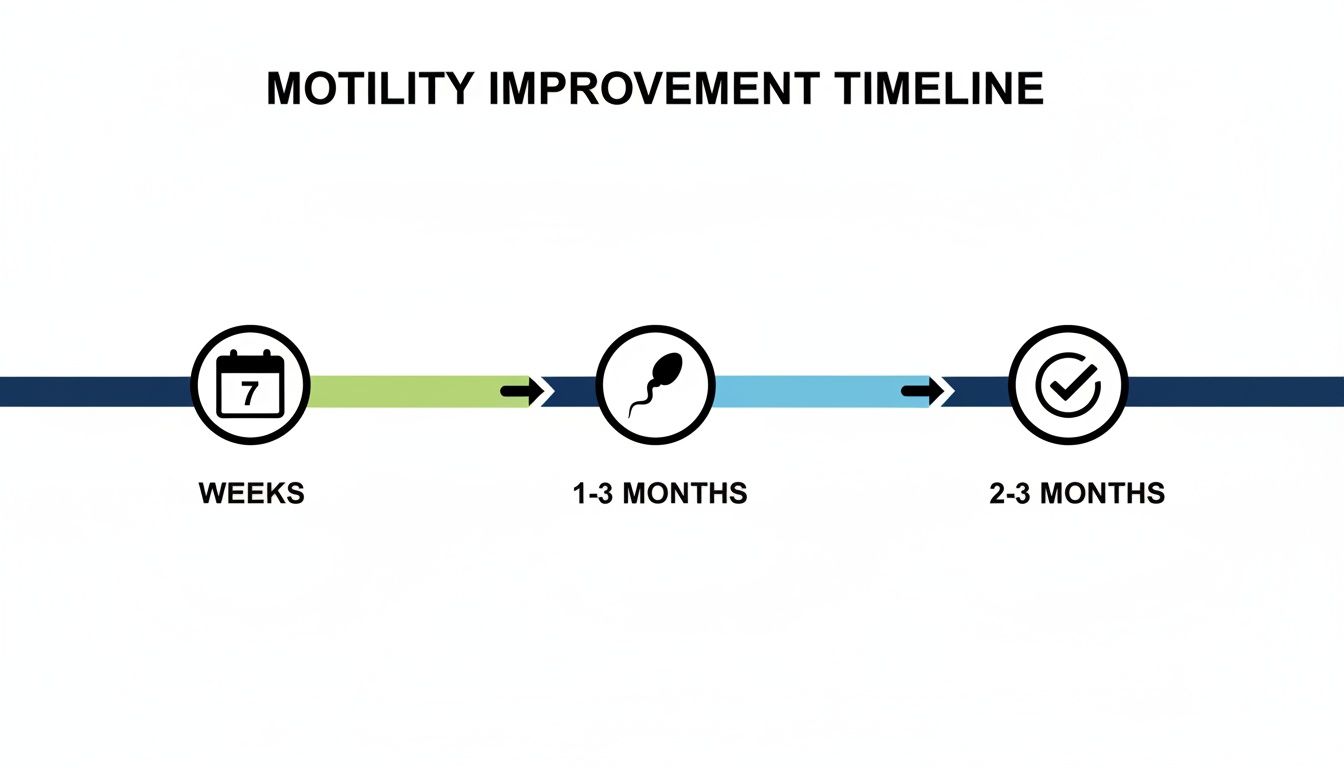
As you can see, the most significant, measurable changes really become clear after you’ve completed a full sperm production cycle.
Why a Baseline Semen Analysis Is Smart
To actually know if you're making progress, you need a starting point. Getting a baseline semen analysis before you dive into major changes gives you a clear snapshot of where things stand right now. It provides concrete numbers for motility, count, and other key metrics, turning guesswork into real data.
Without that baseline, it’s just a shot in the dark. Think of it like a fitness journey—you take a "before" picture so you can truly appreciate the "after." A semen analysis serves the exact same purpose for your fertility.
Getting tested isn't an admission of a problem; it's a proactive step toward understanding and owning your health. It gives you the information you need to build a plan that actually works for you.
Modern testing has made this process incredibly convenient and private. Once you have your report, the next step is figuring out what it all means. You can learn how to read semen analysis results to make sense of the numbers. This knowledge empowers you and your doctor to decide on the best path forward, whether that’s sticking with your natural plan or exploring other options.
Common Questions About Improving Sperm Motility
Navigating the journey to improve sperm motility often brings up a lot of questions. Getting clear, direct answers can help you feel more confident and in control. Here are some of the most common queries men have, answered in a straightforward way.
How Soon Can I Expect to See Results?
This is the number one question for a reason. Because new sperm take about 74 days to fully develop and mature, you’ll need to stick with your new habits for at least two to three months before expecting to see a real change on a semen analysis report.
When it comes to benefits from things like moderate exercise, some studies show the most significant gains appear after about six months of consistent activity. The main takeaway here is that consistency over time is what drives real results. This isn't a quick fix, but a long-term investment in your health.
Is a Healthy Diet Alone Enough to Improve Motility?
A nutrient-dense diet is incredibly powerful, but you'll almost always get better results with a comprehensive approach. Eating foods packed with antioxidants like zinc and selenium directly supports sperm health by fighting off oxidative stress. Think of it as building a strong foundation.
However, you'll see the most significant improvements by combining that great diet with other key factors, such as:
- Regular, moderate exercise to keep male hormones in balance.
- Smart stress-reduction techniques.
- Avoiding known sperm-killers like excessive heat and tobacco.
Should I Worry About High-Intensity Exercise?
Not necessarily, but moderation is your best strategy when the goal is fertility. Research consistently shows that moderate, regular exercise—think jogging, swimming, or brisk walking—provides the most benefit for sperm health.
In contrast, extremely intense, exhaustive workouts can sometimes increase oxidative stress and raise scrotal temperature. Both of these outcomes can temporarily harm sperm quality. For male fertility, think consistency, not all-out intensity.
Are Supplements for Sperm Motility Worth It?
They can be a great addition, especially if you suspect your diet isn't always perfect. Certain supplements are backed by solid scientific studies for their ability to improve sperm parameters, including motility. The big players here are Coenzyme Q10 (CoQ10), Vitamin C, Zinc, and Selenium.
That said, it's always a good idea to chat with a healthcare provider before starting any new supplement regimen. A semen analysis can also help pinpoint if you have specific deficiencies that targeted supplements could address, making your approach that much more effective.
Ready to stop guessing and get a clear picture of your sperm health? The platform from Hera Fertility makes it simple. Get a physician-signed lab order, test at a convenient location, and receive a clear, personalized report with actionable next steps. Take control of your male fertility journey.
Related Resource Articles
-
Understanding Low Sperm Motility Causes and How to Improve Them
Discover the main low sperm motility causes, from lifestyle choices to medical factors. Learn actionable steps to support and improve male fertility.
24 min read
-
Ubiquinol vs Ubiquinone Which CoQ10 Is Best for Male Fertility
Discover in our ubiquinol vs ubiquinone comparison which CoQ10 form best boosts male fertility, sperm health, and bioavailability for men trying to conceive.
22 min read
-
L-carnitine for Sperm Motility: Boost Fertility
Discover how L-carnitine for sperm motility can boost male fertility. Explore the science, evidence, and safe dosages. Improve your chances with this guide.
15 min read