Knowing how to prepare for a vasectomy isn't complicated, but getting the details right makes all the difference. The process really starts with a solid chat with your urologist and then moves into some practical planning—like clearing your schedule for recovery and figuring out your ride home. Nail these steps, and you're setting yourself up for a smooth, low-stress experience.
Your Essential Vasectomy Preparation Checklist
Deciding to get a vasectomy is a huge step in managing your reproductive future. While the procedure itself is surprisingly quick, the prep work you do beforehand is what really paves the way for a successful outcome and an easy recovery. Let's break down everything you need to know, from the initial consultation to that final all-clear.
Thinking about a vasectomy is one thing, but committing to it is another. It all begins with being absolutely sure this permanent decision is the right one for your life. For many men, the finality of it brings a massive sense of relief. For others who might want to keep their options open, it could be worth looking into sperm banking services before moving forward.
Understanding the Big Picture
It helps to view the whole process on a timeline. This isn't just one big event; it's a series of small, manageable steps leading up to procedure day.
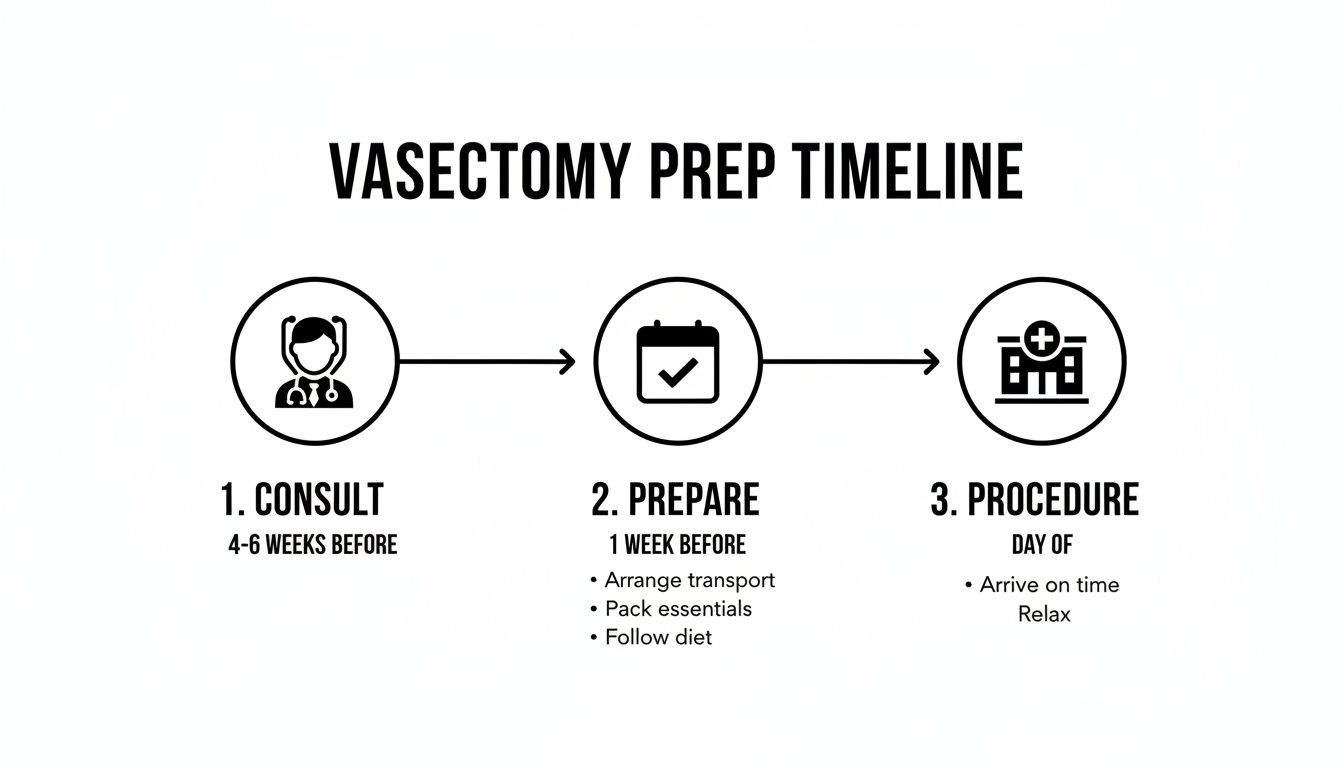
This visual shows that preparation is a structured process, not some overwhelming task you have to figure out all at once.
A vasectomy is easily one of the most reliable forms of male birth control out there—an estimated 42 to 60 million men worldwide have made this choice. Your first real step is that pre-op consultation. This is where your doctor walks you through every detail and confirms you’re fully aware that this is a permanent procedure.
The Mental and Logistical Groundwork
Before you even think about shaving or fasting, the most critical work is mental and logistical. Being 100% certain about your decision is the absolute foundation for a good experience. This isn't something to rush, and you need to feel completely confident before you proceed.
Your main goal in this early phase is clarity. Ask every question you can think of, do your own research, and have frank conversations with your partner. Feeling fully informed is the best way to kick anxiety to the curb.
To help you get organized, here’s a quick rundown of the key steps and why they matter.
Quick Vasectomy Prep Timeline
| Timeframe | Action Item | Why It's Important |
|---|---|---|
| 4+ Weeks Before | Initial Consultation & Decision | This is your chance to get all your questions answered and be 100% sure about this permanent decision. |
| 2-3 Weeks Before | Schedule Procedure & Arrange Time Off | Lock in a date that allows for at least 2-3 days of solid rest. Booking on a Thursday or Friday is a popular move. |
| 1 Week Before | Arrange Your Ride Home | You won't be able to drive yourself. Line up a friend or family member for drop-off and pickup. |
| 1 Week Before | Stop Blood-Thinning Meds | Following your doctor's specific instructions on stopping medications like aspirin helps minimize bleeding risk. |
| The Day Before | Shave the Area | A clean shave helps reduce the risk of infection. Follow the clinic's guidelines carefully. |
| Night Before / Day Of | Fasting (If Required) | If you're having sedation, you'll need to avoid food and drink for a set period. This prevents complications. |
Getting these logistical pieces sorted out early on means you can focus on relaxing as your appointment gets closer.
Once you’re mentally set, it’s time to shift gears to the practical stuff:
- Scheduling the Procedure: Pick a date that gives you at least two or three days to do nothing but rest. A Thursday or Friday appointment is a classic for a reason—it gives you the whole weekend to recover.
- Arranging Transportation: This is non-negotiable. You will not be in any condition to drive home afterward. Get a ride locked in with a partner, friend, or family member well in advance.
- Planning for Recovery: Think like a scout: be prepared. Set up your recovery zone on the couch, stock the fridge with easy-to-make meals, and make sure you have a few good ice packs waiting in the freezer.
What to Ask During Your Pre-Procedure Consultation
Your vasectomy consultation is more than just a box to check—it’s the single most important conversation you'll have before the procedure. This is your dedicated time to get total clarity, build confidence, and make sure you and your surgeon are perfectly aligned.
Walking in prepared with the right questions turns this meeting from a simple briefing into a powerful way to make an informed decision. This is your chance to understand not just the procedure, but the person performing it. Don't be shy; it’s your body, and you deserve to feel 100% comfortable with the expert you've chosen.
Understanding Your Surgeon and the Procedure
Start with the basics to get a feel for their experience and go-to methods. Every surgeon has a slightly different approach, and knowing the specifics can make a huge difference to your comfort level and what to expect during recovery.
Here are some essential questions to kick things off:
- How many vasectomies have you performed? Experience is key. A surgeon who does hundreds of these a year is going to be far more prepared for any scenario that might pop up.
- What specific technique do you use? Ask if they perform a no-scalpel vasectomy (NSV) or a conventional one. The NSV technique often means less bleeding and a quicker recovery for most men.
- Do you use clips, sutures, or cauterization to close the vas deferens? Understanding their method for blocking the tubes gives you a clearer picture of what’s actually happening down there.
Being open about your own health is just as critical. Your surgeon needs to know about any medications you're on, especially blood thinners like aspirin or ibuprofen, and even any supplements. Also, be sure to mention any previous surgeries in the groin area or existing medical conditions.
Discussing Risks, Recovery, and Realistic Outcomes
Next up, it’s time to talk about what to expect—both during the procedure and after. A good surgeon will be completely upfront about potential risks and set realistic expectations for your recovery. This part of the conversation is crucial for getting your head in the right space.
A key goal of this consultation is to eliminate surprises. You should leave the office with a very clear, step-by-step understanding of what your procedure day and recovery week will look like.
Focus on questions that give you a practical roadmap for the days and weeks ahead. The answers will help you plan your time off work and get your home set up for a smooth, couch-bound recovery.
Questions for a Clear Recovery Plan
- What kind of anesthesia will be used? Most vasectomies are done with a local anesthetic, which means you'll be awake. It's good to confirm this so you know exactly what to expect.
- What level of discomfort is normal during and after the procedure? Get a real-world description. Most men report a brief pinching sensation during the anesthetic injection, then maybe a feeling of pressure or tugging.
- Can you walk me through your specific recovery instructions? Ask for the nitty-gritty on icing, activity restrictions, and when you can get back to normal life, work, and the gym.
- What are the most common complications you see? Asking about common issues like swelling or bruising helps you know what's normal versus what might need a follow-up call.
- What is your policy for post-procedure follow-up? Make sure you know who to call if you have questions or concerns after you get home.
Finally, you need to be absolutely clear on the permanence of the procedure. While vasectomy reversals are a thing, they aren't always successful and are rarely covered by insurance. Your surgeon should stress that you must consider a vasectomy a permanent decision. This conversation ensures you’re making a choice that fits your long-term life goals, giving you peace of mind for years to come.
A Practical Guide to Medical and Physical Prep
With your consultation in the rearview mirror and the appointment officially on the calendar, it’s time to shift gears. Now, we focus on the practical side of things—getting your body ready for the procedure.
Think of this as the hands-on part of your vasectomy prep. Following a few simple medical and physical steps in the week leading up to the big day can make a huge difference in your comfort and recovery. It’s all about setting the stage for a smooth, uneventful procedure by minimizing risks like bleeding and infection.
Managing Your Medications
One of the most critical pre-op instructions you'll get is about your medications. Your surgeon will hand you a specific list of medications and even some supplements to avoid in the days before your vasectomy.
Why? The main concern is anything that thins your blood. Blood thinners increase the risk of bleeding and bruising, and avoiding them is a standard precaution for pretty much any surgical procedure.
Common culprits to watch out for include:
- Aspirin: You'll likely need to stop taking any aspirin products about 7-10 days before your procedure.
- NSAIDs: This is a big category that includes common over-the-counter painkillers like ibuprofen (Advil, Motrin) and naproxen (Aleve).
- Certain Supplements: You might be surprised to learn that things like fish oil, vitamin E, and ginkgo biloba can also have blood-thinning effects.
Be completely transparent with your surgeon. Give them a full list of everything you take—prescriptions, over-the-counter stuff, daily vitamins, and supplements. They'll give you exact instructions on what to stop and when.
If you’re on a daily aspirin for a heart condition or any prescription blood thinner, do not stop taking it on your own. You must get explicit instructions from both your prescribing doctor and your urologist first.
The Importance of a Clean Shave
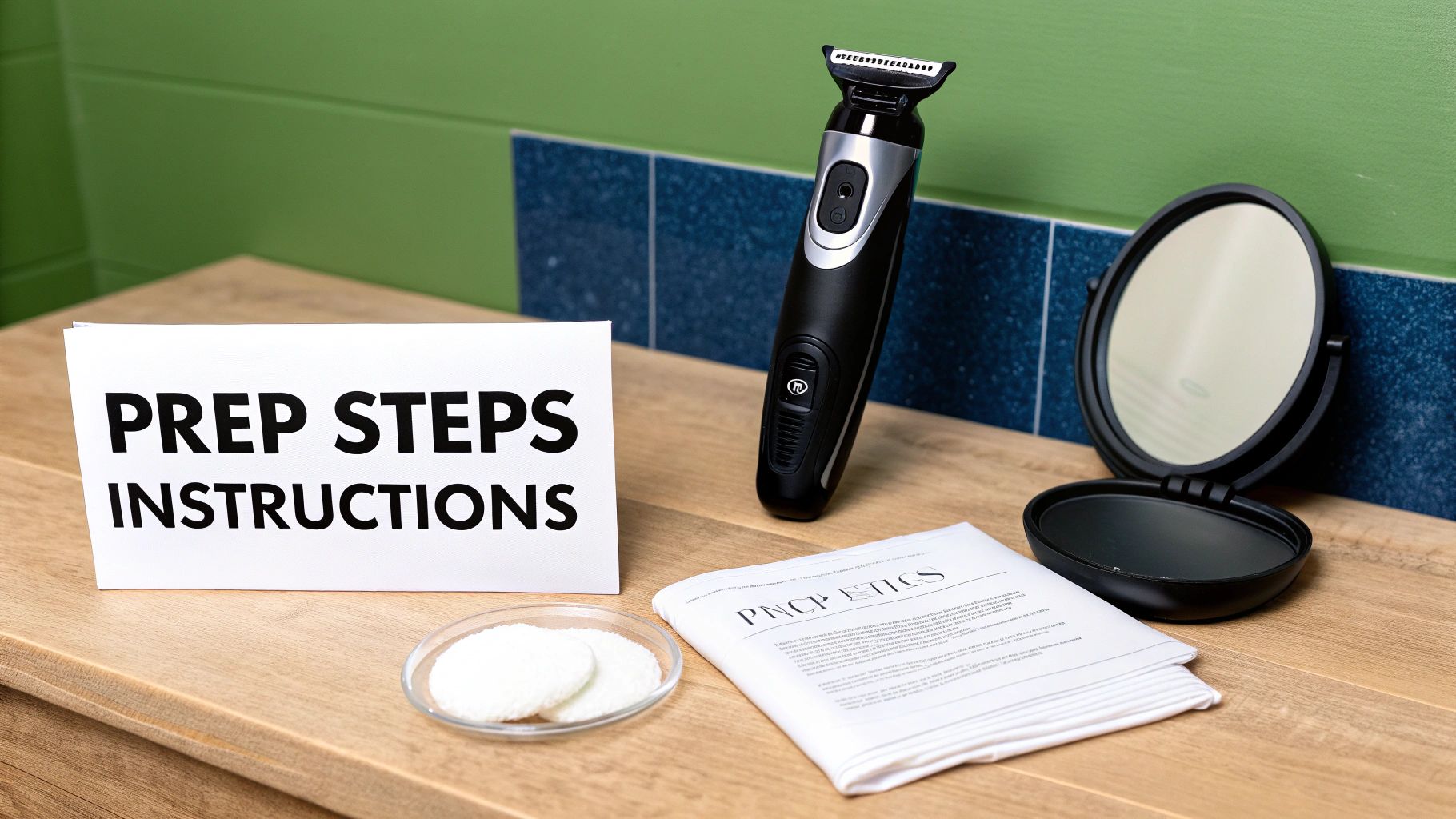
Next up: preparing the surgical site. Your surgeon needs a clean, hair-free area to work on, which is a crucial step for preventing infection. The clinic will give you specific directions, but the basic idea is to carefully remove the hair from your scrotum and around the base of your penis.
This isn't hard to do, but it does require a bit of care. Rushing the job can lead to nicks, cuts, or irritation, which is the last thing you want right before your appointment.
Tips for a Successful Shave
- Use the Right Tools: An electric trimmer with a guard is your best friend here. Use it to get the hair short first, then follow up with a fresh, sharp razor for a smooth finish.
- Take Your Time: Seriously, don't rush this. Use plenty of shaving cream or gel and warm water to soften the skin and hair, making it a much smoother process.
- Timing is Key: Most clinics will tell you to do this the night before or the morning of your procedure. Shaving too early can just lead to uncomfortable stubble and potential irritation.
Remember, this has nothing to do with aesthetics. It's a medical step to make sure the surgical site is as sterile as possible, significantly cutting down the risk of bacteria getting into the small incision.
Fasting and Final Preparations
Depending on whether you're getting any type of sedation, you might be asked to fast. For most vasectomies done with only a local anesthetic, fasting isn't necessary. However, if sedation is part of your plan, you'll likely be told not to eat or drink anything for about eight hours beforehand.
The final stretch of prep involves a few key actions. You'll stop any blood thinners about a week out, then focus on the shave, locking in your ride home, and planning for at least one to two days of solid rest with ice packs at the ready. You'll be able to resume sexual activity after about a week, but the job isn't truly done until you get the all-clear. This requires one or two semen analyses to confirm success.
Services like Hera Fertility make this post-procedure testing simple, helping men manage the whole process from getting physician-signed requisitions to understanding their results. It's the perfect way to verify you're officially in the clear. You can find more details about these guidelines on this comprehensive male health resource.
Setting Up Your Vasectomy Day and Recovery Zone
The day of your vasectomy and the first 48 hours that follow are the most critical part of your recovery. A little planning now means that once you’re home, your only job is to relax and heal. Getting the logistics sorted out beforehand transforms what could be a stressful day into a smooth, straightforward experience.
Let's start with the non-negotiables. First and foremost, you absolutely cannot drive yourself home. It doesn't matter if you have a local anesthetic or light sedation; your reaction times will be off. You need to lock in a ride from a partner, family member, or trusted friend well in advance. Don't leave this to the last minute.

Your Clinic Day Checklist
Keep it simple. You really don't need much, but having these few items ready will make things a lot easier when you're heading out the door and coming back home.
- Loose, Comfortable Pants: Think sweatpants or baggy athletic shorts. Anything tight or restrictive is going to be your worst enemy.
- Supportive Underwear: Bring a pair of snug-fitting briefs or a jockstrap to wear home. This support is crucial for minimizing movement and keeping swelling down.
- Your ID and Insurance Card: Have these ready to go so the check-in process is quick and painless.
That’s it. The goal is to walk in prepared and walk out as comfortably as possible, ready to head straight to your pre-arranged recovery spot.
Designing Your Recovery Headquarters
This is where a little forethought pays off big time. Your "recovery zone" is your dedicated space for the first two or three days. You want to create an environment where everything you could possibly need is within arm's reach, eliminating any reason to get up and move around more than necessary.
Think of it as building the ultimate relaxation nest. Every time you have to stand up, you’re putting a little strain on the healing area. The more you can stay put, the faster and more comfortable your recovery will be.
Pick your spot—the couch or a comfortable recliner is ideal—and start building your command center.
Essential Recovery Zone Supplies
- Ice Packs: Have at least two frozen gel packs (or the classic bags of frozen peas) ready in the freezer. You’ll be applying cold packs to the area for 20-minute intervals all through the first 24-48 hours to manage the swelling.
- Entertainment: Download movies, queue up a TV series, grab a book, or have your gaming console ready to go. Now is the perfect time to binge-watch that show you've been putting off.
- Snacks and Drinks: Set up a small cooler or side table with plenty of water, sports drinks, and easy-to-eat snacks like crackers, fruit, or protein bars.
- Chargers: Make sure your phone, tablet, and any remote controls are fully charged and their chargers are plugged in right next to you.
- Pain Medication: Have your prescribed or recommended over-the-counter pain reliever out and ready so you don’t have to go hunting for it later.
A good understanding of Heat Therapy vs Cold Therapy is useful, but for a post-vasectomy situation, cold is king. It's the standard recommendation to reduce swelling and numb the area right after the procedure.
This prep might seem a bit over-the-top, but it's the single best thing you can do to guarantee a smooth recovery. Taking care of these small tasks ahead of time lets you focus completely on what matters most: resting, icing, and letting your body heal properly. It's a small investment of your time that pays huge dividends in comfort and peace of mind.
And remember, once you're healed up, the journey isn't quite over. You still need to confirm the procedure was a success. You can learn more about finding a lab for your follow-up testing to get that final all-clear.
The Final Step: Confirming Your Vasectomy Was a Success
Getting through the vasectomy procedure and the first week of recovery feels like crossing the finish line, but there's one last, crucial step. A vasectomy isn't officially a success until a lab test confirms it. This final checkpoint—the post-vasectomy semen analysis—is absolutely non-negotiable.
Until you have a lab report in hand that confirms zero sperm in your sample, you are not sterile. It’s that simple. You must continue using other forms of birth control to prevent a pregnancy. This test is the only way to know for sure that the procedure worked, giving you the ultimate peace of mind.
Why This Test Is So Important
A vasectomy works by blocking the vas deferens, the tubes that transport sperm from the testes. After the procedure, however, sperm can still be present in the upper part of those tubes for weeks, sometimes even months. It takes a certain number of ejaculations to completely clear the remaining sperm out of your system.
The post-vasectomy semen analysis is designed to verify that this flushing-out process is complete. Skipping this test is a gamble you don’t want to take.
When to Schedule Your Semen Analysis
Timing is everything here. Your urologist will give you specific instructions, but the general timeline is fairly standard across the board.
You’ll typically need to provide your first sample about 8 to 16 weeks after your vasectomy. Just as important as the timeframe is the number of ejaculations. Most doctors recommend providing a sample after at least 20 ejaculations.
This combo of time and ejaculations ensures any residual sperm have been flushed out, giving you a crystal-clear picture of your sterile status.
Think of it like flushing a pipe. It takes a certain amount of flow over time to clear out everything that was left behind. Rushing the test can lead to a false positive for sperm, causing unnecessary stress and another round of testing.
Understanding the Results
When you get your report back, the goal is simple: zero sperm. The technical term for this is azoospermia. If your report shows no sperm, your urologist will give you the official all-clear. This is the moment you can finally stop using other forms of birth control.
Now, it's important to remember that vasectomies have a very low 0.15% failure rate. That means about 1 in 1,000 men might not achieve sterility right away. These rare cases are precisely why follow-up testing is so critical.
What if the test finds sperm? Don't panic. Sometimes, a small number of non-moving (non-motile) sperm are found. If this happens, your doctor will likely just ask you to wait a few more weeks and provide another sample.
Making the Testing Process Simple
The idea of producing and submitting a semen sample can feel a bit awkward, but modern services have made it a completely straightforward and private process. Platforms like Hera Fertility are designed to help men navigate this final step with ease.
Here’s a quick look at how it works for post-vasectomy confirmation:
- Get a Lab Requisition: You can get a physician-signed lab order in just a few minutes, skipping an extra doctor's visit.
- Find a Nearby Lab: The service helps you locate a convenient, certified lab from a huge network.
- Receive Clear Results: Instead of a confusing medical report full of jargon, you get AI-interpreted results that are easy to understand, confirming whether you've achieved sterility.
This approach takes the guesswork out of the final step and gives you the clear confirmation you need. For men who want to dig deeper into what a report means, check out our guide on how to read semen analysis results for more detail. Taking this final test is the last box to check on your vasectomy journey, ensuring the decision you made provides the lasting freedom you were looking for.
Answering Your Lingering Questions Before the Big Day
Even with the best prep, it’s completely normal to have a few questions rattling around in your head. Getting a vasectomy is a significant decision, and feeling confident and well-informed is the best way to walk into that procedure room. Let's tackle some of the most common questions we hear from men just like you.
How Much Discomfort Should I Really Expect?
This is the big one, isn't it? Let’s be direct: during the procedure, you'll feel a quick pinch from the local anesthetic. Most men compare it to a bee sting or a similar shot. After that numbing agent kicks in, you should only feel a bit of pressure or a mild tugging sensation—no sharp pain.
In the first couple of days of recovery, the feeling is often described as a dull ache, almost like the aftermath of getting lightly kicked in the groin. This is typically very manageable with the simple stuff: over-the-counter pain meds, ice packs, and taking it easy. And trust us, supportive underwear is a non-negotiable part of the recovery kit; it keeps everything stable and helps a ton with swelling.
When Can I Get Back to Work and the Gym?
This really boils down to what your day-to-day looks like.
- Desk Jobs: If you're sitting at a computer all day, you can probably head back to work within two to three days. Just take it easy.
- Physical Labor: For jobs that involve heavy lifting, constant motion, or any real physical strain, you absolutely need to plan for a full week off. Pushing it too soon is a recipe for complications like a hematoma (a painful collection of blood) and will definitely drag out your healing time.
As for exercise, patience is your best friend. Steer clear of the gym, running, and any heavy lifting for at least one full week. When you do go back, ease into it slowly.
The golden rule here is simple: if it hurts, stop. Your body knows what it needs, and listening to it is the fastest way to get back to 100%. Pushing through the pain will only set you back.
Will a Vasectomy Tank My Sex Drive?
Let's clear this one up right away: No. A vasectomy has zero impact on the biology behind your sex drive, performance, or enjoyment.
Here’s the simple science behind it. Your testicles do two main things: make sperm and produce testosterone. A vasectomy only snips and seals the vas deferens, which is just the delivery tube for sperm. It doesn't touch anything related to hormone production.
Your testosterone levels, libido, ability to get an erection, and the sensation of orgasm will all be exactly the same as before. The only difference is that your semen will no longer contain sperm. For many men, the relief from pregnancy scares actually makes their sex life better and more spontaneous.
What If I Change My Mind Down the Road?
A vasectomy should always be approached as a permanent decision. While reversals are technically possible, they are a whole different ballgame.
For starters, a vasectomy reversal is a complex, expensive microsurgery that is rarely covered by insurance. You're likely looking at a hefty out-of-pocket cost. More importantly, they don't always work. Success rates can vary dramatically based on how long it's been since your vasectomy and the skill of the surgeon.
Because of the high cost and uncertain outcome, you need to be 100% sure about this decision. If you have even a sliver of doubt, it’s worth hitting pause and exploring other options. This procedure is all about long-term peace of mind, so being certain is the most important prerequisite.
Navigating the final steps of your vasectomy journey, like post-procedure testing, should be simple and clear. With Hera Fertility, you can easily get a physician-signed lab requisition, find a convenient lab, and receive easy-to-understand results confirming your procedure's success. Visit Hera Fertility to learn how we make the final confirmation process straightforward and stress-free.
Related Resource Articles
-
How Long Does Sperm Live: A Complete Guide for Men
Curious about how long does sperm live? Get clear, evidence-based answers on sperm survival in different environments and what it means for your fertility.
21 min read
-
How do vasectomies fail: A practical guide for men
how do vasectomies fail: Learn early vs. late failure, why it happens, and the steps you need to confirm your outcome and what to do next.
20 min read
-
How to increase sperm volume overnight: Practical tips for male reproductive health
Discover how to increase sperm volume overnight with practical tips on hydration, nutrition, and timing to boost male fertility.
13 min read