It's one of those things you might notice but never really talk about: the color of your sperm. But paying attention can offer a quick, visual check-in on your reproductive health. For most men, a whitish-gray appearance is the healthy standard.
What Your Sperm Color Meaning Reveals
Understanding what different sperm colors mean is a simple, proactive step toward managing your health. While it's not a diagnostic tool on its own, it can absolutely provide valuable clues about what’s going on inside your body. It helps you get familiar with your baseline so you can spot when something might be off.
Generally, healthy semen is a white or grayish color. This appearance signals a good balance of sperm, fluids from the seminal vesicles, and enzymes from the prostate gland—all the components needed for a healthy ejaculate. According to the World Health Organization (WHO), this standard color often lines up with other positive male fertility markers, like sperm count and motility. You can find more details on what constitutes healthy sperm to get a fuller picture.
This visual guide breaks down what to look for, from what’s considered normal to colors that might need a closer look.
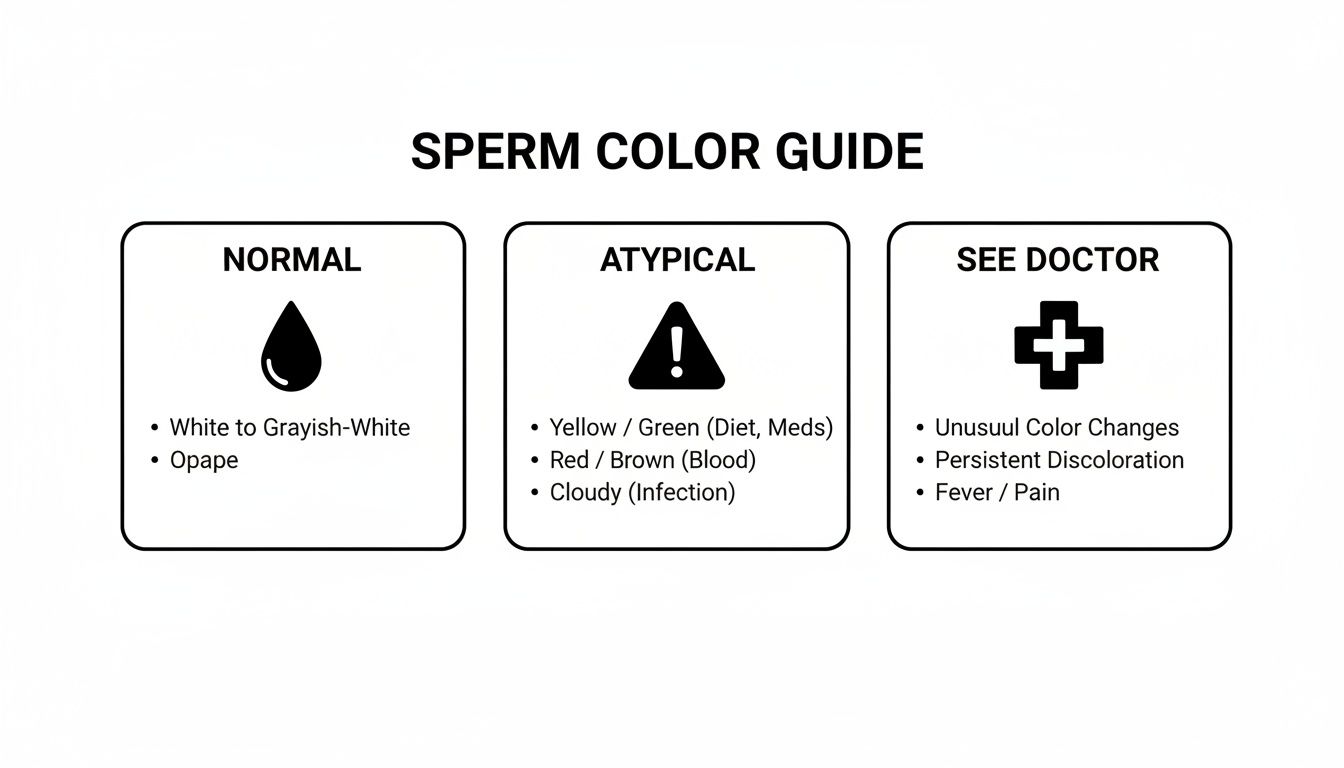
As you can see, whitish-gray is the norm. Atypical colors like yellow, green, or red are your body's way of signaling that it's time to pay attention and maybe even check in with a doctor.
To help you quickly reference what you're seeing, here’s a simple chart that summarizes the potential meanings behind different sperm colors.
Sperm Color Quick Reference Chart
| Sperm Color | What It Might Mean | Recommended Action |
|---|---|---|
| White/Grayish | This is the typical, healthy color. | No action needed. |
| Yellow/Green | Could indicate a urinary tract infection, prostate infection, or jaundice. | Monitor for other symptoms like pain or fever. Consult a doctor if it persists. |
| Red/Brown/Pink | Often indicates the presence of old or fresh blood. | See a doctor to rule out infections, trauma, or other conditions. |
| Clear | May indicate a low sperm count, but can also be normal. | If you’re trying to conceive, a semen analysis is a recommended next step. |
Remember, this is just a guide. A persistent color change is always worth discussing with a healthcare professional to get a clear diagnosis.
Why Color Matters for Male Health
Semen is much more than just sperm. It’s a complex fluid made up of secretions from several different glands, and each part plays a role in both male fertility and how the ejaculate looks.
- Prostate Gland: This adds a milky, slightly acidic fluid with enzymes that help liquefy the semen after it's ejaculated.
- Seminal Vesicles: These produce a thick, fructose-rich fluid. It’s the fuel that gives sperm energy and makes up a big chunk of the semen's volume.
- Testes: This is where the sperm themselves—the reproductive cells—are made.
When these fluids mix, they create the typical color and consistency we recognize. A change in that color can point to an imbalance or an issue in one of these areas, like an infection, some inflammation, or even the presence of blood.
By paying attention to sperm color, you are taking an active role in monitoring your own health. It’s a simple, non-invasive way to spot potential issues early, allowing you to seek advice when it matters most.
Of course, color isn't the whole story. Things like your diet, how hydrated you are, and even how often you ejaculate can cause temporary changes. But if you notice a change that sticks around, it’s worth looking into.
The most accurate way to really assess your reproductive health is through a formal semen analysis. This test gives detailed data on the big three: sperm count, motility, and morphology. These are the critical factors for male fertility, and this guide will help you understand the signs and know when it’s time to take that next step.
What Healthy Semen Looks Like
Before we can decode what different semen colors might mean, we have to get a clear picture of what’s considered normal. For most men, healthy semen has a familiar whitish to grayish-white color. You can think of this as the baseline for your reproductive health.
That classic cloudy appearance isn’t an accident—it’s the result of a precise cocktail of fluids. The signature milky color comes mainly from proteins and enzymes produced by the prostate gland. When this prostatic fluid mixes with sperm from the testes and a nutrient-rich fluid from the seminal vesicles, you get the typical whitish ejaculate. This color is usually a good visual sign that all the right ingredients are in the mix.
The Biology Behind The Color
That whitish-gray hue is more than just a color; it’s a sign that your reproductive system is firing on all cylinders. The fluid from the prostate gland, for example, is critical for male fertility. It contains an important enzyme called prostate-specific antigen (PSA), which helps liquefy the semen after ejaculation so the sperm can swim more freely.
This process is a make-or-break moment for fertility. When semen has the right consistency and composition, it gives sperm the perfect environment to survive and move effectively. That's why the standard whitish color often goes hand-in-hand with other positive fertility signs.
A healthy white or gray semen color often lines up with good sperm parameters, like a solid sperm count and strong motility. It’s a simple visual cue that the production line is working the way it should be.
This link between color and function is exactly why it’s so useful for men to know their own visual baseline when keeping an eye on their health.
Why Slight Variations Are Often Normal
It's also important to know that small shifts within this whitish-gray spectrum are completely normal and rarely a reason to worry. Just like hair or skin tones vary from person to person, the exact shade of semen can, too. A few everyday factors can easily tweak its appearance from one day to the next.
For instance, how hydrated you are plays a role. If you’re well-hydrated, your semen might look a bit more diluted or clear. On the flip side, dehydration can make it seem more concentrated and whiter.
How often you ejaculate is another big one. If it’s been a few days, your semen might appear thicker and whiter because of a higher concentration of sperm. But if you’re ejaculating frequently, it can look more translucent or watery simply because your body hasn’t had as much time to produce a full volume of sperm.
These minor, temporary changes are just part of your body's natural rhythm. By getting familiar with your own "normal," you'll be able to tell the difference between these small fluctuations and a more significant color change that might need a closer look. Understanding what a normal sperm count looks like in a lab report can also give you deeper insight into your fertility. Recognizing your body’s baseline is the first step in being proactive about your reproductive health.
Decoding Yellow Or Green Semen
Seeing a yellow or even green tint in your semen can be alarming, but it’s often just your body sending a signal. Think of it as a check-engine light—sometimes it’s a minor issue, other times it’s a heads-up that something needs a closer look. Understanding what these colors might mean can help you figure out the best next steps.
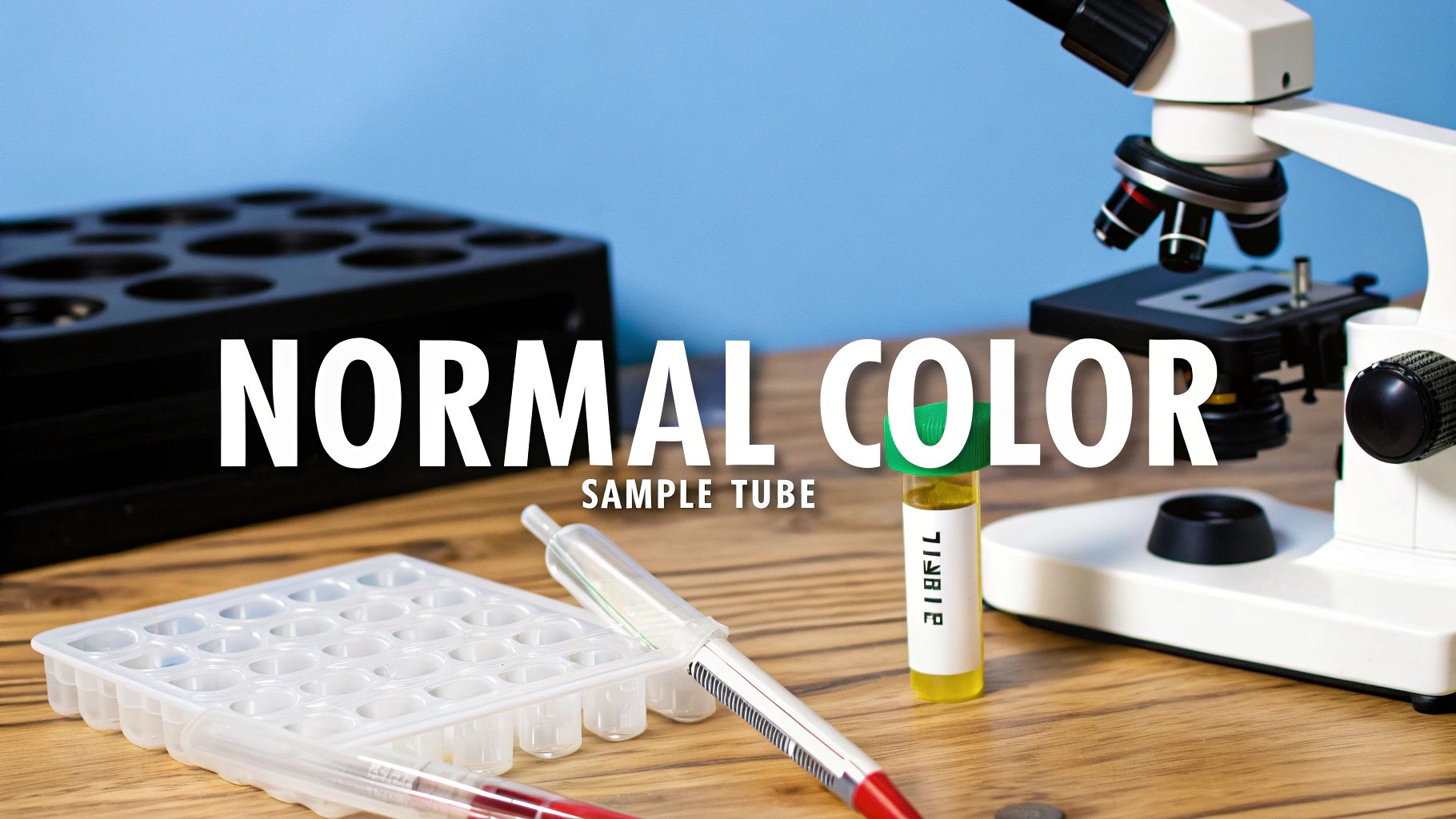
Often, a yellow hue is just temporary and nothing to worry about. A green tint, on the other hand, almost always points to an issue that needs a doctor's attention. Let's break down the common reasons for both colors so you can feel more informed and in control.
Why Semen Might Look Yellow
A yellowish tint is one of the more common color changes men see, and the cause isn't always something serious. In many cases, it’s just a byproduct of normal bodily functions or even your diet.
One of the most frequent reasons is simply the presence of urine. Both urine and semen exit the body through the same tube (the urethra), so it’s pretty common for a little bit of leftover urine to mix with ejaculate. This is especially likely if you ejaculate shortly after urinating.
Other harmless factors can also cause a yellow hue:
- Infrequent Ejaculation: If it’s been a while, older sperm cells can die off and degrade. This natural process can give semen a slight yellow discoloration.
- Diet and Vitamins: Ever notice how asparagus changes the smell of your urine? The same can happen with semen color. Foods high in sulfur, like onions and garlic, can sometimes cause a change. High doses of certain vitamins, especially B vitamins, are also known to produce a distinct yellow tint.
- Dehydration: When you're not drinking enough water, everything in your body becomes more concentrated, including semen. This can make it appear more yellow than usual.
Still, a yellow color that sticks around can sometimes signal an underlying health issue that warrants a closer look.
When Yellow Semen Signals a Deeper Issue
If the yellow color is consistent for several days or shows up with other symptoms, it might be time to consider other possibilities. One such condition is leukocytospermia, a technical term for having a high number of white blood cells in your semen.
Think of white blood cells as your body’s internal security team. They rush to the scene of any infection or inflammation. When they show up in large numbers in your reproductive tract, they can give semen a yellowish, almost pus-like appearance. This is often a sign of an infection in the prostate (prostatitis) or elsewhere in your system.
When the body fights an infection in the reproductive tract, the presence of white blood cells is a direct response. A consistent yellow color that doesn't go away could be an important sign that your immune system is at work.
If you notice a persistent yellow color along with pain during urination, pelvic discomfort, or a fever, that’s a clear signal to see a healthcare provider. These symptoms together strongly suggest an infection is the likely cause. Your next step should be to schedule an appointment for a proper diagnosis.
The Significance of Green-Tinged Semen
While yellow semen can have several innocent causes, a green tint is a much stronger indicator of a potential infection. This color is far less common and should always be taken seriously. It's a definite sign to seek medical advice right away.
Green-tinted semen is almost always caused by a bacterial infection, which can impact a man's fertility and overall health if ignored. The green color itself often comes from pus—a mixture of dead bacteria, white blood cells, and tissue debris—that is a byproduct of your body's fight against the infection.
Specifically, a green tint can be an alarming signal for bacterial infections like gonorrhea or chlamydia. Prostate infections (prostatitis) can also be the culprit, adding a greenish hue due to pus from inflammation. Prostatitis can significantly reduce sperm motility, making it harder to conceive naturally. You can find more insights about what semen color can mean on Vinmec.com.
Because of the strong link to infections that can harm male fertility, any shade of green in your semen should prompt a visit to your doctor for a proper diagnosis and treatment plan. Don't wait—this is a clear sign to take action.
What Red, Brown, or Pink Semen Is Trying to Tell You
Let’s be honest: seeing red, pink, or even a brownish tinge in your semen can be pretty alarming. These colors almost always signal that a bit of blood has mixed in with your ejaculate, a condition known as hematospermia. While it’s certainly an attention-grabber, the cause is often minor and tends to clear up on its own without you having to do a thing.
The goal here is to cut through the initial panic, understand what’s actually happening, and know exactly when it’s time to chat with a doctor. For most men who see this, it’s a temporary issue and not a sign of anything serious.
Think of this as a calm, logical guide to help you figure out if this is a one-off, harmless event or something more persistent that needs a professional look.
Common (and Harmless) Reasons for Blood in Semen
More often than not, blood in the semen comes from something simple and totally benign. The male reproductive tract is full of tiny, fragile blood vessels. Every now and then, one of these can break and leak a small amount of blood.
It’s not all that different from getting a minor nosebleed from blowing your nose too hard. A similar thing can happen inside the prostate or seminal vesicles, especially during sexual activity.
Some of the most common benign causes include:
- Vigorous sexual activity or masturbation: This is one of the top reasons. The pressure and friction can easily cause a small blood vessel to rupture.
- A long break from sex: If it’s been a while since your last ejaculation, the first one back can sometimes release a small amount of blood.
- Minor medical procedures: Urological procedures like a prostate biopsy or a vasectomy can lead to temporary hematospermia. This usually resolves on its own within a few weeks.
In these situations, you might notice pink or reddish semen once or twice, and then it’ll go right back to its usual color. No treatment needed.
When Red or Brown Semen Is a Signal to Act
While it’s often nothing to worry about, persistent red, pink, or brown semen can be your body’s way of flagging an underlying issue that needs attention. The color itself can even give you some clues: bright red usually means fresh bleeding, while a darker brown suggests older blood that’s been hanging around for a bit.
If the color change sticks around for more than a week or if you notice other symptoms along with it, that’s your cue to see a doctor. It’s your body signaling that something more might be going on.
A single instance of reddish semen usually isn’t a cause for alarm. But if it happens repeatedly or shows up with other symptoms, it’s a clear signal to get a medical evaluation and rule out more serious conditions.
Paying attention to these extra signs is a crucial part of looking after your health.
Potential Medical Reasons for Hematospermia
When blood in the semen just won’t go away, it could be linked to several medical conditions impacting the male reproductive system. Getting a proper diagnosis is the only way to get the right treatment and protect your long-term reproductive health.
Some of the more serious potential culprits include:
- Infections and Inflammation: Conditions like prostatitis (inflammation of the prostate), urethritis (inflammation of the urethra), or epididymitis (inflammation of the tube behind the testicles) can all lead to bleeding. These are often paired with symptoms like pain, fever, or a burning sensation when you pee.
- Sexually Transmitted Infections (STIs): Some STIs, including herpes, chlamydia, or gonorrhea, can cause enough inflammation to result in hematospermia.
- Trauma or Injury: A direct hit to the testicles, prostate, or general pelvic area can damage blood vessels and cause bloody semen.
- Blockages: An obstruction in the seminal vesicles or ejaculatory ducts can cause blood vessels to swell and eventually break.
- Prostate Issues: Beyond just inflammation, other prostate conditions could be the cause, particularly for men over 40.
The most important thing to remember is that you don’t have to play a guessing game. A healthcare professional can run the right tests to pinpoint the cause and get you on the right track, giving you peace of mind and a clear path forward.
So, you’ve noticed a change in color. What now?
Knowing what the different shades might mean is one thing, but figuring out when to actually do something about it is the crucial next step. While a one-off, minor color shift that’s gone tomorrow is usually nothing to worry about, some situations are your body’s way of waving a little flag and telling you it’s time to get a professional opinion.
Most of the time, temporary changes will clear up on their own in a day or two. But if you're seeing a distinct yellow, green, pink, or brown color that sticks around for more than a week, that's your cue to make an appointment. A persistent change is a good sign that the cause is something more than just what you had for dinner last night.
Red Flags That Mean It's Time for a Doctor's Visit
Beyond just the color itself, other symptoms can act as big, flashing signs that you need to see a doctor. If any of the following pop up along with the color change, don't wait. These can point to an infection or other underlying health issues that need attention.
Here’s what to look out for:
- Pain or Discomfort: Any aching or pain in your testicles, groin, or lower belly.
- Urination Problems: A burning feeling when you pee, or feeling like you have to go all the time.
- Fever or Chills: These are the classic calling cards of an infection.
- Sexual Issues: Trouble getting or maintaining an erection, or pain when you ejaculate.
- A Foul Odor: Semen that has a strong, unpleasant smell is a definite red flag.
Think of these symptoms as your body's built-in alarm system. When they go off, it’s telling you that something needs a closer look from a professional.
Your health is proactive, not reactive. Paying attention to these signals and seeking timely advice is one of the most important things you can do for your long-term reproductive and overall well-being.
What to Expect at Your Appointment
Booking a visit with a urologist—a doctor who specializes in the male reproductive system—can feel a bit daunting, but knowing what’s coming can make the whole process feel much more manageable. Their goal is simple: figure out what’s going on and what’s causing it.
Your appointment will most likely start with a conversation. Be ready to talk about your medical history, your lifestyle, and of course, the specific changes you’ve noticed. The more honest and detailed you can be, the easier it is for your doctor to connect the dots.
After you chat, your doctor might do a physical exam and suggest a few basic tests to get a clearer picture. If the unusual color is a potential sign of a bigger issue, getting professional help for effective disease state management is the right move. And if you're curious about other indicators of reproductive health, check out our guide on the most common male infertility signs. Taking these steps gives you the power to act decisively and make sure you get the support you need, right when you need it.
How a Semen Analysis Reveals The Full Story
While keeping an eye on your semen color is a great first step, it’s really just the cover of the book. To get the full story of your fertility, you need to read the pages inside. That's where a professional semen analysis comes in—it’s the gold standard for getting a clear, accurate, and objective look at what’s really going on with your sperm health.

This test moves you beyond just observing color and gives you concrete data. It provides definitive answers, whether you're actively trying to start a family or just planning for the future.
Moving Beyond Color Observation
Think of sperm color as a quick visual check, kind of like the dashboard lights in your car. A warning light tells you something might be wrong, but it can’t tell you if it’s low oil or a faulty sensor. You need a mechanic to run diagnostics to find out what's really happening under the hood.
A semen analysis does the exact same thing for your reproductive health.
It provides a detailed report on the key factors that actually determine male fertility. These metrics are far more critical than color because they measure the things that truly matter for conception.
A semen analysis shifts the focus from simple observation to objective measurement. It’s the difference between guessing what’s happening with your fertility and knowing for sure, based on scientific evidence.
This detailed look gives you a solid baseline of your reproductive health, empowering you with the information you need to make informed decisions.
What A Semen Analysis Actually Measures
A comprehensive semen analysis is a multi-point inspection that evaluates several crucial parameters. Each one tells a vital part of your fertility story, painting a complete picture that color alone could never provide. The lab will look at a few main components.
- Sperm Count (Concentration): This is the total number of sperm in your sample. A higher count generally improves the odds of conception.
- Motility (Movement): This measures how well your sperm can swim. It assesses what percentage of sperm are moving and how effectively they move forward.
- Morphology (Shape): This looks at the size and shape of your sperm. Abnormally shaped sperm may have a harder time fertilizing an egg.
- Semen Volume: This measures the total amount of fluid you ejaculate. Low volume could indicate an issue with the glands that produce semen.
Together, these metrics create a full profile of your sperm health. Knowing these details is especially important if you are trying to conceive, as they provide a clear roadmap for your next steps. Understanding how to read semen analysis results can help you feel more confident and prepared when discussing your fertility journey with a healthcare professional.
Why This Test Is The Decisive Step
Ultimately, a semen analysis provides clarity and ends the guesswork. An unusual sperm color might be caused by something harmless like your diet, or it could signal a more significant issue like an infection. You simply can’t know for sure just by looking.
This test gives you the hard data needed to understand the root cause.
Whether the results are perfect or show areas for improvement, you walk away with a clear action plan. It's a proactive step that puts you in control of your reproductive health, providing the definitive answers you need to move forward with confidence.
Frequently Asked Questions About Sperm Color
To wrap things up, let's tackle some of the most common questions men have when they notice a change in their semen color. Think of this as a quick-reference guide to help you make sense of what you've learned and feel more confident about your reproductive health.
Can My Diet Change My Sperm Color?
Yes, absolutely. What you eat can sometimes cause temporary, harmless changes to your semen color. Certain foods are packed with compounds or pigments that can subtly alter its appearance.
For instance, foods high in sulfur—think garlic, onions, or even asparagus—can sometimes give semen a yellowish tint. The same goes for foods and drinks with strong artificial dyes. These shifts are usually nothing to worry about and typically clear up within a day or two. If a new color sticks around longer than that, it’s a good signal to consider other potential causes.
Does Clear or Watery Semen Mean I Am Infertile?
Not necessarily. It's a common worry, but clear or watery semen isn't a guaranteed sign of male infertility. Semen consistency can change for plenty of harmless reasons.
One of the most frequent culprits is frequent ejaculation. If you’re ejaculating often, your body simply has less time to produce a full volume of sperm and seminal fluid, which can make things look more transparent. However, if your semen is consistently watery over a long stretch, it could point to a low sperm count. The only way to know for sure is with a professional semen analysis.
While the way your semen looks can offer clues, it’s not a diagnostic tool on its own. A consistently watery appearance is a solid reason to get a semen analysis for a clear picture of your fertility, but it doesn't automatically mean there's a problem.
How Long Should I Wait Before Seeing a Doctor?
Knowing when to stop monitoring and start making a phone call is key. If you notice a significant color change—like a persistent yellow, green, or any shade of red or pink—it’s smart to book an appointment if it lasts for more than one week.
But you should get in touch with a doctor right away if the color change comes with other symptoms. These are the red flags to watch for:
- Pain when you urinate or ejaculate
- A fever or chills
- Swelling or discomfort in your groin area
- A foul smell coming from the semen
Acting fast when these symptoms show up is the best way to get the right diagnosis and protect your long-term reproductive health.
Take the guesswork out of understanding your fertility. With Hera Fertility, you can order a physician-approved semen analysis, get tested at a top lab near you, and receive a simple, AI-powered report that explains what your results mean. Get clear insights and actionable next steps today at https://herafertility.co.
Related Resource Articles
-
Yellow Semen: Causes, Symptoms, and When to See a Doctor
Yellow semen is often temporary — diet, dehydration, or age — but infection is possible. Learn common causes, warning signs, and when to get tested.
12 min read
-
Unlock Male Fertility: The Power of 1 Ounce of Almonds Daily
Discover how 1 ounce of almonds daily can boost male fertility. Improve sperm health with science-backed insights & actionable tips.
17 min read
-
What Does Clear Semen Mean for Your Fertility?
Wondering what does clear semen mean? Learn the common causes, from harmless factors to potential fertility signals, and discover your next steps.
15 min read