Sperm morphology is just a technical term for the shape and structure of your sperm. When you see a morphology score on a semen analysis report, it’s telling you what percentage of your sperm have a normal, healthy shape—a crucial piece of the male fertility puzzle.
What Is Sperm Morphology And Why Does It Matter for Men?
When you get a semen analysis back, you’ll notice a few key numbers that give a snapshot of your reproductive health. Right alongside sperm count (the total number) and motility (how they swim), sperm morphology is one of the big three. It’s a close-up look at the physical quality of individual sperm.
Think of it like an athlete needing the right gear to perform. A sperm with the right shape has a much better chance of completing its journey and doing its job. This is why labs painstakingly examine the size and shape of the sperm's head, midpiece, and tail.
The Three Parts of a Healthy Sperm
For a sperm cell to be considered "normal," every part has to be just right. A defect in any one of these areas can throw a wrench in the works and stop it from functioning properly.
- The Head: This part is critical. It should be a smooth, oval shape because it carries all the precious genetic material.
- The Midpiece: This is the engine room. It connects the head to the tail and is packed with mitochondria, which generate the energy needed for swimming.
- The Tail: A long, single tail is essential. It’s what propels the sperm forward with a powerful swimming motion.
An abnormal sperm might have a head that’s too big or too small, a bent midpiece, or even two tails. Any of these issues can seriously hinder its ability to function correctly.
Getting a low sperm morphology score can feel like a gut punch, but it’s so important to remember it’s just one piece of a much larger puzzle. The reality is, the vast majority of men have a very high percentage of abnormally shaped sperm. A "normal" result today is a lot lower than most people think.
A Surprising Shift in Standards
Here’s something that catches almost every man off guard: the definition of a "normal" morphology score has changed dramatically over the years. This massive shift in standards shows just how much our understanding of male fertility has evolved.
Back in 1980, when the World Health Organization (WHO) first published its guidelines, a normal result meant at least 80.5% of sperm had to have a perfect shape. Fast forward to the most recent edition, and that benchmark has plummeted to just 4%.
This huge drop from 80.5% to 4% doesn't mean men's fertility is collapsing. It actually means our diagnostic tools have gotten much more precise, giving us a more realistic picture of what a truly functional sperm looks like. You can learn more about how fertility standards have evolved over time.
To make this easier to digest, here's a quick summary of what morphology is all about.
Sperm Morphology At A Glance
| Concept | Simple Explanation | What It Means for You |
|---|---|---|
| Morphology | The shape and structure of individual sperm. | It's a measure of sperm quality, not just quantity. |
| "Normal" Sperm | A sperm with a perfectly formed head, midpiece, and tail. | This shape gives it the best chance of performing its function. |
| Normal Range | ≥4% of sperm have a normal shape (using strict criteria). | It's completely normal for over 96% of sperm to be abnormally shaped. |
| Low Score | A score below 4% is called teratozoospermia. | This doesn't mean you can't have children, but it could be a factor in your reproductive journey. |
Seeing a low number can be startling, but context is everything. Modern labs use very strict criteria, so a "normal" score today is much lower than it was a generation ago.
How Is Sperm Shape Actually Measured?
When you first glance at a semen analysis report, the morphology section can feel a bit... subjective. How does a lab technician look at a sample and decide what’s “normal” and what isn’t? It’s a fair question, but the process is far more scientific and detailed than you might think. Understanding how they do it can make your results feel much less intimidating.
This isn't a quick guess. It's a meticulous evaluation performed under a high-powered microscope. A small drop of semen is carefully spread on specialized microscope slides and treated with a special dye. This stain makes the individual parts of each sperm—the head, midpiece, and tail—pop, allowing for a precise assessment of their structure.
This infographic breaks down why the physical shape of a sperm is so directly tied to its role in male fertility.
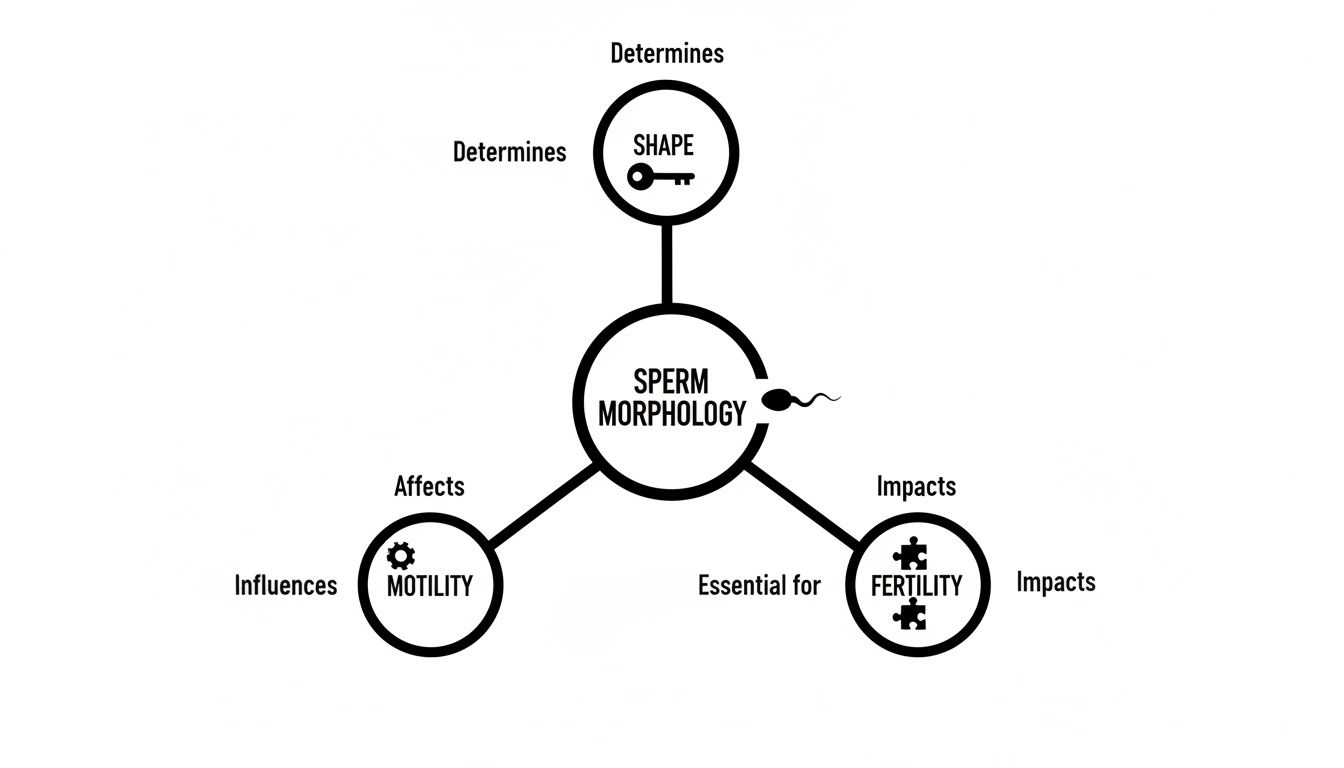
As you can see, the right shape is essential for a sperm to unlock its potential and complete its journey.
The Two Main Scoring Systems
To keep results consistent from one lab to another, technicians rely on specific, internationally recognized guidelines. For years, the World Health Organization (WHO) set the standard. Today, however, most modern clinics use a much more rigorous method called Kruger's Strict Criteria.
Developed in the 1980s, the Kruger method is famously demanding. It has a very tight, narrow definition of what counts as a "perfect" sperm. This is precisely why a "normal" score is now considered 4% or higher—a number that often shocks men when they see it on their report for the first time.
The key takeaway here is that these strict criteria mean even a tiny deviation from the ideal blueprint will land a sperm in the "abnormal" category. It doesn't automatically mean the sperm is useless, just that it doesn't meet the perfect model.
What A Lab Technician Actually Looks For
When an expert examines your sample, they're hunting for sperm that meet a very specific checklist of structural requirements. They analyze hundreds of individual sperm cells, tallying how many fit the ideal mold. For a sperm to be counted as "normal," all three of its parts must be in flawless condition.
Here's what they're checking off:
- A Perfect Head: The head needs to be a smooth, symmetrical oval. It can’t be too big, too small, or tapered. The acrosome—that little cap at the tip—should cover about 40-70% of the head's surface.
- An Intact Midpiece: Think of the midpiece as the sperm's engine. It must be slender, straight, and attached right to the center of the head.
- A Single, Uncoiled Tail: The tail must be long, straight, and uncoiled, with no breaks. It needs to be significantly longer than the head to propel the sperm forward effectively.
Any sperm that deviates from this blueprint gets counted as "abnormal," and that covers a huge range of tiny defects.
Common Examples of Abnormal Sperm Morphology
The term "abnormal" covers any structural flaw, no matter how minor. Technicians classify these defects to paint a complete picture of your sperm health. To see how this fits into the bigger picture, check out our full guide to semen analysis.
Common defects include:
- Head Defects: Tapered (pointy) heads, round heads, or heads that are too large (macrocephalic) or too small (microcephalic).
- Midpiece Defects: A midpiece that's bent, too thick, or attached off-center to the head.
- Tail Defects: Coiled tails, double tails, or short tails that can't swim properly.
Seeing these terms on a report can feel alarming. But it's crucial to remember that nearly every man produces a vast majority of abnormally shaped sperm. The goal of this detailed measurement isn't to cause panic, but to provide one more valuable piece of the puzzle in understanding your overall reproductive health.
Decoding Your Sperm Morphology Results
Getting a semen analysis report can feel like you’ve been handed a document in a foreign language, especially when you hit the section on sperm morphology. For most men, seeing a low number next to "normal forms" triggers instant shock and worry. But the first step to turning that confusion into clarity is understanding what those numbers actually mean.
Here’s the single most important thing to know: modern standards for evaluating sperm are incredibly strict. A score of 4% or 5% normal forms might sound terrible, but that’s considered perfectly healthy and normal by today's clinical benchmarks. That number reflects the high bar set by Kruger's Strict Criteria, not a red flag for your fertility.
Why a Low Number Is Usually Normal
It’s completely natural to see a figure like "96% abnormal" and feel your heart sink. But this is where context is king. This number absolutely does not mean that 96% of your sperm are useless or can't contribute to conception. It just means they don't meet the perfect, textbook definition of shape and structure.
Think about it this way: your body produces billions of sperm, and it's totally normal for the vast majority to have tiny imperfections. Many of these so-called "abnormal" sperm are still fully functional. They might have minor flaws—a slightly tapered head or a barely bent midpiece—that have zero impact on their ability to swim and do their job.
The most critical takeaway from your sperm morphology score is this: a high percentage of "abnormal" sperm is the norm for almost every healthy, fertile man. The goal isn't a perfect score; it's understanding your overall fertility picture.
This perspective is crucial. It helps shift your attention from a single, often misunderstood number to a more complete view of your reproductive health. Getting a clear interpretation of all your numbers is key, which is why we created a detailed guide on how to read your semen analysis results to walk you through every metric.
Morphology Is Just One Piece of the Puzzle
Your sperm morphology score never tells the whole story on its own. It's just one of three core pillars of sperm health and needs to be looked at with the other two. Think of it as a team where each player has a vital role.
The three key players in your semen analysis are:
- Sperm Count (Concentration): This is the sheer number of sperm in your sample. A high count means more chances, which can easily make up for a lower percentage of perfectly shaped sperm.
- Sperm Motility: This measures how well your sperm can swim. Even a perfectly shaped sperm is no good if it can't move properly.
- Sperm Morphology: This assesses shape and structure, which influences the ability to swim straight and function correctly.
A fertility specialist will always analyze these three metrics together. For example, a man could have a slightly low morphology score but an incredibly high sperm count and excellent motility. In that case, the massive number of healthy, fast-swimming sperm far outweighs the percentage with minor shape issues, pointing to a strong fertility outlook.
Putting Your Results into Action
Once you understand that your sperm morphology score is just part of a bigger picture, you can move from worry to proactive steps. Your report isn’t a final verdict—it's a valuable data point that gives you a baseline for your health.
The results are designed to give you and your doctor a clear snapshot, empowering you to make informed decisions. Whether that means looking at lifestyle tweaks, seeking further medical advice, or just feeling reassured, understanding the context behind the numbers is what matters. It turns confusing data into a tool for managing your reproductive journey with confidence.
Root Causes Of Poor Sperm Morphology
After getting your sperm morphology results, the next logical question is a big one: why? Figuring out the root causes behind a lower-than-ideal score is the first real step toward taking back control. The factors that influence sperm shape are incredibly diverse, running the gamut from daily habits to underlying medical issues.

It’s helpful to group these causes into three main buckets: lifestyle choices, environmental exposures, and medical conditions. Pinpointing potential culprits from your own life is a powerful move, turning a confusing number on a lab report into a concrete, actionable plan.
Lifestyle Factors You Can Control
So many aspects of our daily lives have a direct, significant impact on sperm production and quality. The great news? These are often the easiest things to change. Your body is constantly making new sperm, so positive adjustments can lead to measurable improvements in just a few months.
Key lifestyle influences include:
- Diet and Nutrition: What you eat really matters. A diet heavy on processed foods and lacking essential nutrients can crank up oxidative stress, which is poison to developing sperm. On the flip side, foods rich in antioxidants act like bodyguards, protecting them from damage.
- Smoking: Tobacco use is one of the most well-documented enemies of male fertility. The toxins in smoke can directly damage sperm DNA and throw a wrench in their formation, leading to poor morphology.
- Excessive Alcohol Consumption: Heavy drinking can mess with testosterone production and impair the entire sperm development process, hitting their count, movement, and shape.
- Recreational Drug Use: Substances like marijuana and anabolic steroids have been shown to have a negative effect on all sperm parameters, morphology included.
Making mindful choices here creates a much better internal environment for producing healthy, well-formed sperm.
Environmental and Heat Exposures
Your surroundings can also play a huge role, often in ways you might not expect. One of the biggest offenders when it comes to sperm development is excessive heat. There’s a reason the testicles are outside the body—they need to stay a few degrees cooler than your core temperature for optimal sperm production.
When that delicate temperature balance gets thrown off, sperm morphology can take a hit. Common sources of excess heat include:
- Hot Tubs and Saunas: Frequent soaks can raise testicular temperature enough to temporarily impair sperm production and shape.
- Laptops on Your Lap: That cozy warmth from a laptop sitting directly on your lap for hours can have a similar heating effect.
- Tight Underwear: Clothing that holds the testicles too close to the body can trap heat and negatively impact sperm quality.
- Occupational Exposure: Certain jobs that involve prolonged sitting (like long-haul driving) or exposure to high temperatures can also be a factor.
Just being aware of these heat sources allows you to make simple swaps—like switching to boxers or keeping your laptop on a desk—that can support healthier sperm development.
Underlying Medical and Health Conditions
Sometimes, poor sperm morphology is a signal of a deeper medical issue that needs a closer look. These conditions can directly interfere with the complex biological machinery required to build structurally sound sperm.
A crucial factor is your overall metabolic health. Studies have drawn a clear line between conditions like metabolic syndrome and reduced sperm quality. Things like high blood pressure, a larger waistline, and elevated blood sugar are each independently linked to a lower percentage of normal sperm morphology.
Think of your semen analysis as a "check engine" light for your overall health. Chasing down the cause of a low morphology score might just lead you to discover and manage another health condition you didn't know you had.
Other medical causes include:
- Varicoceles: These are enlarged veins in the scrotum, kind of like varicose veins in the legs. They are a leading cause of male infertility and are thought to hurt sperm quality by raising testicular temperature.
- Hormonal Imbalances: Hormones like testosterone are the master regulators of sperm production. Any disruption to this system can affect sperm development, leading to problems with their shape and function.
- Infections: Certain infections in the reproductive tract can cause inflammation and damage to developing sperm.
- Genetic Factors: In some cases, specific genetic conditions can be the direct cause of structural defects in sperm.
If you have any reason to suspect a medical condition might be at play, it's essential to discuss your semen analysis results with a doctor or a male fertility specialist. They can help investigate further and map out a clear path forward.
Actionable Steps To Improve Your Sperm Health
Getting a sperm morphology score that's lower than you hoped for isn't a final verdict—it's a starting point. Your body is constantly making new sperm, which means you have the power to influence the quality of the next generation of cells. By making a few targeted changes, you can create a healthier internal environment that helps your body build better-formed, more effective sperm.

The trick is to focus on practical, evidence-based steps that improve not just morphology, but your overall reproductive health. And the best part? Many of these changes will benefit your total health, creating a positive ripple effect throughout your life.
Power Up Your Nutrition
What you eat is the fuel for every single process in your body, and that absolutely includes sperm production. Think of your diet as the raw material for building high-quality sperm. A diet that’s short on key nutrients can lead to oxidative stress, a process that damages sperm cells and disrupts their development.
Your best defense is a powerful offense fueled by antioxidants. These are the compounds that protect developing sperm from damage.
- Load Up on Fruits and Vegetables: Aim for a colorful plate filled with things like berries, leafy greens, and citrus fruits, which are packed with vitamins C and E.
- Embrace Healthy Fats: Foods rich in omega-3 fatty acids, like walnuts and fatty fish, are crucial for building healthy sperm cell membranes.
- Incorporate Key Minerals: Zinc (found in oysters and pumpkin seeds) and selenium (found in Brazil nuts) are non-negotiable for testosterone production and sperm formation.
A nutrient-dense diet provides the fundamental building blocks for better sperm. For a deeper dive, check out our guide on how to improve sperm health through specific lifestyle and dietary choices.
Make Strategic Lifestyle Adjustments
Your daily habits have a huge impact on your hormones and reproductive system. Making small, consistent tweaks in a few key areas can lead to significant improvements in your sperm quality, including morphology.
The goal here is simple: reduce the physical and chemical stressors on your body. This gives it the best possible shot at producing healthy sperm.
It's also critical to understand the timeline. The entire process of making sperm—from start to finish—takes roughly 70 to 90 days. This means any positive changes you start today will begin to show up in your semen analysis results in about three months. This timeframe is key for setting realistic expectations and staying motivated.
Prioritize Movement and Rest
The link between exercise, sleep, and male fertility is well-established. It's all about finding the right balance to keep your hormones in check and reduce the stress that can hammer your sperm morphology.
Regular, moderate exercise is a fantastic way to support your reproductive health.
- Aim for Consistency: Try to get in 30 minutes of brisk walking, jogging, or cycling most days of the week. This helps maintain a healthy weight and keeps stress levels down.
- Avoid Overtraining: Be careful not to overdo it. Excessively intense exercise can actually put too much strain on your body and have the opposite effect.
Quality sleep is just as vital. Your body performs essential hormonal regulation and cellular repair while you're asleep. Aiming for 7-9 hours of quality shut-eye per night is one of the most effective things you can do for both your overall and reproductive health.
By combining these nutritional, lifestyle, and wellness strategies, you give your body the tools it needs to optimize sperm production. Remember, small, steady efforts are what lead to meaningful and lasting improvements in your sperm health and morphology.
When To See A Specialist About Your Results
Getting your semen analysis report back is a big step, but it’s often just the first piece of the puzzle. The results give you a vital snapshot of your reproductive health, helping you figure out what comes next. And while lifestyle adjustments can make a real difference for many men, some results are a clear signal that it's time to bring in a professional.
Figuring out when to call in a specialist—like a urologist who focuses on male fertility—can feel a bit confusing. Think of this as your roadmap. This isn’t about sounding the alarm; it’s about being proactive and getting the expert support you need, right when you need it.
Signs It's Time for an Expert Opinion
Sometimes, diet and exercise changes just aren't enough, or your results point to something that needs a deeper medical investigation. Consulting a specialist is a smart, strategic move to get the full picture and a plan that’s built specifically for you.
You should seriously consider booking an appointment with a male fertility specialist if any of these situations sound familiar:
- Consistently Low Results: You've cleaned up your diet, hit the gym, and cut back on bad habits for several months, but a follow-up test shows no improvement or your sperm morphology has gotten worse. This is a clear sign to seek expert advice.
- Results Paired with Other Symptoms: If your semen analysis comes back with abnormal numbers and you're experiencing other issues—like pain, swelling in the scrotum, or problems with sexual function—it’s crucial to get checked out by a doctor.
- Extremely Low Scores: A result showing 0% normal forms is rare, but it requires an immediate specialist evaluation. This specific condition, sometimes called globozoospermia, often has underlying genetic causes that only a specialist can properly investigate.
Your semen analysis report is a powerful tool, but it’s most effective when a professional interprets it as part of your bigger health picture. A specialist can connect the dots between the numbers, your health history, and your family-building goals.
What to Expect from a Specialist Visit
Seeing a specialist isn’t just about getting another test done. It’s about getting a comprehensive evaluation to uncover the "why" behind your results.
They’ll investigate potential underlying causes, like a varicocele (enlarged veins in the scrotum) or a hormonal imbalance. These are surprisingly common—and often treatable—reasons for poor sperm parameters.
The specialist will likely review your full report, perform a physical exam, and may order additional tests like blood work to check your hormone levels or a scrotal ultrasound. This thorough approach ensures you're not just chasing symptoms but actually addressing the root cause. This expert guidance provides a clear, supportive path forward in taking control of your reproductive health.
Common Questions About Sperm Morphology
Diving into the world of male fertility can bring up a lot of questions. And when you're looking at something as specific as sperm morphology, it’s completely normal to have some concerns after getting your results. Let’s clear up a few of the most common ones.
The idea here is to give you quick, supportive clarity. Turning that uncertainty into informed action is the next step on your journey.
Can a Man With 1% Normal Sperm Morphology Still Conceive?
Yes, absolutely. While a lower percentage of normally shaped sperm can make the path to conception more challenging, it is far from impossible. Remember, morphology is just one piece of the puzzle.
If your total sperm count and motility are strong, your body is still producing millions upon millions of sperm. Even with a 1% normal score, that can translate to millions of perfectly shaped sperm ready to go. Since it only takes one healthy sperm for conception to occur, plenty of men with low morphology scores have successfully fathered children.
How Quickly Can Sperm Morphology Improve?
The full lifecycle of sperm—from initial production to full maturity—takes about 70 to 90 days. This timeline is a critical piece of information when you start making positive changes to your health.
This means that any beneficial lifestyle adjustments you make today, like cleaning up your diet, quitting smoking, or avoiding excessive heat, will start to show up in your semen analysis results in about three months. This is why consistency is key. Re-testing after this period is the best way to see the real-world impact of your efforts.
Think of it this way: your sperm quality isn't set in stone. It's a dynamic reflection of your overall health. This 90-day cycle is a fresh opportunity to build a healthier team of sperm by making healthier choices.
Is Poor Sperm Morphology Linked to Other Health Problems?
Sometimes, yes. A growing body of research suggests that poor semen quality can act as an early warning sign for other underlying health issues. You can almost think of it as a "check engine" light for a man's overall wellness.
For instance, abnormal sperm morphology has been connected to things like hormonal imbalances or metabolic syndrome. This link is exactly why talking through your results with a doctor is so important. They can figure out if any other health screenings are needed to protect not just your fertility, but your long-term health, too.
Ready to stop guessing and get a clear picture of your sperm health? With Hera Fertility, you can order a semen analysis from a certified lab near you and receive an AI-powered report that translates complex data into simple, actionable insights. Take the first step toward understanding your fertility today at https://herafertility.co.
Related Resource Articles
-
Morphology Sperm: A Clear Guide to Male Fertility and Health
Explore morphology sperm and its impact on fertility. Learn normal ranges, common abnormalities, and practical steps to boost your sperm health.
19 min read
-
Sperm Morphology Normal: A Guide for Men (sperm morphology normal)
Discover what sperm morphology normal means for your fertility, how tests are done, and practical steps to improve sperm health.
21 min read
-
Understanding Normal Morphology of Sperm for Male Fertility
Discover what normal morphology of sperm means for your fertility. Learn about the 4% threshold, what your results mean, and how you can improve sperm health.
18 min read